
You are currently browsing the category archive for the ‘Science’ category.
An exciting update on my recent post on solar roadways. Scott and Julie have an Indiegogo campaign (like kickstarter, but not) and they were looking for $1 million to fund production of their solar roadway hexagons. They have made their goal with a few days left and are currently just under $1.3 million. This is happening! And in case my last article didn’t quite express how awesome this all is, check their new vid.
As a bespectacled individual, I was hoping for something a little more high tech. :)
On the upside, it is good to know when you’re in a pinch.
Why is it that we bow down before the market? It is not a fundamental force of nature, yet we in society are instructed to think of it as such.
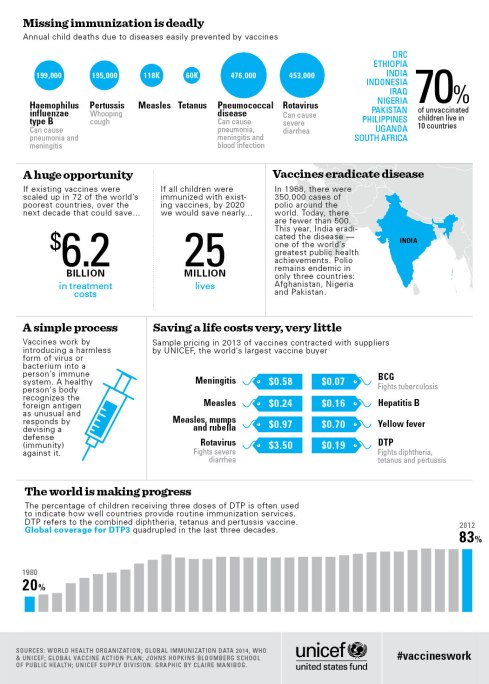
Many thanks to anti-vaxers and of course the CIA for doing the stupid shite they are famous for and making the world a worse place in the process.
A while ago I wrote a post, Roads: Why Are They Still Asphalt? In it I expressed my desire for the future of road materials. No more hours idling in construction zones as they pour more oil to patch another season’s worth of a billion or so potholes. Better drainage and more traction during slippery conditions. Why weren’t these goals being pursued by the best and brightest of engineers? It turns out, someone was indeed working on this problem and it’s looking even better than I had hoped.
Julie and Scott Brusaw in Idaho are developing solar roadways. Here’s the quick version of all the awesome their new road promises:
- They use high-durability, textured glass to cover hexagonal solar modules with internal heaters and LED lights.
- It exceeds standards for weight tolerance, toughness, and traction.
- LED’s mean clear road lines forever, no paint, and alerting drivers to pedestrians as they step out onto crosswalks.
- Heaters deal with snow and ice.
- Modular roads mean broken pieces are quickly identified and replaced.
- Electric cars will be able to plug into the road to recharge.
- More features and details in their FAQ
- No more potholes-ever


What we have here is technology that greatly increases road safety, greatly decreases the use of fossil fuels, and it encourages the development and use of electric vehicles. It’s everything my last article asked for and more.
The obvious question is, while this all sounds great, can this new road feasibly deliver on all that it promises? I don’t know, but in the spirit of my last article, I don’t think it matters that much. If we really are at the cusp of a road revolution and kids 20 years from now look back at asphalt roads the way we currently look at VHS tapes, all the better. However, my cynical side is well trained, and I doubt such a smooth victory is forthcoming. But I’m STILL excited. These solar roadways are here, they are being tested, and people are talking about them. Even if, in this iteration, they are a dismal failure, the seeds of progress have been planted. Whatever unforeseen problems arise, we will learn from them. While I’m unsure of the rate of road progress, I’m thrilled to know that, slow or fast, it’s actually happening. So read all about it, spread the word, and let’s see if we can get this happening sooner, rather than later.
The source of many major problems in society is an overwhelming lack of science awareness. Climate change, evolution, vaccinations, homoeopathy – none of these should be creating any kind of controversy anywhere. The science on each of these issues is pretty damn clear. It is not the case that everyone need to be an expert on such things, but they ought to have a basic understanding on where the scientific community stands. This, however, is not always easy. The public doesn’t get too much info directly from scientists and this is a problem. So is where we actually do get our info, but that’s another post. Science needs a PR boost in a big way. Enter today’s hero.
 Neil deGrasse Tyson not just one of the smartest people alive today, he is also one of the coolest. He gives talks, hosts tv shows, writes books, and by so doing, spreads scientific understanding to people all over the world. Most important, he does it in an inviting way, presenting science, not as something to fear or be wary of, but as something we can all revel in. Here is one of my favourite examples of bringing some cosmological perspective to people who crave it, need it, and will be better people because of it.
Neil carries on the tradition of Carl Sagan, not only in the new Cosmos series, but in making accessible a sense beauty and the transcendence only available through scientific eyes.
And for those of you who like a side of social progress with your people of unparalleled brilliance, Neil has that covered too.
There is so much super cool stuff that science can share with us, but many of us may never hear about it. We need more people who will bring the fantastic marvels of the world and the universe to the masses, particularly in way that highlights just how cool it is. How? Just watch the master in action. Watch Neil deGrasse Tyson.
A helpful infographic from the WHO. (having trouble reading the poster? “control + and control – ” may be able to help you out check the large version)











 bleatmop
 Mystro


 Dead Wild Roses
Your opinions…