
You are currently browsing the category archive for the ‘Technology and Computers’ category.
We’ll add this story to the heading ‘corporations that miss the point‘.
“Electronic Arts has given in to protests and pulled the ability to play as Taliban fighters from its upcoming Medal of Honor video game.
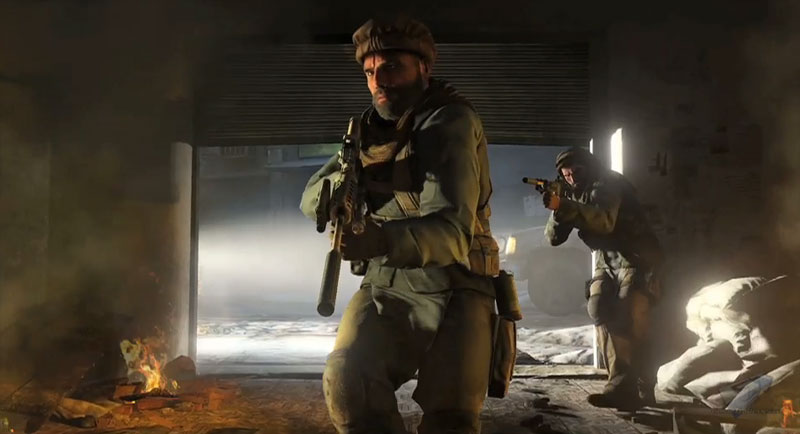
These are the ones you shoot.
It was to allow gamers to fight as Taliban against U.S. and allied troops in its online multiplayer mode, a feature that sparked criticism from some military officials and families of soldiers who have died in Afghanistan. Critics said allowing people to play as the enemies in a current conflict would be insensitive to the families of soldiers who have died.
The cultural assumptions enfolded into this statement bely the skewed view of the world we are fed and has ironic crunchy bits mashed in as well considering that the families of fallen Taliban fighters probably have similar feelings and have more of them considering the technological advantage we possess. But of course, being Official Enemies they do not have feelings or families, or heck, even human status when it comes to our point of view.
“Because the heartbeat of Medal of Honor has always resided in the reverence for American and allied soldiers, we have decided to rename the opposing team in Medal of Honor multiplayer from Taliban to Opposing Force,” executive producer Greg Goodrich said in a statement on the game’s website.”
Exactly, so you can get your righteous fill of filling people ragheads full of holes and terminating them with prejudice. This is okay. We show our reverence for families torn asunder by war by making products that glorify war and the destruction which results from it.
“While this change should not directly affect gamers, as it does not fundamentally alter the gameplay, we are making this change for the men and women serving in the military and for the families of those who have paid the ultimate sacrifice — this franchise will never wilfully disrespect, intentionally or otherwise, your memory and service.”
I’m not sure EA could go any deeper as they are using quantum bore tunnelling technology to dig the hole are in. All this PR spin is about their bottom line. They could care less about the men and women making the ultimate sacrifice during times of war. This wrinkle about changing the human targets from Taliban to OpFor is a callous move to protect their profit margins, nothing more.
 This could be a small win for corporate greed, but somehow I think the internet is a little to big for their money grubbing to contain.
“The men linked to the Pirate Bay file-sharing site were defiant on Friday after a Swedish court found them guilty of breaking the country’s copyright law.
The Stockholm district court sentenced Gottfrid Svartholm Warg, Peter Sunde, Fredrik Neij and Carl Lundstrom to one year each in prison for “assisting making available copyrighted content.”
They were also ordered to pay damages of 30 million kronor ($4.3 million Cdn) to a number of entertainment companies, including Warner Bros., Sony Music Entertainment, EMI and Columbia Pictures.”
An appeal is already in the works so the founders are not currently in jail or responsible for paying some silly amount of money.
“But the group said any verdict would be appealed, and the website home page carried a message equally defiant:
“As in all good movies, the heroes lose in the beginning but have an epic victory in the end anyhow,” said a message posted to the site. “That’s the only thing Hollywood ever taught us.”
Peter Sunde, one of the four founders of the site, said in a video posted Friday the court’s ruling was “bizarre.” “It’s so bizarre we just have to laugh about it, it’s unreal,” he said. As for the damages awarded, Sunde said the number was meaningless. “They could have gotten one billion,” he said. “We can’t pay and we won’t pay.”
Predictably, hollywood is crowing about their victory.
“This is an important decision for rights-holders, underlining their right to have their creative works protected against illegal exploitation and to be fairly rewarded for their endeavours,” Glickman said in a statement.”
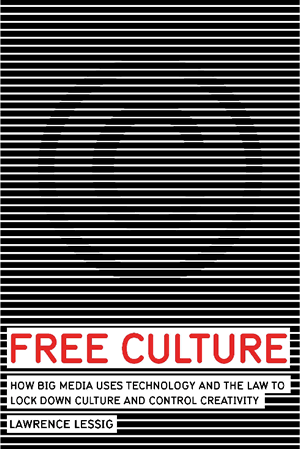
Creative protection. What a load of hoo-haa. They really mean is that they want access to an unending stream of royalties from these so called protected works. See Lawrence Lessig’s work on how they have gamed the copyright system to work for them in their favour.
Stay tuned, this case is far from over.
Theoretical Physics is always just so darn useful according to the CBC:
“A geometric “atlas” of the internet has been created in an effort to preserve it in the coming decades.
U.S., Spanish and Cypriot researchers say they have discovered what they call a negatively curved space hidden beneath the surface of the internet known as a “latent, hyperbolic” geometry.
This discovery has enabled them to create a new way of mapping the internet, a process they believe will help it to operate in the future.
“We compare routing in the internet today to using a hypothetical road atlas, which is really just a long encoded list of road intersections and connections that would require drivers to pore through each line to plot a course to their destination …,” Dmitri Krioukov, principal investigator of the project, said in a release.

I’m a little fuzzy on ‘negative parabolic space’ but the abstract from the journal is actually quite helpful.
“The Internet infrastructure is severely stressed. Rapidly growing overheads associated with the primary function of the Internet—routing information packets between any two computers in the world—cause concerns among Internet experts that the existing Internet routing architecture may not sustain even another decade. In this paper, we present a method to map the Internet to a hyperbolic space.”
So, if the intertoobz fail, we’ll at least know why.
 Private enterprise never misses an opportunity to diminish our rights in the pursuit of profit. The CBC reports from the Kingdom of Saud:
“Saudi Arabia and the Canadian makers of the BlackBerry have reached a preliminary deal on granting access to users’ data that will avert a ban on the phone’s messenger service in the kingdom, Saudi officials said Saturday.
The agreement would likely involve placing a BlackBerry server inside the kingdom to allow the government to monitor messages and allay official fears the service could be used for criminal purposes, the telecom regulatory officials said.”
What is all the fuss about? Well apparently, the BlackBerry uses some pretty nifty encryption, making emails and documents send via BB hard for governments easily decode.
“That will guarantee the kingdom’s ability to see communications and data exchanged on BlackBerry handsets, he said. Al-Mohammed said talks were ongoing and declined to provide more details pending an announcement, which he said was expected soon.”
Saudi Arabia often sets the tone for the rest of the Middle East when it comes to issue such as this, now other countries are coming to RIM with similar demands.
“The deal could have wide-ranging implications for several other countries, including India and the United Arab Emirates, which have expressed similar concerns over how RIM handles data.”
Of course, the profit motive handily pushes aside any sort of privacy concern private citizens may have.
“RIM is quite smart. They’re seeing this is a very lucrative market. They don’t want to take themselves out of this market,” he added.”
Woo haa! That is exactly how long it takes for industry to flush your rights down the crapper.
I suppose one should not be too worried, Saudi Arabia make no airs about being democratic or protecting the rights of its citizens. They were going to shut down the BB service if RIM did not do anything to “fix” the privacy problem. So perhaps this is the best compromise that could be worked out for all involved. I imagine there is a tech fix coming to add another layer of encryption so the Saudi business people who use the BB can continue to work with minimal government interference. And so the privacy/public security race continues…
What I find interesting about this story is the conflux of several important issues regarding privacy and how intrusive the state can be with regards to ‘protecting the national interest’. I think we need to come down on the side of the individual’s privacy. The state does not need to know the contents of my personal messages sent over the Internet (they already do for the most part, but for arguments sake).
I agree there are many strong cases to be make for the state’s right to know, for instance tracking down people planting bombs in schools and coordinating via the Internet. The problem is that, people who use the Net for such nefarious activities will not be communicating via the normal means, they will be using their own cryptography or codes to send their messages.
The sweeping measures (see Patriot Act) implemented will not stop half-way smart, dedicated people. I wager they snap up the stupid ones all the time, so we get a measure of protection versus the incompetent. I do not however think the privacy loss the for great majority of us is worth protecting us from the Stupid.
I hope that the Saudi point of view on this issue is not mirrored through out the world, as it would be a detriment to reasonable private communication everywhere.
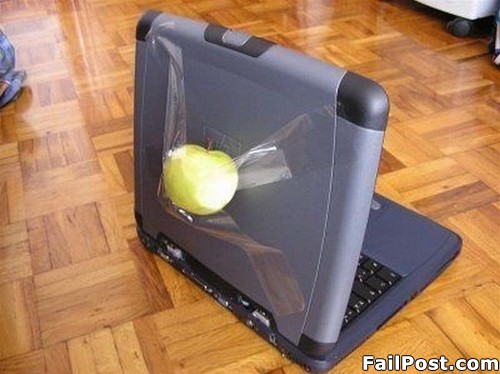 Apple products irk me to no end. They define the non-generative end of the technology spectrum. If Apple does not like your application it simply will not work on your ‘iwhatever’ (flash being a case in point). Apple seems to have dropped the ball again in one of their strong suits: design. (But it does blend well, a point in Apple’s favour.)
“Apple has acknowledged reception problems with its new iPhone 4, but the company is blaming the issue on how users are holding the device.
The new iPhone, which went on sale in several countries on Thursday, features an antenna built into the frame of the device itself. Some users immediately complained of losing reception, which prompted Apple to address the issue late Thursday.”
Huh. Well damn, I guess you just have to stop holding the phone to get good reception. But really, do you buy an Apple product for anything more than just to be seen with it. Functionality seems a distant second, at best. So what if the darn thing cannot pick up a signal, its an Apple and to be seen ‘using’ one should be enough.
‘Apple’s chief executive Steve Jobs further addressed the issue in an email to a user, which was posted on the Engadget website on Friday. The user wrote to complain about the problem, to which Jobs responded: “Just avoid holding it that way.”

Set individuality to 11!
I’ll say it straight out. I am not a fan of Apple products. They are easy to use, fantastic, but are they useful? In my opinion, absolutely not. I break technology. I get mad, frustrated, annoyed even to the level of wanting to TISP!(*) my computers down a very dark and deep hole. The thing is once fixed, through hard work and fair amount of luck, I know how to fix something if it breaks like that again or at least diagnose what not to do the next time. Apple takes the me borking my hardware aspect out of computing, easier for me, but also more limiting. The CBC article mirrors some of my concerns.
“On one hand are the all-too-familiar complaints about pricing for the device’s 3G wireless capabilities. On the other are criticisms that Apple is trying to maintain too tight a control over what users can and can’t do with their gadgets, or that the company is trying to remake the web to its liking.”
Do not forget the requisite shaft for Canadian Broadband consumers:
“The company announced it would offer two plans, one allowing for 250 megabytes of monthly usage for $15 and another giving five gigabytes for $35. That angered potential customers, who pointed out on the company’s Redboard forum that AT&T in the United States was offering a superior plan — unlimited usage — for less money, or $30 (U.S.).
Rogers staff responded by saying that five gigabytes was more than enough usage based on its existing customers’ usage of smartphones and laptop data sticks.”
Lovely. But unsurprising.
“Apple is maintaining similar tight control over what sort of content can go onto the iPad, and even what can be attached to it. The device lacks a CD or DVD drive, as well as a standard USB plug, which means that connecting to Apple’s iTunes through the company’s specially designed plug is the only easy way to get media onto the device.”
Steve Jobs and his for all of his proprietary bullshite can rightly be called His Most Excellent Buttplug of High Douchatude from now on. I buy your hardware and then the only way I can put things on it is through a media pipe of your choosing. Frack the hell off Apple.
“The general public doesn’t think of the iPad as a device where someone other than the owner has the keys to it,” he said. “They haven’t thought, ‘Why is this allowed?’ They just think, ‘Oh, it’s a cool device.'”
And the general public is stupid. Most of the i-crap is more about looking hip and cool. Forget about net neutrality, open source and open access software, as long as my waste of skin peer group can identify me by my glaringly white ear buds I’m “good”. The Apple phenomena is the hybridization of stupid people with stupid devices, profitable but ultimately not good for us.

Repackaged Trendy Shite for the Dullard Masses in 3...2...1...











 bleatmop
 Mystro
 The Arbourist


 Dead Wild Roses
Your opinions…