(TL;DR) Eric Voegelin’s The New Science of Politics remains one of the clearest guides to our modern disorder. It teaches that when politics cuts itself off from transcendent truth, ideology fills the void—and history descends into Gnostic fantasy. Voegelin’s remedy is not new revolution but ancient remembrance: the recovery of the soul’s openness to reality.


Eric Voegelin (1901–1985) was an Austrian-American political philosopher who sought to diagnose the spiritual derangements of modernity. In his 1952 classic The New Science of Politics—first delivered as the Walgreen Lectures at the University of Chicago—Voegelin proposed that politics cannot be understood as a merely empirical or procedural science. Power, institutions, and law arise from a deeper spiritual ground: humanity’s participation in transcendent order. When societies lose awareness of that participation, they fall into ideological dreams that promise salvation through human effort alone. The book is therefore both a critique of modernity and a call to recover the classical and Christian understanding of political reality (Voegelin 1952, 1–26).


1. The Loss of Representational Truth

Every stable society, Voegelin argued, “represents” its members within a larger order of being. In ancient civilizations and medieval Christendom, political authority symbolized this participation through myth, ritual, and law that acknowledged a reality beyond human control. The ruler was not a god but a mediator between the temporal and the eternal.

Beginning in the twelfth century, however, the monk Joachim of Fiore reimagined history as a self-unfolding divine drama in which humanity itself would bring about the final age of perfection. With this shift, Western consciousness began to “immanentize the eschaton”—to relocate ultimate meaning inside history rather than in its transcendent source. Out of this inversion grew the modern ideologies of progress (Comte, Hegel), revolution (Marx), and race (National Socialism), each promising earthly redemption through planning and will (Voegelin 1952, 107–132).

For Voegelin, the loss of representational truth meant that governments no longer reflected humanity’s place in divine order but instead projected utopian images of what they wished reality to be. Politics ceased to be the articulation of truth and became the engineering of salvation.


2. Gnosticism as the Modern Disease

Voegelin identified the inner structure of these movements as Gnostic. Ancient Gnostics sought hidden knowledge that would liberate the soul from an evil world; their modern successors, he said, sought knowledge that would liberate humanity from history itself. “The essence of modernity,” Voegelin wrote, “is the growth of Gnostic speculation” (1952, 166).

He listed six recurrent traits of the Gnostic attitude:

  1. Dissatisfaction with the world as it is.
  2. Conviction that its evils are remediable.
  3. Belief in salvation through human action.
  4. Assumption that history follows a knowable course.
  5. Faith in a vanguard who possess the saving knowledge.
  6. Readiness to use coercion to realize the dream.

From medieval millenarian sects to twentieth-century totalitarian states, these traits form a single continuum of spiritual rebellion: the attempt to perfect existence by abolishing its limits.


3. The Open Soul and the Pathologies of Closure

Against the Gnostic impulse stands the open soul—the philosophical disposition that accepts the “metaxy,” or the in-between nature of human existence. We live neither wholly in transcendence nor wholly in immanence, but within the tension between them. The philosopher’s task is not to resolve that tension through fantasy or reduction but to dwell within it in faith and reason.

Political science, therefore, must be noetic—concerned with insight into the structure of reality—not merely empirical. A society’s symbols, institutions, and laws can be judged by how faithfully they articulate humanity’s participation in divine order. Disorder, Voegelin warned, begins not with bad policy but with pneumopathology—a sickness of the spirit that refuses reality’s truth. “The order of history,” he wrote, “emerges from the history of order in the soul.”

Empirical data can measure economic growth or electoral results, but it cannot measure spiritual health. That requires awareness of being itself.


4. Liberalism’s Vulnerability and the Way of Recovery

Voegelin saw liberal democracies as historically successful yet spiritually precarious. By reducing political order to procedural legitimacy and rights management, liberalism risks drifting into the nihilism it opposes. When public life forgets its transcendent foundation, freedom degenerates into relativism, and pluralism becomes mere fragmentation.

Still, Voegelin’s outlook was not despairing. His proposed remedy was anamnesis—the recollective recovery of forgotten truth. This is not nostalgia but awakening: the rediscovery that human beings are participants in an order they did not create and cannot abolish. The recovery of the classic (Platonic-Aristotelian) and Christian understanding of existence offers the only durable antidote to ideological apocalypse (Voegelin 1952, 165–190).

To “keep open the soul,” as Voegelin put it, is to resist every movement that promises paradise through force or theory. The alternative is the descent into spiritual closure—an ever-recurring temptation of modernity.


5. Contemporary Resonance

Voegelin’s analysis remains uncannily prescient. Today’s ideological battles—whether framed around identity, technology, or climate—often echo the same Gnostic pattern: discontent with the world as it is, belief that perfection lies just one policy or re-education campaign away, and impatience with reality’s resistance. The post-modern conviction that truth is socially constructed continues the old dream of remaking existence through will and language.

Voegelin’s warning cuts through our century as clearly as it did the last: when politics replaces truth with narrative and transcendence with activism, society repeats the ancient heresy in secular form. The cure, as ever, is humility before what is—the recognition that order is discovered, not invented.

References

Voegelin, Eric. 1952. The New Science of Politics: An Introduction. Chicago: University of Chicago Press.

Hughes, Glenn. 2003. Transcendence and History: The Search for Ultimacy from Ancient Societies to Postmodernity. Columbia: University of Missouri Press.

Sandoz, Ellis. 1981. The Voegelinian Revolution: A Biographical Introduction. Baton Rouge: Louisiana State University Press.


Glossary of Key Terms

Anamnesis – Recollective recovery of forgotten truth about being.
Gnosticism – Revolt against the tension of existence through claims to saving knowledge that masters reality.
Immanentize the eschaton – To locate final meaning and salvation within history rather than beyond it.
Metaxy – The “in-between” condition of human existence, suspended between immanence and transcendence.
Noetic – Pertaining to intellectual or spiritual insight into reality’s order.
Pneumopathology – Spiritual sickness of the soul that closes itself to transcendent reality.

Representation – The symbolic and political articulation of a society’s participation in transcendent order.


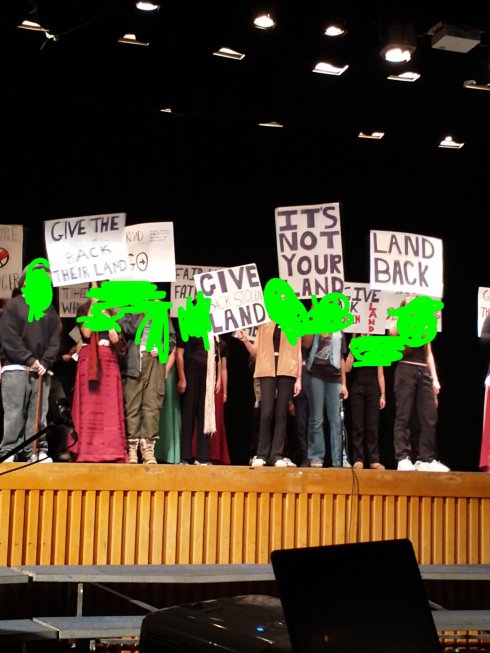
To think that these individuals are going to be in charge soon is positively frightening.


The documentary presents unedited footage of a Spectrum Street Epistemology session conducted by Frances Widdowson at the University of Regina on October 3, 2024, facilitated with Indigenous psychologist Lloyd Hawkeye Robertson. It contextualizes the event within Widdowson’s broader conflicts over academic freedom, detailing the cancellation of her scheduled talks titled “Indigenization and Academic Freedom: Lessons from the Frances Widdowson Case” and “The Grave Error at Kamloops: Should It Be Described as a ‘Hoax’?”

Key background: Widdowson, formerly terminated from Mount Royal University amid disputes over “wokeism” and identity politics, arranged the talks through librarian Robert Thomas. University administrators, including Provost David Gregory and Associate Vice President John Smith, canceled room bookings citing “safety concerns,” particularly proximity to the National Day for Truth and Reconciliation. Widdowson defied warnings, invoking Charter protections for public universities, and proceeded with the informal epistemology exercise in a student center, filmed by former faculty member Daniel Page.

The session examines claims via positioned mats (strongly agree to strongly disagree). Core claim: “The University of Regina protects academic freedom.” Robertson places himself at “slightly agree,” citing institutional policies like collective agreements but noting exceptions (e.g., pressures on Page and computer scientist Trevor Tomesh for LGBTQ-related criticisms and social media posts, respectively). Widdowson highlights her own case and systemic failures.

Related claims probed:
– Academic freedom equates to unrestricted speech: Robertson slightly disagrees, viewing it as narrower (professorial judgment in expertise) yet inseparable from broader expression.
– Professors may claim residential schools benefited Indigenous people: Robertson agrees in principle for academic freedom but personally disagrees overall, acknowledging abuses while noting some schools provided successes and First Nations lobbied to retain them post-1960s closures.
– Residential schools were harmful: Robertson agrees, referencing “residential school syndrome” (PTSD-like symptoms including rage), physical/sexual abuse, and underfunding, but not “strongly” due to variations across institutions.

Interactions escalate with students and a professor (Russell Fayant, from the Teacher Education Program), who arrives with a primed class. Participants accuse Widdowson of denialism, hate, and harming reconciliation; one claims her presence spikes blood pressure and causes distress. Widdowson counters with evidence gaps, e.g., Kamloops’ 2021 announcement of “215 children’s remains” (initially ground-penetrating radar anomalies, unexcavated) and William Combes’ unsubstantiated claim of Queen Elizabeth II abducting 10 children in 1964 (contradicted by royal itineraries). Disruptions include threats to an elderly attendee, projector unplugging, and event relocation from Regina Public Library due to organized opposition by coordinator Rachel Jean and journalism professor Trish Elliot.

Verifiable outcomes: No physical violence; security (Brad Anderson) monitors without intervention. Widdowson maintains composure, emphasizing evidence over emotion. Comments (242 visible) overwhelmingly praise her patience and critique students’ emotionalism, immaturity, and evasion of substantiation—e.g., prioritizing “therapeutic mythologies” over facts, fearing critical thought’s social costs.

Core tension: Widdowson’s insistence on verifiable evidence (e.g., excavations, historical records) clashes with appeals to lived experience, oral knowledge, and relational healing. She argues truth precedes reconciliation; opponents prioritize avoiding harm and building ties, viewing scrutiny as divisive. The session exposes institutional suppression—cancellations without due process—and student unpreparedness for rigorous debate, underscoring academic freedom’s erosion under indigenization mandates. No evidence supports mass murder claims at Kamloops; anomalies remain unconfirmed graves. The exercise, though chaotic, demonstrates dialogue’s possibility despite hostility, affirming verifiable truth as essential to intellectual integrity.

Bach’s Oboe Concerto in F major, BWV 1053R, reconstructs a lost original from the harpsichord concerto BWV 1053. It unfolds in three movements of poised elegance and melodic invention.

The opening Allegro presents a buoyant orchestral ritornello, yielding to the oboe’s lyrical entry with flowing semiquaver lines and affectionate dialogue, all in sunny F major.

The central Siciliano, in D minor, offers a poignant lament: the oboe weaves a siciliano rhythm over muted strings, building to expressive heights before subsiding into tender resolution.

The finale, another Allegro, erupts in vivacious 3/8 meter with hunting-horn motifs, the oboe chasing the orchestra through brilliant passages to a triumphant close.

A compact masterpiece of Baroque interplay, clocking under twenty minutes, it showcases the oboe’s singing soul against Bach’s inexhaustible craft.

Antonio Gramsci, the Marxist imprisoned by Mussolini, changed political strategy forever by shifting revolution from the factory floor to the realm of culture. His concept of cultural hegemony—the quiet capture of schools, media, and moral institutions—remains the blueprint for the modern Left’s “long march through the institutions.” Understanding him is key to understanding how ideology became the new battlefield of Western democracy.

Why the twentieth century’s most subversive Marxist remains essential to understanding our political moment.

Antonio Gramsci has become a ghostly presence in today’s politics—invoked by both left and right, praised as a prophet of cultural liberation and blamed as the architect of “Cultural Marxism.” Yet few who use his name understand the subtlety of what he actually proposed. Gramsci, an Italian communist jailed by Mussolini from 1926 until his death in 1937, recognized that Western societies could not be overthrown by economic revolution alone. The real battleground, he argued, lay in the culture—in the stories a society tells itself about who it is, what it values, and what it considers “common sense.”

In his Prison Notebooks, Gramsci dissected how ruling elites maintain power not only through economic control or state coercion but through the manufacture of consent—what he called cultural hegemony. When the public unconsciously accepts elite norms as their own, open coercion becomes unnecessary. The power structure endures because people cannot easily imagine alternatives.

From Marx to Culture: The Pivot that Changed the Left

This insight quietly revolutionized the Marxist project. Where Marx saw power rooted primarily in economics, Gramsci saw it reproduced through education, religion, art, the press, and civic institutions—what he called “civil society.” If these were the true engines of social continuity, then a revolutionary movement must capture them before capturing the state. The task, therefore, was not simply to seize the means of production but to seize the means of persuasion.

That shift—from factory to faculty, from economics to ideology—birthed what would later be called Cultural Marxism. It gave rise to the post-war New Left and, through the Frankfurt School, to a range of “critical” theories that continue to shape university life and activist politics. Power was no longer viewed as residing primarily in class relations but in language, identity, and culture. Gramsci’s “war of position”—a slow, patient infiltration of cultural institutions—became the model.

The Five Fronts of Cultural Hegemony

Gramsci never offered a neat checklist, but his writings identify five interlocking domains where the battle for hegemony is fought—and where Western institutions have since seen the most visible transformations:

  1. Religion and Moral Order – For centuries, the Church anchored Western moral consensus. Gramsci saw it as the spiritual foundation of bourgeois power. Undermining or secularizing that foundation was essential to remaking moral consciousness.
  2. Education and the Intelligentsia – Schools and universities, he observed, do not merely transmit knowledge; they reproduce ideology. Control the curriculum, train the teachers, shape the young—and you shape tomorrow’s society.
  3. Media and Popular Culture – Newspapers, cinema, art, and now digital media cultivate public sentiment. Altering how people speak, joke, and imagine themselves can shift the moral vocabulary of an entire civilization.
  4. Civil Society and Voluntary Institutions – Clubs, unions, NGOs, and advocacy groups form the connective tissue between individuals and the state. They generate the “organic intellectuals” who articulate a new worldview and lend legitimacy to political change.
  5. Law, Politics, and the Administrative State – Finally, cultural transformation must be consolidated through legal norms, policy, and bureaucratic language, ensuring that the new values become institutional reflexes rather than contested ideas.

Each domain is a theatre in the long “war of position.” The aim is not an immediate coup but the gradual erosion of inherited norms until the revolutionary outlook feels like common sense.

Why Gramsci Still Matters

Gramsci’s legacy is paradoxical. His analysis was intellectually brilliant—but by detaching revolution from economics and anchoring it in culture, he supplied future radicals with a strategy for subverting liberal democracy from within. The New Left of the 1960s and its academic descendants adopted his playbook, translating class struggle into struggles over race, gender, language, and identity. In this sense, Gramsci stands as both the diagnostician and the progenitor of our current ideological turbulence.

For those tracing the lineage of today’s cultural battles, reading Gramsci is essential. His theory of hegemony explains why institutions that once served as stabilizing forces—universities, churches, professional guilds, and even the arts—have become arenas of moral and political conflict. It also clarifies why dissenters within those institutions are treated not as intellectual adversaries but as heretics.

Reading the Intellectual Landscape

This essay continues the Learning the Lay of the Land series here at Dead Wild Roses, which maps the ideas that reshaped Western political thought:

Together they outline the terrain of our ideological crisis: from Arendt’s warning about totalitarian habits of mind, through Gramsci’s theory of cultural capture, to Orwell’s exposure of linguistic manipulation and Mill’s insistence on free thought.

Closing Reflection

Gramsci’s insight—that the health of a society depends on who defines its common sense—remains the axis on which our modern conflicts turn. Understanding his ideas is not an act of homage, but of inoculation. To preserve a free and open civilization, one must know precisely how it can be subverted—and Gramsci told us, in meticulous detail, how that can be done.

Primary Sources

Gramsci, Antonio. *Selections from the Prison Notebooks*. Edited and translated by Quintin Hoare and Geoffrey Nowell Smith. New York: International Publishers, 1971. (Core text for concepts of cultural hegemony, war of position, civil society, and organic intellectuals; selections from Notebooks 1–29, written 1929–1935.)

Secondary Sources

Arendt, Hannah. *The Origins of Totalitarianism*. New York: Harcourt, Brace, 1951. (Referenced in series context for ideological escalation into totalitarianism.)

Mill, John Stuart. *On Liberty*. London: John W. Parker and Son, 1859. (Referenced in series context as counterpoint to hegemonic orthodoxy.)

Orwell, George. “Politics and the English Language.” *Horizon* 13, no. 76 (April 1946): 252–265. (Referenced in series context for linguistic mechanisms of ideological control.)

Additional Contextual Works

Jay, Martin. *The Dialectical Imagination: A History of the Frankfurt School and the Institute of Social Research, 1923–1950*. Boston: Little, Brown, 1973. (Provides linkage between Gramsci’s cultural pivot and post-war Critical Theory.)

Rudd, Mark. “The Long March Through the Institutions: A Memoir of the New Left.” In *The Sixties Without Apology*, edited by Sohnya Sayres et al., 201–218. Minneapolis: University of Minnesota Press, 1984. (Illustrates practical adoption of Gramscian strategy in 1960s activism.)


Antonio Gramsci (1891–1937) was an Italian Marxist philosopher and revolutionary who reimagined the battlefield of socialism. Where Marx envisioned revolution through economic crisis and class struggle, Gramsci located the real battleground in culture—in the stories, moral codes, and institutions that shape how people perceive reality. His insight reshaped leftist strategy throughout the 20th century and remains the foundation of what has come to be known, often critically, as Cultural Marxism.

Gramsci’s imprisonment by Mussolini between 1926 and 1937 produced the Prison Notebooks, a collection of reflections on history, education, religion, and power that would change Marxism forever. Rather than calling for immediate insurrection, Gramsci argued that Western societies were held together not merely by force, but by consent—the consent of people whose minds had been molded by dominant cultural institutions. To overthrow capitalism, the revolution would first have to capture culture.


The Concept of Cultural Hegemony

Gramsci coined the term “cultural hegemony” to describe the way ruling classes maintain control by shaping what society considers “common sense.” Schools, churches, media, literature, and even family life all help reproduce the values that support the existing order. To Gramsci, the working class could never achieve political power until it produced a counter-hegemony—a rival moral and intellectual framework capable of displacing the dominant bourgeois worldview.

This insight was transformative. It shifted Marxist focus from economic structures to cultural superstructures—from factories to universities, from political parties to publishing houses. The revolution would be waged not only with rifles and manifestos, but with textbooks, art, and language itself.


The Five Pillars of Western Hegemony

Gramsci identified several key arenas where cultural hegemony is maintained and where revolutionary transformation must occur. Though he never formally listed “five areas,” his writings consistently emphasize these interlocking domains as the loci of bourgeois cultural power:

  1. Religion (The Church) – The Church was, for Gramsci, the moral anchor of Western civilization. Its authority shaped notions of duty, sin, and redemption. For a new socialist order to take root, Marxists would need to displace religious authority with secular, materialist moral systems.
  2. Education (Schools and Universities) – Schools reproduce social hierarchies by transmitting the ideology of the ruling class. Gramsci saw education as the most potent tool for cultivating a new “collective will.” Intellectuals, teachers, and professors were to become “organic intellectuals” of the working class—agents of counter-hegemony.
  3. The Family – As the smallest unit of moral and cultural reproduction, the family passes on norms of obedience, gender roles, and private property. Gramsci argued that socialist transformation required reconfiguring family life to reflect collective rather than patriarchal or bourgeois values.
  4. Media and Popular Culture – Newspapers, radio, and entertainment function as instruments of social consent. Control over communication channels would allow the revolutionary movement to redefine reality itself—to make socialist ideas seem natural and just.
  5. Law and Civil Society – Beyond the coercive power of the state lies civil society: courts, voluntary associations, clubs, and unions. These mediate between individuals and the state, embedding ruling-class ideology in everyday life. The Left’s long march through these institutions, later theorized by figures like Rudi Dutschke, stems directly from Gramsci’s idea of building a counter-hegemonic presence within civil society.

From Class War to Culture War

Gramsci’s influence has proven far greater than his lifetime achievements would suggest. His Prison Notebooks became a cornerstone for postwar Marxist thinkers of the Frankfurt School—Herbert Marcuse, Theodor Adorno, and others—who expanded his ideas into critical theory. Together, they seeded what would evolve into the New Left, identity-based activism, and much of today’s academic “social justice” thought.

While critics argue that Gramsci’s ideas have fostered divisive cultural politics, even they concede his enduring genius: he saw that culture precedes politics. Whoever controls a society’s moral vocabulary ultimately controls its laws, institutions, and collective imagination.


Why Gramsci Matters Today

Understanding Gramsci is essential to understanding the modern cultural landscape. His legacy explains why ideological movements increasingly contest meanings—of gender, race, language, and history—rather than material production. The “long march through the institutions” that Gramsci inspired is visible across Western education, media, and bureaucracies.

Whether one views this as intellectual renewal or cultural subversion, Gramsci’s insight endures: power begins in the mind before it manifests in law.

References

  1. Gramsci, Antonio. Selections from the Prison Notebooks. Edited by Quintin Hoare and Geoffrey Nowell Smith. New York: International Publishers, 1971.
  2. Buttigieg, Joseph A. Antonio Gramsci: Prison Notebooks, Vols. I–III. Columbia University Press, 1992–2007.
  3. Crehan, Kate. Gramsci, Culture and Anthropology. University of California Press, 2002.
  4. Dutschke, Rudi. “The Long March Through the Institutions.” (Speech, 1967).
  5. Jay, Martin. The Dialectical Imagination: A History of the Frankfurt School and the Institute of Social Research, 1923–1950. University of California Press, 1973.


Canada’s federal budget tells a story that few seem willing to read critically. According to CanadaSpends.com, Ottawa allocates $1.251 billion—5.8 percent of the budget—to “Indigenous Priorities,” eclipsing even Defence ($1.010 billion, 4.7 percent). The arithmetic alone invites scrutiny. At what point does reconciliation become a fiscal reflex, untethered from measurable outcomes?

The Arithmetic of Imbalance

Consider a simple exercise in opportunity cost. Halving “Indigenous Priorities” to $625.5 million would free an equal amount—$625.5 million—for redeployment elsewhere. Redirecting that sum to Public Safety, currently $663 million (3.1 percent), would nearly double its capacity to $1.288 billion. The outcome: stronger policing resources, reinforced border security, and potentially measurable reductions in crime—objectives grounded in deterrence rather than symbolism.

This is not an argument against Indigenous advancement. It is an argument for proportionality and accountability. “Indigenous Priorities” now consume more than Employment Insurance ($678 million), International Affairs ($558 million), and Colleges and Universities ($469 million) combined. Defence, tasked with national sovereignty, trails by $241 million. When cultural or consultative programs eclipse citizen security and education, something in our fiscal compass is misaligned.

The Accountability Deficit

Proponents will cite historical redress, and that moral claim has force. But truth in budgeting requires evidence, not sentiment. Where are the audited outcomes showing that each billion spent yields measurable gains in Indigenous health, education, or economic independence?

The problem is not merely bureaucratic inertia—it is structural opacity, worsened by political choice. In December 2015, the newly elected Liberal government suspended enforcement of the First Nations Financial Transparency Act, which had required Indigenous governments to publish audited financial statements and leadership salaries. The minister at the time, Carolyn Bennett, directed her department to “cease all discretionary compliance measures” and reinstated funding to communities that refused disclosure.

In effect, Ottawa dismantled the only system ensuring public visibility into how billions of tax dollars are spent. Nearly a decade later, the Auditor General’s 2025 report found “unsatisfactory progress” on more than half of all Indigenous-services audit recommendations, despite an 84 percent increase in program spending since 2019. The data are undeniable: accountability has eroded even as expenditures have soared.

Fiscal Compassion, Not Fiscal Indulgence

Canada does not need less compassion; it needs measurable compassion—spending that demonstrably improves lives rather than perpetuates dependency. Halving the current Indigenous Priorities budget would not abolish support or reverse reconciliation. It would introduce accountability, allowing funds to be reallocated to public safety, infrastructure, or innovation—areas with immediate and empirically verifiable benefits.

Until Indigenous programs are evaluated with the same rigour applied to defence, education, or social insurance, billion-dollar gestures will remain ends in themselves—virtue without verification.

References

  1. CanadaSpends.com – Federal Tax Visualizer
  2. Government of Canada Statement on the First Nations Financial Transparency Act (2015)
  3. Office of the Auditor General of Canada, 2025 Report – Programs for First Nations
  4. Canadian Affairs News – Poll: Canadians Want Transparency in First Nations Finances (2025)
  5. Standing Committee Appearance: Supplementary Estimates (2024)
  6. Crown-Indigenous Relations and Northern Affairs Canada 2023–24 Results Report


This Blog best viewed with Ad-Block and Firefox!

What is ad block? It is an application that, at your discretion blocks out advertising so you can browse the internet for content as opposed to ads. If you do not have it, get it here so you can enjoy my blog without the insidious advertising.

Like Privacy?

Change your Browser to Duck Duck Go.

Enter your email address to follow this blog and receive notifications of new posts by email.

Join 397 other subscribers

Categories

January 2026
M T W T F S S
 1234
567891011
12131415161718
19202122232425
262728293031  

Archives

Blogs I Follow

The DWR Community

  • Unknown's avatar
  • Unknown's avatar
  • Unknown's avatar
  • Unknown's avatar
  • silverapplequeen's avatar
  • Daedalus Lex's avatar
  • Unknown's avatar
  • Unknown's avatar
  • hbyd's avatar
  • Unknown's avatar
Kaine's Korner

Religion. Politics. Life.

Connect ALL the Dots

Solve ALL the Problems

Myrela

Art, health, civilizations, photography, nature, books, recipes, etc.

Women Are Human

Independent source for the top stories in worldwide gender identity news

Widdershins Worlds

LESBIAN SF & FANTASY WRITER, & ADVENTURER

silverapplequeen

herstory. poetry. recipes. rants.

Paul S. Graham

Communications, politics, peace and justice

Debbie Hayton

Transgender Teacher and Journalist

shakemyheadhollow

Conceptual spaces: politics, philosophy, art, literature, religion, cultural history

Our Better Natures

Loving, Growing, Being

Lyra

A topnotch WordPress.com site

I Won't Take It

Life After an Emotionally Abusive Relationship

Unpolished XX

No product, no face paint. I am enough.

Volunteer petunia

Observations and analysis on survival, love and struggle

femlab

the feminist exhibition space at the university of alberta

Raising Orlando

About gender, identity, parenting and containing multitudes

The Feminist Kitanu

Spreading the dangerous disease of radical feminism

trionascully.com

Not Afraid Of Virginia Woolf

Double Plus Good

The Evolution Will Not BeTelevised

la scapigliata

writer, doctor, wearer of many hats

Teach The Change

Teaching Artist/ Progressive Educator

Female Personhood

Identifying as female since the dawn of time.

Not The News in Briefs

A blog by Helen Saxby

SOLIDARITY WITH HELEN STEEL

A blog in support of Helen Steel

thenationalsentinel.wordpress.com/

Where media credibility has been reborn.

BigBooButch

Memoirs of a Butch Lesbian

RadFemSpiraling

Radical Feminism Discourse

a sledge and crowbar

deconstructing identity and culture

The Radical Pen

Fighting For Female Liberation from Patriarchy

Emma

Politics, things that make you think, and recreational breaks

Easilyriled's Blog

cranky. joyful. radical. funny. feminist.

Nordic Model Now!

Movement for the Abolition of Prostitution

The WordPress C(h)ronicle

These are the best links shared by people working with WordPress

HANDS ACROSS THE AISLE

Gender is the Problem, Not the Solution

fmnst

Peak Trans and other feminist topics

There Are So Many Things Wrong With This

if you don't like the news, make some of your own

Gentle Curiosity

Musing over important things. More questions than answers.

violetwisp

short commentaries, pretty pictures and strong opinions

Revive the Second Wave

gender-critical sex-negative intersectional radical feminism