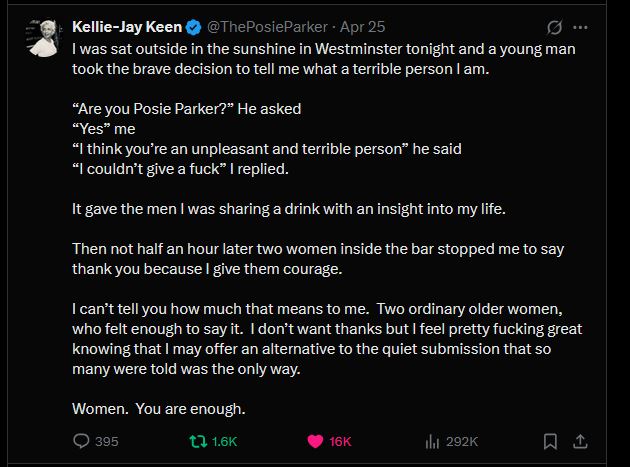
The recent ruling against Amy Hamm by the British Columbia College of Nurses and Midwives (BCCNM) is nothing short of a travesty, a glaring assault on free speech and common sense that should leave any reasonable person fuming. Hamm, a nurse and vocal advocate for women’s sex-based rights, was found guilty of “professional misconduct” in March 2025 for stating biological facts and expressing opinions critical of gender identity ideology. Specifically, the disciplinary panel zeroed in on a handful of her online statements—made while identifying as a nurse—deeming them “discriminatory and derogatory” toward transgender individuals. This isn’t just a punishment for Hamm; it’s a warning shot to every professional in Canada: step out of line with the prevailing ideology, and your career could be next. How dare a regulatory body, meant to ensure competence in healthcare, stretch its tentacles into policing personal beliefs expressed off-duty?
What’s particularly infuriating is the absurdity of the tribunal’s reasoning—or lack thereof. One so-called expert reportedly argued that being a woman is a “social identity category rather than a biological reality,” a statement so detached from science it’s laughable if it weren’t so dangerous. Hamm’s crime? Asserting that biological sex is real and matters, especially when it comes to women’s spaces and rights—a position grounded in observable fact, not hate. Yet, the panel chose to side with ideological fantasy over evidence, slapping Hamm with a guilty verdict for daring to speak her mind. This isn’t about protecting anyone; it’s about control, about silencing dissent under the guise of professionalism. The fact that her extensive Twitter posts, where she didn’t explicitly tie her nurse status, were spared only highlights the flimsy, cherry-picked nature of this witch hunt.
The implications of this ruling are chilling, and that’s putting it mildly. If a nurse can be professionally crucified for advocating for women’s rights and biological truth, what hope is there for free discourse in Canada? The BCCNM’s decision doesn’t just harm Hamm—it erodes the freedom of every regulated professional, from doctors to teachers, who now must tiptoe around controversial issues or risk their livelihoods. This is the kind of dystopian overreach that should spark outrage, not apathy. Hamm’s fight isn’t over—she’s hinted at appeals, potentially up to the Supreme Court—and thank goodness, because someone needs to stand up to this madness. We should all be rooting for her, not because we agree with every word she says, but because the principle at stake is too precious to let slip away without a fight.

The Liberal Party of Canada, under its current leadership, has repeatedly demonstrated a troubling tendency to prioritize internal politics over the nation’s welfare, most notably through its strategic proroguing of Parliament to facilitate a leadership race. Much like Nero, who legendarily strummed his lyre as flames consumed Rome, the Liberals have effectively stalled the machinery of governance to tune their own political instrument. Prorogation, a legitimate parliamentary tool meant for resetting legislative agendas, has been wielded here as a shield to dodge accountability and buy time for party infighting. In a time of economic uncertainty, with inflation biting and housing crises deepening, this self-imposed paralysis echoes Nero’s detachment—fiddling with succession while Canadians grapple with unchecked challenges.
The decision to suspend Parliament undermines democratic integrity and erodes public trust, leaving critical issues to fester unattended. As the leadership race unfolds, debates over party direction supersede the urgent needs of a nation facing healthcare strains and geopolitical tensions. The Liberals’ focus on their own house recalls Nero’s negligence as Rome’s infrastructure crumbled; instead of fortifying Canada’s resilience, they’ve opted to redecorate their political facade. This isn’t merely a pause in governance—it’s an abdication of responsibility, with committees halted, bills delayed, and oversight of government spending effectively silenced. The prorogation serves as a curtain behind which the party orchestrates its drama, while the public is left watching the stage go dark.
History may yet judge this moment as a turning point where partisan vanity trumped national stewardship, risking long-term damage to Canada’s well-being. Nero’s Rome didn’t burn in a day, but his indifference hastened its ruin; similarly, the Liberals’ gambit threatens to weaken institutional stability for fleeting political gain. By proroguing Parliament, they’ve not only delayed action on pressing issues like climate policy and Indigenous reconciliation but also signaled that power consolidation outweighs public service. Canadians deserve a government that governs, not one that retreats to rehearse its next act. As the leadership race plays on, the Liberals risk leaving behind a legacy less of progress and more of a smoldering neglect, with the echoes of Nero’s tune lingering in the air.

Activists realize that they cannot argue on the basis of fact, therefore they must always derail the conversation with hyperbole and emotive rhetoric. Let’s see what you can do to nullify their framing and keep the conversation going.
The phrase “You just don’t want trans people to exist” is often used as a rhetorical jab in debates about transgender issues, implying that opposition to specific policies or ideas equates to denying trans individuals’ right to exist. Here are three counterarguments that challenge this framing without negating the humanity or rights of trans people:
1. **Disagreement Isn’t Denial**: Opposing certain transgender-related policies—like sports participation rules, bathroom access, or medical interventions for minors—doesn’t mean someone wants trans people erased. It’s possible to support trans individuals’ right to exist while questioning specific implementations based on fairness, safety, or biological considerations. For example, some argue that in sports, physical differences tied to biological sex can impact competition, citing cases like Lia Thomas in NCAA swimming, where debates centered on fairness, not existence.
2. **Framing Oversimplifies Complex Issues**: The phrase flattens nuanced discussions into a moral absolute, shutting down debate. Issues like gender dysphoria treatment, especially for kids, involve competing views—some push for affirmation-only approaches, while others advocate caution, pointing to studies like the Cass Review in the UK, which found weak evidence for puberty blockers’ long-term benefits. Disagreeing on medical protocols doesn’t mean rejecting trans people’s existence; it’s about differing on what’s best for well-being.
3. **Intent Matters**: Accusing someone of wanting trans people gone assumes malicious intent that might not be there. Many people, even conservatives or traditionalists, don’t wish harm but hold views rooted in their understanding of biology, culture, or religion. A 2023 Gallup poll showed 69% of Americans believe trans athletes should compete based on birth sex, yet most don’t advocate for banning trans people from society. Conflating policy disagreement with existential denial misrepresents motives.
These counterarguments aim to refocus on substantive issues rather than emotional gotchas, though they don’t dismiss the real fears or experiences of trans individuals in heated debates.
For most people, the time to consider the switch is coming soon. If you happen to be me, you never left. :)
Sandals offer a level of comfort and breathability that closed-toe shoes simply cannot match, making them a superior choice in many situations. The open design allows air to circulate freely around the feet, reducing sweat and preventing the buildup of heat, which is especially beneficial in warm climates or during summer months. This ventilation helps keep feet dry and less prone to issues like athlete’s foot or odor, which can develop in the trapped, moist environment of closed-toe shoes. Additionally, sandals often have fewer pressure points—no tight laces or rigid materials squeezing the toes—allowing for a more natural and relaxed fit that can alleviate discomfort during prolonged wear.
Beyond comfort, sandals provide practical advantages in terms of convenience and versatility. They’re easy to slip on and off, saving time when heading to the beach, running quick errands, or navigating airport security. This ease of use also makes them ideal for activities where shoes might frequently need to be removed, such as visiting someone’s home or attending a casual outdoor gathering. Moreover, sandals come in a wide range of styles—from sporty to formal—meaning they can adapt to various settings without sacrificing functionality. Closed-toe shoes, while sometimes necessary for specific environments like construction sites, often lack this flexibility and can feel cumbersome in scenarios where sandals shine.
Finally, wearing sandals promotes better foot health and freedom of movement, encouraging a more natural stride. Without the constraints of a closed structure, toes can spread and flex more easily, which can improve balance and reduce strain on the feet and lower legs over time. Some studies even suggest that minimalist footwear, like sandals, can strengthen foot muscles and improve overall posture by allowing the feet to move as they were biologically intended. While closed-toe shoes have their place for protection in rugged or hazardous conditions, they can sometimes restrict natural motion and lead to issues like blisters or cramped toes. For everyday wear, sandals offer a liberating alternative that prioritizes both health and comfort without compromising on style or practicality.
A daily 20-minute nap can significantly boost cognitive performance and overall health. Research shows that short naps improve alertness, memory, and decision-making by giving the brain a quick reset. A NASA study found that pilots who napped for 26 minutes showed up to 34% better performance in their duties. By allowing the mind to consolidate information and reduce fatigue, a brief nap acts as a powerful tool for productivity, especially during the midday slump when energy levels naturally dip.
Beyond mental benefits, a 20-minute nap can enhance physical well-being and emotional balance. Sleep experts note that short naps help regulate stress hormones like cortisol, reducing the risk of burnout and improving mood. They also support cardiovascular health by lowering blood pressure, as evidenced by a study in the *American Journal of Cardiology* showing that regular nappers had a 37% lower risk of heart-related issues. This brief rest period allows the body to recover without disrupting nighttime sleep, striking an ideal balance for long-term wellness.
Culturally, we often view naps as a luxury or sign of laziness, but they should be embraced as a universal habit. In countries like Spain and Japan, where siestas and “inemuri” (napping in public) are normalized, people report higher satisfaction and efficiency. Incorporating a 20-minute nap into daily routines—whether at work, school, or home—can democratize rest, making society healthier and more productive. It’s a small time investment with outsized returns, accessible to everyone regardless of lifestyle or schedule.


Your opinions…