
You are currently browsing the tag archive for the ‘BBC’ tag.
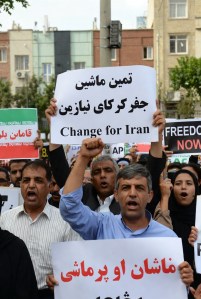
When Iran’s streets erupt, the regime’s first move is rarely ideological persuasion. It is logistical suffocation: arrests, fear, and the severing of communication. In early January 2026, reporting described widespread internet and phone disruptions as protests intensified. The point is not subtle. A state that can’t control bodies tries to control visibility.
Western audiences, meanwhile, do not experience Iran directly. They experience coverage: what makes the front page, what becomes “live,” what gets a correspondent, what earns context, what gets a single write-up and then disappears. That gatekeeping function doesn’t require fabrication to shape reality. It only requires allocation. In practice, editorial choices determine whether an uprising feels like history in motion or distant static.
The claim here is narrower than the familiar “the media lies” complaint. It is this: large news institutions can augment or diminish a story by controlling three dials — timing, framing, and follow-through — and those dials often track narrative comfort as much as factual urgency.
The timeline the public actually receives
Iran’s protest cycle began in late December 2025 and accelerated quickly. Wire reporting described large demonstrations after the rial hit record lows, police using tear gas, and protests spreading beyond Tehran. A few days later, reporting increasingly emphasized the state’s repression and the communications clampdown as the crisis deepened. By January 8–10, the blackout itself and the scale of unrest were central features in major coverage, alongside reports of deaths, detentions, and intensifying crackdowns.
None of this is to say “there was no coverage.” There was. The question is what kind of coverage it became, and when. A story can exist in print while being functionally minimized: treated as episodic, framed as local disorder, or kept at a low hum until a single undeniable hook forces it to the foreground. In this cycle, the communications cutoff became that hook — a reportable meta-event that is easy to verify and hard to ignore.
The BBC dispute is illustrative. Public criticism accused the BBC of thin or late attention; BBC News PR rebutted that claim. The argument itself is the point: audiences can feel the throttle even when they cannot quantify it precisely. When trust collapses, people start timing the coverage.
How stories are diminished without denying facts
1) Timing: when an event is treated as real.
In closed societies, early information is messy: shaky videos, activist claims, regime denials, and silence during blackouts. Caution can be defensible. But caution is also a convenient lever. If the bar for “confirmed” rises selectively, timidity becomes bias with clean hands. The public doesn’t see the internal deliberations; it sees the lag — and a lag signals “this isn’t important.”
2) Framing: what the story is about.
A protest can be framed as “economic unrest,” “public anger,” “unrest,” “crackdown,” or “a legitimacy crisis.” These are not synonyms. Each frame assigns agency and moral clarity differently.
“Economic unrest” implies weather: hardship produces crowds, crowds disperse, life continues. “Legitimacy crisis” implies politics: a governing order is being contested. Amnesty’s language, for example, emphasizes lethal state force; Reuters emphasizes regime warnings and suppression; AP emphasizes spread, detentions, and the hard edge of state response. Those differences matter because they tell the audience whether this is a temporary spasm or a turning point.
3) Follow-through: whether the story becomes a continuing reality.
One report is not coverage. Coverage is cadence: daily updates, on-the-ground reporting, explanatory context, and sustained attention when the situation is still unclear. Regimes understand this. A blackout isn’t only about disrupting domestic coordination; it also disrupts the foreign media rhythm that turns unrest into sustained international pressure.
The steelman case for restraint
There are good reasons major outlets hesitate:
-
verification is genuinely difficult during shutdowns,
-
misinformation can be weaponized by the regime and opportunists,
-
reckless amplification can endanger sources.
These are real constraints, not excuses. But they are only persuasive when applied consistently. The public’s frustration arises when “we can’t confirm” functions as a brake on some stories and not others — when caution looks less like discipline and more like selective incredulity.
A practical heuristic for readers
A useful concept must do more than flatter a tribe. It should help a reader detect when they are being shown an event versus being shown a story about the event. This can be done with a simple diagnostic — the Narrative Throttle Test:
-
Latency: How long did it take for a major outlet to treat it as major?
-
Vocabulary drift: Did coverage move from “unrest” to “crisis” only after the evidence became unavoidable?
-
Cadence: Was it sustained, or did it appear as isolated updates with no continuity?
-
Agency: Were protesters described as political actors with aims, or as reactive crowds with emotions?
-
Comparative salience: What else dominated the same window, and why?
These questions do not require assuming malice. They only require accepting that agenda-setting is power — and that power is exercised even by institutions that believe they are merely “reporting.”
The consequence
Iran’s future will be decided in Iran. But the West’s perception of Iran is decided in newsrooms. When coverage is delayed, flattened, or treated as a passing disturbance, the public receives a smaller event than the one unfolding. That matters because attention is a constraint on brutality. It is not the only constraint, and it is not always sufficient — but it is real.
The cleanest conclusion is also the least dramatic:
Facts do not reach the public raw. Institutions deliver them — loudly, softly, or not at all.
References
AP — Protests erupt in Iran over currency’s plunge to record low (Dec 29, 2025)
https://apnews.com/article/ddc955739fb412b642251dee10638f03
AP — Protests near the 2-week mark as authorities intensify crackdown (Jan 10, 2026)
https://apnews.com/article/c867cd53c99585cc5e0cd98eafe95d16
Reuters — Iran cut off from world as supreme leader warns protesters (Jan 9, 2026)
https://www.reuters.com/world/middle-east/iran-cut-off-world-supreme-leader-warns-protesters-2026-01-09/
The Guardian — Iran plunged into internet blackout as protests spread (Jan 8, 2026)
https://www.theguardian.com/world/2026/jan/08/iran-plunged-into-internet-blackout-as-protests-over-economy-spread-nationwide
Amnesty International Canada — Deaths and injuries rise amid renewed cycle of protest bloodshed (Jan 8, 2026)
https://amnesty.ca/human-rights-news/iran-deaths-injuries-renewed-cycle-protest-bloodshed/
BBC report mirrored via AOL — Huge anti-government protests in Tehran and other cities, videos show (Jan 8–9, 2026)
https://www.aol.com/articles/iran-regime-cuts-nationwide-internet-003409430.html
https://ca.news.yahoo.com/large-crowds-protesting-against-iranian-201839496.html
BBC report mirrored via ModernGhana — Iran crisis deepens: protests spread with chants of “death to the dictator” (Dec 31, 2025)
https://www.modernghana.com/videonews/bbc/5/597647/
Telegraph (commentary) — Critique of BBC’s Iran coverage (Jan 9, 2026)
https://www.telegraph.co.uk/news/2026/01/09/the-bbc-iran-coverage-poor/
BBC News PR tweet responding to coverage criticism (Jan 2026)
https://x.com/BBCNewsPR/status/2007048343793570289
CTP-ISW — Iran Update (Jan 5, 2026)
https://www.criticalthreats.org/analysis/iran-update-january-5-2026
CTP-ISW — Iran Update (Jan 9, 2026)
https://www.criticalthreats.org/analysis/iran-update-january-9-2026
In a revealing glimpse behind the curtain, commentator Andrew Doyle recently highlighted how certain narratives are tightly controlled within major media organizations. According to Doyle, the BBC has an “LGBT desk” that effectively acts as a gatekeeper, making sure all stories related to sexuality or gender must align with a particular viewpoint before they get the green light.
This revelation sheds light on how media outlets can become ideologically captured, turning into echo chambers rather than platforms for open dialogue. While there are undoubtedly excellent journalists at the BBC, Doyle’s insight reveals a systemic issue: when certain desks have the power of veto over stories, it raises questions about whose voices are being heard and whose are being filtered out.
In a time when free speech and diverse perspectives are more important than ever, understanding how these behind-the-scenes dynamics work is crucial. After all, a truly free press should aim to present a range of viewpoints rather than enforcing a single narrative.
 I was going to preface this post with a Captain Stupid character but I found that the outright level of stupid going on here required a (much) higher rank in the Hurr-Durr Legion to properly accommodate the conditions being described. The leaders of the ulta-orthodox Belz sect in North London eminently qualify for Admiralty in the Legion. These antediluvian bags of douche recently deployed a fatwah against women who have the audacity to drive cars with the “immodest” goal of… it is almost nigh unspeakable… yet intone it I must… (*screwing courage to the sticking place*) – taking their children to school!!!! (!).
“The Belz, who originated in Ukraine in the early 19th Century, are an ultra-Orthodox sect who follow Haredi Judaism.
Leaders of the ultra-Orthodox Belz sect in north London wrote to parents saying “no child will be allowed to learn in our school” if their mother drives.
Women driving “goes against the laws of modesty within our society”, it said.”
Furthermore:
“The letter, which was signed from the “spiritual management” of Belz institutions, said: “There has been an increase in incidences of mothers of our students who have begun driving cars, something that goes against the laws of modesty within our society.”
Well, well, well. Here we have, once again, patriarchal religious bullshit fucking up women’s lives. Ostensibly in the pursuit of modesty women, already tasked with r aising their children and domestic duties because it is their god mandated role, can’t do the car thing because that might give them airs about independence or freedom; certainly anything that detracts from their roles as broodmares and domestic servants must be against God.
I knew this was going to be a pithy article when I saw the Ultra-Orthodox in the title because as soon as the religious attach the word ‘Orthodox’ to their particular school of magic – you know horrendous things are on the way. On the downside, treating women as chattel is only Level One in their quest to construct a broken religious society.
These regressive dolts embrace ignorance with the mightiest of aplomb.
“An emphasis on studying the Torah has led to concerns that Haredi boys are leaving school with few qualifications.
Men often continue with their prayer studies after marriage, rather than seek work, and those who do have employment have been affected by changes in traditional occupations, like textiles.
As a result, poverty and deprivation tend to hit Haredi households hard, and there’s evidence that Haredi areas in Hackney, for example, receive higher than average rates of means-tested benefits.”
So the focus of their education for dudes is to think-fap on their magic book until they are useless to themselves and the rest of society. Care to guess who has to work in the real world and make real money aaaaand still be the domestic servant? And of course, living in a secular society means that the rest of the population has to pay for their religious bridge-to-nowhere-educmacational-bollocks-regime. Never, not even for one minute, should you consider religion to be a positive force in society, these yahoos exemplify the bulk-stupid that most religions bring to the societal table.
“[…] from the Belz community, a spokesman said it never intended to “stigmatise or discriminate against children or their parents”.
It said: “We are proud of what we stand for and we do not feel the need to excuse ourselves for our deeply held beliefs and staunchly maintained way of life.
“It has withstood the test of time and is not prone to the vagaries of passing fads.”
Counterexample time!
It was not our intent to stigmatize colour children by giving them their own drinking fountain and forbidding them to use the one labelled ‘Whites Only’ – because intent, like their religiously-addled ‘declarations’, are fucking magical.
I cast a cynical eye toward a belief system that is evaluated and venerated on the single condition of being ‘long-lived’. The Bubonic plague has withstood the test of time as well – checkmarks of goodness to be dispensed for all…
The extra-sad take away from this is that these religious misogynists, by enforcing the ban on women driving their kids to school, has created a what is essentially a nightmare scenario for British legislators.
“This goes to the heart of what is a fantastically difficult problem now facing the government in drafting a counter-extremism bill that protects against extremism, but also safeguards religious freedom.
Earlier this year, Home Secretary Theresa May defined extremism as “the vocal or active opposition to fundamental British values, including democracy, the rule of law, individual liberty and the mutual respect and tolerance of different faiths and beliefs”.
It throws up the question, is a religious ban on women driving active opposition to the British value of individual liberty? And how do you square that with the other British value of mutual respect and tolerance for different faiths and beliefs?”
The above is worth an entire post unto itself just to document the outrageous pretzel-bends secular lawmakers are undertaking in attempting to deal with this religious foolishness. Invoking the religious tolerance idea for misogynistic practices that are clearly antithetical to a secular society seems misguided to me. But that, as stated, is another debate.
Let’s close instead with a statement from the high-admiral shitlords themselves:
“The statement continued: “In an effort to formulate these guidelines the issue of women driving cars became conflated with broader issues which we intended to address. “
They know.
You don’t release baffle-gab press releases like the above without not knowing.
How could they not know that the stupid shit they are imposing on women and children stinks all the way up to their imaginary heaven. Once their nuclear-grade stupid hit the Press and the rest of secular society, it was rightly called out for being pure Dumbonium, their only recourse is to hide behind the thin mantle of ‘religious tolerance’ and hope the attention of the public wanes from their self-created sewer of misguided religious tomfoolery.
And there we have it folks – religion once again attempting to lead society away from civilization and modernity.
Many thanks to Intransigentia for bringing this lovely story to my attention.

Religious fundamentalism of any creed, is a threat to peace, secular societies and evidence based decision making. Lets take a closer look at one strain of the radical fundamentalism – radical Islam with the BBC as our guide.
I’m always amused when I see people commentating on the “liberal bias” in the media. It is usually followed by a trenchant analysis of at least one instance of how news corporation X has finally gone off the rails and has lost all of its journalistic integrity blah blah blah.
Sitting where I am, in political and social Outlier-ville, I have to smile to myself. This might be a case of “liberal bias” but when you take a step back and look at what the media does, it is fairly easy to discern that mouldering just under the surface of “a vibrant free-press’ is a well tuned, self-selecting propaganda apparatus that exists only to serve the agenda of the state.
Oh sure we like to make fun of Pravada and point to those poor brain-washed induhviduals. Ironically we here in the west have even a better system in place, that masquerades as independent and unbiased, yet in the final analysis, is just as credible as the Pravda we like to point at and say “boo”.
Of course, using different sources, as I like to do, such as Counterpoint, Alter.net, Al-Jazeera, Tom’s Dispatch, et cetera often gets me into trouble as people who are firmly ensconced in the propaganda model get bent out shape fairly quickly when exposed to a non-official point of view.
Explaining the western version of the Propaganda model is what Media Lens does best:
The essential feature of corporate media performance is that elite interests are routinely favoured and protected, while serious public dissent is minimised and marginalised. The BBC, the biggest and arguably the most globally respected news organisation, is far from being an exception. Indeed, on any issue that matters, its consistently biased news coverage – propped up, by a horrible irony, with the financial support of the public whose interests it so often crushes – means that BBC News is surely the most insidious propaganda outlet today.
Consider, for example, the way BBC editors and journalists constantly portray Nato as an organisation that maintains peace and security. During the recent Nato summit in Wales, newsreader Sophie Raworth dutifully told viewers of BBC News at Ten:
‘Nato leaders will have to try to tackle the growing threat of the Islamist extremists in Iraq and Syria, and decide what steps to take next. (September 4, 2014)
As we have since seen, the ‘steps’ that were taken ‘next’ meant a third war waged by the West in Iraq in just 24 years.
The same edition of BBC News at Ten relayed, uncontested, this ideological assertion from Nato Secretary-General Anders Fogh Rasmussen:
‘Surrounded by an arc of crisis, our alliance, our transatlantic community, represents an island of security, stability and prosperity.’
In fact, the truth is almost precisely the reverse of Rasmussen’s assertion. Nato is a source of insecurity, instability, war and violence afflicting much of the world. True to form, BBC News kept well clear of that documented truth. Nor did it even remind its audience of the awkward fact that Rasmussen, when he was Danish prime minister, had once said:
‘Iraq has WMDs. It is not something we think, it is something we know.’
That was embarrassing enough. But also off the agenda was any critical awareness that the Nato summit’s opening ceremony was replete with military grandeur and pomposity of the sort that would have elicited ridicule from journalists if it had taken place in North Korea, Iran or some other state-designated ‘enemy’. Media Lens challenges you to watch this charade without dissolving into laughter or switching it off before reaching the end.
Oh Aunte-Beebs, say it ain’t so. Of course, it gets worse –
“Of course, it is ironic that leading politicians constantly strive to foster a media image of themselves as caring, truthful and fearless. In reality, they are all beholden to powerful business and financial interests, and even afraid to step out of line; notably so when it comes to criticism of Israel. Political ‘leaders’ are virtual puppets with little, if any, autonomy; condemned to perform an elite-friendly role that keeps the general population as passive and powerless as possible. The corporate media plays an essential role here, as the British historian and foreign policy analyst Mark Curtis observes:
‘The evidence is overwhelming that BBC and commercial television news report on Britain’s foreign policy in ways that resemble straightforward state propaganda organs. Although by no means directed by the state, their output might as well be; it is not even subtle. BBC, ITV and Channel 5 news simply report nothing seriously critical on British foreign policy; the exception is the odd report on Channel 4 news. Television news – the source of most people’s information – provides the most extreme media distortion of [foreign policy news coverage], playing an even greater ideological function than the press.’ (Mark Curtis, ‘Web of Deceit: Britain’s Real Role in the World’, Vintage, London, 2003, page 379).
Andrew MacGregor Marshall, the former Reuters bureau chief in Baghdad, recently related that:
‘there is tendency for the Western media to claim that it is neutral and unbiased, when in fact it’s clearly propagating a one-sided, quite nationalistic and selfish view of its own interventions in these countries.’
He continued:
‘If you want to accuse the US military of an atrocity, you have to make sure that every last element of your story is absolutely accurate, because if you make one mistake, you will be vilified and your career will be over. And we have seen that happen to some people in recent years. But if you want to say that some group of militants in Yemen or Afghanistan or Iraq have committed an atrocity, your story might be completely wrong, but nobody will vilify you and nobody will ever really check it out.’
The Dutch journalist Karel Van Wolferen recently wrote an insightful piece exposing the state-corporate propaganda that is so crucial to keeping the public in a state of general ignorance and passivity. There ‘could hardly be a better time than now’, he said, to study the effects of this ‘insidious propaganda’ in the so-called ‘free world’. He continued:
‘What makes propaganda effective is the manner in which, through its between-the-lines existence, it inserts itself into the brain as tacit knowledge. Our tacit understanding of things is by definition not focused, it helps us understand other things. The assumptions it entails are settled, no longer subject to discussion.’
Much of this propaganda originates in centres of power, notably Washington and London, and ‘continues to be faithfully followed by institutions like the BBC and the vast majority of the European mainstream media’. Thus, BBC News endlessly trumpets Western ‘values’ and takes as assumed that parliamentary ‘democracy’ represents the range of acceptable public opinion and sensible discourse. Underpinning this elite-supporting news framework is a faith-based ideology which Van Wolferen calls ‘Atlanticism’. This doctrine holds that:
‘the world will not run properly if the United States is not accepted as its primary political conductor, and Europe should not get in America’s way.’
The result?
‘Propaganda reduces everything to comic book simplicity’ of ‘good guys’ and ‘bad guys’.
So, really – tell me more about how about how damn liberally-biased our media is despite the fact that in the bigger picture, the majority of it (news media) is serving the propagandist needs of the state.
Media Lens is an invaluable source to in describing and measuring how far the “respectable media” kowtows to state and corporate interests. This excerpt from their latest media alert illustrates the mendacity that is common place in what is considered to be “acceptable journalistic practices”.
“The key to what is precisely wrong with corporate journalism is explained in this nutshell by the US commentator Michael Parenti:
‘Bias in favor of the orthodox is frequently mistaken for “objectivity”. Departures from this ideological orthodoxy are themselves dismissed as ideological.’
Examples of bias towards the orthodoxy of Western power are legion every day of the week. On January 30 this year, David Loyn reported for BBC News at Ten from Bagram airbase in Afghanistan as US troops prepared to withdraw from a blood-strewn occupation. Standing beside a large US military plane, he intoned:
‘For all of the lives lost and money spent, it could have been so much better.’
The pro-Nato perspective of that remark masquerading as impartial journalism is stark. By contrast, Patrick Cockburn summed up the reality:
‘After 12 years, £390bn, and countless dead, we leave poverty, fraud – and the Taliban in Afghanistan…60 per cent of children are malnourished and only 27 per cent of Afghans have access to safe drinking water…Elections are now so fraudulent as to rob the winners of legitimacy.’
The damning conclusion?
‘Faced with these multiple disasters western leaders simply ignore Afghan reality and take refuge in spin that is not far from deliberate lying.’
BBC News has been a major component of this gross deception of the public.”
Hmm. What is troubling is that many outside of the UK look to BBC as a “better” source of news that is more reliable that what is available in North America.
Admittedly, I would take BBC reporting hands down over anything from the propaganda mill known as Fox News, but how many people have the time to really sink their teeth into multiple news sources? How many people even care about the news that much anymore?
I’m shocked that so many people have consciously chosen ignorance as their strategy for dealing with the news and world events. Denial of the world ‘out there’ can only lead to insular thinking and simplistic interpretations of complex problems. We need more people, not less, grounded in rationality with a gist of how the world actually works. How can you effect change in the world if you know nothing of how it works?











 bleatmop
 Mystro


 Dead Wild Roses
Your opinions…