
You are currently browsing the tag archive for the ‘Trust’ tag.
There’s a low-grade feeling in the background of a lot of conversations right now that something isn’t quite working the way it used to.
Not broken. Not collapsing. Just… off.
The rules still exist. The institutions still function. On paper, everything is in place. But the sense that things are moving in the direction they claim to be moving has started to thin, and people tend to notice that long before they can explain it.
It’s difficult to point to a single cause. That’s part of why the feeling lingers. When something breaks, you can name it. When something drifts, you feel it first and only understand it later.
That unease tends to show up when the quiet constraints that keep systems stable begin to weaken.
In law, it looks like uneven enforcement. In politics, it shows up when power stops feeling like something that will eventually change hands. More generally, it appears whenever positions begin to feel fixed rather than contingent.
Most of the time, these constraints operate in the background. They don’t need to be defended constantly because they are demonstrated often enough that people take them for granted. You see rules applied. You see consequences land. You see people leave positions they once held.
That’s usually enough.
When those patterns become less consistent, the system doesn’t collapse. It adjusts. Power becomes a little less exposed, a little more predictable, but not in a reassuring way. Access narrows, not through explicit barriers, but through familiarity and repetition.
You start to see the same outcomes, or at least the same kinds of outcomes, and they become easier to anticipate.
At first, most people adapt without thinking much about it. Systems can absorb a surprising amount of this kind of drift. But the adjustment isn’t free. It changes how people relate to the system itself.
They rely on it less. They work around it more. And eventually, they stop assuming that the rules being stated are the rules that actually matter.
That shift is quiet, but it matters.
This is not an argument that the past was fair, pure, or evenly experienced. Many people never experienced the old constraints as neutral. The point is narrower. When the public no longer believes the operative rules match the stated rules, trust begins to thin.
Analysts of collapse tend to focus on endpoints. Resource exhaustion. Rising complexity. External shock. Those accounts are valuable, and they explain why systems eventually fail.
What they describe less clearly is the phase that comes before that.
The point where the system still functions, but no longer feels like it is working as intended.
That phase is where most people live, and it is where most systems are decided.
Because once a system reaches the point where it requires constant effort to maintain the appearance of fairness, the cost of sustaining it begins to rise. Not just in money, but in attention, coordination, and trust.
More oversight gets added. More process. More intervention. Each change is meant to correct a small imbalance. Taken together, they make the system heavier and harder to move.
At some point, the question shifts. It’s no longer just whether the system is fair or efficient. It becomes whether it is worth maintaining in its current form.
That’s where drift turns into something else.
Not collapse in the dramatic sense, but simplification. People disengage. Participation drops. Compliance becomes selective. The system doesn’t explode. It contracts.
If that is the direction of travel, then the question is not how to prevent collapse entirely. No system avoids change indefinitely.
The question is how to restore the constraints that keep drift from becoming the default condition.
The answer is less dramatic than most people expect.
It doesn’t require perfect leaders, sweeping reform, or a complete redesign of institutions. It requires something more basic, and more difficult to sustain.
The system has to demonstrate, consistently and visibly, that its constraints still hold.
That demonstration has to be more than messaging.
It has to take the form of consequences that land where they should, including on allies, insiders, and institutions themselves. It means oversight with teeth, rules applied even when politically inconvenient, and positions that remain genuinely vulnerable to replacement rather than quietly secured over time.
These are not abstract principles. They are operational ones.
A system that enforces its rules selectively teaches people to look for exceptions. A system that allows power to settle teaches people that outcomes are predetermined. A system that avoids disruption teaches people that disruption is no longer possible.
Reversing that drift doesn’t happen through messaging. It happens through action, repeated often enough that people begin to believe what they are seeing again.
Trust is not restored by argument. It is restored by demonstration.
And that demonstration has to be visible enough that people can recognize it without being told what it means.
That is the path forward.
Not a guarantee of stability. Not a return to some idealized past. But a re-establishment of the conditions under which systems remain both legible and worth participating in.
Because the alternative is not immediate collapse, it is something a little more quieter and under the radar.
A system that continues to function, but no longer convinces.

Suggested Further Reading
If this line of thinking resonates, these works explore different parts of the same problem from complementary angles:
- The Collapse of Complex Societies — Joseph Tainter
A clear account of how increasing complexity yields diminishing returns, and why systems often simplify rather than fail dramatically. - Collapse — Jared Diamond
Examines how societies respond—successfully or not—to environmental, political, and economic pressures over time. - Guns, Germs, and Steel — Jared Diamond
A broader look at how geography and structural conditions shape long-term societal development and stability. - Rivers of Gold, Rivers of Blood — Anthony Quinn
Explores how wealth, empire, and resource flows influence power, expansion, and institutional behavior. - Altered Carbon — created by Laeta Kalogridis (based on the novel by Richard K. Morgan)
A speculative take on what happens when one of society’s most fundamental constraints—biological exit—is removed entirely.
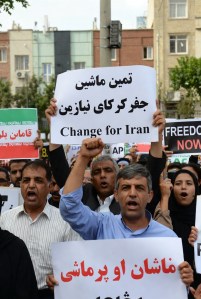
When Iran’s streets erupt, the regime’s first move is rarely ideological persuasion. It is logistical suffocation: arrests, fear, and the severing of communication. In early January 2026, reporting described widespread internet and phone disruptions as protests intensified. The point is not subtle. A state that can’t control bodies tries to control visibility.
Western audiences, meanwhile, do not experience Iran directly. They experience coverage: what makes the front page, what becomes “live,” what gets a correspondent, what earns context, what gets a single write-up and then disappears. That gatekeeping function doesn’t require fabrication to shape reality. It only requires allocation. In practice, editorial choices determine whether an uprising feels like history in motion or distant static.
The claim here is narrower than the familiar “the media lies” complaint. It is this: large news institutions can augment or diminish a story by controlling three dials — timing, framing, and follow-through — and those dials often track narrative comfort as much as factual urgency.
The timeline the public actually receives
Iran’s protest cycle began in late December 2025 and accelerated quickly. Wire reporting described large demonstrations after the rial hit record lows, police using tear gas, and protests spreading beyond Tehran. A few days later, reporting increasingly emphasized the state’s repression and the communications clampdown as the crisis deepened. By January 8–10, the blackout itself and the scale of unrest were central features in major coverage, alongside reports of deaths, detentions, and intensifying crackdowns.
None of this is to say “there was no coverage.” There was. The question is what kind of coverage it became, and when. A story can exist in print while being functionally minimized: treated as episodic, framed as local disorder, or kept at a low hum until a single undeniable hook forces it to the foreground. In this cycle, the communications cutoff became that hook — a reportable meta-event that is easy to verify and hard to ignore.
The BBC dispute is illustrative. Public criticism accused the BBC of thin or late attention; BBC News PR rebutted that claim. The argument itself is the point: audiences can feel the throttle even when they cannot quantify it precisely. When trust collapses, people start timing the coverage.
How stories are diminished without denying facts
1) Timing: when an event is treated as real.
In closed societies, early information is messy: shaky videos, activist claims, regime denials, and silence during blackouts. Caution can be defensible. But caution is also a convenient lever. If the bar for “confirmed” rises selectively, timidity becomes bias with clean hands. The public doesn’t see the internal deliberations; it sees the lag — and a lag signals “this isn’t important.”
2) Framing: what the story is about.
A protest can be framed as “economic unrest,” “public anger,” “unrest,” “crackdown,” or “a legitimacy crisis.” These are not synonyms. Each frame assigns agency and moral clarity differently.
“Economic unrest” implies weather: hardship produces crowds, crowds disperse, life continues. “Legitimacy crisis” implies politics: a governing order is being contested. Amnesty’s language, for example, emphasizes lethal state force; Reuters emphasizes regime warnings and suppression; AP emphasizes spread, detentions, and the hard edge of state response. Those differences matter because they tell the audience whether this is a temporary spasm or a turning point.
3) Follow-through: whether the story becomes a continuing reality.
One report is not coverage. Coverage is cadence: daily updates, on-the-ground reporting, explanatory context, and sustained attention when the situation is still unclear. Regimes understand this. A blackout isn’t only about disrupting domestic coordination; it also disrupts the foreign media rhythm that turns unrest into sustained international pressure.
The steelman case for restraint
There are good reasons major outlets hesitate:
-
verification is genuinely difficult during shutdowns,
-
misinformation can be weaponized by the regime and opportunists,
-
reckless amplification can endanger sources.
These are real constraints, not excuses. But they are only persuasive when applied consistently. The public’s frustration arises when “we can’t confirm” functions as a brake on some stories and not others — when caution looks less like discipline and more like selective incredulity.
A practical heuristic for readers
A useful concept must do more than flatter a tribe. It should help a reader detect when they are being shown an event versus being shown a story about the event. This can be done with a simple diagnostic — the Narrative Throttle Test:
-
Latency: How long did it take for a major outlet to treat it as major?
-
Vocabulary drift: Did coverage move from “unrest” to “crisis” only after the evidence became unavoidable?
-
Cadence: Was it sustained, or did it appear as isolated updates with no continuity?
-
Agency: Were protesters described as political actors with aims, or as reactive crowds with emotions?
-
Comparative salience: What else dominated the same window, and why?
These questions do not require assuming malice. They only require accepting that agenda-setting is power — and that power is exercised even by institutions that believe they are merely “reporting.”
The consequence
Iran’s future will be decided in Iran. But the West’s perception of Iran is decided in newsrooms. When coverage is delayed, flattened, or treated as a passing disturbance, the public receives a smaller event than the one unfolding. That matters because attention is a constraint on brutality. It is not the only constraint, and it is not always sufficient — but it is real.
The cleanest conclusion is also the least dramatic:
Facts do not reach the public raw. Institutions deliver them — loudly, softly, or not at all.
References
AP — Protests erupt in Iran over currency’s plunge to record low (Dec 29, 2025)
https://apnews.com/article/ddc955739fb412b642251dee10638f03
AP — Protests near the 2-week mark as authorities intensify crackdown (Jan 10, 2026)
https://apnews.com/article/c867cd53c99585cc5e0cd98eafe95d16
Reuters — Iran cut off from world as supreme leader warns protesters (Jan 9, 2026)
https://www.reuters.com/world/middle-east/iran-cut-off-world-supreme-leader-warns-protesters-2026-01-09/
The Guardian — Iran plunged into internet blackout as protests spread (Jan 8, 2026)
https://www.theguardian.com/world/2026/jan/08/iran-plunged-into-internet-blackout-as-protests-over-economy-spread-nationwide
Amnesty International Canada — Deaths and injuries rise amid renewed cycle of protest bloodshed (Jan 8, 2026)
https://amnesty.ca/human-rights-news/iran-deaths-injuries-renewed-cycle-protest-bloodshed/
BBC report mirrored via AOL — Huge anti-government protests in Tehran and other cities, videos show (Jan 8–9, 2026)
https://www.aol.com/articles/iran-regime-cuts-nationwide-internet-003409430.html
https://ca.news.yahoo.com/large-crowds-protesting-against-iranian-201839496.html
BBC report mirrored via ModernGhana — Iran crisis deepens: protests spread with chants of “death to the dictator” (Dec 31, 2025)
https://www.modernghana.com/videonews/bbc/5/597647/
Telegraph (commentary) — Critique of BBC’s Iran coverage (Jan 9, 2026)
https://www.telegraph.co.uk/news/2026/01/09/the-bbc-iran-coverage-poor/
BBC News PR tweet responding to coverage criticism (Jan 2026)
https://x.com/BBCNewsPR/status/2007048343793570289
CTP-ISW — Iran Update (Jan 5, 2026)
https://www.criticalthreats.org/analysis/iran-update-january-5-2026
CTP-ISW — Iran Update (Jan 9, 2026)
https://www.criticalthreats.org/analysis/iran-update-january-9-2026
Damn right we can, as long the evidence they present present the most accurate view of reality. Religious claims do not do a good job of describing the reality we live in, they are inaccurate, rely on hearsay and reflect an ignorant and scared world view.











 bleatmop
 Mystro
 The Arbourist


 Dead Wild Roses
Your opinions…