
You are currently browsing the tag archive for the ‘Political Philosophy’ tag.
The phrase “Judeo-Christian values” is often used loosely, so it is worth defining what it means in its strongest form.
Judaism and Christianity are not identical. They differ profoundly on theology, covenant, salvation, scripture, and the person of Jesus. The term “Judeo-Christian” can also flatten real historical tensions, including centuries of Christian anti-Judaism.
Nor did the West emerge from religion alone. Western civilization is a synthesis: Hebrew religion, Christian theology, Greek philosophy, Roman law, English common law, Germanic custom, Enlightenment liberalism, and centuries of political struggle all helped shape it.
Still, the Judeo-Christian inheritance gave the West several core moral claims that remain foundational. They are not the whole story, but they are a decisive part of the story.
1. Human beings possess inherent dignity
Human worth is not granted by the state, the tribe, the ruler, the market, the collective, or the majority.
In the biblical tradition, man is made in the image of God. That idea helped ground the belief that each person has moral worth beyond usefulness, status, race, sex, class, strength, or productivity.
This does not mean the West always honoured that claim. It often failed it catastrophically. But the claim itself became one of the standards by which those failures could be judged.
2. Moral law stands above human law
Kings, courts, governments, and majorities are not the highest moral authority.
A law can be legal and still be wicked. A ruler can hold power and still be morally wrong. The prophets rebuked kings. Christian natural law later joined biblical morality to Greek and Roman philosophy. Out of that synthesis came a powerful Western intuition: political power is answerable to a higher standard of justice.
This is one root of the rule of law, constitutional government, and the right to resist tyranny.
3. Each person is morally responsible
Human beings are not merely products of tribe, class, history, oppression, biology, or circumstance.
People can choose. People can do right or wrong. Guilt and innocence matter. Conscience matters. Repentance, judgment, forgiveness, and accountability all depend on the belief that human beings are moral agents.
Greek philosophy also emphasized moral formation and self-examination, but the Judeo-Christian tradition gave personal responsibility a particularly intense moral and spiritual weight.
4. Justice must be joined to mercy
Wrongdoing matters. Evil should not be excused, ignored, or sentimentalized.
But justice must not become mere vengeance. The Judeo-Christian tradition also emphasizes mercy, repentance, forgiveness, charity, care for the poor, protection of the vulnerable, and restraint against cruelty.
This helped form some of the West’s most important charitable and reforming institutions: hospitals, schools, poor relief, abolitionist movements, prison reform, and the idea that the weak are not disposable.
5. Power must be morally limited
Human beings are fallen, proud, corruptible, and tempted by domination.
Therefore rulers are not gods. The state is not sacred. The majority is not automatically righteous. Authority must be restrained by law, conscience, duty, and moral limits.
This idea did not come from religion alone. Greek political thought, Roman republicanism, common law, and Enlightenment constitutionalism all mattered. But the Judeo-Christian suspicion of human pride and idolatrous power gave the West a deep moral reason to distrust unchecked authority.
The short version
So when people speak seriously about Judeo-Christian values, the strongest list is this:
- Human dignity
- Moral law above human law
- Personal moral responsibility
- Justice tempered by mercy
- Power limited by law and conscience
These values are not uniquely owned by Judaism or Christianity. They have parallels elsewhere, and they can be defended in secular language.
But in the West, they were deeply shaped, transmitted, institutionalized, and morally charged by the Judeo-Christian inheritance.
That is the strongest version of the claim. Not that the West was purely Judeo-Christian. Not that every Western failure can be excused by appealing to religion. Not that secular reason contributed nothing.
The better claim is this: the West became what it became through a moral synthesis, and the Judeo-Christian tradition supplied several of its most important claims about dignity, conscience, justice, mercy, and the limits of power.

A free society is not composed of isolated individuals on one side and government on the other. If those are the only two poles we recognize, every social problem eventually collapses into either a private burden or a state responsibility.
Civil society is the layer of life in between.
It is the network of families, friendships, churches, charities, clubs, unions, schools, neighbourhood groups, sports leagues, choirs, professional associations, volunteer organizations, and local institutions where people learn to live together without being commanded by the state. It is made of membership, duty, custom, trust, persuasion, service, affection, and shared purpose.
Alexis de Tocqueville noticed this in 19th-century America. What impressed him was not only the formal machinery of democracy, but the habit of association: citizens forming groups, solving problems, organizing locally, and learning self-government by practicing it together. Civil society is where that kind of habit is formed.
Civil society is not the same thing as government. Government works through law, taxation, regulation, courts, policing, public administration, and public authority. These are necessary. A society without courts, contracts, law enforcement, or public order will not remain free for long. But government is a blunt instrument compared with the dense human relationships that make ordinary life livable.
The state can punish theft, enforce contracts, provide services, and regulate conduct. It cannot easily make people neighbourly. It cannot manufacture trust by decree. It cannot replace every family, friendship, congregation, team, club, charity, and local association without becoming too large, too intrusive, and too impersonal.
Civil society is also not the same thing as the market. Markets matter because they allow people to cooperate through work, trade, investment, risk, and voluntary exchange. But not every human relationship is commercial. Friends are not customers. Children are not products. Neighbours are not merely service providers. Communities need loyalties and obligations that cannot be reduced to money.
That is where civil society does its work.
A person who joins a choir, coaches a team, volunteers at a food bank, serves on a board, visits a shut-in, helps with a fundraiser, mentors a young worker, or checks on an elderly neighbour is doing something socially important even if it does not look political. These acts create habits that no statute can simply summon into existence: patience, reciprocity, responsibility, compromise, forgiveness, and care for people beyond the self.
This is why civil society matters to a classically liberal society. Rights protect the individual from coercion, but rights alone do not teach people how to live well with one another. Law sets boundaries, but it cannot provide every form of belonging. Markets create prosperity, but they cannot provide every form of meaning. A free society needs people who can do more than assert rights, obey rules, and make transactions. It needs citizens who can join, serve, trust, repair, and keep showing up.
None of this means civil society is perfect. Families can fail. Churches can fail. Schools can fail. Charities can fail. Local communities can become narrow, unfair, stagnant, or cruel. Voluntary institutions are made of human beings, and human beings bring their faults with them.
Sometimes government intervention is necessary. Sometimes civil society is too weak, too captured, too exclusionary, or too absent to meet a real need. A serious defence of civil society does not require pretending otherwise.
But the alternative to imperfect civil society is not perfection. It is usually a colder society with fewer places to belong and more pressure on the state to fill the gaps. When families weaken, churches empty, local associations fade, and neighbours stop knowing one another, people do not float freely into greater autonomy. They often become more isolated, and isolated people tend to look upward for help, meaning, protection, and recognition.
That is how the state grows downward into more areas of ordinary life. Some of that growth may answer real suffering, but something is lost when every human need becomes a public program and every social failure becomes an administrative problem.
Civil society is slower than bureaucracy and less efficient than a spreadsheet, but it is far more human. It is where trust becomes real because people have to practice it: meeting, disagreeing, disappointing one another, forgiving one another, organizing, compromising, and trying again.

“Civil society: the human layer between the individual and the state. Where trust is practiced, communities form, and freedom becomes livable.”
In summary, civil society is the layer of voluntary life between the individual and the state. It is made of the relationships, institutions, duties, and habits that allow people to cooperate without constant government command.
It does not replace law. It does not replace markets. It does not replace individual rights.
It makes them livable.
A free society cannot survive as only individuals and government. It needs the institutions in between.
Equality before the law is one of the basic principles of a free society.
It means that every citizen enters the legal system with the same basic standing. The law does not treat a person as more guilty, more innocent, more believable, more suspicious, more deserving, or less deserving because of race, sex, religion, class, ancestry, political tribe, or social status.
The law deals with persons, not castes.
This does not mean every case is identical. Facts differ. Circumstances differ. Harm differs. Intent differs. Evidence differs. A fair legal system can recognize relevant differences between cases.
Equality before the law means those differences must be legally relevant. Identity by itself does not create superior or inferior legal standing.
1. The law recognizes citizens, not groups
A society governed by equality before the law treats people first as citizens.
A person is not merely a representative of a race, sex, religion, class, political movement, or historical category. A person is an individual with rights, duties, agency, and responsibility.
That matters because group-based judgment changes the nature of law. Once people are treated primarily as members of categories, legal judgment drifts toward inherited guilt, inherited innocence, inherited victimhood, or inherited suspicion.
Equality before the law keeps the legal focus on the person, the act, the evidence, and the standard being applied.
2. Protection and accountability both apply equally
Equality before the law has two sides.
The first is protection. Every person is protected by the same basic rights, whether popular or unpopular, powerful or weak, respectable or disliked.
The second is accountability. Every person is answerable to the same law when accused of wrongdoing.
A society loses equality before the law when some people become too important to punish, too sympathetic to scrutinize, too useful to question, or too unpopular to defend.
Equal law means protection is not a favour and accountability is not selective.
3. Guilt and innocence belong to individuals
In a classically liberal legal order, guilt is individual.
A person is not guilty because of race, sex, religion, ancestry, class, nationality, or political association. Nor is a person innocent because of those things.
The law asks what this person did, what evidence exists, what intent can be shown, what harm occurred, what rights apply, and what process is required.
Collective guilt and collective innocence both undermine equality before the law because both replace individual judgment with group judgment.
The law may consider context, but it cannot turn identity into verdict.
4. Process must be consistent
Equality before the law applies to process as well as outcomes.
Who gets investigated, charged, believed, doubted, excused, or punished? If similar cases are handled differently because of politics, status, public pressure, institutional embarrassment, or group identity, trust in the legal system erodes.
Consistent process does not mean mechanical sameness. It means similar standards of evidence, procedure, and accountability apply across cases.
Without consistent process, equality before the law becomes a slogan rather than a reality.
5. Context can matter without becoming legal rank
A fair legal system can recognize context.
Age, intent, coercion, mental capacity, prior conduct, vulnerability, harm, motive, and circumstance may all matter in different legal settings. Law is not blind to reality.
But context is different from rank.
Context helps the law understand the case. Rank changes the standing of the person before the law.
Equality before the law allows relevant facts to matter. It does not allow identity, status, or political usefulness to create superior or inferior legal standing.
6. The opposite is caste law
The opposite of equality before the law is not merely unfairness.
It is caste law.
Caste law means different rules, presumptions, protections, punishments, or privileges depending on who someone is. One group receives leniency. Another receives suspicion. One group is protected from criticism. Another is denied ordinary sympathy. One group is treated as morally authoritative. Another is treated as morally suspect.
A society does not need formal castes to drift in this direction. It only needs institutions that apply different standards to different people for reasons the public can see but officials refuse to admit.
That is why equality before the law matters to public trust.
Citizens can endure imperfect laws more easily than they can endure selective law.
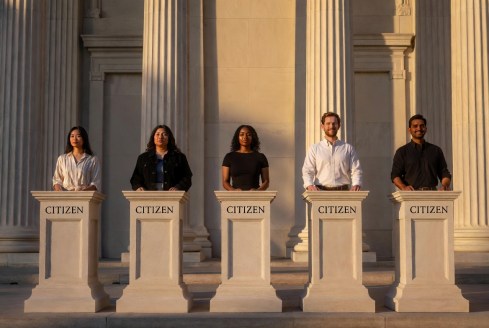
Equality before the law means the law sees citizens, not castes.
In summary
Equality before the law means every person has the same basic legal standing.
It means citizens are protected by the same rights, answerable to the same laws, and judged by the same standards of evidence and process.
It does not mean every case is identical. It does not mean context never matters. It does not mean equal outcomes are guaranteed.
It means identity is not legal rank.
It means guilt and innocence belong to individuals, not groups.
It means the law sees citizens, not castes.
Free speech is often defended badly.
Sometimes it is treated as a license to say anything without consequence. Sometimes it is reduced to personal self-expression. Sometimes it is framed as a courtesy extended to polite, harmless, approved opinions.
That misses the deeper point.
In a classically liberal society, free speech serves a practical purpose: it lets citizens search for truth, correct error, restrain power, and govern themselves.
It is not decorative. It is part of the machinery of a free society.
1. Free speech helps society find truth
Human beings are fallible.
Individuals can be wrong. Experts can be wrong. Majorities can be wrong. Governments can be wrong. Institutions can be wrong. Moral crusades can be wrong.
Free speech matters because no authority is wise enough to decide, permanently and in advance, which ideas may be questioned.
Some claims are false, foolish, dishonest, or ugly. But the answer to bad claims is usually better argument, better evidence, open criticism, and public testing.
A society that cannot question its own certainties may still call its beliefs truth, but it has stopped checking.
2. Free speech protects dissent
Free speech is easy to support when everyone agrees.
Its real test comes when speech is irritating, unpopular, offensive, inconvenient, or aimed at powerful people.
Many ideas now considered obvious were once treated as dangerous, immoral, foolish, or socially disruptive. That does not make every dissenter right. Much dissent is mistaken, partial, crankish, or premature. But we often cannot know which is which until dissent is allowed to be heard and tested.
A society that protects only approved speech protects consensus, not free speech.
Dissent needs room before it becomes respectable.
3. Free speech restrains power
Free speech allows citizens to question institutions.
What are you doing? Why are you doing it? What evidence supports it? Who benefits? Who pays? What are the tradeoffs? What are you hiding?
Those questions matter because institutions tend to protect themselves. Governments, corporations, universities, professional bodies, media organizations, activist movements, and bureaucracies all prefer deference when they have power.
Free speech keeps authority answerable to public challenge. Without it, institutions can govern through status, expertise, fear, or moral pressure instead of justification.
4. Free speech makes self-government possible
Democracy requires more than voting.
Citizens need to argue about laws, leaders, policies, institutions, values, evidence, and public priorities. If people can vote but cannot freely discuss what they are voting about, democracy becomes managed consent.
Free speech allows citizens to hear competing arguments, compare claims, criticize leaders, expose failures, and persuade one another.
It is not only an individual right. It is a condition of honest public judgment.
5. Free speech includes the right to be wrong
A meaningful free-speech principle must protect some false or mistaken speech.
If only “true” speech is protected, someone must decide what counts as true before debate even begins. That power rarely stays neutral.
This does not protect fraud, defamation, threats, perjury, direct incitement, or criminal harassment. Free speech has limits.
But contested public questions cannot be settled by official truth-arbiters. Free societies answer error through argument wherever possible, because the cure for bad speech can easily become worse than the disease.
6. Free speech protects listeners too
Free speech is not only the right to speak.
It is also the right to hear, read, compare, consider, reject, and decide.
Censorship does not only silence the speaker. It also treats the listener as too fragile, foolish, or dangerous to encounter the wrong idea.
A free citizen is not merely someone allowed to express approved thoughts. A free citizen is someone trusted to hear arguments and judge them.
7. Free speech is uncomfortable by design
Free speech requires citizens to tolerate disagreement, offence, criticism of cherished beliefs, and ideas they consider wrong or dangerous.
That discomfort is not a flaw. It is the price of living among free adults rather than under enforced consensus.
A free society does not remain peaceful because no one disagrees. It remains peaceful because disagreement can be spoken, challenged, mocked, answered, revised, and defeated without being driven underground or handed over to the state.

Free speech allows disagreement to remain public, peaceful, and answerable to reason.
In summary
Free speech is the right to speak, hear, question, criticize, argue, publish, dissent, and persuade without unlawful censorship or coercion.
Its purpose is not merely self-expression. It is the error-correction system of a free society. It helps test truth, expose mistakes, restrain power, protect dissent, and make self-government possible.
Free speech does not mean every claim is wise. It does not mean speech has no limits. It does not mean freedom from criticism, disagreement, ridicule, or consequence.
It means no authority gets final ownership of public truth.
Free speech is not a luxury for when society agrees.
It is the mechanism that allows disagreement to remain peaceful, public, and answerable to reason.
People often say they support “the rule of law,” but the phrase can become so familiar that we stop asking what it means.
The rule of law does not simply mean that a society has laws. Every society has laws. Dictatorships have laws. Theocracies have laws. Police states have laws. A government can pass thousands of statutes and still be unjust if those laws mainly serve power rather than restrain it.
In the classical liberal sense, the rule of law means that public power is exercised only according to public, known rules that also bind those who wield power.
That is the central idea: the rule of law is not only about controlling citizens. It is about controlling power.
1. The law applies to everyone
A rule-of-law society begins from the principle that no person or institution stands above the law.
This includes politicians, police, judges, bureaucrats, regulators, public agencies, private citizens, corporations, activists, and ordinary voters. The law recognizes different roles and responsibilities, but it does not create a class of people exempt from ordinary legal limits.
The same principle runs in the other direction. No one falls beneath the protection of the law. An unpopular person is still protected. A disliked minority is still protected. A political opponent is still protected. A person accused of wrongdoing remains protected by process until guilt is established.
Equality before the law does not mean everyone has the same wealth, status, history, talents, or circumstances. It means the law recognizes citizens as citizens, rather than sorting them into favoured and unfavoured classes.
2. The state acts under legal authority
The state has powers ordinary citizens do not have. It can tax, arrest, regulate, prosecute, fine, imprison, seize property, restrict movement, and use force. Some of those powers are necessary. A society without courts, policing, public order, or contract enforcement will not remain free for long.
But necessary power is still power.
The rule of law requires government to justify its actions by law. A public official cannot rely merely on usefulness, popularity, safety, urgency, or good intentions. The relevant question is: what legal authority permits this action, and what limits govern that authority?
Without that requirement, law becomes something government applies to others while remaining above meaningful restraint itself.
3. Laws are public and knowable
People cannot obey laws they cannot know.
For law to guide citizens, it has to be public, accessible, and clear enough that ordinary people can understand what is expected of them. Modern legal systems are complicated, and not every rule can be simple. Even so, citizens are not governed well by hidden standards, secret procedures, vague commands, or rules that only become clear after punishment begins.
Vague law expands official discretion. It allows officials to decide later who counts as guilty, which makes citizens dependent not on law itself, but on the judgment, mood, ideology, or priorities of those enforcing it.
A rule-of-law society makes legal duties knowable before citizens are punished for violating them.
4. Laws are general, not targeted
Law is built around principles rather than enemies.
A general law applies across cases. It does not exist merely to punish a disliked person, silence a faction, reward an ally, or create special treatment for a favoured group. When law becomes too targeted, it stops functioning as law and starts functioning as political power in legal form.
This does not mean law never distinguishes between situations. Criminal law treats theft differently from murder. Tax law treats income differently from gifts. Public safety law treats dangerous conduct differently from ordinary conduct.
The problem is not distinction. The problem is arbitrary distinction.
A rule-of-law society distinguishes between laws grounded in general principles and laws used to protect friends or punish enemies.
5. Due process matters
Due process means that the state cannot simply accuse, condemn, and punish. There has to be fair procedure.
At minimum, a person knows the accusation, has a chance to respond, faces evidence rather than rumour, and is judged by an impartial process. The more serious the possible punishment, the more important these protections become.
Due process is sometimes treated as a loophole or a technicality, especially when the accused person is unpopular. But due process is most important when it is least popular.
Under the rule of law, punishment follows lawful process rather than public anger, political convenience, bureaucratic shortcut, or moral panic.
6. Courts and remedies exist
Rights are weak if citizens have no way to enforce them.
A rule-of-law society has independent courts and meaningful remedies when government exceeds its authority. Citizens have some lawful path to challenge unlawful action, whether through courts, appeals, judicial review, legislative oversight, public inquiries, ombudsmen, or other accountability mechanisms.
No institution is perfect. Courts can be slow, expensive, inconsistent, or wrong. But without some independent body able to say to government, “You have gone too far,” legal rights become largely decorative.
The rule of law depends not only on written promises, but on mechanisms that allow citizens to test whether those promises have been kept.
7. Emergency powers remain limited
Emergencies are real. Wars, disasters, riots, pandemics, and public-order crises can require government to act quickly. A rule-of-law society does not pretend that ordinary conditions always apply.
But emergency power arrives with urgency attached. The public is told there is no time for normal limits, ordinary procedures, or careful objections. Temporary extraordinary powers may sometimes be justified, but under the rule of law they remain lawful, limited, proportionate, reviewable, and temporary.
A crisis does not erase legal restraint. Crisis is precisely when legal restraint becomes most necessary, because fear makes people more willing to grant power without limits.
Rule of law versus rule by law
The distinction between rule of law and rule by law is useful.
Rule of law means law restrains power.
Rule by law means power uses law as a tool.
An authoritarian government may have courts, police, regulations, official procedures, and legal language. It may pass laws constantly. But if those laws mainly protect the regime, punish enemies, control speech, excuse officials, or make citizens dependent on arbitrary discretion, then the society is not governed by the rule of law in the liberal sense.
The question is not simply whether laws exist. The question is whether law stands above power, or whether power bends law to its own purposes.
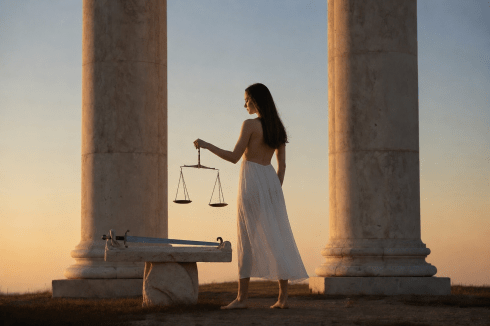
Law is not merely what power writes down. Rule of law means power itself is bound.
In summary
The rule of law means that society is governed by public, general, knowable, and fairly applied laws rather than arbitrary power.
It means the law binds the state as well as the citizen. It requires legal limits on government, equality before the law, due process, independent review, and meaningful remedies when power is abused.
It does not mean every law is wise. It does not mean every court is right. It does not mean government can never act. It means that even necessary government action must remain under law.
Rule of law is not merely having laws.
Every tyranny has laws.
Rule of law means law restrains power.
People often use the word “liberal” in confusing ways. In modern politics, “liberal” is often used as a synonym for progressive, left-wing, socially permissive, or even as an insult.
Classical liberalism means something more specific.
Classical liberalism emerged out of the long struggle against arbitrary power: absolute monarchy, inherited privilege, religious coercion, and government by decree. Thinkers such as John Locke, Adam Smith, and later John Stuart Mill helped develop many of its core ideas.
A classically liberal society is built around the moral and legal priority of the individual person. It begins with the idea that people have rights that do not come from the state, the tribe, the church, the activist class, the monarch, or the majority. Government exists to protect those rights, not to grant them as favours.
At its core, classical liberalism is about equal liberty under the rule of law. It protects life, liberty, private property, conscience, speech, due process, voluntary exchange, and the right to live without needing permission from the state or the mob.
It does not promise a perfect society. It does not promise equal outcomes. It does not promise that everyone will agree, approve of one another, or live the same way.
It promises something more modest, and more important: a shared legal order in which free people can live together despite deep disagreement.
So what does a classically liberal society look like?
1. The individual comes first
Classical liberalism begins with the individual person.
That does not mean selfishness is the highest good. It does not mean people have no duties to family, neighbours, community, or country. It means that the basic unit of moral and legal concern is the person, not the group.
You are not merely a race, sex, class, religion, sexuality, nation, tribe, caste, or political category. You are a person first.
That matters because once society treats people primarily as members of groups, it becomes easier to assign guilt, innocence, virtue, blame, privilege, or victimhood by category. Classical liberalism resists that. It insists that people should be judged as individuals.
2. Rights are not gifts from the state
In a classically liberal society, rights are not treated as permissions handed down by government.
The state does not give you freedom of speech. It is supposed to protect your freedom of speech. The state does not give you liberty. It is supposed to protect your liberty. The state does not own your life and then generously allow you to live some portion of it.
This is one of the great dividing lines between classical liberalism and more authoritarian ways of thinking.
The government is not the parent of the citizen. It is not the priest of public morality. It is not the owner of society. It is a limited institution with specific duties.
Its job is to protect rights, enforce law, defend the country, maintain public order, and adjudicate disputes.
It is necessary, but because it is dangerous, it must be limited by design. That is why classically liberal societies tend to value constitutional limits, divided powers, independent courts, free elections, and restraints on what government may do even when it has popular support.
3. Liberty means freedom under equal law
Classical liberalism is not the belief that everyone should be able to do whatever they want.
That is not liberty under law. That is the absence of law.
A free society needs law because human beings live together. Your freedom and my freedom will sometimes collide. Property disputes, contracts, crimes, injuries, fraud, violence, and negligence all require rules.
The classical liberal answer is not “no rules.” It is equal rules.
My freedom extends as far as it can without violating yours. Your freedom extends as far as it can without violating mine. The law exists to draw those boundaries as fairly and consistently as possible.
That is why classical liberalism is better understood as equal liberty under general laws, not maximum personal desire without restraint.
4. The rule of law applies to everyone
A classically liberal society is based on the rule of law.
That means the law applies to rulers and citizens alike. It applies to the rich and the poor, the popular and the unpopular, the majority and the minority, the powerful and the powerless.
No one is above the law.
But just as importantly, no one is beneath its protection.
This means there should be no special legal castes. No hereditary privileges. No racial exemptions. No religious exemptions from ordinary justice. No political favourites. No group-based immunity. No automatic moral rank assigned by identity.
Equality before the law does not mean every person has the same life, talents, wealth, history, or circumstances. It means the law sees citizens, not castes.
5. Due process protects everyone
In a free society, accusation is not conviction.
This matters enormously. A classically liberal society requires due process: fair procedures, impartial hearings, evidence, the right to respond, the right to know the accusation, and protection from arbitrary punishment.
These protections are not technicalities. They are civilizational guardrails.
The reason is simple: the state is powerful, mobs are dangerous, institutions can be cowardly, and human beings are often wrong.
Due process protects the innocent. It also protects the unpopular. And at some point, every serious dissenter may become unpopular.
A society that abandons due process because it believes it has found the “right” villains has already begun to abandon liberalism.
6. Speech and conscience must be free
Classical liberalism depends on freedom of speech, thought, conscience, religion, and association.
People must be free to argue, doubt, publish, worship, criticize, organize, persuade, offend, change their minds, and refuse to affirm what they do not believe.
This is not because every opinion is wise. Many opinions are foolish. Some are ugly. Some are wrong.
But a free society does not survive by giving authorities the power to decide which ideas may be spoken. Once that power exists, it will not always be used by people you trust.
Freedom of speech is not only a personal right. It is also how society tests ideas. Bad claims need to be challenged. Good claims need to be defended. No proposition should be protected from examination by sacred status.
“A free society does not survive by giving authorities the power to decide which ideas may be spoken.”
7. There is no final authority on truth
A classically liberal society assumes human beings are fallible.
The king can be wrong. The church can be wrong. The majority can be wrong. Experts can be wrong. Activists can be wrong. Governments can be wrong. The fashionable consensus can be wrong.
That is why truth must remain open to challenge.
Classical liberalism does not say truth is whatever anyone wants it to be. Quite the opposite. It says truth matters so much that no institution should be allowed to permanently shield its claims from scrutiny.
There should be no sacred wisdom that cannot be questioned. No political doctrine beyond criticism. No identity group whose claims become true by default. No expert class whose authority replaces public reason.
The question must always remain: is the claim true?
8. Private property protects independence
Private property is central to classical liberalism.
This is not because money is sacred or greed is good. It is because property gives people independence.
If you cannot own anything, save anything, build anything, trade anything, inherit anything, or control the fruits of your labour, then your freedom is mostly theoretical. You become dependent on whoever controls access to resources.
Private property allows people to make plans, build families, start businesses, support causes, resist pressure, and live with some degree of independence from the state and the crowd.
Voluntary exchange matters for the same reason. This is why classical liberals have generally supported relatively free markets: not because markets are flawless, but because they are the system most consistent with voluntary cooperation and dispersed power.
Markets are not magic. They require law, trust, property rights, contract enforcement, and limits on fraud and coercion. But they allow people to cooperate without needing a central authority to command every relationship.
9. Civil society matters
Classical liberalism is not just the individual and the state.
A healthy free society depends on civil society: families, friendships, churches, charities, schools, clubs, unions, businesses, neighbourhoods, choirs, sports leagues, volunteer groups, and local associations.
These institutions create trust, belonging, obligation, memory, and meaning. They do much of the work that neither the individual nor the state can do alone.
This is important because if civil society weakens, people often turn to the state to fill the gap. The state then grows larger, more intrusive, and more moralistic.
Classical liberalism needs free citizens, but it also needs strong communities. Not every human problem should become a government program. Not every disagreement should become a legal battle. Not every social failure can be solved by bureaucracy.
“Not perfection. Not utopia. A disciplined defence of freedom for imperfect human beings.”
10. Freedom requires responsibility
A classically liberal society requires self-restraint.
This is the part many people forget.
Freedom is not only a legal arrangement. It is also a civic habit. It requires people who can tolerate disagreement, accept loss, respect boundaries, honour contracts, tell the truth, raise children, keep promises, and resist the temptation to use state power against every person who offends them.
A free society cannot survive if citizens constantly demand censorship, punishment, surveillance, deplatforming, ideological conformity, or emergency powers whenever they feel threatened.
Classical liberalism requires adults who can live with the discomfort that freedom inevitably produces.
That means other people will say things you dislike. They will worship differently, vote differently, spend differently, speak differently, and make choices you would not make.
The alternative is not harmony. The alternative is power.
And once politics becomes a contest to control everyone else, liberty does not last long.

Equal liberty under the rule of law.
In summary
A classically liberal society is one built around equal individual liberty under the rule of law.
It protects life, liberty, property, conscience, speech, association, due process, and voluntary exchange. It limits government because power is dangerous. It protects dissent because human beings are fallible. It treats citizens as individuals rather than members of political castes.
It does not promise equal outcomes. It does not promise moral agreement. It does not promise a world without conflict, offence, hardship, or foolishness.
It promises something better than enforced agreement: a shared civic order where free people can argue, work, worship, trade, build, dissent, cooperate, and live together without needing permission from the state or the tribe.
That is classical liberalism.
Not perfection.
Not utopia.
A disciplined defence of freedom for imperfect human beings.
There’s a low-grade feeling in the background of a lot of conversations right now that something isn’t quite working the way it used to.
Not broken. Not collapsing. Just… off.
The rules still exist. The institutions still function. On paper, everything is in place. But the sense that things are moving in the direction they claim to be moving has started to thin, and people tend to notice that long before they can explain it.
It’s difficult to point to a single cause. That’s part of why the feeling lingers. When something breaks, you can name it. When something drifts, you feel it first and only understand it later.
That unease tends to show up when the quiet constraints that keep systems stable begin to weaken.
In law, it looks like uneven enforcement. In politics, it shows up when power stops feeling like something that will eventually change hands. More generally, it appears whenever positions begin to feel fixed rather than contingent.
Most of the time, these constraints operate in the background. They don’t need to be defended constantly because they are demonstrated often enough that people take them for granted. You see rules applied. You see consequences land. You see people leave positions they once held.
That’s usually enough.
When those patterns become less consistent, the system doesn’t collapse. It adjusts. Power becomes a little less exposed, a little more predictable, but not in a reassuring way. Access narrows, not through explicit barriers, but through familiarity and repetition.
You start to see the same outcomes, or at least the same kinds of outcomes, and they become easier to anticipate.
At first, most people adapt without thinking much about it. Systems can absorb a surprising amount of this kind of drift. But the adjustment isn’t free. It changes how people relate to the system itself.
They rely on it less. They work around it more. And eventually, they stop assuming that the rules being stated are the rules that actually matter.
That shift is quiet, but it matters.
This is not an argument that the past was fair, pure, or evenly experienced. Many people never experienced the old constraints as neutral. The point is narrower. When the public no longer believes the operative rules match the stated rules, trust begins to thin.
Analysts of collapse tend to focus on endpoints. Resource exhaustion. Rising complexity. External shock. Those accounts are valuable, and they explain why systems eventually fail.
What they describe less clearly is the phase that comes before that.
The point where the system still functions, but no longer feels like it is working as intended.
That phase is where most people live, and it is where most systems are decided.
Because once a system reaches the point where it requires constant effort to maintain the appearance of fairness, the cost of sustaining it begins to rise. Not just in money, but in attention, coordination, and trust.
More oversight gets added. More process. More intervention. Each change is meant to correct a small imbalance. Taken together, they make the system heavier and harder to move.
At some point, the question shifts. It’s no longer just whether the system is fair or efficient. It becomes whether it is worth maintaining in its current form.
That’s where drift turns into something else.
Not collapse in the dramatic sense, but simplification. People disengage. Participation drops. Compliance becomes selective. The system doesn’t explode. It contracts.
If that is the direction of travel, then the question is not how to prevent collapse entirely. No system avoids change indefinitely.
The question is how to restore the constraints that keep drift from becoming the default condition.
The answer is less dramatic than most people expect.
It doesn’t require perfect leaders, sweeping reform, or a complete redesign of institutions. It requires something more basic, and more difficult to sustain.
The system has to demonstrate, consistently and visibly, that its constraints still hold.
That demonstration has to be more than messaging.
It has to take the form of consequences that land where they should, including on allies, insiders, and institutions themselves. It means oversight with teeth, rules applied even when politically inconvenient, and positions that remain genuinely vulnerable to replacement rather than quietly secured over time.
These are not abstract principles. They are operational ones.
A system that enforces its rules selectively teaches people to look for exceptions. A system that allows power to settle teaches people that outcomes are predetermined. A system that avoids disruption teaches people that disruption is no longer possible.
Reversing that drift doesn’t happen through messaging. It happens through action, repeated often enough that people begin to believe what they are seeing again.
Trust is not restored by argument. It is restored by demonstration.
And that demonstration has to be visible enough that people can recognize it without being told what it means.
That is the path forward.
Not a guarantee of stability. Not a return to some idealized past. But a re-establishment of the conditions under which systems remain both legible and worth participating in.
Because the alternative is not immediate collapse, it is something a little more quieter and under the radar.
A system that continues to function, but no longer convinces.

Suggested Further Reading
If this line of thinking resonates, these works explore different parts of the same problem from complementary angles:
- The Collapse of Complex Societies — Joseph Tainter
A clear account of how increasing complexity yields diminishing returns, and why systems often simplify rather than fail dramatically. - Collapse — Jared Diamond
Examines how societies respond—successfully or not—to environmental, political, and economic pressures over time. - Guns, Germs, and Steel — Jared Diamond
A broader look at how geography and structural conditions shape long-term societal development and stability. - Rivers of Gold, Rivers of Blood — Anthony Quinn
Explores how wealth, empire, and resource flows influence power, expansion, and institutional behavior. - Altered Carbon — created by Laeta Kalogridis (based on the novel by Richard K. Morgan)
A speculative take on what happens when one of society’s most fundamental constraints—biological exit—is removed entirely.











 bleatmop
 Mystro
 The Arbourist


 Dead Wild Roses
Your opinions…