
You are currently browsing the tag archive for the ‘Equal Citizenship’ tag.
Equality before the law is one of the basic principles of a free society.
It means that every citizen enters the legal system with the same basic standing. The law does not treat a person as more guilty, more innocent, more believable, more suspicious, more deserving, or less deserving because of race, sex, religion, class, ancestry, political tribe, or social status.
The law deals with persons, not castes.
This does not mean every case is identical. Facts differ. Circumstances differ. Harm differs. Intent differs. Evidence differs. A fair legal system can recognize relevant differences between cases.
Equality before the law means those differences must be legally relevant. Identity by itself does not create superior or inferior legal standing.
1. The law recognizes citizens, not groups
A society governed by equality before the law treats people first as citizens.
A person is not merely a representative of a race, sex, religion, class, political movement, or historical category. A person is an individual with rights, duties, agency, and responsibility.
That matters because group-based judgment changes the nature of law. Once people are treated primarily as members of categories, legal judgment drifts toward inherited guilt, inherited innocence, inherited victimhood, or inherited suspicion.
Equality before the law keeps the legal focus on the person, the act, the evidence, and the standard being applied.
2. Protection and accountability both apply equally
Equality before the law has two sides.
The first is protection. Every person is protected by the same basic rights, whether popular or unpopular, powerful or weak, respectable or disliked.
The second is accountability. Every person is answerable to the same law when accused of wrongdoing.
A society loses equality before the law when some people become too important to punish, too sympathetic to scrutinize, too useful to question, or too unpopular to defend.
Equal law means protection is not a favour and accountability is not selective.
3. Guilt and innocence belong to individuals
In a classically liberal legal order, guilt is individual.
A person is not guilty because of race, sex, religion, ancestry, class, nationality, or political association. Nor is a person innocent because of those things.
The law asks what this person did, what evidence exists, what intent can be shown, what harm occurred, what rights apply, and what process is required.
Collective guilt and collective innocence both undermine equality before the law because both replace individual judgment with group judgment.
The law may consider context, but it cannot turn identity into verdict.
4. Process must be consistent
Equality before the law applies to process as well as outcomes.
Who gets investigated, charged, believed, doubted, excused, or punished? If similar cases are handled differently because of politics, status, public pressure, institutional embarrassment, or group identity, trust in the legal system erodes.
Consistent process does not mean mechanical sameness. It means similar standards of evidence, procedure, and accountability apply across cases.
Without consistent process, equality before the law becomes a slogan rather than a reality.
5. Context can matter without becoming legal rank
A fair legal system can recognize context.
Age, intent, coercion, mental capacity, prior conduct, vulnerability, harm, motive, and circumstance may all matter in different legal settings. Law is not blind to reality.
But context is different from rank.
Context helps the law understand the case. Rank changes the standing of the person before the law.
Equality before the law allows relevant facts to matter. It does not allow identity, status, or political usefulness to create superior or inferior legal standing.
6. The opposite is caste law
The opposite of equality before the law is not merely unfairness.
It is caste law.
Caste law means different rules, presumptions, protections, punishments, or privileges depending on who someone is. One group receives leniency. Another receives suspicion. One group is protected from criticism. Another is denied ordinary sympathy. One group is treated as morally authoritative. Another is treated as morally suspect.
A society does not need formal castes to drift in this direction. It only needs institutions that apply different standards to different people for reasons the public can see but officials refuse to admit.
That is why equality before the law matters to public trust.
Citizens can endure imperfect laws more easily than they can endure selective law.
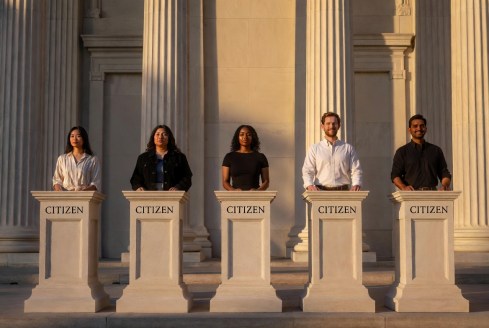
Equality before the law means the law sees citizens, not castes.
In summary
Equality before the law means every person has the same basic legal standing.
It means citizens are protected by the same rights, answerable to the same laws, and judged by the same standards of evidence and process.
It does not mean every case is identical. It does not mean context never matters. It does not mean equal outcomes are guaranteed.
It means identity is not legal rank.
It means guilt and innocence belong to individuals, not groups.
It means the law sees citizens, not castes.
June is coming, which means the machinery will start again.
The flags. The emails. The school bulletin boards. The corporate logos. The municipal proclamations. The HR language. The social media badges. The rainbow email signatures. The familiar little suggestion that anyone who declines the ritual must be hiding some moral defect.
That is exactly why Pride needs civic proportion.
Not abolition. Not cruelty. Not some bitter campaign to drive gay and lesbian citizens back into silence. That would be wrong, and it would also miss the point. The question is not whether gay people should be treated with dignity. Of course they should. The question is whether equal citizenship requires a month of institutional performance, followed in Canada by what the federal government now openly calls Pride Season, running from June to September.
At some point, recognition became saturation.
That distinction matters. Visibility can have value. There are still young people who feel isolated, families that struggle to accept them, and countries where homosexuality remains criminalized. None of that is trivial. But a liberal society still has to distinguish between civic recognition and compulsory enthusiasm. It can protect minorities without turning public institutions into ideological billboards. It can permit parades, private celebration, voluntary corporate sponsorship, and public respect without making every workplace, school, and government office participate in a rolling moral pageant.
Veterans have Remembrance Day, with Veterans’ Week as a focused period of solemn national memory. Fallen firefighters are honoured through Firefighters’ National Memorial Day. Canadian peacekeepers are recognized on National Peacekeepers’ Day. These are not minor observances. They include people who served in wars, ran toward fire, responded to disaster, watched friends die, and carried burdens most citizens will never see.
Yet their recognition is bounded and it is not disrespect, but rather it is a demonstration of civic restraint.
Pride has not been restrained. It has expanded from a protest, to a celebration, to a month, to a season, to a branding cycle, to a school-calendar fixture, to a test of institutional obedience. The expansion is now so familiar that many people barely notice it. They only notice the consequences of objecting.
Decline the flag, and suspicion arrives. Question the school display, and someone starts measuring your moral temperature. Object to compelled language, and the labels come quickly: hateful, unsafe, bigoted, backward, not fit for polite company. This is how a movement that once asked for tolerance drifts into reputational discipline. Not by sending police to your door, but by making ordinary dissent socially expensive enough that most people decide silence is easier.
Surprisingly(?)this isn’t healthy pluralism or even good advocacy on a societal scale.
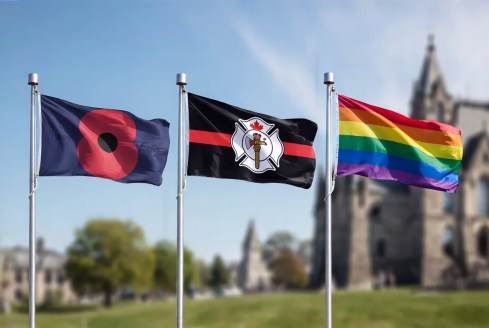
Every cause eventually faces a choice. It can keep expanding its demands forever, or it can settle into the ordinary dignity of citizenship. The first option keeps activists, consultants, committees, and bureaucracies busy. The second allows citizens to live together without every institution becoming a stage for moral performance.
And this critique does not apply only to one letter in the ever-expanding acronym. The problem is the machinery itself: the institutional expectation that citizens must affirm not only dignity and legal equality, but the whole ideological package attached to the celebration. That is where reasonable accommodation gives way to soft coercion.
The smarter move would be if the Pride organizations themselves stepped up and acknowledged their overreach.
“The better settlement is simple enough: one day of recognition, freely observed, and then the ordinary dignity of living together without a seasonal loyalty test.”
They could say: we have made our point. Gay and lesbian Canadians are not going anywhere. We are neighbours, friends, co-workers, artists, teachers, soldiers, parents, and citizens. We do not need four months of official reinforcement to prove we belong. Let Pride return to civic scale: a bounded public recognition, private celebration for those who want it, and no expectation that every institution must join the ritual.
That would be a sign of confidence, not retreat. A movement secure in its place does not need every bank logo recoloured, every school hallway decorated, or every employee nudged into public agreement. If the goal is equal citizenship, then the endgame cannot be permanent mobilization. It has to be ordinary civic life, with room for celebration, indifference, criticism, and refusal.
Let communities hold parades. Let businesses support Pride if they choose. Let citizens attend, ignore, criticize, or enjoy the day as free people. But public institutions should stop behaving as though full civic membership requires annual submission to a political liturgy.
The better settlement is simple enough: one day of recognition, freely observed, and then the ordinary dignity of living together without a seasonal loyalty test.
Too many land acknowledgements are not acknowledgements anymore. They are rituals of submission with nicer stationery.
Everyone knows the form. Before the meeting, concert, lecture, school assembly, or conference begins, someone reads a solemn paragraph about the land. The tone is reverent. The words are familiar. The effect is usually deadening. Nobody is supposed to argue with it. Nobody is supposed to ask what it means in practice. The ritual is complete once the room has been morally sorted.
That is the trick.
A land acknowledgement does not merely “acknowledge land.” It often imports a political frame. It suggests that some people belong here more deeply than others, that ordinary Canadians are guests in their own country, and that citizenship itself sits under a cloud of inherited guilt.
This is why Jamil Jivani’s version is useful:
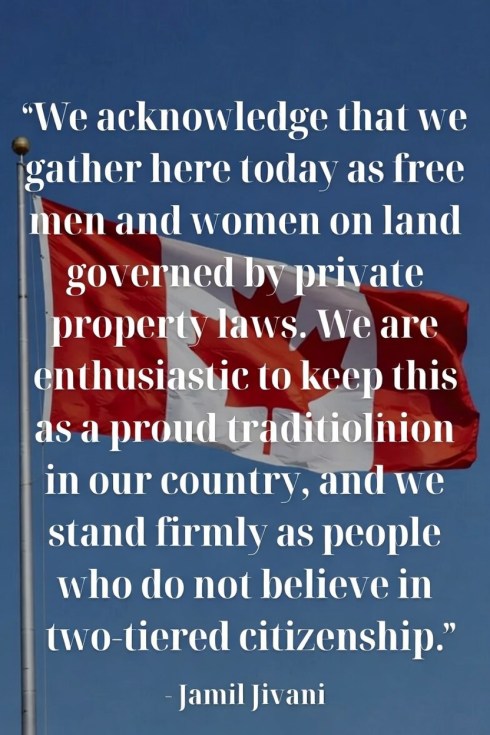
“We acknowledge that we gather here today as free men and women on land governed by private property laws. We are enthusiastic to keep this as a proud tradition in our country, and we stand firmly as people who do not believe in two-tiered citizenship.”
That works because it does what the usual version refuses to do. It acknowledges the legal and political order under which people are actually gathered.
We are not meeting in a metaphysical guilt zone. We are meeting in Canada. That means Canadian law, constitutional government, treaty obligations, private property, Crown land, Aboriginal title, reserves, statutes, courts, and civic rights that apply to citizens as citizens.
The details matter. Canada’s land regime is not one simple thing, and anyone pretending otherwise is selling you a pamphlet, not an argument. But the public square still depends on a shared legal order. It cannot survive if every gathering begins by quietly ranking people according to ancestry.
That is why the phrase “land governed by private property laws” matters. It cuts through the incense.
Private property is not just about who owns a fence line or a parcel on a title map. It is one of the civilizational tools that lets strangers live beside each other without every dispute becoming a tribal contest. It turns land into a governed reality rather than a permanent symbolic battlefield. It lets people build homes, churches, schools, businesses, farms, and community halls without having to justify their existence every time someone invokes ancestry.
The usual acknowledgement often leaves people with a vague sense that Canada is illegitimate, but without saying clearly what should follow.
Are property titles invalid? Are municipal governments illegitimate? Are homeowners merely tenants of history? Are citizens equal, or are some citizens permanently morally prior because of bloodline?
These questions are usually dodged because answering them would reveal the radicalism hiding inside the ritual.
Jivani’s version answers plainly: no two-tiered citizenship.
That is the heart of it.
A serious country can honour Indigenous history. It can recognize treaties. It can correct specific injustices where evidence and law require correction. It can admit that governments have done cruel, stupid, and destructive things. None of that requires teaching Canadians that equal citizenship is somehow morally suspect.
But that is where many modern land acknowledgements drift. They sort the room into moral categories before the event even starts. Some people are original. Some are settlers. Some have ancestral legitimacy. Others inherit suspicion. The language remains soft, but the structure underneath it is hard.
That is not reconciliation. That is caste thinking with a grant application attached.
And no, refusing that frame does not mean pretending history began yesterday. This lazy accusation needs to be retired. Canadians can know the history without accepting a ritual designed to weaken their confidence in the country they inhabit. Memory does not require self-erasure. Justice does not require permanent civic grovelling. Respect does not require pretending that liberal citizenship is some colonial inconvenience we should all feel embarrassed about.
If people want reconciliation, then do the real work. Clarify treaty obligations. Improve reserve governance. Support economic development. Fix broken service delivery. Protect individual rights. Litigate actual claims. Negotiate actual settlements.
But stop pretending that reciting inherited guilt before a PowerPoint presentation is moral courage.
The better acknowledgement is provocative because it reverses the moral pressure. Instead of forcing citizens to rehearse guilt before they proceed, it affirms the conditions that let free people gather in the first place: law, property, citizenship, and equality before the state.
That is exactly why it will irritate the professional class that treats land acknowledgements as sacred theatre. It refuses the expected posture. It does not bow. It does not mumble through a half-confession. It says, openly, that Canada is a real country, that its legal order matters, and that citizenship must not be divided into ancestral ranks.
A land acknowledgement should acknowledge reality.
That is worth saying out loud.











 bleatmop
 Mystro


 Dead Wild Roses
Your opinions…