
You are currently browsing the tag archive for the ‘Canada’ tag.
Policing in Canada has historically been grounded in the principle of equality under the law, where all individuals, regardless of identity, are subject to the same legal standards and enforcement practices. However, recent shifts in policy, training, and public discourse suggest that Canadian policing is increasingly adopting a model that applies different standards based on identity categories such as race, ethnicity, gender, and socioeconomic status. This evolution is driven by a combination of social justice movements, government directives, and institutional reforms aimed at addressing systemic inequalities. While intended to rectify historical disparities, this approach raises questions about consistency and impartiality in law enforcement.
One clear indicator of this shift is the implementation of race-based data collection by police services across Canada. Initiated in response to allegations of racial profiling, agencies like the Toronto Police Service and the Ontario Provincial Police began collecting and analyzing data on the race of individuals stopped, questioned, or arrested, starting with pilot projects around 2019 and expanding since then. The stated goal is to identify and address “disproportionate” enforcement patterns, particularly against Black, Indigenous, and other racialized groups. While this data has confirmed higher rates of police interaction for certain communities—such as a 2020 Toronto report showing Black individuals were 2.2 times more likely to be involved in use-of-force incidents—it has also led to tailored policing strategies that adjust scrutiny or leniency based on racial identity rather than uniform application of the law.
Training and policy changes further illustrate this trend toward differential standards. Following high-profile incidents like the 2020 death of Regis Korchinski-Paquet and subsequent Black Lives Matter protests, Canadian police forces have overhauled training to emphasize “de-escalation” and “cultural competency,” often with specific focus on interactions with Indigenous and racialized populations. For instance, the RCMP introduced mandatory “bias-free policing” modules by 2022, which instruct officers to consider historical trauma and systemic factors when engaging with certain groups. While these measures aim to reduce harm, they implicitly encourage officers to alter their approach—sometimes reducing enforcement rigor—based on an individual’s perceived identity, diverging from a strictly neutral standard.
Legal and governmental frameworks also support this shift. In 2023, Bill C-92, an Act respecting First Nations, Inuit, and Métis children, youth, and families, effectively granted Indigenous communities greater autonomy over child welfare, including policing-related interventions, creating a parallel system distinct from mainstream enforcement. Similarly, hate crime laws and sentencing guidelines increasingly factor in identity-based considerations, with offenders targeting “vulnerable” groups facing harsher penalties, while enforcement in marginalized communities is often softened to avoid perceptions of over-policing. This dual-track approach—tougher on some, lighter on others—reflects a deliberate move away from universal standards toward identity-specific policing practices.
Finally, public and institutional pressure continues to reinforce this trajectory. Advocacy groups, such as the Canadian Association of Black Lawyers and Indigenous rights organizations, have successfully lobbied for policies that treat identity as a mitigating factor in policing. Reports like the 2021 Missing and Murdered Indigenous Women and Girls Inquiry explicitly called for reduced police intervention in Indigenous communities, alongside increased accountability for officers dealing with these populations. Meanwhile, urban police forces face scrutiny for “over-policing” racialized neighborhoods, prompting initiatives like Toronto’s 2024 “Community Crisis Support Service,” which diverts mental health calls involving racialized individuals away from police entirely. These developments signal a broader trend: policing in Canada is increasingly calibrated to identity, balancing equity goals against the traditional ethos of equal enforcement. Whether this enhances justice or undermines fairness remains a point of contention.

The media in Canada often frames voting Conservative as a dangerous shift toward regressive policies, economic stagnation, and social division. This narrative frequently highlights fears of cuts to social programs, environmental neglect, and a rollback of progressive values, as seen in coverage of leaders like Pierre Poilievre or past figures like Stephen Harper. However, this portrayal overlooks key facts: Conservative governments have historically presided over economic growth—Harper’s tenure saw Canada weather the 2008 global financial crisis better than most G7 nations, with a GDP growth rate averaging 1.8% annually from 2006 to 2015, compared to the OECD average of 1.2%. Moreover, claims of slashed social programs are exaggerated; Harper’s government increased healthcare transfers to provinces by 6% annually, reaching $40.4 billion by 2015. The narrative also ignores that Conservative platforms often adapt to public sentiment—Poilievre, for instance, has emphasized affordability and housing, issues resonating with younger voters typically dismissed as outside the party’s base.
Beyond disputing the media’s alarmism, there’s a strong case for why switching governments every decade or so benefits Canada’s democracy. A prolonged grip by any single party—Liberal or otherwise—breeds complacency, entitlement, and policy stagnation. The Liberals, under Justin Trudeau since 2015, have faced criticism for unfulfilled promises (e.g., electoral reform) and scandals like SNC-Lavalin, suggesting a fatigue that sets in without fresh competition. Historical shifts bear this out: Brian Mulroney’s Progressive Conservatives (1984–1993) broke a 20-year Liberal dominance, introducing the GST and NAFTA—policies initially vilified but later credited for economic stability. Similarly, Harper’s 2006 win ended 13 years of Liberal rule, forcing a recalibration of priorities like accountability (via the Federal Accountability Act). Regular turnover keeps governments responsive, preventing the calcification of power and ensuring policies reflect evolving public needs rather than entrenched agendas.
The media’s tendency to paint Conservative victories as a threat also dodges the reality that Canada’s system thrives on balance, not perpetual one-party rule. Voter turnout data supports this: elections with clear alternation potential—like 2006, when turnout hit 64.7% after years of Liberal governance—show higher engagement than landslides like 2015 (68.5%), where momentum favored Trudeau’s Liberals but later waned. A Conservative government, far from being a monolith of destruction, often acts as a corrective force, challenging orthodoxies (e.g., Harper’s focus on deficit reduction post-recession versus Liberal spending). Changing government every decade isn’t just healthy—it’s a safeguard against complacency, corruption, and the echo chamber of uninterrupted power, ensuring Canada remains dynamic rather than dogmatic.

A Canadian Department of Government Efficiency (DOGE) could offer significant positives by tackling the perennial issue of bureaucratic bloat. With a mandate to optimize processes, cut waste, and boost accountability, DOGE could save taxpayers billions—think of trimming redundant programs or digitizing outdated paper-based systems. Inspired perhaps by Elon Musk’s and Vivek Ramaswamy’s vision for a U.S. version, it might bring a results-driven ethos to Ottawa, using data analytics and AI to identify inefficiencies, like overlapping agency roles or sluggish service delivery. For a country with a sprawling public sector, this could mean faster disaster relief, shorter healthcare wait times, and a leaner government that actually delivers what citizens need without the usual red tape.
However, the negatives could stack up quickly if DOGE isn’t carefully designed. Critics might fear it becomes a Trojan horse for slashing essential services under the guise of “efficiency”—imagine cuts to social programs or environmental oversight that hit vulnerable Canadians hardest. There’s also the risk of over-centralization: a ministry obsessed with streamlining could steamroll local nuances, like the unique needs of rural provinces versus urban centers, creating one-size-fits-none solutions. And let’s not ignore the irony—if DOGE itself gets bogged down in political infighting or mismanagement, it could end up as another layer of bureaucracy, costing more than it saves while fueling public cynicism about government competence.
The success of a Canadian DOGE would hinge on its ability to balance ambition with pragmatism. Done right, it could be a game-changer, modernizing governance and restoring trust in a system often seen as sluggish and out of touch. Picture a DOGE that collaborates with provinces, respects regional diversity, and prioritizes citizen outcomes over blind cost-cutting—like speeding up infrastructure approvals without gutting safety standards. But if it devolves into a ideological buzzsaw or a toothless paper tiger, it’d just be another acronym in the alphabet soup of government failures. Canada would need clear metrics, transparent oversight, and a willingness to adapt to make DOGE more than a catchy name—it’d have to prove efficiency isn’t just a buzzword, but a promise kept.

The Kamloops grave hoax, sparked by the 2021 announcement from the Tk’emlúps te Secwépemc First Nation claiming the discovery of 215 unmarked graves at the former Kamloops Indian Residential School, ignited a firestorm of outrage across Canada. This claim, based on preliminary ground-penetrating radar findings and later proven to lack physical evidence of human remains, fueled a wave of anti-Christian sentiment that resulted in the burning or vandalism of over 85 churches, predominantly Catholic, between 2021 and 2024. These acts of arson and destruction were not random; they were a direct response to a narrative that falsely accused the Church of mass atrocities, a narrative amplified by political leaders and media without rigorous verification. The churches, many of which were historic and served as community pillars, were reduced to ashes, leaving congregations devastated and their sacred spaces irreparably lost.
The case for reparations for these destroyed churches rests on the principle of justice for the innocent. The Canadian government and media played a significant role in perpetuating the hoax, with Prime Minister Justin Trudeau lowering flags and offering statements that fanned the flames of retribution, while outlets like the CBC reported the claims as fact without evidence. This reckless endorsement led to millions of dollars in damages and the loss of cultural heritage, all based on a falsehood that has yet to yield a single confirmed body despite nearly $8 million spent on investigations. The churches and their parishioners, who were not complicit in the alleged crimes, bore the brunt of this misinformation campaign. Reparations—whether through government funding or community restitution—would acknowledge this wrong, providing resources to rebuild and heal the wounds inflicted on these faith communities.
Moreover, reparations align with the broader call for truth and reconciliation, ironically the very framework used to justify the initial outrage. If reconciliation is to be genuine, it must extend to all victims, including those unjustly targeted in the fallout of the Kamloops narrative. The destruction of churches did not uncover hidden graves or bring closure to Indigenous communities; instead, it deepened division and punished the blameless. By offering reparations, Canada could demonstrate a commitment to correcting the record and supporting the restoration of these sacred spaces, many of which had served both Indigenous and non-Indigenous congregants. This act would not erase the painful history of residential schools but would rectify a modern injustice born of haste and falsehood, ensuring that the pursuit of truth does not leave new victims in its wake.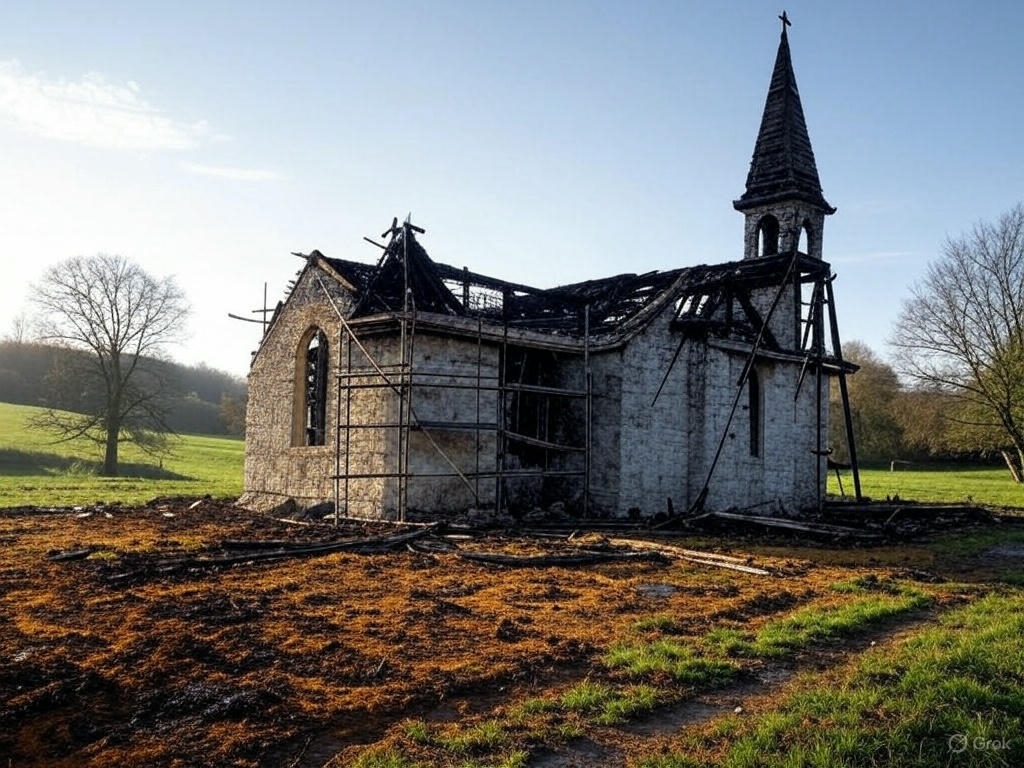
The British Columbia College of Nurses and Midwives (BCCNM) Discipline Committee’s ruling against Amy Hamm on March 13, 2025, represents a significant setback for women and their freedom of speech in Canada. By disciplining Hamm—a nurse and vocal advocate for sex-based rights—for her gender-critical statements, the decision effectively punishes women who challenge prevailing transgender ideology, particularly when it encroaches on female-only spaces and identities. This ruling not only silences a woman defending biological reality and women’s rights but also signals to others that expressing such views, even off-duty, risks professional ruin, disproportionately chilling female voices in a debate where they have a unique stake.
The 115 page document is a bit of a read, so here are the main points, and a refutation right after.
5-Point Summary of Evidence Supporting the BCCNM Decision
- Discriminatory Statements Linked to Professional Identity: The panel found that Hamm made “discriminatory and derogatory” statements about transgender people across online platforms (e.g., articles, podcasts) between July 2018 and March 2021, while explicitly identifying herself as a nurse or nurse educator. This nexus to her profession was key, as it was seen to undermine the nursing profession’s reputation.
- Violation of Professional Standards: The BCCNM argued that Hamm’s statements breached the College’s Code of Ethics and Professional Standards, which require nurses to provide care without discrimination and uphold public trust. The panel agreed that her public comments contradicted these obligations.
- Intent to Harm Reputation of Transgender Community: The ruling highlighted that Hamm’s statements were designed to “elicit fear, contempt, and outrage” against transgender individuals, particularly by denying their existence (e.g., rejecting gender identity as a concept). This was deemed unprofessional and harmful.
- Specific Instances of Misconduct: The panel pinpointed four instances (Tabs 4, 24, 28, and S3 from the evidence extract) where Hamm’s comments—tied to her nursing identity—were ruled as crossing the line into professional misconduct. These included writings and a podcast appearance explicitly linked to her role as a nurse.
- Public Role and Accountability: By leveraging her professional credentials in public discourse, Hamm was held to a higher standard. The panel concluded that her actions damaged the integrity of the nursing profession, justifying regulatory intervention despite her off-duty status.
Refutation of the Evidence
- Freedom of Expression Overreach: Hamm and her legal team, supported by the Justice Centre for Constitutional Freedoms (JCCF), argued that her statements were protected under the Canadian Charter of Rights and Freedoms (Section 2(b)). The panel’s ruling infringes on her right to express personal views—especially on a contested public issue like gender ideology—without evidence of direct harm to patients or professional practice.
- No Nexus to Professional Conduct: The defense contended that Hamm’s statements lacked a sufficient connection to her nursing duties. Most of her online activity (e.g., Twitter posts) did not explicitly tie her nurse identity to the comments, and the panel itself declined to find misconduct in those cases. Penalizing her for a handful of instances where she mentioned her profession stretches regulatory authority too far.
- Scientific and Reasonable Basis: Hamm’s rejection of gender identity as a “mystical belief” aligns with biological reality (sex as immutable) and is a defensible stance in scientific debate. The panel’s characterization of this as “discriminatory erasure” imposes an ideological litmus test, punishing her for not conforming to transgender advocacy rather than for any professional failing.
- Lack of Demonstrable Harm: There was no evidence presented that Hamm’s statements caused tangible harm to transgender individuals or compromised her nursing practice. The BCCNM’s case relied on hypothetical reputational damage to the profession, which the defense argued is too vague to justify discipline—especially given the public’s varied views on gender issues.
- Regulatory Overreach and Precedent: The ruling sets a dangerous precedent for all regulated professionals, chilling free speech by suggesting that any controversial opinion expressed publicly, if tied to one’s job title, can trigger discipline. Hamm’s advocacy for women’s sex-based rights (e.g., supporting J.K. Rowling) is a legitimate political stance, not a professional lapse, and the BCCNM’s intervention risks turning regulators into arbiters of acceptable thought.
This ruling underscores a tension between professional regulation and personal expression, with particular implications for women like Hamm who advocate for sex-based rights.

The Liberal Party of Canada, under its current leadership, has repeatedly demonstrated a troubling tendency to prioritize internal politics over the nation’s welfare, most notably through its strategic proroguing of Parliament to facilitate a leadership race. Much like Nero, who legendarily strummed his lyre as flames consumed Rome, the Liberals have effectively stalled the machinery of governance to tune their own political instrument. Prorogation, a legitimate parliamentary tool meant for resetting legislative agendas, has been wielded here as a shield to dodge accountability and buy time for party infighting. In a time of economic uncertainty, with inflation biting and housing crises deepening, this self-imposed paralysis echoes Nero’s detachment—fiddling with succession while Canadians grapple with unchecked challenges.
The decision to suspend Parliament undermines democratic integrity and erodes public trust, leaving critical issues to fester unattended. As the leadership race unfolds, debates over party direction supersede the urgent needs of a nation facing healthcare strains and geopolitical tensions. The Liberals’ focus on their own house recalls Nero’s negligence as Rome’s infrastructure crumbled; instead of fortifying Canada’s resilience, they’ve opted to redecorate their political facade. This isn’t merely a pause in governance—it’s an abdication of responsibility, with committees halted, bills delayed, and oversight of government spending effectively silenced. The prorogation serves as a curtain behind which the party orchestrates its drama, while the public is left watching the stage go dark.
History may yet judge this moment as a turning point where partisan vanity trumped national stewardship, risking long-term damage to Canada’s well-being. Nero’s Rome didn’t burn in a day, but his indifference hastened its ruin; similarly, the Liberals’ gambit threatens to weaken institutional stability for fleeting political gain. By proroguing Parliament, they’ve not only delayed action on pressing issues like climate policy and Indigenous reconciliation but also signaled that power consolidation outweighs public service. Canadians deserve a government that governs, not one that retreats to rehearse its next act. As the leadership race plays on, the Liberals risk leaving behind a legacy less of progress and more of a smoldering neglect, with the echoes of Nero’s tune lingering in the air.

From a Stoic perspective, which emphasizes virtue, reason, and living in accordance with nature, Canadian values can be interpreted through the lens of universal principles rather than cultural specifics alone. However, reflecting on commonly recognized Canadian traits—such as respect for diversity, community, fairness, resilience, and a connection to nature—we can distill these into a Stoic framework. The Stoics, like Marcus Aurelius or Seneca, would likely admire values that align with justice, courage, wisdom, and temperance, and these can guide our understanding of Canadian ideals. Below is a list of five key values, interpreted stoically, with practical ways to embody them.
1. Respect for Diversity as Justice**: Stoicism teaches that all humans share a common reason and are part of the same cosmopolitan community. In Canada, this resonates with the value of embracing diversity—cultural, linguistic, and ideological. To practice this, exercise justice by treating all individuals with equal respect, regardless of background, as Seneca advised: “Associate with those who will make a better man of you; welcome those whom you yourself can improve.” Engage in conversations with people different from you, listen without judgment, and challenge your biases daily.
2. Community as Mutual Support**: The Stoic concept of *oikeiôsis*—a natural affiliation with others—parallels Canada’s emphasis on collective well-being, seen in things like universal healthcare or community-driven initiatives. Marcus Aurelius wrote, “What brings no benefit to the hive brings no benefit to the bee.” To live this, contribute to your community without expecting reward: volunteer locally, support neighbors in need, or simply offer a kind word. Recognize that your well-being is tied to the whole, and act accordingly.
3. Fairness as Wisdom**: Canadians often pride themselves on fairness, a value Stoics would tie to wisdom and impartiality. Epictetus reminds us to focus on what is in our control and accept what is not, judging situations rationally rather than emotionally. In practice, this means resolving conflicts calmly, advocating for equitable treatment in your workplace or social circles, and refusing to let personal feelings cloud your decisions. When faced with injustice, respond with reasoned arguments rather than anger.
4. Resilience as Courage**: Canada’s harsh winters and vast geography have bred a cultural resilience that aligns with Stoic courage—the ability to endure hardship without complaint. Seneca noted, “Sometimes even to live is an act of courage.” To embody this, face challenges head-on: whether it’s a tough job, a bitter cold day, or personal setbacks, adopt a mindset of endurance. Practice discomfort deliberately—take cold walks, limit indulgences, or tackle hard tasks first—to build your inner strength.
5. Connection to Nature as Temperance**: Canadians often feel a deep bond with their natural surroundings, from forests to mountains. Stoics, who urged living in harmony with nature, would see this as temperance—moderation in desires and appreciation of what is. As Zeno taught, align your life with the natural order. Practically, this means spending time outdoors mindfully: walk in parks without distractions, reduce wasteful consumption, and cultivate gratitude for the environment. Let nature remind you of life’s simplicity and your place within it.











 bleatmop
 Mystro
 The Arbourist


 Dead Wild Roses
Your opinions…