
You are currently browsing the tag archive for the ‘Capitalist Exploitation’ tag.
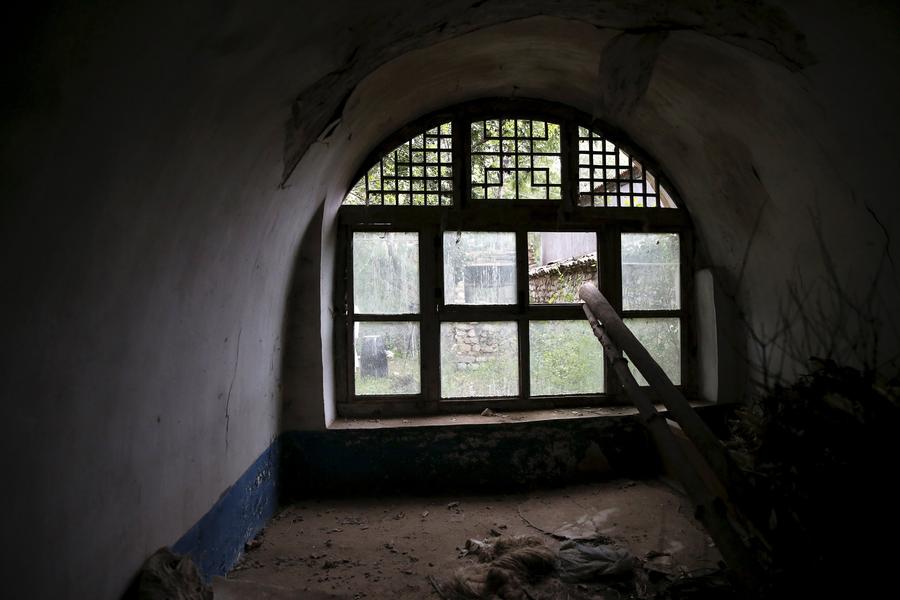
In the category of appalling but unsurprising when it comes to the exploitation of labour by capital, we have this “charming” vignette:
“Joy Lynn, who now co-owns the Whipple Company Store and has turned it into a museum, told Kline she has had as many 10 women visit the museum who referred to the third-floor space as “the rape room” because that is how the mine guards forced the women to pay for their shoes. “They would have to keep their mouths shut tight about what had happened to them upstairs,” Lynn said, because the mining companies would threaten to kick them out of their company-owned houses.”
[…]
Consider the time – this is when the free market was actually very close to being free – unhindered by government and all of its nasty regulations. This was also before the time of much of labour organization in the US. Unbridled power in any one segment of society leads to exploitation and abuse of people, yet as we stumble forward in the humble-bumble forced march of neo-liberalism, these are the sorts of conditions that await us.
“Since the publication of his article on Esau in Appalachian Heritage, Kline writes that “numerous accounts of institutionalized forced sexual servitude in the coal fields have surfaced.”
A woman from West Virginia told Harris and Kline a story about her great-grandmother who was “rented” to coal company agents at the age of 12. She would spend four to six months at a time in sexual servitude in coal camps. “And if the girls had babies, the babies would be taken and sold,” the woman said.
The girls and young women who were taken from their homes in West Virginia were called “comfort girls” or “comfort wives” during their time in servitude. The Japanese government followed the same model, forcing Korean and Chinese woman to work as “comfort women” during World War II. Japan has refused to apologize for forcing the women into sexual servitude, claiming the women were voluntary prostitutes. In West Virginia, state officials have never acknowledged the existence of this formal system of sexual servitude.
The West Virginia woman interviewed by Harris and Kline said her great-grandmother felt so desperate at the time that she did not have any qualms about selling her own babies. “I mean, if you’re a woman and the only thing you have to make money with is your body, and you end up pregnant, you can’t afford to feed that baby. So what are you going to do?” she said.
A woman who needed another week’s worth of groceries or needed new shoes would pay with their own bodies, the woman said.
“My sense is they weren’t ashamed,” Harris said about the exploited women. “It wasn’t something they were embarrassed about. It was very much in the same vein as the men going into the coal mine and taking risks they had no business taking. It’s like you do what you have to do to feed your family. They didn’t talk about it, but they certainly weren’t ashamed of it. Why would you be ashamed of feeding your kids?”
This is the sort of exploitation unfettered and unregulated capitalism can bring to people; it should not be a set of conditions that we aspire recreate.
[Quotes from Mark Hands essay: ‘Rape Rooms’: How West Virginia Women Paid Off Coal Company Debts. (via Counterpunch)]
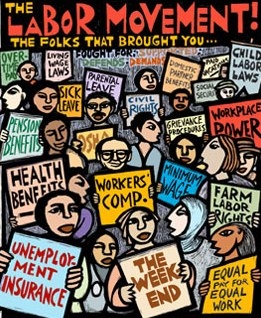 The rights we enjoy today in Canada as workers and professionals were not given to us. It was through determined, bloody at times, never-say-die, collective struggle that our rights as workers were imposed on the capitalist class. Power never makes concessions – struggles for basic working benefits must be fought for and taken. The price for humane working conditions can be as high as death or as in the case of Cleaning Workers Union in Greece, permanent disfigurement.
“Vassilis Kikilias, didn’t lose time. Less than an hour after he took office, riot police cracked down on a protest of the cleaning staff of the ministry of finance.
The protesters are more than 500 women of all ages and national backgrounds who were cleaning tax offices, the ministry of finance and customs services until a ministerial decree, fired them all indiscriminately and permanently.
The austerity rationale behind the decision was spurious because these women were not a fiscal burden – quite the contrary. The privatisation of cleaning services has increased the amount spent in order to keep public working spaces decently clean.”
Ah, there we go, the popular myth that privatization is solution to all problems in the public sector. It usually isn’t when it comes to saving money as privatized services cost more and treat their employees badly; less pay, less benefits, less job security. Embrace job insecurity! It is but one of the lovely intrinsic features of privatization of society and a necessary feature of the capitalist paradigm.
“The fate of these 500 women is nothing new in Greece; for years now, and especially since the financial crisis, workers have had to take to the streets to reclaim their rights.”
“Overall, privatising services and reverting to temporary contracts for workers has been associated with slavery-like conditions of labour exploitation.”
We must never forget the blood price paid by earlier generations to erect the bulwarks of labour protections against the capitalist tide. People fought and died for what we consider “normal” working conditions.
“Kouneva, a trained historian, emigrated to Greece from Bulgaria in 2001, because of the financial troubles many countries in Eastern Europe were going through at the time.
In 2003 she was hired as a janitor by private company OIKOMET, which had a contract with the Athenian railway service. Seeing the conditions in which her colleagues were working (low and infrequent pay, lack of insurance, mistreatment), Kouneva entered the janitors union of Athens and soon became one of its leading figures.
From that moment on, she didn’t stop protesting working conditions, struggling for the rights of cleaning staff, who were often ignored by the main trade unions.
She ignored threats against her life and never regretted her decision to continue the fight for labour rights.
One night in December 2008, Konstantina Kouneva was attacked by two men while walking back home in downtown Athens. They threw sulfuric acid on her face and forced her to drink the rest in what could have been a fatal attack.”
What was her crime? Protesting for decent working conditions. People need to realize the coercive power capital holds and guard against it regaining the sort of destructive influence observed in Greece.
“This doesn’t change the significance of the cleaners’ story: Fired from governmental institutions some of these women will be hired back at half of their original salaries, no insurance in some cases, and incapable to fight employer blackmail as employees.
This is what the austerity programme is all about.
A lot has been written about the high unemployment figures in Greece due to the crisis but there’s another aspect that affects the working population. Salaries drop, conditions worsen and the negotiating power of workers is annihilated.
500 women are continuing the struggle Konstantina Kouneva paid for with her health, fighting hard to keep the gates that lead to the precarious underclass, closed .
Despite the fact that they have already won their litigation against the Greek state, they are being constantly attacked by conservative politicians, the mainstream media, and riot police. Just recently they were brutally beaten again while trying to reach the finance ministry and demonstrate for, yet another day.”
People fighting for their lives while conservatives, the media and of course the police try to crush them. This was commonplace here in North America not long ago and the conservative capitalist forces of today are doing their very best to erase the memory of workers popular struggle so they can continue to chip away at the hard fought rights and benefits we enjoy today.
[Source]











 bleatmop
 Mystro
 The Arbourist


 Dead Wild Roses
Your opinions…