
You are currently browsing the tag archive for the ‘Corporate Folly’ tag.
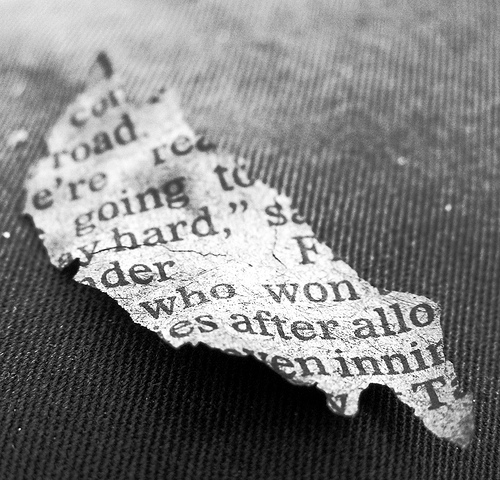 Our Canadian media is taking a beating as of late. Neil Macdonald opines:
“Consider Postmedia, the biggest newspaper chain in the country.
It is largely owned by an American hedge fund, which regularly drains the member newspapers’ dwindling profits at a handsome interest rate as their newsrooms are merged and hollowed out to cut costs, and editorial direction is dictated from corporate headquarters.
No one knows where it will end, but end-stage asset stripping is probably a safe bet.”
My very own Edmonton Journal has been gutted in the latest round of cuts to the editorial board. Where do people think ‘news’ comes from? Primary sources – professional journalists – are the ones reporting and writing the stories that provide the grist for the mill for carrion feeders (bloggers like myself and the rest of the internet) possible. We should be very concerned that our eyes and ears to the world are slowly being hacked to death by corporations that prioritize everything but the actual process of Journalism.
“Baron, now executive editor of the Washington Post, acknowledged the economic forces ripping the business to shreds.
It is so on target that I’m going to quote its most salient passage:
“The greatest danger to a vigorous press today,” he begins, “comes from ourselves.
“The press is routinely belittled, badgered, harassed, disparaged, demonized, and subjected to acts of intimidation from all corners — including boycotts, threats of cancellations (or defunding, in the case of public broadcasting) …
“Our independence — simply posing legitimate questions — is seen as an obstacle to what our critics consider a righteous moral, ideological, political, or business agenda.
“In this environment, too many news organizations are holding back, out of fear — fear that we will be saddled with an uncomfortable political label, fear that we will be accused of bias, fear that we will be portrayed as negative, fear that we will lose customers, fear that advertisers will run from us, fear that we will be assailed as anti-this or anti-that, fear that we will offend someone, anyone.
“Fear, in short, that our weakened financial condition will be made weaker because we did something strong and right, because we simply told the truth and told it straight.”
Yeah. The facts of matter might be offensive, but they still are the facts of the matter. We seem to have lost sight of this salient feature in much of society. The problem, of course, is that our press depends on advertising and therefore behest to many sorts of of influences that detracts from the reporting of the facts.
I hope we as a society get back on track and start supporting our journalists and the crucial role they play in society. Being able to comment and critique in a contextually appropriator manner is founded on having access to the facts of any particular situation.
“But the original information, before it is aggregated and re-aggregated a thousand times, has to come from someone with the experience, brains and training to uncover it in the first place.
That is usually the work of credentialed journalism. It’s what Baron did in Boston. The alternative is usually just spin and corporatist fantasy, and let us all hope the latter does not overwhelm the former.”
Business as usual.
Enjoy?
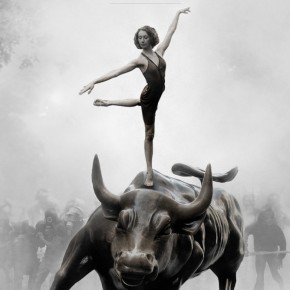 Haven’t heard much about the protests going on in the financial districts in the US? Are you surprised? When the interests of the elite are challenged getting the mainstream media to notice is like trying iceskate uphill (go see what al jazeera has to say on OWS). I repost this nugget about the OWS demonstration, find the full post on Whatever Works.
“POSTED BY ORHAN
The MSM continues to ridicule #OWS for not having a specific list of demands. The absence of demands, and consequent absence of a divide-and-conquer target, that’s driving the media into such a tizzy is not specifically a “tactic”, but, as far as I can tell, is a byproduct of the radical democratic process being practiced by the General Assemblies (nicely described by Matt Stoller).
Here is the closest thing I’ve found to an “official” statement on demands from The Occupied Wall Street Journal, a paper published and distributed by #OWS:
What are the demands of the protesters?
Ugh—the zillion-dollar question. Again, the original Adbusters call asked, “What is our one demand?” Technically, there isn’t one yet. In the weeks leading up to September 17, the NYC General Assembly seemed to be veering away from the language of “demands” in the first place, largely because government institutions are already so shot through with corporate money that making specific demands would be pointless until the movement grew stronger politically. Instead, to begin with, they opted to make their demand the occupation itself—and the direct democracy taking place there—which in turn may or may not come up with some specific demand. When you think about it, this act is actually a pretty powerful statement against the corruption that Wall Street has come to represent. But since thinking is often too much to ask of the American mass media, the question of demands has turned into a massive PR challenge.
The General Assembly is currently in the midst of determining how it will come to consensus about unifying demands. It’s a really messy and interesting discussion. But don’t hold your breath.
So it appears #OWS is specifically addressing the anger of the majority of Americans at the power, arrogance, and lack of accountability enjoyed by the coterie of the richest 1%, and the marginalization, disempowerment, and impoverishment of the remaining 99%–and doing it in a way that is “horizontal, autonomous, leaderless, modified-consensus-based”, which most people–let alone members of the political class–find it almost impossible to wrap their heads around.”
The message needs to be disseminated far and wide, and people need to see who is responsible for much of the financial ruin in their lives.
We’ll add this story to the heading ‘corporations that miss the point‘.
“Electronic Arts has given in to protests and pulled the ability to play as Taliban fighters from its upcoming Medal of Honor video game.
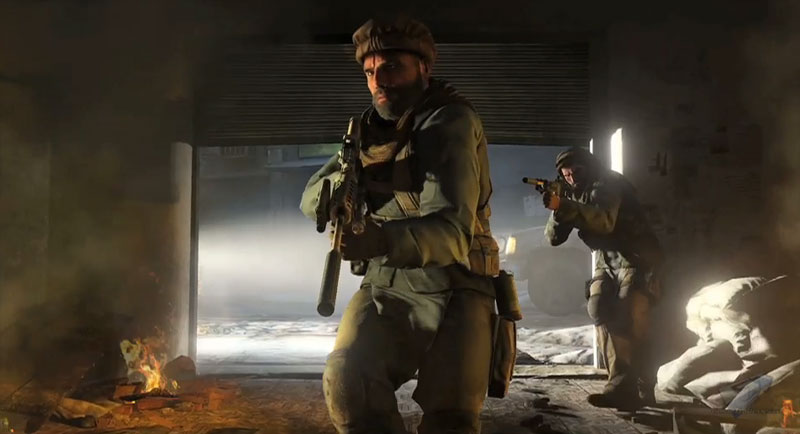
These are the ones you shoot.
It was to allow gamers to fight as Taliban against U.S. and allied troops in its online multiplayer mode, a feature that sparked criticism from some military officials and families of soldiers who have died in Afghanistan. Critics said allowing people to play as the enemies in a current conflict would be insensitive to the families of soldiers who have died.
The cultural assumptions enfolded into this statement bely the skewed view of the world we are fed and has ironic crunchy bits mashed in as well considering that the families of fallen Taliban fighters probably have similar feelings and have more of them considering the technological advantage we possess. But of course, being Official Enemies they do not have feelings or families, or heck, even human status when it comes to our point of view.
“Because the heartbeat of Medal of Honor has always resided in the reverence for American and allied soldiers, we have decided to rename the opposing team in Medal of Honor multiplayer from Taliban to Opposing Force,” executive producer Greg Goodrich said in a statement on the game’s website.”
Exactly, so you can get your righteous fill of filling people ragheads full of holes and terminating them with prejudice. This is okay. We show our reverence for families torn asunder by war by making products that glorify war and the destruction which results from it.
“While this change should not directly affect gamers, as it does not fundamentally alter the gameplay, we are making this change for the men and women serving in the military and for the families of those who have paid the ultimate sacrifice — this franchise will never wilfully disrespect, intentionally or otherwise, your memory and service.”
I’m not sure EA could go any deeper as they are using quantum bore tunnelling technology to dig the hole are in. All this PR spin is about their bottom line. They could care less about the men and women making the ultimate sacrifice during times of war. This wrinkle about changing the human targets from Taliban to OpFor is a callous move to protect their profit margins, nothing more.











 bleatmop
 Mystro


 Dead Wild Roses
Your opinions…