
You are currently browsing the tag archive for the ‘(CSC) Critical Social Constructivsm’ tag.
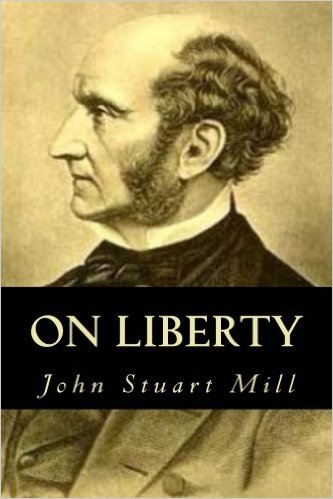
Arendt exposed ideological conformity, Gramsci revealed cultural capture, and Orwell diagnosed linguistic decay. Now, John Stuart Mill’s On Liberty (1859) offers a moral and philosophical counter to critical social constructivism’s (CSC) hostility toward open inquiry and individual conscience. Mill’s insistence that liberty of thought, speech, and character fuels social and moral progress stands as a principled rebuke to CSC’s attempts to bind individuality to collective dogma. Together, these thinkers—Arendt, Gramsci, Orwell, and Mill—equip us to resist CSC’s illiberal advance.
Mill argues that silencing expression harms not only the speaker but society as a whole, which is deprived of truth’s refinement through open contest (Mill, 1859, Ch. II). Even false opinions, he writes, may contain a kernel of truth; and true ones grow weak without opposition. CSC, meanwhile, appeals by promising equity through collective identity. Yet it treats dissent as a moral failure. Disagreement with DEI orthodoxy or critical race theory is labeled “harmful” or dismissed as “white fragility,” producing what Mill called “the tyranny of the prevailing opinion.” In 2024, University of Washington faculty guidelines equated merely questioning anti-racism initiatives with creating a “hostile environment,” thereby chilling discussion.
CSC’s moral coercion inverts Mill’s epistemic humility—his belief that all ideas deserve scrutiny, no matter how widely accepted. Mandatory DEI trainings, such as a 2024 policy at a major tech firm requiring employees to affirm “lived experience” as a primary form of knowledge, preclude rational dissent. In K–12 education, 2024 California curriculum guidance redefined “authenticity” as alignment with racial or gender identity groups, effectively suppressing individual thought. These tactics substitute ritual affirmation for genuine intellectual contest—exactly what Mill warned against.
Mill’s defense of individuality as a moral ideal—his celebration of “originality” and “nonconformity” (Ch. III)—clashes with CSC’s group-based scripts. By prioritizing identity categories over self-authorship, CSC undermines human flourishing. Mill does not reject social justice, but insists that no ideal justifies silencing dissent. His Enlightenment liberalism calls us to restore a culture of contestation and protect the individual as a source of moral insight.
Where Orwell showed how language is manipulated to close debate, Mill reveals why debate must remain open—because liberty depends on it. This series—Arendt’s pluralism, Gramsci’s cultural strategy, Orwell’s linguistic clarity, and Mill’s defense of liberty—forms a unified resistance to CSC’s totalizing ambitions.
Read Mill. Restore the contest of ideas. Reclaim individuality in classrooms, workplaces, and public life as the cornerstone of a free society.
Three Salient Points for Arguments Against Critical Social Constructivism
- Silencing Dissent Erodes Truth: CSC’s labeling of CRT critiques as “hostile,” as in 2024 campus policies, violates Mill’s warning that suppressing dissent impoverishes collective understanding.
- Moral Coercion Replaces Rational Persuasion: CSC’s mandates—like 2024 DEI affirmations in workplaces—replace Mill’s marketplace of ideas with conformity. Challenging these in policy debates restores reasoned inquiry.
- Individuality Is Suppressed by Group Identity: CSC’s identity scripts, seen in 2024 K–12 curricula, undermine Mill’s ideal of self-authorship. Promoting merit-based and pluralistic policies can counter this trend.
Reference
Mill, J. S. (1859). On Liberty. London: John W. Parker and Son.
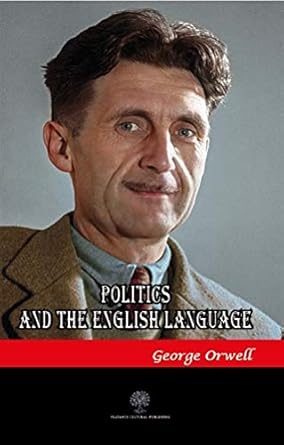
Arendt exposed ideological conformity, Gramsci revealed cultural capture, and now George Orwell’s Politics and the English Language (1946) unveils critical social constructivism’s (CSC) subtlest weapon: the corruption of language. Orwell warned that vague, euphemistic language obscures reality, trapping thought in a labyrinth of abstraction. CSC wields this tactic to redefine terms, enforce orthodoxy, and render dissent unthinkable. As we turn next to Mill’s defense of liberty, Orwell’s insights equip us to resist CSC’s assault on meaning.
Orwell argued that sloppy language fosters sloppy thought, and vice versa, creating a cycle in which “language becomes ugly and inaccurate because our thoughts are foolish” (Orwell, 1946). CSC exploits this feedback loop by emptying words like harm, justice, and truth of any stable, shared meaning. Disagreement becomes “harm,” objectivity becomes “whiteness,” merit becomes “systemic bias.” The appeal lies in the promise of inclusivity, yet clarity is sacrificed for ideological control. In 2024, university style guides—such as Stanford’s—discouraged terms like “mother” and “father” in favor of “birthing parent” and “non-birthing parent,” narrowing language to conform with CSC imperatives. That same year, journalism guidelines at outlets like NPR labeled objective reporting as a manifestation of “whiteness,” stifling evidence-based discourse.
Like Orwell’s Newspeak, CSC’s linguistic shifts shrink vocabulary and moral nuance, making dissent socially radioactive. To question CSC isn’t to be wrong—it’s to enact “violence.” This mirrors Orwell’s warning that vague language can “make lies sound truthful” (1946), a tactic used to protect ideological dogma. Unlike Gramsci’s cultural trenches, Orwell targets the battlefield of meaning, where CSC renders opposition not just incorrect but unintelligible within its moral grammar.
Orwell’s antidote—short words, active verbs, and concrete images—is a blueprint for resistance. Language must be a window, not a smokescreen. When language no longer corresponds to shared experience, political manipulation becomes inevitable. Restoring clarity means demanding precise, evidence-based definitions in institutions captured by CSC. This series—Arendt on totalitarianism, Gramsci on hegemony, Orwell on language, and Mill on liberty—reveals CSC as a coordinated project to redefine reality.
Read Orwell. Restore language through precise debate. Reclaim meaning in schools, workplaces, and public forums as the first act of resistance.
Three Salient Points for Arguments Against Critical Social Constructivism
- Language Obscures, Then Controls: CSC’s redefinition of “violence” to include speech, as in 2024 campus policies, severs language from reality and undermines open discourse—just as Orwell warned.
- Vagueness Is a Weapon, Not a Flaw: CSC’s reliance on unverifiable concepts like “lived experience,” seen in 2024 DEI reports, avoids falsifiability and shields ideological claims from challenge.
- Clarity Is Resistance: Demanding evidence-based definitions in DEI training and policy debates—guided by Orwell’s principles—undermines CSC’s ideological capture and restores intellectual integrity.
References
Orwell, G. (1946). Politics and the English Language. London: Horizon.
(Additional references: Orwell, G. (1949). 1984; Orwell, G. (1946). The Prevention of Literature.)
Our series began with Hannah Arendt’s The Origins of Totalitarianism, exposing how ideological systems crush complexity and silence dissent. Now, Antonio Gramsci’s Selections from the Prison Notebooks (1971) reveals how such systems entrench themselves not through violence, but through culture. His concept of cultural hegemony—the ruling class’s ability to weave its worldview into society’s “common sense”—underpins the activist-theoretical complex of critical social constructivism (CSC). Gramsci’s insights—soon to be joined by Orwell’s warnings on language and Mill’s defense of liberty—illuminate the strategic depth of CSC and arm us to resist its totalizing spread.
A Marxist imprisoned by Mussolini’s regime, Gramsci argued that dominance endures not just through state coercion, but by shaping the cultural narratives expressed in schools, media, and civil institutions (Gramsci, 1971). CSC wields this strategy skillfully, capturing universities, HR departments, and K–12 curricula to redefine concepts like justice, harm, and truth. Its appeal lies in promising equity through structural change, yet it betrays this promise by erecting a new orthodoxy in which dissent becomes unintelligible. In 2024, university DEI training at institutions like UCLA required faculty to affirm “anti-racism” principles, silencing questions about ideological framing—a Gramscian maneuver designed to remake “common sense” itself.
CSC’s genius—and its danger—lies in rewiring the cultural fabric, thread by thread, until dissent appears as an unthinkable pattern. In contrast to Gramsci’s vision of empowering the marginalized from below, CSC’s elites impose orthodoxy from above. DEI mandates, such as 2024 corporate policies that require employees to affirm contested ideologies, mirror what Gramsci called the “trenches” of cultural warfare. Speech codes that label disagreement as “harmful” render opposition not merely wrong but morally deviant, echoing the totalitarian logic Arendt identified. These tactics reshape the public square, narrowing moral and linguistic boundaries until alternative worldviews are excluded by default.
Gramsci reveals why CSC resists debate: it redefines the very terms of discourse. Understanding this strategy is essential to resisting it. By recognizing how CSC transforms institutions into ideological instruments, we can begin to reclaim pluralism and open inquiry. This series, bridging Gramsci to Orwell and Mill, equips us to understand CSC not just as a collection of radical ideas, but as a cultural project aimed at monopolizing moral and linguistic legitimacy. CSC’s spread—like a tapestry quietly rewoven to exclude dissent—demands a unified stand for liberal principles: free inquiry, reasoned debate, and intellectual freedom. Read Gramsci critically. Decode the cultural strategy.
Reclaim our institutions through open forums, Socratic seminars, and a revival of pluralistic values.

Three Salient Points for Arguments Against Critical Social Constructivism
Cultural Hegemony Is Real—and Reversible
Gramsci showed how norms are shaped through education and language. Reversing CSC’s dominance starts with advocating parental choice in curricula and open academic forums like Socratic seminars.
Institutional Capture, Not State Revolution, Is the Threat
CSC’s infiltration of institutions—such as 2024 UCLA DEI mandates enforcing ideological affirmations—mirrors Gramsci’s cultural revolution, reshaping society without needing to seize state power.
Ideas Become Unquestioned as ‘Common Sense’
By normalizing its ideology, CSC renders dissent immoral, as seen in 2024 speech codes. Supporting pluralism and open debate in schools and workplaces restores the possibility of reasoned disagreement.
Reference
Gramsci, A. (1971). Selections from the Prison Notebooks. New York: International Publishers.

Context and Ideology
On April 17, 1975, the Khmer Rouge, a communist guerrilla movement led by Pol Pot, seized Phnom Penh, ending Cambodia’s civil war. Declaring “Year Zero,” they sought to erase history, culture, and social structures to create a radical agrarian society. Influenced by Maoist China and Stalinist purges, their ideology vilified intellectuals, urbanites, and perceived “enemies” of the revolution. The term “Year Zero” symbolized a complete societal reset, rejecting capitalism, religion, and Western influence (Chandler, 1991).
Forced Evacuations and Urban Destruction
Within days of capturing Phnom Penh, the Khmer Rouge forcibly evacuated cities, claiming it was to protect citizens from American bombing—a lie. Over two million people, including hospital patients, were marched into rural areas under brutal conditions. Urban life was deemed bourgeois; cities were left to decay. This act alone caused thousands of deaths from starvation, exhaustion, or execution of dissenters (Kiernan, 2008).
Agrarian Collectivization and Forced Labor
The regime abolished private property, currency, and markets, forcing Cambodians into collective farms. Families were separated, and individuals were assigned grueling labor in rice fields or infrastructure projects, such as irrigation canals, with minimal food—often 200-300 calories daily (Ponchaud, 1978). Failure to meet quotas or minor infractions led to execution. The goal was self-sufficiency, but mismanagement and paranoia led to widespread famine.
Genocide and Mass Killings
The Khmer Rouge targeted “class enemies”—intellectuals, monks, ethnic minorities (Cham, Vietnamese, Chinese), and anyone suspected of disloyalty. Wearing glasses or speaking a foreign language could mark one for death. The Tuol Sleng prison (S-21) saw 12,000-20,000 tortured and executed, with only a handful surviving (Chandler, 1999). Mass graves, known as the “Killing Fields,” dotted the countryside. Estimates suggest 1.7 to 2.2 million deaths—nearly a quarter of Cambodia’s population—from execution, starvation, or disease (Kiernan, 2008).
Cultural Eradication
Year Zero aimed to obliterate Cambodian culture. Temples, libraries, and schools were destroyed or repurposed. Buddhism, practiced by 95% of Cambodians, was outlawed; monks were defrocked or killed. Traditional music, art, and even family ties were deemed counterrevolutionary. This cultural vandalism left Cambodia’s heritage in tatters (Becker, 1998).
Collapse and Legacy
The regime’s paranoia extended inward, with purges of its own ranks. By 1979, internal dissent and Vietnamese invasion toppled the Khmer Rouge. Pol Pot fled, but the regime’s legacy—trauma, fractured society, and economic ruin—persisted. The 1991 Paris Peace Accords and UN interventions aided recovery, but justice was slow. The Extraordinary Chambers in the Courts of Cambodia (ECCC), established in 2003, convicted key leaders like Nuon Chea and Khieu Samphan for genocide (ECCC, 2018).
References
- Becker, E. (1998). When the War Was Over: Cambodia and the Khmer Rouge Revolution. PublicAffairs.
- Chandler, D. P. (1991). The Tragedy of Cambodian History: Politics, War, and Revolution Since 1945. Yale University Press.
- Chandler, D. P. (1999). Voices from S-21: Terror and History in Pol Pot’s Secret Prison. University of California Press.
- Extraordinary Chambers in the Courts of Cambodia (ECCC). (2018). Case 002/02 Judgement. Retrieved from https://www.eccc.gov.kh/en.
- Kiernan, B. (2008). The Pol Pot Regime: Race, Power, and Genocide in Cambodia under the Khmer Rouge, 1975-79. Yale University Press.
- Ponchaud, F. (1978). Cambodia: Year Zero. Holt, Rinehart and Winston.











 bleatmop
 Mystro
 The Arbourist


 Dead Wild Roses
Your opinions…