
You are currently browsing the tag archive for the ‘Edmund Burke’ tag.
(TL;DR) – Burke’s Reflections on the Revolution in France warned that abstract ideals, once severed from tradition, devour the civilization that birthed them. Against the arrogance of rationalist utopia, Burke offers a philosophy of gratitude: reform through inheritance, freedom through reverence, and wisdom through time.
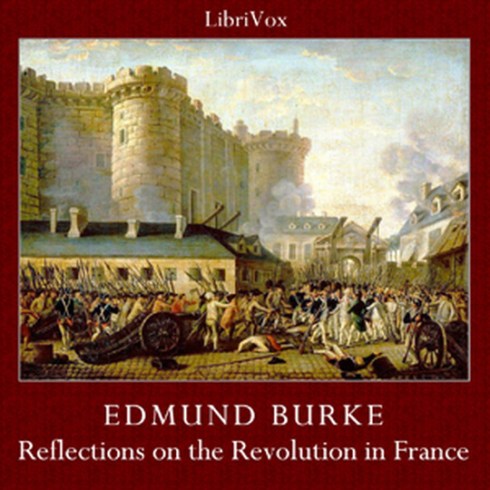
Edmund Burke (1729–1797), the Irish-born British statesman and philosopher, published Reflections on the Revolution in France in November 1790 as an open letter to a young Frenchman. Written before the Revolution’s worst excesses, the work is less a history than a prophetic warning against uprooting inherited institutions in the name of abstract rights.
At a time when Enlightenment rationalists sought to rebuild society from first principles, Burke defended the British constitution not as perfect but as the tested fruit of centuries of moral and political experience. Against the revolutionary attempt to remake society on metaphysical blueprints, he argued that true political wisdom rests in “prescription” (inheritance), “prejudice” (habitual virtue), and the moral imagination that clothes authority in reverence and restraint. Reflections thus became the founding text of modern conservatism, grounding politics in humility before the slow wisdom of civilization (Burke 1790, 29–55).
1. The Organic Constitution versus the Mechanical State
Burke likens a healthy commonwealth to a living organism whose parts grow together over time. The British settlement of 1688, which balanced liberty and order, exemplified reform through continuity—“a deliberate election of light and reason,” not a clean slate.
The French revolutionaries, by contrast, treated the state as a machine to be disassembled and reassembled according to geometric principles. They dissolved the nobility, confiscated Church lands, and issued assignats—paper money backed only by revolutionary will. Burke foresaw that such rationalist tinkering would require force to maintain: “The age of chivalry is gone. That of sophisters, economists, and calculators has succeeded.” The predictable end, he warned, would be military dictatorship—the logic of abstraction enforced by bayonets (Burke 1790, 56–92).
2. The Danger of Metaphysical Politics
The Revolution’s fatal error, Burke argued, was to govern by “the rights of man” divorced from the concrete rights of Englishmen, Frenchmen, or any particular people. These universal abstractions ignore circumstance, manners, and the “latent wisdom” embedded in custom.
When the revolutionaries dragged Queen Marie Antoinette from Versailles to Paris in October 1789, Burke saw not merely a political humiliation but a civilizational collapse: “I thought ten thousand swords must have leaped from their scabbards to avenge even a look that threatened her with insult.” The queen, for him, symbolized a moral order that elevated society above brute appetite. Once such symbols are desecrated, civilization itself is imperiled (Burke 1790, 93–127).
3. Prescription, Prejudice, and the Moral Imagination
For Burke, rationality in politics is not the isolated reasoning of philosophers but the accumulated judgment of generations. “Prescription” gives legal and moral title to long possession; to overturn it is theft from the dead. “Prejudice,” far from being ignorance, is the pre-reflective moral instinct that makes virtue habitual—“rendering a man’s virtue his habit,” Burke wrote, “and not a series of unconnected acts.”
In his famous image of the “wardrobe of a moral imagination,” Burke insists that society requires splendid illusions—chivalry, ceremony, religion—to clothe power in dignity and soften human passions. Strip away these garments and you are left with naked force and the “swinish multitude.” Culture, in his view, is not ornament but armor for civilization (Burke 1790, 128–171).
4. Prophecy Fulfilled and the Path of Prudence
Events soon vindicated Burke’s warnings: the Reign of Terror, Napoleon’s rise, and the wars that consumed Europe. Yet Reflections is not an “I told you so” but a manual for political health. Burke accepts reform as necessary but insists that it must proceed “for the sake of preservation.” The statesman’s duty is to repair the vessel of society while it still sails, not to smash it in search of utopia.
Reverence for the past and distrust of untried theory are not cowardice but prudence—the recognition that civilization is a fragile inheritance, easily destroyed and seldom rebuilt (Burke 1790, 172–280).
5. Burke’s Enduring Lesson
Burke’s insight extends far beyond the French Revolution. His critique applies wherever abstract moralism seeks to erase inherited forms—whether through revolutionary ideology, technocratic social engineering, or the cultural purism of modern movements that prize purity over continuity. The temptation to rebuild society from scratch persists, but Burke reminds us that order is not manufactured; it is cultivated.
In an age still haunted by ideological utopias, Burke’s prudence is an act of intellectual piety: to love what we have inherited enough to reform it carefully, and to mistrust those who promise perfection by destruction.
References
Burke, Edmund. 1790. Reflections on the Revolution in France, and on the Proceedings in Certain Societies in London Relative to that Event. London: J. Dodsley.
Glossary of Key Terms
Assignats – Revolutionary paper currency secured on confiscated Church property; rapid depreciation fueled inflation.
Latent wisdom – Practical knowledge embedded in customs and institutions, inaccessible to abstract reason.
Moral imagination – The faculty that clothes abstract power in elevating symbols and sentiments.
Prejudice – Pre-reflective judgment formed by habit and tradition; for Burke, a source of social cohesion.
Prescription – Legal and moral title acquired through uninterrupted possession over time.
Swinish multitude – Derisive term for the populace once traditional restraints are removed.
The last veterans of the Great War departed this world decades ago; those who endured the trenches and bombardments of the Second World War now number fewer than a thousand, most in their late nineties or beyond. With them vanishes the final tether of direct witness to the twentieth century’s cataclysms. What fades is not merely a generation but a form of moral authority — the living memory that once stood before us in uniform and silence. We have reached a civilizational inflection point: the moment when history ceases to be personal recollection and becomes curated narrative, vulnerable to distortion, neglect, or deliberate revision.
This transition demands vigilance. Memory, once embodied in a stooped figure wearing faded medals, could command reverence simply by existing. Now it resides in archives, textbooks, and the contested arena of public commemoration. The risk is not that the past will vanish entirely — curiosity and conscience ensure fragments endure. The greater peril is that it will be instrumentalised: stripped of complexity and pressed into service for transient ideological projects. A battle becomes a hashtag, a sacrifice a soundbite, a hard-won lesson a slogan detached from the blood that purchased it.
Edmund Burke reminded us that society is a partnership not only among the living, but between the living, the dead, and those yet unborn. This compact imposes obligations. We inherit institutions, norms, and liberties refined through centuries of trial, error, and atonement. To treat them as disposable because their origins lie beyond living memory is to saw off the branch on which we sit. The trenches of the Somme, the beaches of Normandy, the frozen forests of the Ardennes—these were not abstractions of geopolitics but crucibles in which the consequences of appeasement, militarised grievance, and contempt for constitutional restraint were written in blood.
The lesson is not that war is always avoidable; history disproves such sentimentalism. It is that certain patterns recur with lethal predictability when prudence is discarded. The erosion of intermediary institutions, the inflation of executive power, the substitution of mass emotion for deliberation—these were the preconditions that turned stable nations into abattoirs. To recognise them requires neither nostalgia nor ancestor worship, only the intellectual honesty to trace cause and effect across generations.
Conserving society in the Burkean sense is therefore active, not passive. It means cultivating the habits that sustain ordered liberty: deference to proven custom tempered by principled reform; respect for the diffused experience of the many rather than the concentrated will of the few; and humility before the limits of any single generation’s wisdom. Remembrance Day, properly observed, is not a requiem for the dead but a summons to the living. It reminds us that the peace we enjoy is borrowed, not owned — and that the interest payments come due in vigilance, discernment, and the quiet courage to defend what has been painfully built.
As the century that began in Sarajevo and ended in Sarajevo’s shadow recedes from living memory, the obligation deepens. We must read the dispatches, study the treaties, weigh the speeches, and above all resist the temptation to flatten the past into morality plays that flatter the present. Only thus do we honour the fallen: not with poppies alone, but with societies sturdy enough to vindicate their sacrifice.











 bleatmop
 Mystro


 Dead Wild Roses
Your opinions…