
You are currently browsing the tag archive for the ‘Empathy’ tag.
In late December 2025, an X thread went viral by naming a pattern many people recognize but rarely formalize. The author argued that much contemporary activism doesn’t begin with an argument. It begins with an emotional capture: a suffering child, a traumatized testimonial, a stripped-down historical grievance, a demand to “listen,” and the implicit message that hesitation is moral failure. If the target asks for definitions, tradeoffs, or evidence, the thread claims the response is often not rebuttal but stigma—labels meant to raise the social cost of dissent.
To describe the mechanism, the thread borrows from psychologist Martha Stout’s The Sociopath Next Door, especially her warning about the “pity play”: an appeal to sympathy that disarms decent people and grants the manipulator moral cover. The point of the thread is not that political opponents are “sociopaths.” Its point is that sympathy can be used to purchase moral immunity, and once immunity is granted, scrutiny becomes taboo.
This matters because democratic persuasion depends on the difference between compassion and coercion. Compassion is attention to suffering. Coercion is using suffering to forbid questions.
So here is a practical test for readers who want to stay humane without becoming steerable.
The Narrative Pressure Test
When a cause arrives wrapped in urgency, run five questions before you assent.
1) What claim is being made, separate from the story?
A vivid story is not a thesis. A photo is not a policy. If the emotional payload is clear but the claim is vague, you’re being recruited before you’re informed.
A common trick is to start with something true (“this person is suffering”) and slide toward something contestable (“therefore this specific policy is the only decent response”). The bridge between those two is where reasoning belongs. If the bridge is missing, the message is operating as a shortcut.
2) What facts would falsify it?
Real claims have losing conditions. If disagreement itself is treated as evidence of malice, the message isn’t trying to persuade. It’s trying to sort people into “good” and “bad.”
This is where moral language becomes a weapon. “Act now or you’re complicit” is not analysis. It is time pressure dressed as conscience.
3) Who gets moral immunity?
Look for the doctrine of permanent innocence.
If a group is treated as incapable of agency, it will also be treated as incapable of responsibility. That exemption attracts opportunists and rewards escalation, because any request for standards can be reframed as “attacking victims.”
Pity is not the problem. Pity used as a shield against scrutiny is.
4) What action is being demanded, and who pays?
This question forces morality to meet arithmetic.
Is the demanded action symbolic (slogans, rituals, purges), or coercive (law, policy, firings, spending commitments, policing changes)? Who bears the downside risk? The people demanding sacrifice, or the bystanders who can’t opt out?
If the loudest moralizers don’t pay the costs, compassion may be functioning as status performance rather than responsibility.
5) What happens if we slow down?
True emergencies can survive scrutiny. Manufactured urgency cannot.
If a narrative collapses the moment you ask for definitions, evidence, and tradeoffs, it’s not designed to be tested. It’s designed to capture. The insistence on speed is often the tell, because speed bypasses the hard questions that expose weak claims.
The steelman objection
There is an obvious fear here: doesn’t this “weaponized empathy” framework become an excuse to ignore suffering?
It can. That’s the failure mode in the opposite direction. People learn the language of manipulation and use it as an anesthetic: any appeal to pain becomes “a pity play,” and they never have to do anything difficult again.
The disciplined position is harder:
-
Suffering is real and morally relevant.
-
Claims made on the back of suffering still need scrutiny.
-
Compassion is not permission to skip consequences.
A clean rule helps: grant humanity first, then demand the adult questions.
A person can be hurting and still be wrong. A cause can be sympathetic and still produce harm. A story can be true and still be used to sell a false conclusion.
Compassion with guardrails
The viral thread’s usefulness is not in its tribal conclusions. It is in the reminder that moral pressure can substitute for argument, and that good people are especially vulnerable to that substitution because they don’t want to be cruel.
The antidote is not numbness. It is sequencing. Feel the tug, then force the questions.
Empathy is a virtue. But empathy that cannot tolerate scrutiny becomes a lever. And a society that hands out levers this easily will eventually be moved by whoever learns to pull them best.
References
Ne_pas_couvrir X thread (Dec 23, 2025)
https://x.com/Ne_pas_couvrir/status/2003469502210572613
Martha Stout — “pity play” quote (Goodreads)
https://www.goodreads.com/quotes/1129543-rather-the-best-clue-is-of-all-things-the-pity
Martha Stout — The Sociopath Next Door (Goodreads quotes index)
https://www.goodreads.com/work/quotes/118905-the-sociopath-next-door
Bezmenov context (Snopes)
https://www.snopes.com/fact-check/1960s-kgb-experiments-subjects-brainwashed/
Bezmenov overview (Big Think)
https://bigthink.com/the-present/yuri-bezmenov/
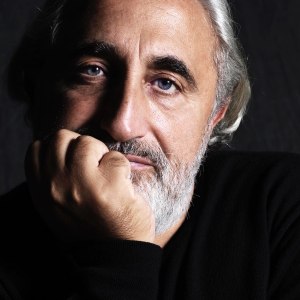
Suicidal empathy is a term Dr. Gad Saad uses to describe a specific failure mode of compassion: empathy that gets detached from boundaries, reciprocity, and cost-accounting—until it starts producing outcomes that harm the very people and institutions doing the empathizing.
Read it less as a diagnosis and more as a warning label. Empathy is normally a pro-social tool. It helps humans cooperate, care for dependents, and build trust. But like any tool, it can be misapplied. When empathy becomes an unconditional rule (“the compassionate option must always win”), it stops asking the questions that keep compassion functional: Who pays? Who benefits? What incentives are we creating? What happens if this scales?
That’s the central mechanism. Unbounded empathy deactivates trade-offs. It treats limits as moral failure, and it treats enforcement as cruelty. In public life, that often looks like policies designed around the needs of the claimant while steadily eroding the duties owed to the steward—the taxpayer, the law-abiding neighbor, the already-vulnerable person living downstream of disorder. It isn’t that compassion is wrong; it’s that compassion without accounting becomes a transfer of risk onto the conscientious.
If you want this concept to be useful—rather than partisan—you need a clean heuristic. Here’s one:
The Suicidal Empathy Test (a quick diagnostic)
When you see a “compassion-first” policy, norm, or movement, ask:
-
Where does the cost land?
Is the cost paid by decision-makers, or exported onto people with less voice? -
What happens at scale?
Would this still work if adopted widely, or is it only viable as a boutique exception? -
What incentives does it create?
Does it reward responsibility and reciprocity—or does it reward manipulation, noncompliance, or repeat harm? -
Are boundaries being treated as immoral by definition?
If the only “good” option is the one that refuses limits, you’re not doing ethics—you’re doing sentiment. -
Does it erode the conditions that make generosity possible?
High-trust societies can afford softness because they still enforce norms. If the proposal weakens trust, safety, or shared obligation, it may be burning the fuel empathy runs on.
You don’t need cynicism to apply this test. You just need the willingness to treat compassion as something that must be paired with responsibility. The point isn’t to feel less—it’s to see more: the second-order effects, the incentives, the people who silently pay. If empathy can’t survive contact with those questions, it isn’t moral courage. It’s moral vanity with a body count.
References
Suicidal Empathy (publisher page – HarperCollins / Broadside Books)
https://www.harpercollins.com/products/suicidal-empathy-gad-saad
Gad Saad – Concordia University faculty profile
https://www.concordia.ca/faculty/gad-saad.html
The Parasitic Mind (publisher page – Simon & Schuster)
https://www.simonandschuster.com/books/The-Parasitic-Mind/Gad-Saad/9781621579939
Gad Saad – Psychology Today contributor page
https://www.psychologytoday.com/ca/contributors/gad-saad-phd
Suicidal Empathy (Audible Canada listing – includes release date/details)
https://www.audible.ca/pd/Suicidal-Empathy-Audiobook/B0FZ6JMVFQ
Yelling at each other online is cool and what not (see the RPOJ) but past cartharisis for the writer, I’m thinking, not much is really accomplished. Understanding the context and where people are coming from is an important skill to foster, and as Alexander Bevilacqua (from his essay on the Aeon Website) says, we should not entirely replace the adversarial aspects of our intellectual culture, but perhaps temper our expectations with a bit of empathy and appreciation for where the arguments are coming from.
“The call for empathy might seem theoretically naive. Yet we judge people’s intentions all the time in our daily lives; we can’t function socially without making inferences about others’ motivations. Historians merely apply this approach to people who are dead. They invoke intentions not from a desire to attack, nor because they seek reasons to restrain a text’s range of meanings. Their questions about intentions stem, instead, from respect for the people whose actions and thoughts they’re trying to understand.
Reading like a historian, then, involves not just a theory of interpretation, but also a moral stance. It is an attempt to treat others generously, and to extend that generosity even to those who can’t be hic et nunc – here and now.
For many historians (as well as others in what we might call the ‘empathetic’ humanities, such as art history and literary history), empathy is a life practice. Living with the people of the past changes one’s relationship to the present. At our best, we begin to offer empathy not just to those who are distant, but to those who surround us, aiming in our daily life for ‘understanding, not judging’.
To be sure, it’s challenging to impart these lessons to students in their teens or early 20s, to whom the problems of the present seem especially urgent and compelling. The injunction to read more generously is pretty unfashionable. It can even be perceived as conservative: isn’t the past what’s holding us back, and shouldn’t we reject it? Isn’t it more useful to learn how to deconstruct a text, and to be on the lookout for latent, pernicious meanings?
Certainly, reading isn’t a zero-sum game. One can and should cultivate multiple modes of interpretation. Yet the nostrum that the humanities teach ‘critical thinking and reading skills’ obscures the profound differences in how adversarial and empathetic disciplines engage with written works – and how they teach us to respond to other human beings. If the empathetic humanities can make us more compassionate and more charitable – if they can encourage us to ‘always remember context, and never disregard intent’ – they afford something uniquely useful today.”
There isn’t much to lose in trying a slightly different approach to arguing with other people, I think it is worth a shot.
The parochial attitude of North Americans is quite disturbing, and unjustified. We have unparalleled access to information and news from across the globe and by this feature alone we should be attuned to the plight of others and the injustice in the world. Yet, most of us are not. As long as shit happens ‘over there’ whether it be across an ocean, or the local river the daily pattern of our lives does not change.
Only when our routines are disrupted and our comfort zones threatened do we awake from our slumber. In our defence, there really isn’t another way to go about one’s life as the amount of horror in the world is a completely paralyzing notion and can only be examined at arms length if one wishes to remain sane.
But.
I think the balance between our safe cocoons and concern for the situations others needs to be reordered. The slow-fast human catastrophe that is Syria highlights exactly what I’m talking about.
“A chemical attack in Douma, the last rebel-held stronghold near Syria’s capital, Damascus, has killed at least 70 people and affected hundreds, rescue workers have told Al Jazeera.
The White Helmets, a group of rescuers operating in opposition-held areas in Syria, said on Saturday that most of the fatalities were women and children.
“Seventy people suffocated to death and hundreds are still suffocating,” Raed al-Saleh, head of the White Helmets, told Al Jazeera, adding that the death toll was expected to rise as many people were in critical condition.
Al-Saleh said that chlorine gas and an unidentified but stronger gas were dropped on Douma.”
We sit complicit while the Assad regime gasses its own people in their efforts to ‘stabilize’ their country.
“We are currently dealing with more than 1,000 cases of people struggling to breathe after the chlorine barrel bomb was dropped on the city. The number of dead will probably rise even further.”
The Douma Media Centre, a pro-opposition group, posted images on social media of people being treated by medics, and of what appeared to be dead bodies, including many women and children.
Rescue workers also posted videos of people appearing to show symptoms consistent with a gas attack. Some appeared to have white foam around their mouths and noses.
Symptoms of a chlorine attack include coughing, dyspnea, intensive irritation of the mucous membrane and difficulty in breathing.”
Being a civilian is Syria isn’t such a welcoming proposition. Chemical warfare is an agreed upon ‘no-go’ for most of the nations of the world. There is a treaty and everything.
“The Chemical Weapons Convention (CWC) is an arms control treaty that outlaws the production, stockpiling, and use of chemical weapons and their precursors. The full name of the treaty is the Convention on the Prohibition of the Development, Production, Stockpiling and Use of Chemical Weapons and on their Destruction and it is administered by the Organisation for the Prohibition of Chemical Weapons (OPCW), an intergovernmental organization based in The Hague, The Netherlands. The treaty entered into force in 1997.”
…
…

This image released early Sunday, April 8, 2018 by the Syrian Civil Defence White Helmets, shows a rescue worker carrying a child following an alleged chemical weapons attack in the rebel-held town of Douma, near Damascus, Syria. White Helmets via AP
Yet this happens. And most of NA placidly accepts this. Maybe some tsk-tisking and/or a lament on how horrible the gassing of civilians is. But then, most of us just scroll onward past this tragedy that has been disconnected from our consciousness.
What is missing, at least in part, is the feeling of responsibility (not to mention the empathy of what it must be like trying to survive during a civil war) of our part in their ordeal.
“Joseph Massad on Al Jazeera said the term was “part of a US strategy of controlling [the movement’s] aims and goals” and directing it towards western-style liberal democracy.[17] When Arab Spring protests in some countries were followed by electoral success for Islamist parties, some American pundits coined the terms “Islamist Spring”[20] and “Islamist Winter”.
Also this from The Atlantic:
“Egyptian military officials wagered, rightly, that they could get away with what became, according to Human Rights Watch, the worst mass killing in modern Egyptian history—as well as one of the worst single-day mass killings in recent decades anywhere in the world.
America’s relative silence was no accident. To offer a strong, coherent response to the killings would have required a strategy, which would have required more, not less, involvement. This, however, would have been at cross-purposes with the entire thrust of the administration’s policy. Obama was engaged in a concerted effort to reduce its footprint in the Middle East. The phrase “leading from behind” quickly became a pejorative for Obama’s foreign-policy doctrine, but it captured a very real shift in America’s posture. The foreign-policy analysts Nina Hachigian and David Shorr called it the “Responsibility Doctrine,” a strategy of “prodding other influential nations … to help shoulder the burdens of fostering a stable, peaceful world order.” In pursuing this strategy in the Middle East, the United States left a power vacuum—and a proxy struggle. During Morsi’s year-long tenure, Qatar became the single largest foreign donor to Egypt, at over $5 billion (with Turkey contributing another $2 billion). Just days after the military moved against Morsi, it was Saudi Arabia, the United Arab Emirates, and Kuwait that pledged a massive $12 billion to the new military-appointed government.
The United States, along with the conservative Gulf monarchies and many others, also viewed Islamist parties with considerable suspicion.”
Being a world power, only when convenient, isn’t being a world power. Behaving only to protect the national interest places us squarely in the realm of realpolitik and the (a)moral compass associated with that mode of thinking. Syria lies on the border of two spheres of influence. The Russian empire and the American Empire. Arguably, Russia has greater influence, not least of all because of geographical proximity, on Syria and the maintenance of the current regime is in their national self interest. Thus the frisson between the American tacit support for the revolution (toward a US friendly regime) and the Russian support for the status quo and continuation within their own sphere of self-interest are the only realpolitik concerns on the table. The humanitarian disaster resulting from this friction between empires is but a footnote and not really mainstream news worthy – at least not past the ratings ‘bump’ procured for showing disconnected images of human suffering.
a
a
A non-corporate real media would be all over the context of the situation portraying the real cost in human misery of what happens when spheres of influence collide and how little the ‘national interest’ cares about people dying ‘over there’. Yet with all our glitzy internet power and googleplexes of information at our fingertips has this sort of contextual analysis even been hinted at in North American mainstream media?
a
a
Not really.
a
a
Compare how the Associated Press and Al-Jazeera frame the article (also the sources on which this piece is based). A telling difference, the focus on the ‘facts’ versus the human angle that the Al-Jazeera piece. I think we need more of the second variety as we need to inspire empathy and the common human nature that binds us all together, so we can work toward a more peaceable future.
a
a
(Unlikely as it may be.)
A couple nights ago I was wading about the web, waiting for sleepiness to find me when I came across this video. It exhibits the most beautiful project I’ve seen to in a very long time.
On the surface, it is a colossal exercise of empathy and caring for those in desperate need of support. On top of that, and I think much more important, is the awareness it must spread to the community. The bridge highlights a problem and inspires people to think about it, identify with sufferers, and help in preventative measures. It’s a wonderful thing.
 Ethics are what make people stand against tyranny. Saying “no” to the crowd is one of the most difficult challenges we face as social animals. Bradley Manning had the courage to make an ethical stand, we all possess similar characteristics, we just choose to dismiss these ethical impulses. When we do so, our the moral fabric of our society degrades.
“Washington, DC – Private Bradley Manning was just 22 years old when he allegedly leaked hundreds of thousands of US State Department cables and video evidence of war crimes to the whistle-blowing website WikiLeaks. For that act of courage that revealed to the world the true face of the American empire, he faces the prospect of spending the rest of his life in prison.”
Making an ethical stand always has consequences; I’m surprised Mr.Manning has not been executed yet for his actions. The international media, not heard in the US of course, is picking up the story and telling a significantly different narrative than what the White House would like you to believe.
“All one needs to know about American justice is that if he had murdered civilians and desecrated their corpses – if he had the moral capacity to commit war crimes, not the audacity to expose them – he’d be better off today.”
Not exactly good for the recruiting posters.
“Indeed, if Manning had merely murdered the nameless, faceless “other”, as his Army colleagues on the notorious Afghan “Kill Team” did, he would not have had his right to a speedy trial blatantly violated. If Manning had intentionally killed unarmed civilians, posed for pictures with their dead bodies and slashed their fingers off as souvenirs, he would not have had his guilt publicly pronounced by his own commander-in-chief, President Barack Obama, months before he so much as saw the inside of a military court. If he had killed poor foreigners instead of exposing their deaths, he might even stand a chance of getting out of prison while still a young man.”
War brings a different set of rules to the table, but we in the West would like to think that we possess some noble spirit that sets us apart from the rest. Yo-ho, it is they who are savages, the brutes who kill indiscriminately. What bullocks.
“This isn’t really a head-scratching development. While killing unarmed civilians for sport may not be officially sanctioned policy, it doesn’t threaten the functioning of the war machine as much as a soldier standing up and refusing to be complicit in mass murder. From the perspective of a Washington establishment much more concerned with maintaining hegemony than its humanity, the former – murder – is much less troubling a precedent than the latter.
And so the US government is making an example of Manning, lest any other cogs in the machine start thinking about listening to their consciences instead of their commanders.”
The mirroring of foreign policy onto this case bears further investigation. The bullshite you here about the domino theory and the various red-scares starts with the implicit assumption that the “threat of a good-example” must be quashed at all costs. The illegal terrorist war waged by the United States on Nicaragua is a prime example of a country using resources for its people instead of the multinationals. Raises the poor a few steps out of abject poverty is the “good example” that must be utterly destroyed so “stability” can be restored. Stability being shorthand for globalized corporate control. Focusing on the individual case of Mr.Manning we can observe the same pattern.
 Manning’s actions speak of a human conscience, a sense that what was going on was horribly wrong and it needed to stop. Acting on his conscience as a decent human being, Manning took action. Having people empathically relate to official enemies is a big no no in the armed forces, you might start questioning the rational, as such, of what you’re doing there and that, gentle readers, is not allowed.
“Had Manning – instead of exposing the crime – been the one pulling the trigger in the US Apache helicopter that in 2007 murdered at least a dozen unarmed people in Baghdad, he wouldn’t be facing any legal consequences for his actions. Had Manning authorised a 2009 missile strike in Yemen that killed 14 women and 21 children, instead of releasing the State Department cable that acknowledges responsibility for the killings, we wouldn’t even know his name.
But Manning didn’t kill anybody. Rather, he was outraged by the killing he saw all around him and angered at the complicity of his higher-ups who weren’t prepared to do a damn thing about. So, the system having failed to ensure accountability, Manning took it upon himself to share the inconvenient facts his government was withholding from the world.
“I prefer a painful truth over any blissful fantasy”, he explained in a chat with hacker-turned-informant Adrian Lamo. As an Army intelligence analyst, Manning witnessed firsthand the American empire in action – and it changed him. “I don’t believe in good guys versus bad guys anymore”, he lamented, “only a plethora of states acting in self-interest”.
Transparency, accountability, responsibility are all hallmarks of a functioning democracy. The people of a democracy have the right to know what is being done in their name.
“Confronted with the reality of institutional evil, Manning risked his career – and his freedom – in order to expose everything from mass murder and child rape in Afghanistan to US support for brutal dictators across North Africa and the Middle East. His actions were heroic, and Amnesty International has even credited them as the spark for with jump-starting the Arab Spring. And yet a president who proclaims his commitment to transparency while on the campaign trail is determined to go down as the one whose administration mentally tortured, prosecuted and jailed the most famous whistle-blower in half-a-century.”
Officially we want heroes from war, but what we really get are ‘made-men’ who, with the consent of the state, parrot the institutional truths back to the public to keep them in the dark. Outside of the borders of the USA, the notion of ‘defending freedom’ has a much different definition, one much closer to the harsh truth that Bradly Manning chose to share.
Manning said,”I prefer a painful truth over any blissful fantasy”. – Perhaps if the American public could share a similar sentiment democracy might begin to flourish once again in the USA.











 bleatmop
 Mystro


 Dead Wild Roses
Your opinions…