
You are currently browsing the tag archive for the ‘Femininity’ tag.
Headless, mouth slightly open, long hair, white, frilly uncomfortable dress and flowers – A Weak object for consumption/desire.
“Women aren’t hated for being feminine, femininity is forced on us because we are hated. we don’t naturally apply make up, wear constricting clothing, shave our natural body hair and stay quiet even when we are upset with something. we are conditioned to do this because women are supposed to take up as little space as possible and erase traces of our growth both physically and mentally. women who refuse to perform femininity demand their space and they demand to be heard. they cannot be neutral in a highly gendered society; they are punished for not conforming.”

Femininity literally is weakness forced upon us. Being quiet, serving and submissive is not anything that can be reformed into some good, new kind of gender. We literally modify our bodies. We are trained to serve and be available. We are trained to hate ourselves and not strive too far, lest our oppressors may be displeased.
Femininity is the socialization of the oppressed class.
 A pox on you Game of Thrones for pushing my summer reading to the margins. Just look at the great stuff that has been gathering dust in my book-pile. This is an excerpt from Susan Brownmiller’s work titled “Femininity”.
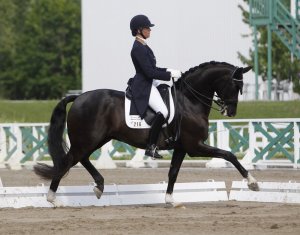
“Nancy Henley, psychologist and author of Body Politics, has written, “In a way so accepted and so subtle as to be unnoticed even by its practitioners and recipients, males in couples will often literally push a woman everywhere she is to go – the arm from behind, steering around corners, through doorways, into elevators, onto escalators … crossing the street. It is not necessarily heavy and pushy or physical in an ugly way; it is light and gentle but firm, in the way of the most confident equestrians with the best-trained horses.”
In this familiar pas de deux, a woman must either consent to be led with a gracious display of good manners or else she must buck and bristle at the touch of the reins. Femininity encourages the romance of compliance, a willing exchange of motor autonomy and physical balance for the protocols of masculine protection. Steering and leading are prerogatives of those in command. Observational studies of who touches whom in a given situation show that superiors feel free to lay an intimate, guiding hand on those with inferior status, but not the reverse. “The politics of touch,” a concept of Henley’s operates instructively in masculine-feminine relations.”
-Susan Brownmiller, Femininity. p. 200
Sociological experiment time ladies and gents. Let’s test the politics of touch in real life and be aware of how your partner interacts with you on the street. Is the gentle steering there? The quote mentions that this is close to being an imperceptible phenomena, so hike up your conscious awareness to 11 and observe what happens.
For extra fun why not try and lead your partner, or be lead to see how the role reversal works out?
 Susan Brownmiller has a remarkable talent for framing slippery sociological concepts. This quote is from the introduction to her book “Femininity” and it lucidly describes the nature of the viscous catch-22 women experience for the crime of being born female.
“Femininity always demands more.
It must constantly reassures its audience by a willing demonstration of difference, even when one does not exist in nature, or it must seize and embrace a natural variation and compose a rhapsodic symphony upon the notes. Suppose one doesn’t care to, has other things on her mind, is clumsy or tone-deaf despite the best instruction and training? To fail at the feminine difference is to appear not to care about men, and to risk the loss of their attention and approval. To be insufficiently feminine is viewed as a failure in core sexual identify, or as a failure to care sufficiently about oneself, for a woman found wanting will be appraised (and will appraise herself) as mannish or neutered or simply unattractive, as men have defined these terms.
We are talking, admittedly, about an exquisite esthetic [sic]. Enormous pleasure can be extracted from feminine pursuits as a creative outlet or purely as relaxation; indeed, indulgence for the sake of fun, or art, or attention, is among femininity’s great joys. But the chief attraction (and the central paradox, as well) is the competitive edge that femininty seems to promise in the unending struggle to survive, and perhaps to triumph. The world smiles favorably on the feminine woman: it extends little courtesies and minor privilege. Yet the nature of the competitive edge is ironic, as beset, for one works at femininity by accepting restrictions, by limiting one’s sights, by choosing an indirect route, by scattering concentration and not giving one’s all as a man would to his own, certifiably masculine, interests. It does not require a great deal of imagination for a woman to understand the feminine principle as a grand collection of compromises, large and small, that she simply must make in order to render herself a successful woman. If she has difficulty in satisfying femininity’s demands, if its illusions go against her grain, or if she is criticized for her shortcomings and imperfections, the more she will see femininity as a desperate strategy of appeasement, a strategy she may noe have the wish of the courage to abandon, for failure looms in either direction.”
-Susan Brownmiller. Femininity p. 15-16











 bleatmop
 Mystro
 The Arbourist


 Dead Wild Roses
Your opinions…