
You are currently browsing the tag archive for the ‘Feminism’ tag.
 I’ve had this post on the back burner for months, since a commenter at Shakesville (I think) said, you could never get away with restricting men’s access to Viagra the way state legislatures have restricted women’s access to abortion in America. And no, you couldn’t. But interestingly enough, it’s pretty easy to make a set of arguments for restricting access to Viagra, that are pretty similar to the arguments for restricting access to abortion. For the most part, all you have to do is search the text, and replace “woman” with “man”, “abortion” with “Viagra”, and “ends a human life” with “begins a human life”. (If pre-born human life is that important to you, you should take its creation as seriously as its destruction.) Then there are a few restrictions that claim they’re protecting women, and you just have to look at the flip-side: preventing men from hurting women. For some of the restrictions, I’ve invented an imaginary evil radical feminist anti-het-sex conspiracy to substitute for the Religious Right.
Every restriction on access to Viagra I propose below, is either a fact of life, or a legislated restriction, on abortion in at least one, and often many, American states. When the restrictions and their justifications are imposed on men, they look pretty radically man-hating (never mind that being unable to get a hardon is nowhere near as traumatic as going through childbirth against your will), but in their anti-abortion form, it’s not just fringe whackaloons making the arguments I’ll list, it’s people elected to public office. Read the rest of this entry »
I just keep posting about gender inequality, others say pfffff! what the heck I am talking about….
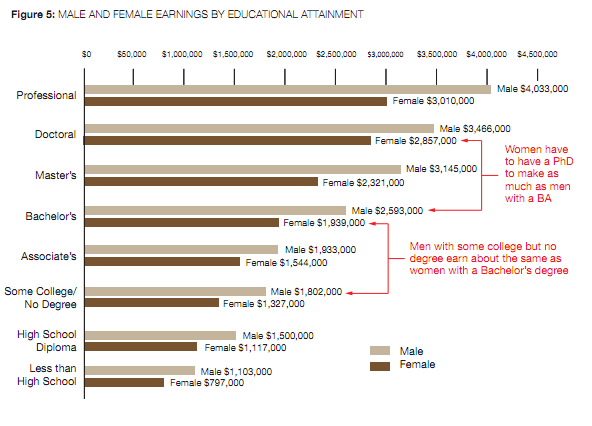
Until the idea that inequality exists and that it is a problem,then there really is not much to discuss now, is there?
Of all the women and all the poses that are available *this* one gets the attention. Of course it is rape culture double thumbs up approved so its all good.

*sigh*
Still so much work to do…
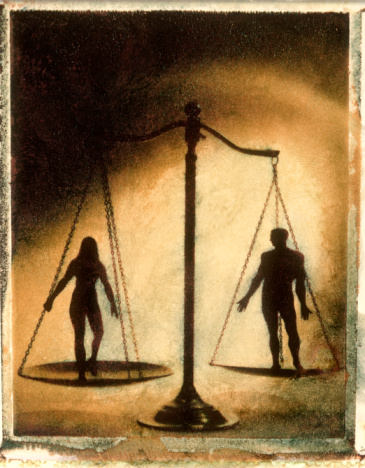 Ahh, a small break in the studies allows me to do some sweet sweet blogging.
The Canadian Supreme Court as just managed to find its ass with, get this, not just one, but BOTH of it hands. The wisdom and judicial prudence has been flowing as of late, but let us scry into the dense legal jargon and decipher this weighty codex:
“A woman cannot give advance consent to sexual activity while unconscious, the Supreme Court of Canada ruled Friday.”
How they get the creamy filling into the chocolate bars is next on this braintrust’s todo list. One problem at a time though…
“If the complainant is unconscious during the sexual activity, she has no real way of knowing what happened and whether her partner exceeded the bounds of her consent,” the ruling said.
The definition of consent is an ongoing state of mind where individuals can ask their partner to stop, McLachlin wrote.
“Any sexual activity with an individual who is incapable of consciously evaluating whether she is consenting is therefore not consensual within the meaning of the Criminal Code,” she wrote.
Why we need such clarity is because in 2007 a couple engaged in mutual erotic asphyxiation and of course, the dude while his partner was out did stuff to her that was above and beyond the terms of their agreement. Okay, that was speculation on my part, this is what the article says:
“The case goes back to a particular episode in 2007 when the woman, who cannot be named because of a publication ban, complained to police about what her partner did to her after she passed out. At trial, the man was found guilty of sexual assault but his conviction was overturned on appeal.”
Ah, says the rights crowd, she had it coming then as she had already agreed to take part in sexual activity. Yes, she did to the initial act, but she did not give consent for x, y, and z that came after when she was unconscious and correctly this dudes appeal was overturn and he went to prison.
“The Ottawa man served 18 months in jail after his conviction in 2008 on the sexual assault charge.”
And justly so, because there was a point, before committing x,y,z on her body, he had the choice. There was a threshold, a line of ambivalence that needed to be consciously crossed before he continued with the sexual assault and he did so. Consent is everything in an intimate relationship, especially one that pushes boundaries with racy sexual activities, and the dude in question made a conscious decision to go beyond the reasonable expectations of their relationship.
Three Justices dissented from this ruling –
“In the dissenting opinion written by Justice Morris Fish, the judges said Friday’s ruling would deprive women “of their freedom to engage by choice in sexual adventures that involve no proven harm to them or to others.”
They also expressed concern about the criminalization of normal sexual relations between spouses.
“The approach advocated by the Chief Justice would also result in the criminalization of a broad range of conduct that Parliament cannot have intended to capture in its definition of the offense of sexual assault. Notably, it would criminalize kissing or caressing a sleeping partner, however gently and affectionately.”
I’m guessing that the x,y,z that our friendly dude perpetrated against our victim was a little more that caressing or kissing. The dissent relies on a less than reasonable interpretation of the law.
“Elizabeth Sheehy, a lawyer for the Women’s Legal Education and Action Fund, which intervened in this case, dismissed the dissenting opinion. She called the majority ruling a major victory for women.
“The most important message that the court is communicating is that unconscious women are not sexually available,” she said.”
Hurrah for that.
Discussing our society is difficult at the best of times. Getting a handle on some of the basics can never hurt as we struggle to make our civilization more progressive and humane. Toward that end a look at some of the salient features of how we have organized our society is in order. I’m borrowing from FinallyaFeminism101, a blog that helps set the stage and create the tools for discussions on how society has been structured.
**update** – A big thanks to Rob F from the Words on What for bring to my attention to a specific listing of male privilege on the blog, Alas a blog.
The first installment is about privilege or white male privilege (WMP) and how it affects all aspects of our society.
Privilege is: About how society accommodates you. It’s about advantages you have that you think are normal. It’s about you being normal, and others being the deviation from normal. It’s about fate dealing from the bottom of the deck on your behalf.
[Betty, A primer on privilege.]
Since social status is conferred in many different ways — everything from race to geography to class — all people are both privileged and non-privileged in certain aspects of their life. Furthermore, since dynamics of social status are highly dependent on situation, a person can benefit from privilege in one situation while not benefiting from it in another. It is also possible to have a situation in which a person simultaneously is the beneficiary of privilege while also being the recipient of discrimination in an area which they do not benefit from privilege.
Male privilege is a set of privileges that are given to men as a class due to their institutional power in relation to women as a class. While every man experiences privilege differently due to his own individual position in the social hierarchy, every man, by virtue of being read as male by society, benefits from male privilege.
When first dealing with the concept it might be easier to approach it from a systematic, rather than personal, approach. Consider what Lucy says here:
[T]rue gender equality is actually perceived as inequality. A group that is made up of 50% women is perceived as being mostly women. A situation that is perfectly equal between men and women is perceived as being biased in favor of women.
And if you don’t believe me, you’ve never been a married woman who kept her family name. I have had students hold that up as proof of my “sexism.” My own brother told me that he could never marry a woman who kept her name because “everyone would know who ruled that relationship.” Perfect equality – my husband keeps his name and I keep mine – is held as a statement of superiority on my part.
In this case the inequality is perceived, in part, because taking one’s husband’s name is considered “normal” for a woman, whereas choosing to keep one’s own name deviates from that. Popular culture often labels this behavior as “emasculating” to a man, but never bothers to question how a woman might feel being asked to give up something that has been part of her since her birth. This is an example of a culture of male privilege — where a man’s position and feelings are placed above that of the woman’s in a way that is seen as normal, natural, and traditional.
Going back to Lucy’s article, this is what she said in the paragraph directly preceding the one quoted above:
Male privilege may be more obvious in other cultures, but in so-called Western culture it’s still ubiquitous. In fact, it’s so ubiquitous that it’s invisible. It is so pervasive as to be normalized, and so normalized as to be visible only in its absence. The vast, vast, vast majority of institutions, spaces, and subcultures privilege male interests, but because male is the default in this culture, such interests are very often considered ungendered. As a result, we only really notice when something privileges female interests.
Most people do not think twice about a woman who shares the same name as her husband; they simply assume that the shared name is his family name. This is an illustration about how male privilege operates in stealth. When a wife does not share the same name as the husband, however, it often leads to confusion and even anger — as Lucy’s example illustrated. This is because the male-oriented option (wife taking husband’s name) is seen as default, and the neutral option (both parties keeping their original names) is a deviation from that norm and therefore comes across as privileging the woman because it doesn’t privilege the man.
It is important to keep in mind that the above example is not an outside incident; male privilege is an institutional problem that has a long history associated with it. In addition to her anecdote above, Lucy discusses how male privilege interacts with fandom; in “Occasionally Conversations with my Man Are Instructive” Ilyka talks about the impact of it in terms of male commenters on feminist blogs; and in her “Privilege in Action” series tekanji takes instances of privilege that she’s witnessed in various aspects of her life (both online and off) and deconstructs them, looking specifically at why they are problematic. All of which points to one thing: it’s not about one person saying or doing one thing, it’s about a whole lot of people saying and doing things that, collectively, end up giving men an overall advantage.
Sociological Images also comes through with some data about women and the workforce and the precentage of money they make in relation to a man doing the same job.


 Approaching contentious topics in conversation is always a touchy proposition considering my stance on most issues. The War in Afghanistan, Prison Policy, Educational Policy and Patriarchy are all minefields that are necessarily carefully navigated through as disagreeing too much with the dominant point of view only leads to consternation and frustration on both sides of the conversation.
Sadly, we end up talking about ‘other’ topics and any sort of give or take is eliminated because of the calcified nature of conservatism in Alberta. Take for instance the Oilsands, a blight in Northern Alberta that is poisoning the environment and the people who live near them. The counter argument, jobs and the economy of course. We are making money and that takes precedence over all. Once the Athabasca river is thoroughly contaminated and the people living near it have moved away or died, things will be fine I imagine.
Similarly in Afghanistan, I’m sure once we kill enough of the Taliban peace and prosperity will firmly take hold and we can make a gracious exit and commend ourselves on a job well done. The alternate picture, perpetual war against a embittered, radicalized population does not to have much traction, although it is a narrative much closer to the reality of the situation in Afghanistan at present. I imagine though that we’ll eventually end up blaming the Afghan people for being too backward, too corrupt and too sectarian for our benevolent efforts (bombing the crap out of everything) and disengage while calling it mendaciously, a victory for our side. Consider the magic woven in Vietnam where America came out of the war eventually demanding reparations from the Vietnamese for their actions… Imperial hubris is wonderful.
Hubris aside, the mentality of some conservatives can be somewhat trying, especially with regards to crime and prisons. The verdict is in, and the evidence points to one clear concept. Punishing people does not ‘fix’ them. More punishment is not the solution. Here is where I get accused of being “soft” on crime. Quite bluntly, dealing with the precursors to crime and criminality – poverty, discrimination, and inequality- is a much more efficient and effective way to deal with crime in a society. I assert with certainty we will still need prisons because necessarily, there exists in any population a percentage of people who simply do not fit in and need to be segregated from the general population. The focus though needs to be on the precursors and getting people the skills they need to become a member of society that does not need to commit crime.
Educational policy dovetails into the discussion of the justice system as it has been noted that in punishment heavy modes of operation, educational policy can act as a feeder system for the criminal justice system. Again, the idea that we can punish (people) children into becoming what we want is deleteriously wrong notion that needs to be dispelled from the schools. The fear of punishment works for many, but not all children. For those who do not have the skills to behave correctly punishing them more only pushes them further away from our goal of nurturing and educating people to become contributing members of our society.
Like the unreality of the punishment point of view the view that Feminism is over and women have achieved equality in our society is a persistent meme that needs to be corrected. The Patriarchy is not dead, our culture is a rape culture and women are still second class citizens at their very best. Is the work of eradicating the massive inequality built into our culture even close to being done, heck no. Not acknowledging that the work needs to be done retards progress significantly, as again, the case must be made, defended and writ large so the proper context can be established and the idea that feminism is not “over” can be vanquished (again).
The theme of this post has been pretty much “waaaa! it sucks having to constatantly contradict the dominant cultural and historical narrative, look how much work it is!!!!”. I realize that, but I write to educate those who wonder why when they talk about certain topics with their progressive friends they all of a sudden get that tired 1000 kilometer stare.
Women judged on their looks? Objectification? It just does not happen in our society. Really.
*sigh*
Thank you to Sociological Images for the find.











 bleatmop
 Mystro


 Dead Wild Roses
Your opinions…