
You are currently browsing the tag archive for the ‘Geopolitics’ tag.
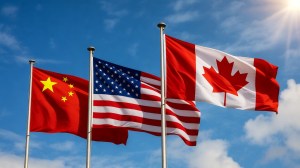
Canada is in the middle of a familiar temptation: the Americans are difficult, therefore the Chinese offer must be sane.
The immediate backdrop is concrete. On January 16, 2026, Canada announced a reset in economic ties with China that includes lowering barriers for a set number of Chinese EVs, while China reduces tariffs on key Canadian exports like canola. (Reuters) Washington responded with open irritation, warning Canada it may regret the move and stressing Chinese EVs will face U.S. barriers. (Reuters)
If you want a simple, pasteable bromide for people losing their minds online, it’s this: the U.S. and China both do bad things, but they do bad things in different ways, at different scales, with different “escape hatches.” One is a democracy with adversarial institutions that sometimes work. The other is a one-party state that treats accountability as a threat.
To make that visible, here are five egregious “hits” from each—then the contrast that actually matters.
Five things the United States does that Canadians have reason to resent
1) Protectionist trade punishment against allies
Steel/aluminum tariffs and recurring lumber duties are the classic pattern: national-interest rhetoric, domestic political payoff, allied collateral damage. Canada has repeatedly challenged U.S. measures on steel/aluminum and softwood lumber. (Global Affairs Canada)
Takeaway: the U.S. will squeeze Canada when it’s convenient—sometimes loudly, sometimes as a bureaucratic grind.
2) Energy and infrastructure whiplash
Keystone XL is the poster child of U.S. policy reversals that impose real costs north of the border and then move on. The project’s termination is documented by the company and Canadian/Alberta sources. (TC Energy)
Takeaway: the U.S. can treat Canadian capital as disposable when U.S. domestic politics flips.
3) Extraterritorial reach into Canadians’ private financial lives
FATCA and related information-sharing arrangements are widely experienced as a sovereignty irritant (and have been litigated in Canada). The Supreme Court of Canada ultimately declined to hear a constitutional challenge in 2023. (STEP)
Takeaway: the U.S. often assumes its laws get to follow people across borders.
4) A surveillance state that had to be restrained after the fact
Bulk telephone metadata collection under Patriot Act authorities became politically toxic and was later reformed/ended under the USA Freedom Act’s structure. (Default)
Takeaway: democracies can drift into overreach; the difference is that overreach can become a scandal, a law change, and a court fight.
5) The post-9/11 stain: indefinite detention and coercive interrogation
Guantánamo’s long-running controversy and the Senate Intelligence Committee’s reporting on the CIA program remain enduring examples of U.S. moral failure. (Senate Select Committee on Intelligence)
Takeaway: the U.S. is capable of serious rights abuses—then also capable of documenting them publicly, litigating them, and partially reversing course.
Five things the People’s Republic of China does that are categorically different
1) Mass rights violations against Uyghurs and other Muslim minorities in Xinjiang
The UN human rights office assessed serious human rights concerns in Xinjiang and noted that the scale of certain detention practices may constitute international crimes, including crimes against humanity. Canada has publicly echoed those concerns in multilateral statements. (OHCHR)
Takeaway: this is not “policy disagreement.” It’s a regime-scale human rights problem.
2) Hong Kong: the model of “one country, one party”
The ongoing use of the national security framework to prosecute prominent pro-democracy figures is a live, observable indicator of how Beijing treats dissent when it has full jurisdiction. (Reuters)
Takeaway: when Beijing says “stability,” it means obedience.
3) Foreign interference and transnational pressure tactics
Canadian public safety materials and parliamentary reporting describe investigations into transnational repression activity and concerns around “overseas police stations” and foreign influence. (Public Safety Canada)
Takeaway: the Chinese state’s threat model can extend into diaspora communities abroad.
4) Systematic acquisition—licit and illicit—of sensitive technology and IP
The U.S. intelligence community’s public threat assessment explicitly describes China’s efforts to accelerate S&T progress through licit and illicit means, including IP acquisition/theft and cyber operations. (Director of National Intelligence)
Takeaway: your “market partner” may also be running an extraction strategy against your innovation base.
5) Environmental and maritime predation at scale
China remains a dominant player in coal buildout even while expanding renewables, a dual-track strategy with global climate implications. (Financial Times)
On the oceans, multiple research and advocacy reports emphasize the size and global footprint of China’s distant-water fishing and associated IUU concerns. (Brookings)
Takeaway: when the state backs extraction, the externalities get exported.
Compare and contrast: the difference is accountability
If you read those lists and conclude “both sides are bad,” you’ve missed the key variable.
The U.S. does bad things in a system with adversarial leak paths:
investigative journalism, courts, opposition parties, congressional reports, and leadership turnover. That doesn’t prevent abuses. It does make abuses contestable—and sometimes reversible. (Senate Select Committee on Intelligence)
China does bad things in a system designed to prevent contestation:
one-party rule, censorship, legal instruments aimed at “subversion,” and a governance style that treats independent scrutiny as hostile action. The problem isn’t “China is foreign.” The problem is that the regime’s incentives run against transparency by design. (Reuters)
So when someone says, “Maybe we should pivot away from the Americans,” the adult response is:
- Yes, diversify.
- No, don’t pretend dependency on an authoritarian state is merely a swap of suppliers.
A quick media-literacy rule for your feed
If a post uses a checklist like “America did X, therefore China is fine,” it’s usually laundering a conclusion.
A better frame is risk profile:
- In a democracy, policy risk is high but visible—and the country can change its mind in public.
- In a one-party state, policy risk is lower until it isn’t—and then you discover the rules were never meant to protect you.
Canada can do business with anyone. But it should not confuse trade with trust, or frustration with Washington with safety in Beijing.
If Canada wants autonomy, the answer isn’t romanticizing China. It’s building a broader portfolio across countries where the rule of law is not a slogan in a press release.
References
- Canada–China trade reset (EV tariffs/canola): Reuters; Guardian. (Reuters)
- U.S. criticism of Canada opening to Chinese EVs: Reuters. (Reuters)
- U.S. tariffs/lumber disputes: Global Affairs Canada; Reuters. (Global Affairs Canada)
- Keystone XL termination: TC Energy; Government of Alberta. (TC Energy)
- FATCA Canadian challenge result: STEP (re Supreme Court dismissal). (STEP)
- USA Freedom Act / end of bulk metadata: Lawfare; Just Security. (Default)
- CIA detention/interrogation report: U.S. Senate Intelligence Committee report PDF. (Senate Select Committee on Intelligence)
- Guantánamo context: Reuters; Amnesty. (Reuters)
- Xinjiang assessment: OHCHR report + Canada multilateral statement. (OHCHR)
- Hong Kong NSL crackdown example: Reuters (Jimmy Lai). (Reuters)
- Transnational repression / overseas police station concerns: Public Safety Canada; House of Commons report PDF. (Public Safety Canada)
- China tech acquisition / IP theft framing: ODNI Annual Threat Assessment PDF. (Director of National Intelligence)
- Coal buildout: Financial Times; Reuters analysis. (Financial Times)
- Distant-water fishing footprint / IUU concerns: Brookings; EJF; Oceana. (Brookings)
It won’t be business as usual for very much longer. The mantle of world power is quite possibly changing hands within my life time. Lovely. Alfred McCoy tackles the large geopolitical issues that we will all be facing in the future.
The Bipartisan Nature of U.S. Decline
America’s decline started at home as a distinctly bipartisan affair. After all, Washington wasted two decades in an extravagant fashion fighting costly conflicts in distant lands, in part to secure the Middle East’s oil at a time when that fuel was already destined to join cordwood and coal in the dustbin of history (though not faintly soon enough). Beijing, in contrast, used those same years to build industries that would make it the world’s workshop.
In 2001, in a major miscalculation, Washington admitted Beijing to the World Trade Organization, bizarrely confident that a compliant China would somehow join the world economy without challenging American global power. “Across the ideological spectrum, we in the U.S. foreign policy community,” wrote two former members of the Obama administration, “shared the underlying belief that U.S. power and hegemony could readily mold China to the United States’ liking… All sides of the policy debate erred.”
A bit more bluntly, foreign policy expert John Mearsheimer recently concluded that “both Democratic and Republican administrations… promoted investment in China and welcomed the country into the global trading system, thinking it would become a peace-loving democracy and a responsible stakeholder in a U.S.-led international order.”
In the 15 years since then, Beijing’s exports to the U.S. grew nearly fivefold to $462 billion annually. By 2014, its foreign currency reserves had surged from just $200 billion to an unprecedented $4 trillion — a vast hoard of cash it used to build a modern military and win allies across Eurasia and Africa. Meanwhile, Washington was wasting more than $8 trillion on profitless wars in the Greater Middle East and Africa in lieu of spending such funds domestically on infrastructure, innovation, or education — a time-tested formula for imperial decline.
When a Pentagon team assessing the war in Afghanistan interviewed Jeffrey Eggers, a former White House staffer and Navy SEAL veteran, he asked rhetorically: “What did we get for this $1 trillion effort? Was it worth a trillion? After the killing of Osama bin Laden, I said that Osama was probably laughing in his watery grave considering how much we have spent on Afghanistan.” (And keep in mind that the best estimate now is that the true cost to America of that lost war alone was $2.3 trillion.) Consider it an imperial lesson of the first order that the most extravagantly funded military on Earth has not won a war since the start of the twenty-first century.
Donald Trump’s presidency brought a growing realization, at home and abroad, that Washington’s world leadership was ending far sooner than anyone had imagined. For four years, Trump attacked long-standing U.S. alliances, while making an obvious effort to dismiss or demolish the international organizations that had been the hallmark of Washington’s world system. To top that off, he denounced a fair American election as “fraudulent” and sparked a mob attack on the U.S. Capitol, functionally making a mockery of America’s long history of promoting the idea of democracy to legitimate its global leadership (even as it overthrew unfriendly democratic governments in distant lands via covert interventions).
In that riot’s aftermath, most of the Republican Party has embraced Trump’s demagoguery about electoral fraud as an article of faith. As it happens, no nation can exercise global leadership if one of its ruling parties descends into persistent irrationality, something Britain’s Conservative Party demonstrated all too clearly during that country’s imperial decline in the 1950s.
The lives of the common people seem to always come last when it comes to geopolitical considerations.
 The West’s policies and actions in the Middle East have set the stage for tragedy. The destruction and destabilization of states and the creation of a new Cold War flash-point in Syrian (and one upcoming in the Ukraine) are spreading chaos in the world. The mass murder in Nice, France is an example, par excellence, of what Chalmers Johnson describes as Blowback. What is ‘Blowback’?
Blowback – is a term invented by the CIA, refers to the unintended consequences of American policies that are predicated on projecting its military power to every corner of the earth and using American capital and markets to force global economic integration on its own terms.
So this is what happened in Nice [from cbc.ca]:
The Islamic State in Iraq and Syria claimed responsibility for the truck attack on the French city of Nice on Saturday as French police arrested three people there in connection with the carnage that claimed the lives of at least 84 people.
“The person who carried out the operation in Nice, France, to run down people was one of the soldiers of Islamic State,” the news agency Amaq, which supports ISIS, said via its Telegram account.
“He carried out the operation in response to calls to target nationals of states that are part of the coalition fighting Islamic State,” the statement said.
We in North America tend to think (unless you happen to not to be white) of terrorism and war as something that happens ‘over there’. We sit with a manufactured placidity behind our oceans and vicariously experience the horror visited on people in foreign lands and, if moved enough, make a post about it on some social media platform (irony noted). What is difficult for North Americans is the teasing out the questions of “How, if at all(?), does this relate to us?”, while wading though the media slideshow of human misery and death. Our media is failing us by not providing context to the images we see, so we don’t know how to respond.
Blowback is coming. Through the direct result of our use of military and economic power we are fracturing countries and immiserating their people for our Geo-poltical gain. The people of North America are subject to a severe disconnect between the foreign policy goals stated at home and what those goals look like when actualized in reality. I am fairly confident that most of the policy initiatives that involve displacing people and murdering them wouldn’t get much popular support.
However, call it (murder et cetera) bringing “stability’ to a region, it sounds palatable to the citizenry, and thus their consent is ensured. How many lives hang in the balance or have been sacrificed because of word/not-words like ‘precision bombing’ and ‘democracy promotion’? Our use of opaque sanitized language cuts people off from the empathy we all possess and allows for the most pernicious of behaviours.
We in the West feel connected only when the chickens of violence come home to roost and vengeance is delivered to our innocent populations. The sympathetic news coverage begins immediately, more so if the victims happen to be Caucasian (because #whitelivesmattermore), and we can connect with the sorrow and horror being visited on the people in question.
Did believe in Islam play a role in the mass-murder in Nice. Almost certainly. Even traumatized desperate people need persuading to enable them to commit murderous acts. The ISIS brand of Islam is tailor made to undermine empathetic thoughts and feelings, to numb the fundamental kindness we feel toward each other (this applies to almost all organized religions, of course) and make atrocities such as what happened in Nice possible.
Fervent belief in ideology – religious or otherwise – helps make disastrous events possible, because as soon as we can start people as the ‘enemy’ and the ‘other’ it becomes so much easier to destroy their lives.
So, did Allah take the wheel and instigate vehicular homicide on a grand scale? Probably not, but he certainly put gas in the tank and keys in hand.
Taken from his essay on Counterpunch called Slouching Toward Global Disaster.
“Toxic Geopolitics
It is impossible to understand and explain such a disastrous failure of military interventionism without considering the effects of two toxic ‘special relationships’ formed by the United States, with Israel and Saudi Arabia.
The basic feature of such special relationships is an unconditional partnership in which the Israelis and Saudis can do whatever they wish, including pursuing policies antagonistic to U.S. interests without encountering any meaningful opposition from either Washington or Europe.
This zone of discretion has allowed Israel to keep Palestinians from achieving self-determination while pursuing its own territorial ambitions via constantly expanding settlements on occupied Palestinian territory, fueling grassroots anti-Western sentiment throughout the Arab world because of this persisting reliance on a cruel settler colonialist approach to block for seven decades the Palestinian struggle for fundamental and minimal national rights.
The special relationship with Saudi Arabia is even more astonishing until one considers the primacy of economic strategic priorities, especially the importance of oil supplied at affordable prices. Having by far the worst human rights record in the region, replete with judicially decreed beheadings and executions by stoning, the Riyadh leadership continues to be warmly courted in Western capitals as allies and friends. At the same time, equally theocratic Iran is hypocritically bashed and internationally punished in retaliation for its far less oppressive governing abuses.
Of course, looking the other way, is what is to be expected in the cynical conduct of opportunistic geopolitics, but to indulge the Saudi role in the worldwide promotion of jihadism while spending trillion on counter-terrorism is much more difficult to fathom until one shifts attention from the cover story of counter-terrorism to the more illuminating narrative of petropolitics. Despite fracking and natural gas discoveries lessening Western dependence on Middle Eastern oil, old capitalist habits persist long after their economic justifications have lapsed and this seems true even when such policies have become damaging in lives and financial burdens.”
-Richard Falk. Slouching Toward Global Disaster
Just a little peek into what fairness and equality means on the global scale. Take note of how the playing field is levelled instead of it being ‘level’ and one might start to see the patterns in our society and maybe start to question the conceptions of ‘equality’ when we are told things are ‘fine’.
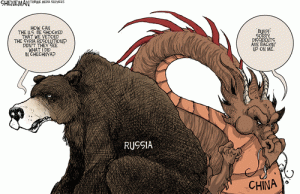 The concluding paragraphs from Michael Klare’s Essay on the Coming Cold War 2.0.
“For those of us residing outside Washington, this choice may appear to have few immediate consequences. The defense budget will rise in either case; troops will, as now, be shuttled desperately around the hot spots of the planet, and so on. Over the long run, however, don’t think for a second that the choice won’t matter.
A stepped-up drive to counter Russia will inevitably produce a grim, unpredictable Cold War-like atmosphere of suspicion, muscle-flexing, and periodic crises. More U.S. troops will be deployed to Europe; American nuclear weapons may return there; and saber rattling, nuclear or otherwise, will increase. (Note that Moscow recently announced a decision to add another 40 intercontinental ballistic missiles to its already impressive nuclear arsenal and recall Senator Cruz’s proposal for deploying U.S. anti-missile batteries in Eastern Europe.) For those of us who can remember the actual Cold War, this is hardly an appealing prospect.
A renewed focus on China would undoubtedly prove no less unnerving. It would involve the deployment of additional U.S. naval and air forces to the Pacific and an attendant risk of armed confrontation over China’s expanded military presence in the East and South China Seas. Cooperation on trade and the climate would be imperiled, along with the health of the global economy, while the flow of ideas and people between East and West would be further constricted. (In a sign of the times, China recently announced new curbs on the operations of foreign nongovernmental organizations.) Although that country possesses far fewer nuclear weapons than Russia, it is modernizing its arsenal and the risk of nuclear confrontation would undoubtedly increase as well.
In short, the options for American global policy, post-2016, might be characterized as either grim and chaotic or even grimmer, if more focused. Most of us will fare equally badly under either of those outcomes, though defense contractors and others in what President Dwight Eisenhower first dubbed the “military-industrial complex” will have a field day. Domestic needs like health, education, infrastructure, and the environment will suffer either way, while prospects for peace and climate stability will recede.
A country without a coherent plan for advancing its national interests is a sorry thing. Worse yet, however, as we may find out in the years to come, would be a country forever on the brink of crisis and conflict with a beleaguered, nuclear-armed rival.”
The geopolitics of the future continue to darken as the interests of the state and corporate elites once again trump the interests of the people of the world. The elephant in the room, of course, is climate change and no one in power seems to care. I imagine, when New York is underwater – action might be considered.











 bleatmop
 Mystro


 Dead Wild Roses
Your opinions…