
You are currently browsing the tag archive for the ‘Iran’ tag.
Iran, American Hegemony, and Western Resolve.
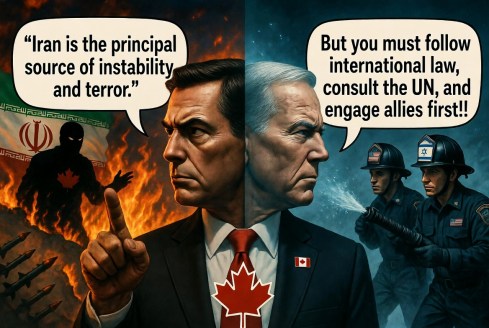
For years, Iran has functioned not as a normal state with normal ambitions, but as a regime that exports pressure through proxies, intimidation, missile programs, and calibrated disorder. Ottawa itself has repeatedly described Iran as “the principal source of instability and terror in the Middle East,” while stressing that Tehran must never be allowed to obtain or develop nuclear weapons. That matters because it cuts through the usual fog. This was not a strike against a harmless status quo. It was a strike against a regime that has spent years making the region more combustible, more violent, and more difficult to govern. (Canada PM)
That does not make war clean. It does not make every target choice wise. It does not make every legal question disappear. But it does clarify the strategic question. If a regime repeatedly funds, arms, and directs forces that destabilize the region, then eventually someone must decide whether deterrence is a word or a policy. The American and Israeli action in Iran is best understood in those terms. Not as a fantasy of moral purity, but as a decision to reimpose costs on a state that had grown used to exporting them. Ottawa’s own language makes that case harder to evade than many critics would like. (Canada PM)
This is the part many Western governments still struggle to say plainly. Order is not maintained by sentiment alone. It is not maintained by declarations, concern, and another exhausted appeal to “the international community.” Canada’s March 3 statement admitted the core reality: years of negotiations, sanctions, international monitoring, and multilateral pressure did not neutralize the Iranian threat. That is a brutal admission, and an important one. It means the soft-language consensus failed on its own stated terms. At some point, if the threat remains, either somebody acts or the speeches become a form of theatre performed over a steadily deteriorating map. (Canada PM)
“American hegemony, however much the word offends refined opinion, has often been the hard outer shell of a wider Western order.”
So yes, there is a case for saying the strikes were good in strategic terms. Iran was not a stabilizing power that got misunderstood by the usual Western moralists. It was a revolutionary regime that helped build and sustain a network of armed clients and auxiliaries across the region. Striking at that centre of gravity carries risks, but so did allowing it to operate under the assumption that the West had become too managerial, too conflict-averse, and too morally confused to act decisively. The risk of action is real. The risk of permanent indulgence was real too, and too often treated as invisible. (Canada PM)
That is why this moment matters beyond Iran. Not because one campaign settles the world. Not because every adversary will instantly become cautious. But because power still communicates. It communicates especially to regimes that have spent years studying the West and concluding that we prefer procedure to force, messaging to punishment, and managed humiliation to escalation. The lesson of Iran may not be that America will always act. It is simpler and more important than that: America still can act, and under some conditions still will. Even the White House’s preferred language of “peace through strength” matters less here as slogan than as signal. Adversaries do not have to admire the wording to understand the demonstration. (Canada PM)
That broader message is where China enters the discussion, but only carefully. It would be too strong, and probably false, to say Beijing has “backed down” because of Iran. Reuters reporting on Chinese military activity around Taiwan points to a narrower and more ambiguous picture: visible Chinese air activity around Taiwan has fallen sharply, but Taiwanese officials and analysts offered multiple possible explanations, including a possible Trump-Xi meeting atmosphere and internal turbulence inside China’s military. They explicitly warned against reading too much into a short lull. So the honest claim is not that China has folded. It is that Beijing is being reminded, in public, that the United States still possesses both the means and, at times, the appetite to use hard power. That is an inference. It is not yet a proved geopolitical shift. (Reuters)
The January Venezuela raid helps make that point, though only in a limited sense. Reuters reported that U.S. officials explicitly framed the operation as a warning to Beijing to keep its distance from the Americas. That does not prove deterrence has been restored, and it does not establish a new global pattern on its own. It does show that the message was sent. In Venezuela and now Iran, Washington has demonstrated that recent American power has not been purely rhetorical. Rivals may draw their own conclusions, but they are being given fresh evidence that the United States still possesses both the means and, at times, the appetite to use hard force. (Reuters)
And that matters because American hegemony, however much the word offends refined opinion, has served for decades as the hard outer shell of a wider Western order. It has not produced a perfect world. It has produced something rarer: a world in which hostile powers, rogue regimes, and ambitious revisionists often had to think twice. That “think twice” space is not everything, but it is a great deal. Lose it, and you do not get peace. You get more tests, more probes, more daring clients, more rulers gambling that the old sheriff now prefers seminars to force. The language may rankle. The reality remains. (Reuters)
“Ottawa could identify the arsonist, but still felt compelled to lecture the firefighters on process before the building stopped burning.”
And then there is Canada, performing once again its favourite late-imperial routine: saying the truest thing in the room and then rushing to blur it. On March 3, Carney said Iran is the principal source of instability and terror in the Middle East and condemned Iranian violence against civilians. On March 4, he also stressed that the United States and Israel acted without engaging the United Nations or consulting allies, including Canada, and reaffirmed that international law binds all belligerents. In other words, Ottawa could identify the arsonist, but still felt compelled to lecture the firefighters on process before the building stopped burning. (Canada PM)
That is the embarrassment. Not caution as such. Caution can be prudent. The embarrassment is the inability to rank moral and strategic realities in the right order. A serious government can say: Iran is the principal destabilizing force, diplomacy failed, the strikes carry grave risks, and the next task is preventing a wider regional catastrophe. That would at least sound like an adult hierarchy of judgment. What we got instead was a familiar Canadian blend of partial clarity and procedural recoil, as if sounding too decisive might itself be a diplomatic offence. (Canada PM)
The deeper issue is civilizational confidence. A West that cannot impose costs on regimes that menace its allies, fuel regional disorder, and exploit every sign of hesitation will not be admired for its restraint. It will be read as tired. The value of American hegemony, whatever its flaws, has never been that it creates a frictionless world. It is that it has often underwritten a world in which enemies of the West had reason to fear miscalculation. That fear is not barbarism. It is one of the costs of preserving order. Remove it, and you do not get a more humane international system. You get a more predatory one. (Canada PM)
So the case for the strikes is not that war is noble or that consequences will be tidy. It is that deterrence sometimes has to become visible again. Iran built power by betting that the West preferred delay to decision. In this case, that bet was answered with force. Even America’s enemies, and Canada’s evasive political class, may have been reminded of something they had started to forget: strength still speaks, and sometimes it is the only language a revolutionary regime believes. (Canada PM)
References
Prime Minister of Canada. “Statement by Prime Minister Carney on the evolving situation in the Middle East.” March 3, 2026.
Prime Minister of Canada. “Prime Minister Carney delivers remarks to media in Sydney, Australia.” March 4, 2026.
Reuters. “Chinese military flights around Taiwan fall, Trump-Xi meeting may be factor.” March 5, 2026.
Reuters. “With Venezuela raid, US tells China to keep away from the Americas.” January 11, 2026.
In Iran, child marriage isn’t merely a whispered rural custom; it’s a practice that can breathe because the law gives it room. A Radio Free Europe/Radio Liberty report tells the story of “Leila,” married at ten to a fifteen-year-old boy—an arrangement delivered to her in the night, a ring placed on her finger like a stamp. She describes the aftermath not as romance or “tradition,” but as fear, pain, and a body treated as if it were already spoken for.
The scandal here is not that bad people exist; it’s that systems can normalize the bad. The report states that marriage is legal for girls at 13 with parental consent, and that younger girls can be married with a judge’s permission (and that the legal age cited for boys is 15). It also cites 37,000 underage marriages registered in the last Iranian year ending in March (as of 2016), while noting that unregistered unions mean the true number is likely higher.
A society’s moral temperature shows up in what it excuses, and what it calls “inevitable.” The piece reports that the UN Committee on the Rights of the Child urged Iran to raise the marriage age and expressed concern that the legal framework permits sexual intercourse with girls as young as nine lunar years, alongside gaps in criminalization of other sexual abuse against very young children. This isn’t “culture” in the harmless sense; it’s power arranged into a rite, with a child paying the cost.

Bibliography 📚
-
Radio Free Europe/Radio Liberty (Radio Farda), “Childhood’s End: Forced Into Marriage At Age 10 In Iran” (Nov. 17, 2016).
Unrest in Iran has persisted into 2026, with recent protests triggered by economic challenges such as currency devaluation and inflation, building on longer-term grievances related to human rights and governance. Human rights organizations argue that the Islamic Republic’s policies since the 1979 revolution have contributed to discontent by prioritizing state security and ideological conformity, leading to restrictions on dissent and freedoms. The 2022–2023 “Woman, Life, Freedom” protests, sparked by the death of Mahsa Amini in custody, highlighted these tensions but were suppressed, though underlying issues have continued to fuel sporadic demonstrations and broader dissatisfaction.
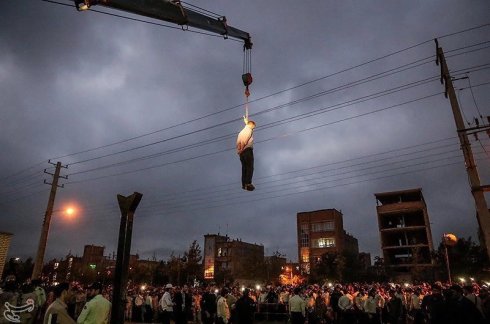
A significant point of criticism is Iran’s high rate of executions. According to monitoring groups such as Iran Human Rights (IHRNGO) and Amnesty International, at least 1,500 executions occurred in 2025, with over 1,000 recorded by September—the highest levels in decades. A substantial portion involved drug-related offenses, which Iranian authorities justify as necessary to combat trafficking given the country’s position on major transit routes. International observers, however, criticize the use of capital punishment for non-violent crimes and raise concerns about trial fairness. Public executions and the disproportionate impact on ethnic minorities, including Baluchis and Kurds, have drawn particular scrutiny.
Women’s rights remain a focal point of contention. Laws mandating compulsory veiling are enforced through measures such as the Noor Plan, involving surveillance and penalties ranging from fines to imprisonment. Human rights reports document cases of violence during enforcement, alongside broader legal discrimination in areas such as marriage and inheritance. Iranian officials frame these policies as protecting cultural and religious values, while critics and protesters describe them as systemic sex-based restrictions contributing to ongoing resistance.
Minorities also face documented challenges. LGBTQ+ individuals are subject to criminal penalties under laws prohibiting same-sex relations, with reports of harsh punishments. The Baha’i community experiences restrictions on education, employment, and worship, described by organizations such as Human Rights Watch as persecution. Journalists, artists, and activists—including minors—have been detained for expression deemed critical of the state. Authorities maintain that such measures address security threats or moral standards.
The lack of avenues for systemic change is frequently cited as prolonging tensions. Human rights monitors note limited accountability for past events, such as the 1988 prison executions or the suppression of the 2019 fuel protests, alongside tightly controlled political processes. While international criticism and sanctions aim to pressure reforms, their effectiveness remains debated, with the government rejecting external interference. Recent economic-driven protests in late 2025 and early 2026 highlight the interaction between socioeconomic pressures and long-standing rights concerns.
Analytical Assessment (Non-Advocacy)
From an analytical perspective, Iran’s persistent unrest can be understood as the outcome of a closed political system absorbing repeated shocks without adaptive mechanisms. Economic stressors act as immediate triggers, but the durability of unrest reflects deeper structural conditions: punitive enforcement practices, limited legal accountability, and the absence of credible pathways for reform. High execution rates and visible enforcement of social controls may temporarily deter dissent, but they also raise the perceived cost of compliance for affected populations, particularly women and minorities. When governance frameworks prioritize ideological enforcement over responsiveness, public pressure tends to reappear cyclically rather than dissipate. In this sense, Iran’s unrest is less a series of isolated crises than a recurring response to unresolved institutional constraints.
Key References & Sources
- Human Rights Watch. World Report 2025: Iran
https://www.hrw.org/world-report/2025/country-chapters/iran - Amnesty International. Iran: Over 1,000 people executed as authorities step up horrifying assault on the right to life (2025)
https://www.amnesty.org/en/latest/news/2025/09/iran-over-1000-people-executed-as-authorities-step-up-horrifying-assault-on-right-to-life/ - Iran Human Rights (IHRNGO). Annual Reports on the Death Penalty in Iran (2025)
https://iranhr.net/en/
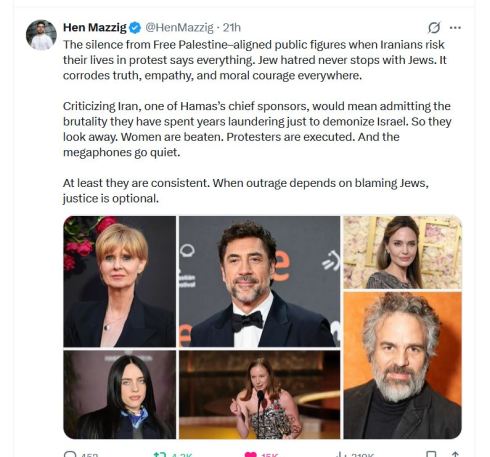
In the world of advocacy and human rights, consistency is more than just a virtue—it’s what gives our principles real meaning. Recently, a comment on social media highlighted a familiar pattern: certain voices who are vocal about one cause may fall silent when similar struggles appear in a different context. It’s a reminder that if we want justice to truly be just, it must be blind to who is involved—applying the same standards to all people, regardless of race, creed, or background.
This isn’t about slamming any particular group; it’s about encouraging all of us to reflect on the importance of consistency. When we advocate for human rights, it’s crucial that we do so across the board. If a group of protesters in one country deserves our solidarity, then those in another country risking their lives for similar ideals deserve it too.
In short, “justice” in quotes should indeed be blind. Not in the sense of ignoring the nuances of each situation, but in the sense of applying our moral standards fairly and universally. By doing so, we strengthen the credibility of our advocacy and remind the world that human rights aren’t selective—they’re for everyone.
Find that tweet inspiration for this post here.
A picture of typically dressed Iranian females before the Iranian Islamic revolution (pre-1979).

It was time to make women into non-people and become a crazed warmongering religious cult state. Exactly what the world needed! :/
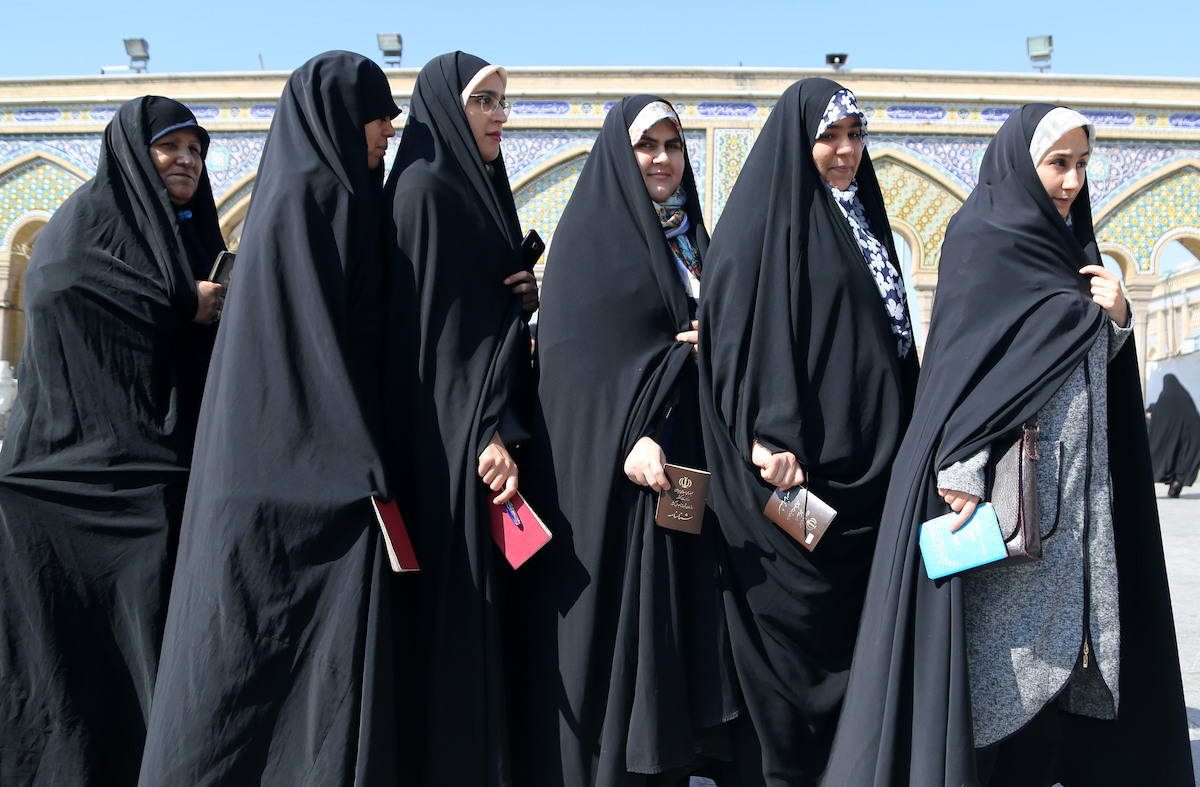
TEHRAN, IRAN – FEBRUARY 21: Iranian women wait to cast their ballot for the 11th Parliamentary elections at a polling station in Shah Abdol-Azim Shrine in Tehran, Iran on February 21, 2020. Fatemeh Bahrami / Anadolu Agency
The US foreign policy regarding Iran is foolish. Noam Chomsky analyzes the situation:
“The most dangerous immediate foreign policy crisis is the conflict with Iran, which has been deemed the official source of all evil. Iran must end its “aggression” and become a “normal country” — like Saudi Arabia, which is making rapid progress in Trump’s fantasy world, even “a great job in Saudi Arabia from the standpoint of women,” he explained at G20.
The charges against Iran resonate through the media echo chamber with little effort to assess the validity of the accusations — which hardly withstand analysis. Whatever one thinks of Iranian international behavior, by the miserable standards of U.S. allies in the region — not to speak of the U.S. itself — it is not much of a competitor in the rogue state derby.
In the real world, the U.S. unilaterally decided to destroy the well-functioning nuclear agreement (JCPOA), with ludicrous charges accepted by virtually no one with the slightest credibility, and to impose extremely harsh sanctions designed to punish the Iranian people and undermine the economy. The [U.S. government] also uses its enormous economic power, including virtual control of the international financial system, to compel others to obey Washington’s dictates. None of this has even minimal legitimacy; the same is true of Cuba and other cases. The world may protest — last November, the UN General Assembly once again condemned the U.S. embargo on Cuba, 189-2 (only the U.S. and Israel voted against the resolution). But in vain. The weird idea of the founders that one might have “decent respect to the opinions of mankind” has long vanished, and the pained bleatings of the world pass in silence. On Iran as well.
This is not the place to pursue the matter, but there is a good deal more to say about the U.S. specialty of resorting to sanctions (with extraterritorial reach) to punish populations — a form of “American exceptionalism” that finds its place within what Nick Turse calls “the American system of suffering” in his harrowing expose of the U.S. assault on the civilian population of South Vietnam. The right to engage in this malicious practice is accepted as normal in the U.S. doctrinal system, with little effort to analyze the actual motives in individual cases, the legitimacy of such policies, or in fact even their legality. Matters of no slight significance.
With regard to Iran, within the government-media doctrinal system, the only question that arises is whether the victim will respond in some way, maybe by “violating” the agreement that the U.S. has demolished, maybe by some other act. And if it does, it obviously will be deemed to deserve brutal punishment.
In commentary made by U.S. officials and media, Iran “violates” agreements. The U.S. merely “withdraws” from them. The stance is reminiscent of a comment by the great anarchist writer and Wobbly activist T-Bone Slim: “Only the poor break laws — the rich evade them.”
Food for thought.











 bleatmop
 Mystro


 Dead Wild Roses
Your opinions…