
You are currently browsing the tag archive for the ‘Justice’ tag.
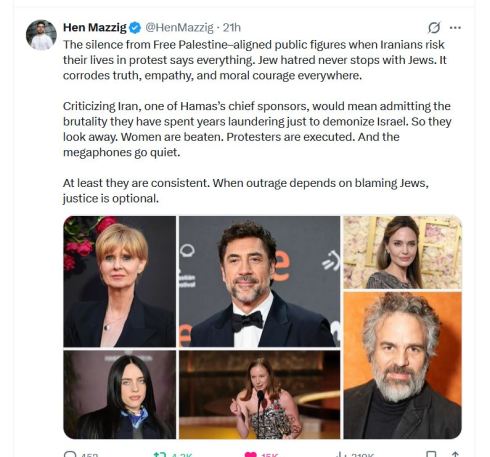
In the world of advocacy and human rights, consistency is more than just a virtue—it’s what gives our principles real meaning. Recently, a comment on social media highlighted a familiar pattern: certain voices who are vocal about one cause may fall silent when similar struggles appear in a different context. It’s a reminder that if we want justice to truly be just, it must be blind to who is involved—applying the same standards to all people, regardless of race, creed, or background.
This isn’t about slamming any particular group; it’s about encouraging all of us to reflect on the importance of consistency. When we advocate for human rights, it’s crucial that we do so across the board. If a group of protesters in one country deserves our solidarity, then those in another country risking their lives for similar ideals deserve it too.
In short, “justice” in quotes should indeed be blind. Not in the sense of ignoring the nuances of each situation, but in the sense of applying our moral standards fairly and universally. By doing so, we strengthen the credibility of our advocacy and remind the world that human rights aren’t selective—they’re for everyone.
Find that tweet inspiration for this post here.
Overlay recent events in Canada with what has happened in history. This is ride we do NOT want to be on.
Canada’s policing landscape reveals a troubling inconsistency, a corrosive double standard that erodes public trust: assaults on Jewish citizens often draw sluggish responses, while those on Muslims prompt swift condemnation and action. Consider the Montreal debacle—a Jewish father beaten in Dickie Moore Park before his terrified children, his kippah tossed into a splash pad like discarded refuse. Police took nearly an hour to arrive, allowing the assailant to vanish, and only arrested him days later amid public furor spurred by community outcry on social media.
Contrast this with Ottawa’s swift response to an unprovoked attack on a young Muslim woman aboard public transit, punched and bombarded with Islamophobic slurs as passengers watched in stunned silence. Authorities immediately labeled it hate-motivated and launched an investigation, reflecting a government commitment to combatting hate crimes. No delay, no limbo—just urgency, as if the system awakens only for select victims.
This disparity is not aberration but pattern. Statistics Canada reports Jews—under 1% of the population—endured over 900 hate crimes in 2023, roughly 70% of religion-based incidents, while Muslim-targeted crimes, numbering around 200, saw faster police action. Yet responses to antisemitic violence often lag, fostering a climate where aggressors act with impunity. Muslims face brutal attacks too, but policing pivots faster, bolstered by vocal leadership. Both communities deserve equal protection; only one consistently receives it.
The irony stings in a nation priding itself on equity: one community’s cries echo unanswered, another’s summon swift shields. Such two-tiered enforcement is not oversight—it is antithetical to justice. If Canada fails to apply equal urgency to all victims, it risks fracturing society into a hierarchy of suffering, dividing rather than uniting against bigotry’s tide.

Sources Referenced
- Statistics Canada, 2023 Hate Crime Report
- CTV News, Montreal, July 2023: Dickie Moore Park assault coverage
- CBC News, Ottawa, June 2023: Transit attack reports
- X posts aggregated from community reports, July 2023
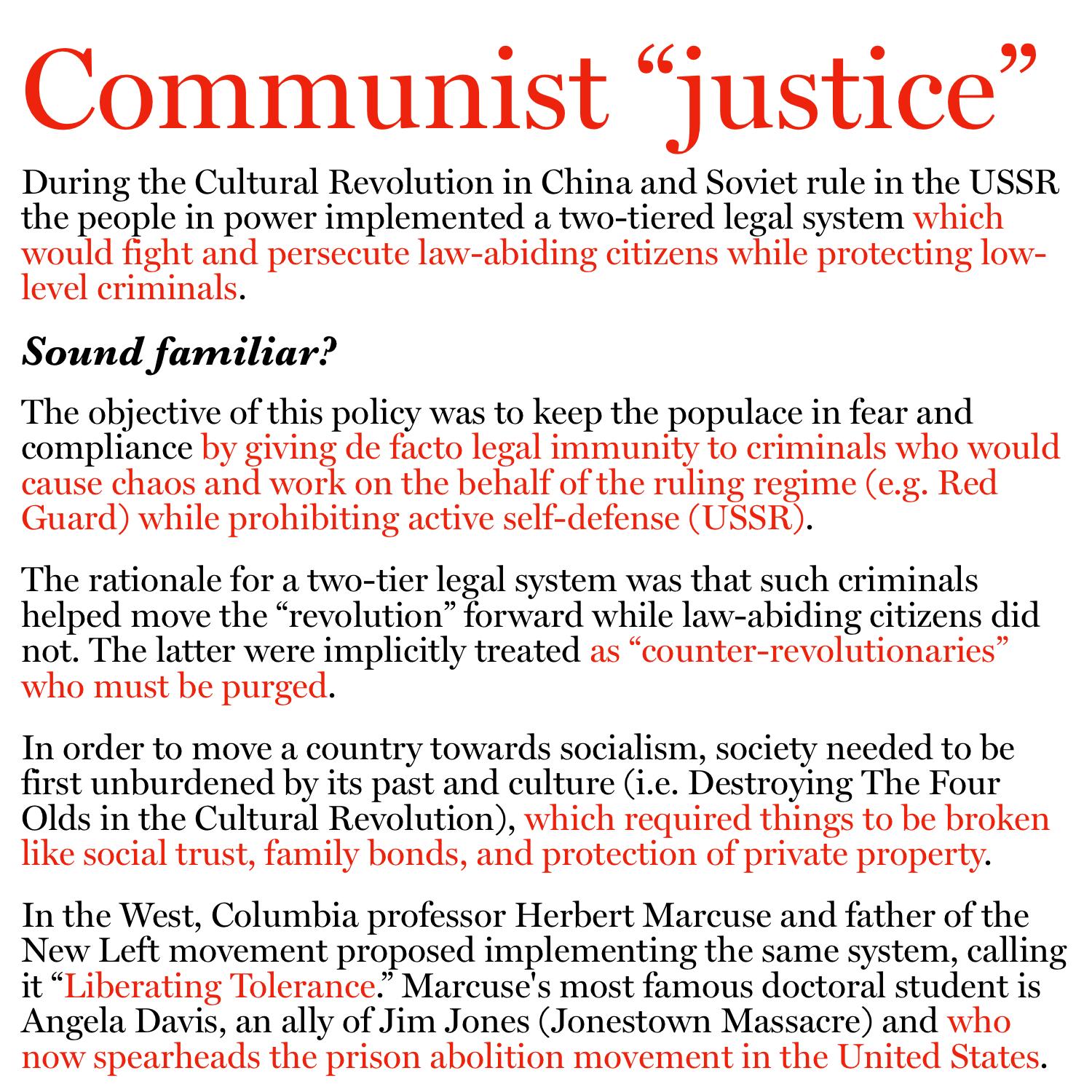
 Herbert Marcuse’s 1965 essay *Repressive Tolerance* argues that tolerance in liberal societies isn’t neutral—it props up power while smothering real dissent. He saw it as a rigged game: the system tolerates ideas that fit its frame and represses those that don’t. Marcuse’s fix? “Liberating tolerance”—coddling radical change, even lawbreaking, if it’s “progressive,” while crushing “regressive” resistance. Fast-forward to today: police and courts often give left-leaning lawbreakers a pass when their cause aligns with elite vibes, but hammer right-leaning groups like Canada’s Trucker Convoy. Let’s break this down with real cases through Marcuse’s eyes.
Marcuse’s Core Idea
Marcuse claimed tolerance in capitalist democracies—like free speech or legal fairness—shields the status quo. It’s not about justice; it’s about control. He pushed for intolerance toward oppressive ideas (think war or exploitation) and leniency for acts challenging them, even if illegal. The hitch: who picks the winners? Today’s justice system seems to—favoring leftist breaches while pummeling right-wing ones. Two real examples show it plain.
The Left’s Light Touch
Look at the 2020 Portland protests after George Floyd’s death. Night after night, activists clashed with police, torched a federal courthouse, and smashed storefronts. Over 1,000 arrests happened across months, per Portland Police data, but Multnomah County DA Mike Schmidt dropped charges for most non-violent cases—hundreds walked free. Rioting and property damage? Illegal, sure. But Schmidt called it “proportional” to focus on “serious” crimes, nodding to the protests’ racial justice aim.
Marcuse might nod too. He’d see this as “liberating”—lawbreaking to dismantle systemic racism, a cause he’d back. The state’s leniency fits his playbook: tolerate disruption if it’s “just.” But context matters. Media framed it as moral outrage, and cultural elites cheered. Tolerance here wasn’t blind—it leaned on a narrative Portland’s leaders could stomach.
The Trucker Convoy: Heavy Hand
Now flip to Canada’s 2022 Trucker Convoy. Truckers rolled into Ottawa, protesting vaccine mandates. They parked rigs, honked horns, and gridlocked downtown—illegal blockades, no question. No firebombs, though; it was loud, not violent. Ottawa’s response? A state of emergency. Police arrested 191 people, per the Ottawa Police Service, and the feds invoked the Emergencies Act—first time since 1988. Bank accounts got frozen, crowdfunding cash was seized, and leaders like Tamara Lich faced charges carrying up to 10 years. Courts still grind on some as of 2025.
Marcuse might call this “regressive”—truckers resisting public health for personal freedom, not his revolutionary vibe. His theory would greenlight repression here. But step back: these were blue-collar workers, not suits, pushing against centralized control. The state didn’t just enforce law—it flexed hard, with banks and media tagging them “extremists.” Tolerance? Out the window when the script flipped.
Side by Side
Portland versus Ottawa lays it bare. In Portland, sustained lawbreaking—arson, vandalism—drew arrests, but prosecutors waved off most penalties. The cause? Racial justice, a darling of progressive elites. The truckers broke laws too—blockades, noise—but got hit with emergency powers, asset freezes, and jail time. Their cause? Individual liberty, a sore spot for the same elites. Both disrupted public order. One got a shrug; the other got shackles.
Marcuse’s lens tracks this. He’d argue Portland’s activists deserved slack—their fight aligned with his anti-oppression stance. The truckers? Too “backward” to tolerate. Yet the truckers’ working-class roots and anti-mandate gripes echo his underdog ideal more than Portland’s curated chaos. The difference? Cultural clout. Left-leaning causes get a halo; right-leaning ones get a boot.
Steel-Manning the Divide
To be fair, the state’s not a monolith. Portland’s leniency could reflect local politics—progressive DAs like Schmidt prioritize “equity” over punishment. Ottawa’s crackdown? Public safety after weeks of gridlock, not just ideology. Law’s messy, not a conspiracy. Still, the gap’s real. A 2021 DOJ report showed 93% of Portland riot cases got dismissed or deferred; contrast that with the Convoy’s 70+ convictions by 2023, per Canadian court records. Police logged 1,000+ hours on Portland protests with kid gloves; Ottawa saw 2,000+ officers deployed in days, batons out. Numbers don’t lie—tolerance tilts.
Marcuse didn’t see this coming. He figured the repressed were leftists battling a right-wing Goliath. Now? Power’s cultural, not just economic, and it leans left—media, tech, academia. The truckers, not the rioters, look more like his outcasts. Yet “repressive tolerance” still flows his way—toward causes that sound noble, not ones that clash with the zeitgeist.
The Takeaway
Marcuse’s *Repressive Tolerance* nails today’s double standard. Portland’s rioters broke laws and walked; Ottawa’s truckers did the same and sank. It’s not random—tolerance tracks power’s favorites. Marcuse wanted it for revolution, but it’s become a perk for the loudest voices. Scroll X, pick a protest, and test it: who gets the pass? The answer’s in the outcomes, not the excuses.”
Credit to Grok AI, for the legwork with regards to statistics and editing for clarity.
Policing in Canada has historically been grounded in the principle of equality under the law, where all individuals, regardless of identity, are subject to the same legal standards and enforcement practices. However, recent shifts in policy, training, and public discourse suggest that Canadian policing is increasingly adopting a model that applies different standards based on identity categories such as race, ethnicity, gender, and socioeconomic status. This evolution is driven by a combination of social justice movements, government directives, and institutional reforms aimed at addressing systemic inequalities. While intended to rectify historical disparities, this approach raises questions about consistency and impartiality in law enforcement.
One clear indicator of this shift is the implementation of race-based data collection by police services across Canada. Initiated in response to allegations of racial profiling, agencies like the Toronto Police Service and the Ontario Provincial Police began collecting and analyzing data on the race of individuals stopped, questioned, or arrested, starting with pilot projects around 2019 and expanding since then. The stated goal is to identify and address “disproportionate” enforcement patterns, particularly against Black, Indigenous, and other racialized groups. While this data has confirmed higher rates of police interaction for certain communities—such as a 2020 Toronto report showing Black individuals were 2.2 times more likely to be involved in use-of-force incidents—it has also led to tailored policing strategies that adjust scrutiny or leniency based on racial identity rather than uniform application of the law.
Training and policy changes further illustrate this trend toward differential standards. Following high-profile incidents like the 2020 death of Regis Korchinski-Paquet and subsequent Black Lives Matter protests, Canadian police forces have overhauled training to emphasize “de-escalation” and “cultural competency,” often with specific focus on interactions with Indigenous and racialized populations. For instance, the RCMP introduced mandatory “bias-free policing” modules by 2022, which instruct officers to consider historical trauma and systemic factors when engaging with certain groups. While these measures aim to reduce harm, they implicitly encourage officers to alter their approach—sometimes reducing enforcement rigor—based on an individual’s perceived identity, diverging from a strictly neutral standard.
Legal and governmental frameworks also support this shift. In 2023, Bill C-92, an Act respecting First Nations, Inuit, and Métis children, youth, and families, effectively granted Indigenous communities greater autonomy over child welfare, including policing-related interventions, creating a parallel system distinct from mainstream enforcement. Similarly, hate crime laws and sentencing guidelines increasingly factor in identity-based considerations, with offenders targeting “vulnerable” groups facing harsher penalties, while enforcement in marginalized communities is often softened to avoid perceptions of over-policing. This dual-track approach—tougher on some, lighter on others—reflects a deliberate move away from universal standards toward identity-specific policing practices.
Finally, public and institutional pressure continues to reinforce this trajectory. Advocacy groups, such as the Canadian Association of Black Lawyers and Indigenous rights organizations, have successfully lobbied for policies that treat identity as a mitigating factor in policing. Reports like the 2021 Missing and Murdered Indigenous Women and Girls Inquiry explicitly called for reduced police intervention in Indigenous communities, alongside increased accountability for officers dealing with these populations. Meanwhile, urban police forces face scrutiny for “over-policing” racialized neighborhoods, prompting initiatives like Toronto’s 2024 “Community Crisis Support Service,” which diverts mental health calls involving racialized individuals away from police entirely. These developments signal a broader trend: policing in Canada is increasingly calibrated to identity, balancing equity goals against the traditional ethos of equal enforcement. Whether this enhances justice or undermines fairness remains a point of contention.


Inequality – Unequal access to opportunities.
Equality? – Evenly Distributed tools and assistance.
Equity – Custom tools that identify and address inequality.
Justice – Fixing the system to offer equal access to both tools and opportunities
This is the problem, heroic male defenders of rule of law. Your system doesn’t serve and protect half of the damn population. So before the words equality and justice pass in from your lips, take a goddamn reflective moment and see the systemic problems affecting the entire process and realize that ‘due process’ seems only to work reliably when you happen to be white and male.


How many more personal testimonies do we need before we tear down the current current justice system and rebuild it with an artifice that actually serves the cause of Justice? We don’t believe women when they speak and women pay the price for it – often with their lives. Take action folks, as Ms.Williams suggests, it is the only way fix this systemic problem.











 bleatmop
 Mystro


 Dead Wild Roses
Your opinions…