
You are currently browsing the tag archive for the ‘Learning the Lay of the Intellectual Land: Mill’s On Liberty and the Case for Free Thought Against Conformist Orthodoxy’ tag.
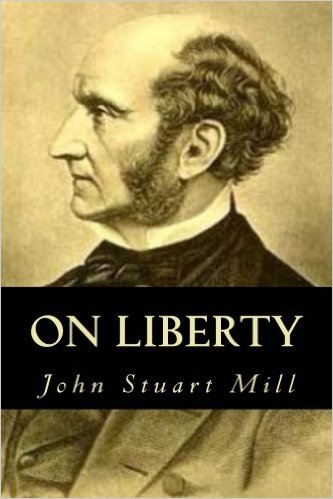
Arendt exposed ideological conformity, Gramsci revealed cultural capture, and Orwell diagnosed linguistic decay. Now, John Stuart Mill’s On Liberty (1859) offers a moral and philosophical counter to critical social constructivism’s (CSC) hostility toward open inquiry and individual conscience. Mill’s insistence that liberty of thought, speech, and character fuels social and moral progress stands as a principled rebuke to CSC’s attempts to bind individuality to collective dogma. Together, these thinkers—Arendt, Gramsci, Orwell, and Mill—equip us to resist CSC’s illiberal advance.
Mill argues that silencing expression harms not only the speaker but society as a whole, which is deprived of truth’s refinement through open contest (Mill, 1859, Ch. II). Even false opinions, he writes, may contain a kernel of truth; and true ones grow weak without opposition. CSC, meanwhile, appeals by promising equity through collective identity. Yet it treats dissent as a moral failure. Disagreement with DEI orthodoxy or critical race theory is labeled “harmful” or dismissed as “white fragility,” producing what Mill called “the tyranny of the prevailing opinion.” In 2024, University of Washington faculty guidelines equated merely questioning anti-racism initiatives with creating a “hostile environment,” thereby chilling discussion.
CSC’s moral coercion inverts Mill’s epistemic humility—his belief that all ideas deserve scrutiny, no matter how widely accepted. Mandatory DEI trainings, such as a 2024 policy at a major tech firm requiring employees to affirm “lived experience” as a primary form of knowledge, preclude rational dissent. In K–12 education, 2024 California curriculum guidance redefined “authenticity” as alignment with racial or gender identity groups, effectively suppressing individual thought. These tactics substitute ritual affirmation for genuine intellectual contest—exactly what Mill warned against.
Mill’s defense of individuality as a moral ideal—his celebration of “originality” and “nonconformity” (Ch. III)—clashes with CSC’s group-based scripts. By prioritizing identity categories over self-authorship, CSC undermines human flourishing. Mill does not reject social justice, but insists that no ideal justifies silencing dissent. His Enlightenment liberalism calls us to restore a culture of contestation and protect the individual as a source of moral insight.
Where Orwell showed how language is manipulated to close debate, Mill reveals why debate must remain open—because liberty depends on it. This series—Arendt’s pluralism, Gramsci’s cultural strategy, Orwell’s linguistic clarity, and Mill’s defense of liberty—forms a unified resistance to CSC’s totalizing ambitions.
Read Mill. Restore the contest of ideas. Reclaim individuality in classrooms, workplaces, and public life as the cornerstone of a free society.
Three Salient Points for Arguments Against Critical Social Constructivism
- Silencing Dissent Erodes Truth: CSC’s labeling of CRT critiques as “hostile,” as in 2024 campus policies, violates Mill’s warning that suppressing dissent impoverishes collective understanding.
- Moral Coercion Replaces Rational Persuasion: CSC’s mandates—like 2024 DEI affirmations in workplaces—replace Mill’s marketplace of ideas with conformity. Challenging these in policy debates restores reasoned inquiry.
- Individuality Is Suppressed by Group Identity: CSC’s identity scripts, seen in 2024 K–12 curricula, undermine Mill’s ideal of self-authorship. Promoting merit-based and pluralistic policies can counter this trend.
Reference
Mill, J. S. (1859). On Liberty. London: John W. Parker and Son.











 bleatmop
 Mystro
 The Arbourist


 Dead Wild Roses
Your opinions…