
You are currently browsing the tag archive for the ‘Media Lens’ tag.
 I find it amusing how often people refer to the media as having a “liberal bias”. It is such a counter-intuitive claim to make given the composition of the majority of mainstream media outlets (ad driven, reliant on the government for information). Media Lens never gives an inch when it comes to the ‘liberal press’ bowing to power.
Liberal journalism is balanced, neutral and objective, except when it’s not. A BBC news report on Hugo Chavez’s latest election triumph in Venezuela commented:
‘Mr Chavez said Venezuela would continue its march towards socialism but also vowed he would be a “better president”.’ (Our emphasis. The article was subsequently amended, although the ‘but’ remains)
The ‘but’ revealed the BBC’s perception of a conflict between Venezuela’s ‘march towards socialism’ and Chavez becoming a ‘better president’. Despite the appearance of neutral reporting, the ‘but’ snarled at both Chavez and socialism.
A second BBC article described Chavez as ‘one of the most visible, vocal and controversial leaders in Latin America’.
Another found him a ‘colourful and often controversial figure on the international stage’.
“Is Chavez more ‘controversial’ than war—fighting leaders like Bush, Blair, Brown, Obama and Cameron? How many tens or hundreds of thousands of people has Chavez killed? Imagine the BBC reporting: ‘David Cameron is an often controversial figure on the international stage.’ In fact the term is reserved for enemies of the West.
The same bias is found in editorials that often express, or reflect, the passionately partisan views of owners and editors. In 1997, the Independent proclaimed that Tony Blair’s election victory ‘bursts open the door to a British transformation’ to a ‘freer land’. (Neal Ascherson, ‘Through the door he can begin to create a freer land,’ The Independent, May 4, 1997)”
Damn Liberal Media indeed…
 People still cling to the idea that we have a liberal news bias in the media – Let’s look to the problem of global warming in an example from Media Lens.
“[…] Equally disturbing is the variation in media performance across the globe. A wide-ranging Reuters study on the prevalence of climate scepticism in the world’s media – Poles Apart – The international reporting of climate scepticism – focused on newspapers in Brazil, China, France, India, the UK and the USA. The periods studied were February to April 2007 and mid-November 2009 to mid-February 2010 (a period that included the UN climate change summit in Copenhagen and ‘Climategate’). Remarkably, the study concluded that climate scepticism is ‘predominantly an Anglo-Saxon phenomenon’, found most frequently in US and British newspapers:
‘In general the UK and the US print media quoted or mentioned significantly more sceptical voices than the other four countries. Together they represented more than 80% of the times such voices were quoted across all six countries.’
The study concluded:
‘In general, the data suggests a strong correspondence between the perspective of a newspaper and the prevalence of sceptical voices within it, particularly in the opinion pages. By most measures (but not all), the more right-leaning tend to have more such voices, the left-leaning less.’
But in all ten UK newspapers studied, there was an increase ‘both in the absolute numbers of articles with sceptical voices in them and the percentage of articles with sceptical voices in them’.
And so we find that Britain and the US – the two countries responding most aggressively to alleged ‘threats’ to human security in countries like Afghanistan, Iraq and Libya – are also the two countries least interested in responding to the very real threat of climate change.”
Could it be that because we are actually securing access to fossil sources that we’re not really focusing on the downside of their use?
“As the Reuters study suggests, media reporting is heavily influenced by editorial stance which, in turn, is heavily influenced by commercial interests. In October, the former Daily Star journalist Richard Peppiatt told the Leveson inquiry into the culture and ethics of the British press the truth about about the UK’s newsroom culture:
‘In approximately 900 newspaper bylines I can probably count on fingers and toes the times I felt I was genuinely telling the truth, yet only a similar number could be classed as outright lies. This is because as much as the skill of a journalist today is about finding facts, it is also, particularly at the tabloid end of the market, about knowing what facts to ignore. The job is about making the facts fit the story, because the story is almost pre-defined.
‘Laid out before you is a canon of ideologically and commercially driven narratives that must be adhered to. The newspaper appoints itself moral arbiter, and it is your job to stamp their worldview on all the journalism you do… The ideological imperative comes before the journalistic one – drugs are always bad, British justice is always soft.’
Peppiatt noted:
‘Tabloid newsrooms are often bullying and aggressive environments, in which dissent is simply not tolerated. It is difficult to stand up and walk out the door with a mortgage to pay, knowing another opportunity is unlikely to be waiting beyond.’
The issue that is not being discussed by Leveson is the extent to which these observations generalise to the ‘quality’ corporate media, and why. By contrast, in soft-pedalling the level of interference from owners and advertisers, the Guardian’s Nick Davies wrote:
‘Journalists with whom I have discussed this agree that if you could quantify it, you could attribute only 5% or 10% of the problem to the total impact of these two forms of interference.’ (Davies, Flat Earth News, Vintage 2008, p.22)
Compare this with corporate escapee Peppiatt’s unfettered conclusion:
‘Capitalism is trampling on journalism.’
I happen to agree with this statement. The answer – I suggest more outlets like Al-Jazeera the BBC and the CBC that, although still heavily influenced by corporate and government pressure, they can occasionally still report the truth of matters.
 Media Lens does fantastic, if grim work, in describing the system we live in. We are insulated from other narratives other ideas, other peoples sufferings. How can a public become informed with no other sources to cross reference? You cannot triangulate with only one point. Media Lens, Al-Jazeera and other alternative news sources provide those points for those who have the resources to find out.
The Statistics of Western State Terror (click title for link to full article)
“Ten years later, the violent consequences of the invasion of Afghanistan are truly appalling. A Stop the War video, ‘What is the true cost of the Afghanistan war?’ details some of the appalling statistics:
9,300 Afghan civilians have been killed by International Security Assistance Forces, i.e. Nato.
380 British soldiers are dead.
£18 billion of UK taxpayer’s money has been spent.
The war is costing Britain £12 million per day. The same amount could employ 100,000 nurses (at £21,000 annually) and 150,000 care workers (£15,000).
A study by Brown University in the United States estimates an unimaginable combined sum of up to $4 trillion to fight the wars in Afghanistan and Iraq.
In Afghanistan, ‘cautious estimates’ of the total civilian death toll exceed 40,000 people, of which:
25.6% killed by ISAF forces.
15.4% killed by anti-government forces.
60% killed by poverty, disease and starvation.
In particular, the horrendous killing of Afghan children in US air strikes and night raids gets scant coverage, if any, before the Western media swiftly looks away.
There are now three million refugees from Afghanistan: 30.7% of the world’s total, exceeding the figures of 16.9% from Iraq, 7.7% from Somalia and 4.8% from the Democratic Republic of Congo.
74% of the British public want the occupation to end either ‘immediately’ or ‘soon’.
Very little of this reality made it into the largely uncritical coverage of the ten-year anniversary of the West’s aggression against Afghanistan.
In the conclusion to a new report for Stop the War, David Swanson provides a stunning example of the media’s systematic bias:
‘On August 6, 2011, numerous US media outlets reported “the deadliest day of the war” because 38 soldiers, including 30 U.S. troops, had been killed when their helicopter was shot down.
‘But compare that with the day of May 4, 2009, discussed in this report, on which 140 people, including 93 children, were killed in U.S. airstrikes. We are denying to each other through silence and misdirection every day that the children of Afghanistan exist. But their deaths are rising.’
But the deaths of Afghan children, and the suffering of the people of Afghanistan, are seemingly of little consequence for most Western journalists who would rather focus on the ‘progress’ and ‘achievements’ of the Nato ‘campaign’. “
 “Nothing is free.” Remember that golden nugget of advice given back when you were young? Of course you do, it made you wary of deals that seemed just perfect and produced nothing but unicorns and butterflies and the separation of you and your money once you made the agreement with the con artist in question. The idea that nothing is free needs to be extended further because the deception continues on a much larger trans-national scale. Citizens of democratic counties are bombarded with messages about the “free market” and the “free press” two terms that will not lose their scare quotes until they actually start representing what the words purportedly mean.
We’ll confine analysis to the “free press’ part of the equation, as Media Lens focuses on the unseemly bias toward the dominant power structures by the media in society today. Objectivity? Fairness and Accuracy in reporting? You will not find it inside the mainstream media of western countries, as shocking a revelation that is for many. It is tempting here to go down the left-wing/right-wing bias arguement black hole at the juncture, but really the left versus right debate is but a mere flickering candle compared to the supernova-like malfeasance of the courtier “free press” fawning to whomever hold the levers of power in society.
The article we’ll be looking at appears on the Media Lens website. Significant sections will be reviewed here, but to see the work in full: “The Golden Rule of State Violence: Terrorism is What they Do; Counterterrorism is What We do.”
“A defining feature of state power is rhetoric about a ‘moral’ or ‘ethical’ role in world affairs. Errors of judgement, blunders and tactical mistakes can, and do, occur. But the motivation underlying state policy is fundamentally benign. Reporters and commentators, trained or selected for professional ‘reliability’, tend to slavishly adopt this prevailing ideology.
Thus, on the ten-year anniversary of the 9/11 attacks, an editorial in the Independent on Sunday gushed about ‘Bush’s desire to spread democracy as an end in itself’. It was, the paper said, ‘the germ of a noble idea’. There was ‘an idealism’ about Blair’s support for Bush. The drawback was that the execution of the righteous vision had been ‘naive, arrogant and morally compromised by torture and the abrogation of the very values for which the US-led coalition claimed to fight’.”
Who in their right mind actually thought that we were “spreading democracy” in Iraq? But I guess whatever it takes to sell the idea of war to enough people to make it popular.
“Note that the invasion-occupation of Iraq is described as a ‘mistake’, not the supreme international crime as judged by the standards of the post-WW2 Nuremberg Trials.”
We come to point very early in the article is really damning and says so much about the pablum we are fed by the media. The Nuremberg Trials established rules for the world to follow after WW2 in attempt to head off another costly world catastrophe, they were to be followed not only by the losers of the war but by the victors as well. We broke these conventions, actually we ripped them up used them as toilet paper, and an actual “free press” would brought this and kept this fact in the world’s eye for all to see. But instead, only reputations are tarnished:
“The horrendous murder of Baha Mousa, an Iraqi civilian, by British soldiers ‘was a reminder of how much the Iraq war tarnished Britain’s reputation abroad.’ The implication is that Britain’s ‘reputation’ is fundamentally decent, only occasionally ‘tarnished’.
The paper concludes:
‘there is a hope that Britain, with a more realistic understanding of its capability, could regain some of the ethical role in the world that it lost after its mistaken response to 9/11.’
In the wake of all that has happened in the past ten years (and more), it takes a committed form of self-deception to cling to the shredded image of Britain’s ‘ethical role in the world’.”
Ah, self-deception, we all practice it to a certain extent. When left unchecked on the level of societies and countries though, it becomes a malevolent, destructive force.
 Media Lens has been around for ten years now, continually challenging the view the corporate media presents to people. The authors answer a few common questions as to why they do what they do in a very clear and structured way. Defining the problem is always the first step to finding a solution, so I reprint their words here with the goal of defining the problem for people to see.
“Question: Why did you start Media Lens?
Answer: The media presents itself as a neutral window on the world. We are to believe that the view we see through the window is ‘the world as it is’. It’s ‘All the news that’s fit to print’ because ‘Comment is free but facts are sacred’. What’s to challenge? When you take a closer look at the ‘window’, you realise it’s not a window on the world at all; it’s a kind of painting of a window on the world. And the ‘painting’ has been carefully produced using colours, textures and forms all selected by the media arm of a corporate system that has very clear interests and bias.
And the one issue the media will not seriously discuss is the idea that it is not a neutral window on the world. This silence protects every deception promoting war, destruction of the climate, and the general subordination of people and planet to profit. It has to be challenged.
Q: Are there any media systems in the world that you think work well?
A: Compassion and honesty are found in individuals, not in systems. There are individuals who are sensitive to the suffering of others, to the importance of compassion for the welfare of themselves and others, and who, to a greater or lesser degree, subordinate self-interest (wealth, status) to rational analysis and truthful communication. Honest individuals reject the idea that they need to be trained to understand, and respond productively to, the suffering of others. They understand that the great enemy of dissent is the desire to participate comfortably as part of a system, herd, corporation, which inevitably demand conformity and compromise. They understand that the sense of comfort is illusory and actually a condition of great suffering. The self-centred mind is inherently stressed and dissatisfied. A life spent in the self-centred herd is not a happy one, it comes at great cost to the soul. Norman Mailer observed:
‘There is an odour to any Press Headquarters that is unmistakeable… The unavoidable smell of flesh burning quietly and slowly in the service of a machine.’ (Mailer, The Time Of Our Time, Little Brown, 1998, p.457)”
It is nice to see others engaged in the same struggle fighting the same battles. Cheers Media Lens and may you have 10 more successful years after this.
Media lens is currently calling another Independent reporter on their uncritical treatment of Tony Blair and his sentiments toward the Palestinians. Go to the Media Lens website for the entire deconstruction.
A snippet from John Pilger caught my attention, I will repost it here:
In similar vein, Macintyre made a cryptic reference in his article to the “tragically abortive peace talks at Camp David in 2000”. This “tragic” episode is “Israel’s most important contemporary myth”, John Pilger writes. The myth states that Ehud Barak offered the Palestinians the return of “90 per cent” of the Occupied Territories and that Yasser Arafat turned him down. Arafat’s alleged rejection of this “unprecedented act of generosity”, to quote the myth once again, became the launch pad for renewed abuse of the Palestinians, including the building of an apartheid wall.
Pilger writes of the peace talks in 2000:
“There was no ’90 per cent’ offer. At Camp David, Barak promised a token military withdrawal from no more than 12 per cent of the Occupied Territories. He also made it clear that Israel had no intention of giving back any part of Greater Jerusalem, which covers some of the best Palestinian land and is the administrative and cultural heart of Palestine. Most of the illegal settlements, which controlled 42 per cent of the West Bank and Gaza, would stay, leaving the Palestinians with fragments of their original homeland, or 15 per cent of pre-Israel Palestine.” (John Pilger, Freedom Next Time, Bantam Press, London, 2006, pp. 107-108)
“In practice,” wrote Barak’s chief negotiator at Camp David, Shlomo Ben-Ami, before taking up his negotiator’s role, “the Oslo agreements were founded on a neo-colonialist basis, on a life of dependence of one on the other forever.” (Quoted, Pilger, ibid.)
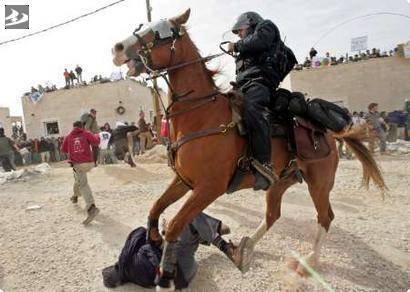
It is nice to see we are giving the Palestinians a fair shake with our obvious generosity.
 Media Lens offers a valuable service of presenting the news that does not make the front page of the newspapers (or even the back page) and providing analysis and edification that does not come with the mandatory business class prism. This excerpt can be found on their web page.
Beyond Corporate Propaganda
In his latest excellent book, ‘Beyond the Profits System’, the British economist Harry Shutt observes that one of the most striking features of the financial crisis has been:
“… the uniformly superficial nature of the analysis of its causes presented by mainstream observers, whether government officials, academics or business representatives. Thus it is commonly stated that the crisis was caused by a combination of imprudent investment by bankers and others […] and unduly lax official regulation and supervision of markets. Yet the obvious question begged by such explanations – of how or why such a dysfunctional climate came to be created – is never addressed in any serious fashion.”
Shutt continues:
“The inescapable conclusion […] is that the crisis was the product of a conscious process of facilitating ever greater risk of massive systemic failure.” (Harry Shutt, ‘Beyond the Profits System: Possibilities for a Post-Capitalist Era’, Zed Books, London, 2010, p.6)
In several books and articles, David Harvey, a social theorist at the City University of New York, has cogently written of how capitalism has shaped western society, risking and even destroying nations, populations and ecosystems. Not only are periodic episodes of “meltdown” inevitable, but they are crucial to capitalism’s very survival. The essence of capitalism is self-interest; and any talk of reforming it through regulation or by imposing morality – a kinder, gentler capitalism – is both irrational and deceitful.
The bankruptcy of investment bank Lehman Brothers in September 2008 triggered the latest crisis of capitalism. Drastic action was required to save the system. And so, observes Harvey, a few US Treasury officials and bankers including the Treasury Secretary himself, a past president of Goldman Sachs and the present Chief Executive of Goldman, “emerged from a conference room with a three-page document demanding a $700 billion bail-out of the banking system while threatening Armageddon in the markets.”
Harvey continues:
“It seemed like Wall Street had launched a financial coup against the government and the people of the
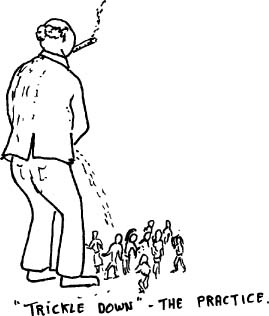
Things they do not teach you in Economics 101.
United States. A few weeks later, with caveats here and there and a lot of rhetoric, Congress and then President George Bush caved in and the money was sent flooding off, without any controls whatsoever, to all those financial institutions deemed ‘too big to fail’.” (David Harvey, ‘The Enigma of Capital: And the Crises of Capitalism’, Profile Books, London, 2010, p. 5)
Shutt translates “too big to fail”, that over-used defence employed by capitalists and their cheerleaders, as meaning that a tiny super-wealthy clique recognised that they risked losing vast fortunes if the markets were allowed to take their course free of intervention from the state. Wholesale nationalisation of insolvent banks would have posed an existential threat to elite power; or even led to the collapse of the capitalist profits system in its entirety. Rather than accept such a fate, rich investors tried to ensure that their toxic assets be “largely transferred to the state, thereby adding unimaginable sums – officially estimated at $18 trillion world-wide – to already excessive public debt.” (Shutt, op. cit., p. 36)
As ever, the public were made to pay the price for private greed. In simple terms: it’s socialism for the rich, and capitalism for the rest of us.”
Make no mistake, capitalism for the rest of us, is no happy place.











 bleatmop
 Mystro
 The Arbourist


 Dead Wild Roses
Your opinions…