
You are currently browsing the tag archive for the ‘Realpolitik’ tag.
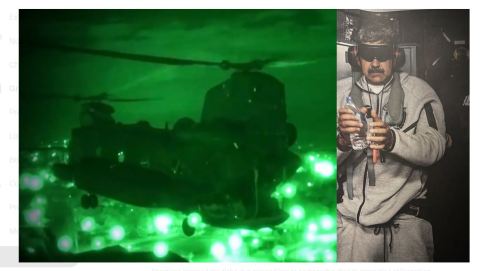
On January 3, 2026, the United States carried out a large-scale operation in Venezuela that resulted in the capture of Nicolás Maduro and his wife, Cilia Flores, and their transfer into U.S. custody. [1] Within hours, the story stopped being only about Maduro. It became a stress test of the West’s default assumptions about how global order actually works.
The reaction split fast and predictably: condemnation framed in the language of sovereignty and the UN Charter; applause framed in the language of liberation and justice; and, underneath both, a quieter argument about whether “international law” is a meaningful constraint—or primarily a vocabulary used to legitimize outcomes power already permits.
Two languages for one event
When a great power uses force to remove a sitting head of state and relocate him for prosecution, states and commentators typically reach for one of two languages.
The first is legal-institutional: Was this lawful? Was it authorized? What does the UN Charter permit? What precedent does it set?
The second is strategic-realist: What will it cost? Who can impose consequences? What does it deter? What does it invite?
These languages often coexist, but Venezuela forced a choice because it exposed the tension between *the claim* of a rules-governed international order and *the mechanism* by which order actually persists.
The enforceability problem
The measured point is not that international law is “fake” in every domain. A great deal of international life runs on rules that are real in practice: treaties, trade arrangements, financial compliance, aviation coordination, maritime norms, and sanctions enforcement. In those domains, rules can be highly consequential because they are tied to access, markets, and institutional membership.
But in the domain that states care about most—hard security and regime survival—international law runs into a structural limitation: there is no global sovereign with a monopoly on force. The question is not whether rules exist, but whether they bind the actors most able to ignore them.
That isn’t a rhetorical flourish. It’s the structural fact everything else sits on.
The UN can convene, condemn, and deliberate. But it cannot consistently coerce major powers into compliance. In the wake of the Maduro operation, the UN Security Council moved to meet and the UN Secretary-General warned the action set a “dangerous precedent.” [2] That may shape legitimacy and alliances. It may raise political costs. But it does not function like law inside a state, because law inside a state ultimately rests on enforceable authority.
This is why the phrase “international law” so often behaves less like binding law and more like legitimacy currency—something states spend, something rivals contest, and something that matters most when it is backed by power.
The reaction spectrum makes more sense as philosophy, not partisanship
The political reactions were not merely partisan reflexes; they were expressions of competing world-models.
Institutionalists treated the precedent as the core danger: once unilateral force becomes normalized, the world becomes easier for worse actors to imitate.
Sovereignty-first critics (especially in regions with long memories of intervention) treated it as a return to imperial patterns—regardless of Maduro’s character.
Results-first supporters treated it as overdue action against an entrenched authoritarian regime and criminal networks.
Realists treated it as a reminder that rules do not restrain actors who cannot be credibly punished.
It is possible to disagree with the operation and still accept the realist diagnosis. “This was reckless” and “this reveals how order works” are not contradictions—they’re often the same conclusion stated in different registers.
A small but telling detail: systems moved, not just speeches
One detail worth noting is that the event had immediate operational spillover beyond diplomacy: temporary Caribbean airspace restrictions and widespread flight cancellations followed, with U.S. authorities later lifting curbs. [3] That’s not a moral argument either way. It’s simply a reminder that great-power action produces real-world system effects instantly—while multilateral processes operate on a different clock.
Meanwhile, Venezuela’s internal institutions scrambled to project continuity. On January 4, 2026, reporting described Venezuela’s Supreme Court ordering Vice President Delcy Rodríguez to assume the interim presidency following Maduro’s detention. [4] Again, one can read this in legal terms or strategic terms. But it underscores the same point: the decisive moves were being made through power, institutional control, and logistics—not through international adjudication.
What Venezuela is really teaching
The strongest measured conclusion is this:
1. International law can matter as coordination and legitimacy.
2. But in hard-security conflicts, it does not function like ordinary law because enforcement is selective, especially against great powers.
3. Therefore, when Western leaders speak as though “international law” itself will constrain outcomes, they are often describing the world they want—or the world they remember—more than the world that exists.
This is the wake-up Venezuela delivers: not that rules are worthless, but that rules don’t become rules until they are paired with credible consequences. If the West wants a world that is safer for liberal societies, it must stop mistaking procedural vocabulary for strategic capacity.
What Western leaders should do differently
If “international law” is often a language of legitimacy rather than a source of enforcement, then the task for Western leaders is not to abandon norms—but to rebuild the conditions under which norms can actually hold. That requires a change in posture that is both external and internal.
First: speak honestly about interests and tradeoffs.
A rules vocabulary can be morally sincere and still strategically evasive. Western publics deserve leaders who can say, without euphemism, what outcomes matter, why they matter, and what costs we are willing to pay to secure them.
Second: re-embody Western values in our institutions, not merely our slogans.
The West is not “a place that sometimes gets things right.” It is the most successful civilizational experiment yet produced: freedom under law, pluralism, scientific dynamism, broad prosperity, and the moral insight that the individual matters. If leaders treat this as an embarrassment rather than an inheritance, they will govern as caretakers of decline.
Third: restore civic confidence by repairing the narrative infrastructure.
A civilization that teaches its own children that it is uniquely evil will not defend itself—or even understand why it should. The “mono-focused West-is-bad” story has become a kind of institutional reflex across parts of education, culture, and bureaucracy. You can reject naïve triumphalism while still insisting on civilizational honesty: that the West has flaws, committed crimes, and still produced the best lived human outcomes at scale to date.
Fourth: build capacity again—material, strategic, and moral.
Norms without capacity do not preserve peace; they invite tests. This means defense industrial readiness, energy resilience, border and migration competence, counterintelligence seriousness, and the willingness to impose costs where deterrence requires it.
Finally: treat multilateralism as a tool, not a substitute for power.
Institutions can amplify strength; they cannot conjure it. A West that wants a stable order must stop acting as though process is the engine. Process is the dashboard.
Afterword: the more polemical take
Western elites keep reaching for “international law” the way a sleepwalker reaches for the bedside table—by habit, not by sight. They speak as if naming the norm substitutes for enforcing it. But there is no authority behind it for the actors that matter most.
So the scandal isn’t disagreement about Venezuela. The scandal is that so many of our leadership classes still talk like we live in a world where legitimacy language can replace power, unity, and competence. That was a comfortable posture in a more unipolar era. It is a dangerous posture now.
In a multipolar environment, moral declarations without strength don’t preserve order. They advertise weakness. And weakness is not neutral: it invites tests.
Footnotes
[1] Reuters (Jan 3–4, 2026): reporting on the U.S. operation capturing Nicolás Maduro and Cilia Flores and transferring them to U.S. custody.
[2] Reuters (Jan 3, 2026): UN Security Council to meet over U.S. action; UN Secretary-General calls it a “dangerous precedent”; meeting requested with backing from Russia/China.
[3] Reuters (Jan 3, 2026): Caribbean airspace restrictions and flight cancellations following the operation; later lifted.
[4] Reuters (Jan 4, 2026): Venezuela’s Supreme Court orders Delcy Rodríguez to assume interim presidency after Maduro’s detention.
Direct Reference Links
[1] Reuters — “Mock house, CIA source and Special Forces: The US operation to capture Maduro”
https://www.reuters.com/business/aerospace-defense/mock-house-cia-source-special-forces-us-operation-capture-maduro-2026-01-03/
[2] Reuters — “UN Security Council to meet Monday over US action in Venezuela”
https://www.reuters.com/world/americas/un-chief-venezuela-us-action-sets-dangerous-precedent-2026-01-03/
[3] Reuters — “US lifts Caribbean airspace curbs after attack on Venezuela”
https://www.reuters.com/world/americas/us-airlines-cancel-flights-after-caribbean-airspace-closure-2026-01-03/
[4] Reuters — “Venezuela’s Supreme Court orders Delcy Rodriguez become interim president”
https://www.reuters.com/world/americas/venezuelas-supreme-court-orders-delcy-rodriguez-become-interim-president-2026-01-04/
Why do we act surprised when areas of the world erupt into bloody vicious conflict. We are shocked at the intensity and absolute disregard for human life. Yet how do the ‘bad guys’ get access to all these calamitous weapons?
We sell them. We sell a whole bunch of weapons in nearly every corner of the world to pretty much anyone who has the cash. That’s how. This has been a feature, as Mr.Hartung states, of every presidency from Nixon on in. It is the status-quo and has bi-partisan support, for decades.
Another prestigious brick in the monument attesting to the trivial worth of human life. We in the civilized West speak of human rights while ensuring through our arms sales they they will never become universal rights.
Fuck.
If it makes you feel better, slap the ‘business is business’ rhetorical dodge all over this appalling fact. This is what happens when we divorce the public from the political decision making process. This is what happens when we lose the basic trait of empathy toward others. The feelings are the same when someone on the other side of the globe loses a loved one. Gunshot wounds maim people and cripple family units for life whether it is here in North America or in San Salvador, Syria, or Yemen.
Yet geography makes a (fateful) difference. We disassociate from the losses people experience ‘over there’. We remain ignorant of our contribution in the slaughter of innocent people across the globe. It is a moral chasm that follows us. arms dealers to the world, ignorant or not, of to what we are really committed to as a nation. The lofty rhetoric we hear on the news from the political class is divorced from the realpolitik in which we actually operate and base our foreign policy on.
My real fear is this – what if people are informed of the real nature of this aspect of the world, and their response is apathy. I would not know what to do after that.
Anyways, my moralizing aside read the entire article at Tom’s Dispatch, but this is the part I was commenting on:
“Though Saudi Arabia may be the largest recipient of U.S. arms on the planet, it’s anything but Washington’s only customer. According to the Pentagon’s annual tally of major agreements under the Foreign Military Sales program, the most significant channel for U.S. arms exports, Washington entered into formal agreements to sell weaponry to 130 nations in 2016 (the most recent year for which full data is available). According to a recent report from the Cato Institute, between 2002 and 2016 the United States delivered weaponry to 167 countries — more than 85% of the nations on the planet. The Cato report also notes that, between 1981 and 2010, Washington supplied some form of weaponry to 59% of all nations engaged in high-level conflicts.
In short, Donald Trump has headed down a well-traveled arms superhighway. Every president since Richard Nixon has taken that same road and, in 2010, the Obama administration managed to rack up a record $102 billion in foreign arms offers. In a recent report I wrote for the Security Assistance Monitor at the Center for International Policy, I documented more than $82 billion in arms offers by the Trump administration in 2017 alone, which actually represented a slight increase from the $76 billion in offers made during President Obama’s final year. It was, however, far lower than that 2010 figure, $60 billion of which came from Saudi deals for F-15 combat aircraft, Apache attack helicopters, transport aircraft, and armored vehicles, as well as guns and ammunition.
There have nonetheless been some differences in the approaches of the two administrations in the area of human rights. Under pressure from human rights groups, the Obama administration did, in the end, suspend sales of aircraft to Bahrain and Nigeria, both of whose militaries were significant human rights violators, and also a $1 billion-plus deal for precision-guided bombs to Saudi Arabia. That Saudi suspension represented the first concrete action by the Obama administration to express displeasure with Riyadh’s indiscriminate bombing campaign in Yemen. Conducted largely with U.S. and British supplied aircraft, bombs, and missiles, it has included strikesagainst hospitals, marketplaces, water treatment facilities, and even a funeral. In keeping with his focus on jobs to the exclusion of humanitarian concerns, Trump reversed all three of the Obama suspensions shortly after taking office.
Fueling Terrorism and Instability
In fact, selling weapons to dictatorships and repressive regimes often fuels instability, war, and terrorism, as the American war on terror has vividly demonstrated for the last nearly 17 years. U.S.-supplied arms also have a nasty habit of ending up in the hands of America’s adversaries. At the height of the U.S. intervention in Iraq, for instance, that country’s armed forces lost track of hundreds of thousands of rifles, many of which made their way into the hands of forces resisting the U.S. occupation.
In a similar fashion, when Islamic State militants swept into Iraq in 2014, the Iraqi security forces abandoned billions of dollars worth of American equipment, from small arms to military trucks and armored vehicles. ISIS promptly put them to use against U.S. advisers and the Iraqi security forces as well as tens of thousands of Iraqi civilians. The Taliban, too, has gotten its hands on substantial quantities of U.S. weaponry, either on the battlefield or by buying them at cut-rate, black market prices from corrupt members of the Afghan security forces.
In northern Syria, two U.S.-armed groups are now fighting each other. Turkish forces are facing off against Syrian Kurdish militias that have been among the most effective anti-ISIS fighters and there is even an ongoing risk that U.S. and Turkish forces, NATO allies, may find themselves in direct combat with each other. Far from giving Washington influence over key allies or improving their combat effectiveness, U.S. arms and training often simply spur further conflict and chaos to the detriment of the security of the United States, not to speak of the peace of the world.”
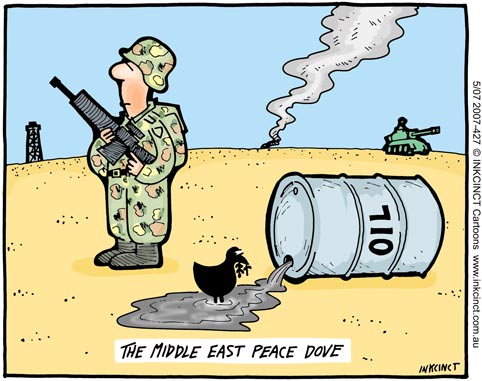 Noam Chomsky is considered a rogue commentator in the United States. His critiques of power illustrates the gross realpolitik that runs the US government and its foreign policy. Traditionally, we tend to think of ourselves as the “good guys”. In reality though, we seldom have that role. A look at the recent history of the Middle East confirms this hypothesis, excerpt from Alter.net.
Q: Does the United States still have the same level of control over the energy resources of the Middle East as it once had?
NC: The major energy-producing countries are still firmly under the control of the Western-backed dictatorships. So, actually, the progress made by the Arab Spring is limited, but it’s not insignificant. The Western-controlled dictatorial system is eroding. In fact, it’s been eroding for some time. So, for example, if you go back 50 years, the energy resources — the main concern of U.S. planners — have been mostly nationalized. There are constantly attempts to reverse that, but they have not succeeded.
Take the U.S. invasion of Iraq, for example. To everyone except a dedicated ideologue, it was pretty obvious that we invaded Iraq not because of our love of democracy but because it’s maybe the second- or third-largest source of oil in the world, and is right in the middle of the major energy-producing region. You’re not supposed to say this. It’s considered a conspiracy theory.
The United States was seriously defeated in Iraq by Iraqi nationalism — mostly by nonviolent resistance. The United States could kill the insurgents, but they couldn’t deal with half a million people demonstrating in the streets. Step by step, Iraq was able to dismantle the controls put in place by the occupying forces. By November 2007, it was becoming pretty clear that it was going to be very hard to reach U.S. goals. And at that point, interestingly, those goals were explicitly stated. So in November 2007 the Bush II administration came out with an official declaration about what any future arrangement with Iraq would have to be. It had two major requirements: one, that the United States must be free to carry out combat operations from its military bases, which it will retain; and two, “encouraging the flow of foreign investments to Iraq, especially American investments.” In January 2008, Bush made this clear in one of his signing statements. A couple of months later, in the face of Iraqi resistance, the United States had to give that up. Control of Iraq is now disappearing before their eyes.
Iraq was an attempt to reinstitute by force something like the old system of control, but it was beaten back. In general, I think, U.S. policies remain constant, going back to the Second World War. But the capacity to implement them is declining.











 bleatmop
 Mystro
 The Arbourist


 Dead Wild Roses
Your opinions…