
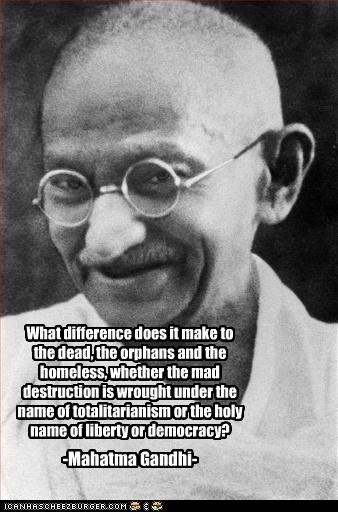
 Currently reading Democracy Incorporated by Sheldon Wolin. He speaks of totalitarianism in a different form as opposed to that described by Hannah Arendt, but of what he terms inverted totalitarianism in which the state is hollowed out to serve corporate interests rather than those of the public. Thus quote originates from chapter 4 in which two ways in which nations can slip into autocratic rule.
“Tocqueville democrat comfortable with despotism and Hobbes’s free rationalist who opts for absolutism share an elective affinity. Tocqueville imagines a despotism made possible because citizens have chosen to relinquish participatory politics, which he and singled out as the most remarkable, widespread, and essential element of American political life. By abandoning their intense involvement with the common affairs of their communities in favor of personal ends, they, like signatories to Hobbes’s contract, have chosen to be apolitical subjects rather than citizens.
The contemporary moral to be drawn from our detour through Hobbes and Tocqueville is this: while it may prove possible to mobilize voters around the slogan “Anything to beat Bush!” it take more persistence, more thoughtfulness to dismantle Superpower and to nurture a democratic citizenry. The lesson of Hobbes and Tocqueville can be boiled down to a brief but chilling dictum: concentrated power, whether of a Leviathan, a benevolent despotism, or a superpower, is impossible without the support of a complicitous citizenry that willingly signs on to the covenant, or acquiesces, or clicks the “mute button.”
– Sheldon S. Wolin, Democracy Incorporated p.80-81.











 bleatmop
 Mystro


 Dead Wild Roses
7 comments
August 24, 2013 at 11:23 am
john zande
Off topic, but Prayson is at it again, and this is one that will have you pulling your hair out:
LikeLike
August 24, 2013 at 11:34 am
VR Kaine
a benevolent despotism, or a superpower, is impossible without the support of a complicitous citizenry that willingly signs on to the covenant, or acquiesces, or clicks the “mute button.”’
Totally agree. Look what we have now and to me, this is exactly how we got here. Government effectively bought an ignorant voting public through bread and circuses and bright shiny things, and has ensured that no matter what, two parties beholden to nothing but large corporate interests will ALWAYS get in.
LikeLike
August 24, 2013 at 12:27 pm
The Arbourist
@JZ
I doubt this will get through moderation, but here is the comment I left.
@Prayson
Ah. I love the smell of untrammeled misogyny in the morning.
Your loquaciously prolix ways of disenfranchising women of their basic human rights never fails to amaze and disgust me. I stare in wonderment of the vile ziggurat of animosity you bear toward women and despair that you continue to build it post after post day after day. It is a testament to the scorn, disdain and contempt for women that is woven into the fabric of society (and fuck-you-very-much for perpetuating the cycle).
Your views, of course buttressed by religious delusion, find purchase only with those dedicated to depriving women of liberty and heralding them into the abject misery of birth slavery and their patriarchally approved role of “mother”. We are not going back, not for your bizzarely perverse notion of “morality”, not for jebus, not for anything.
Your advocacy for the depredation of women is quintessentially insulting to any sort of ethical system that regards women as human beings with rights and freedoms. Your contumacious refusal to see women as autonomous human beings, first and foremost, demolishes any argument arrogantly purported to be of a moral or ethical nature.
My rhetoric aside, let’s deal with the shit that you are calling an ‘argument’.
What Jane decides to do with her body is none of your fucking business. Not even a quantum fluctuation of your opinion should deign to flirt with what a woman does with her pregnancy.
It (your opinion) is irrelevant. When your body can be used, against your will, for the benefit of others then you may have a horse in the this race. Until then, you may shut the fuck up with your hatred of women.
I doubt you’ll be happy Prayson until women who are pregnant are chained to a bed for the duration of their pregnancy. Perhaps only then your rank and slavish fetus-fetish will be satisfied. Women’s status and worth for you, is a function of their capacity to breed, and that if that demotion of a human being to mere broodmare status, doesn’t fucking turn your ethical machinery into the red zone, then any moral or ethical noise emanating from you must be necessarily taken as plain and simple bullshit.
Foetuses are not equal to women in rights, nor should they be if we are to continue to regard women as human beings.
LikeLike
August 24, 2013 at 12:50 pm
Prayson Daniel
I am very tolerant person ;) of cause it gets without moderation. You do raise good points.
LikeLike
August 24, 2013 at 12:59 pm
The Arbourist
@Prayson
Well this iteration of your post touched a nerve and you received the a good portion of the vituperation that I usually edit out before posting.
I should have something for you that features a little bit less of the angry rhetorical flourishes and more attention to argumentative detail.
LikeLike
August 24, 2013 at 1:39 pm
Prayson Daniel
It is well with me. :) I love you and in love there is tolerance and accepting people for who they are. Both when they are angry and when they are sweet.
LikeLike
August 24, 2013 at 2:42 pm
john zande
Arb, i am in awe of your wordsmittery.
Prayson, you sound way too much Age of Aquarius.
LikeLike