
You are currently browsing the monthly archive for March 2025.
Chanel Pfahl, a high school teacher in Ontario, Canada, has become a focal point in the ongoing cultural battle over education, activism, and free expression. On March 8, 2025, Pfahl announced via X that she is facing her fourth investigation by the Ontario College of Teachers for her social media posts and podcast comments criticizing activist policies, such as those promoting critical race theory and gender ideology in schools. This repeated targeting exemplifies the tactics of “woke cancel culture,” where individuals who challenge progressive orthodoxies are subjected to professional scrutiny, public shaming, and potential career destruction. Pfahl’s case highlights a broader trend in Canadian education, where dissent against ideological conformity is met with punitive measures, undermining open dialogue.
The investigations into Pfahl’s tweets and podcast remarks reveal a pattern of selective enforcement and ideological policing. Her posts, which include sharing images of school pride decorations, questioning gender-affirming care policies, and critiquing the imposition of group identities in education, are being scrutinized as “problematic” by the Ontario College of Teachers. Yet, as Pfahl notes, the same schools and educators who originally shared these materials on social media face no consequences. This double standard suggests a deliberate attempt to silence her voice, a hallmark of cancel culture, where individuals are held to inconsistent standards based on their alignment with prevailing ideological norms. The Democracy Fund, representing Pfahl in a related 2022 investigation, has argued that her comments are neither racist nor offensive, yet the investigations persist, illustrating the weaponization of regulatory power.
Pfahl’s situation also demonstrates the use of “repressive tolerance,” a tactic described by critics of critical social justice movements, as noted on the website Stop Woke Activism. While proponents of these ideologies claim to champion inclusion and diversity, their actions often exclude and punish those with opposing views, such as Pfahl. By compiling “pages and pages” of her tweets and podcast quotes, the Ontario College of Teachers is engaging in a form of public shaming, aiming to deter other educators from questioning activist policies in schools. This approach mirrors the “cancelling” tactics outlined in web resources, where dissenters are smeared, investigated, and pressured to conform, undermining fundamental democratic principles like freedom of expression and equality before the law.
The impact of these tactics extends beyond Pfahl, threatening the broader educational landscape in Canada. As highlighted in the National Post’s 2022 article on critical race theory’s influence in Canadian education, large school boards and institutions have adopted these ideologies, often without room for debate. Pfahl’s case underscores the risks for teachers who challenge this orthodoxy, potentially chilling free speech in classrooms and stifling diverse perspectives. Parents, as the primary educators of their children, also have a stake in this issue, as Pfahl’s advocacy aligns with concerns about ideological indoctrination in schools, a point emphasized by critics of critical social justice movements. Her investigations signal a broader cultural shift where dissent is pathologized rather than debated.
Ultimately, Chanel Pfahl’s repeated investigations by the Ontario College of Teachers serve as a stark warning about the dangers of woke cancel culture in Canadian education. By targeting her for expressing views that question activist policies, the regulatory body is enforcing a narrow ideological conformity that suppresses open discourse and individual rights. This case, rooted in Pfahl’s commitment to fostering an inclusive education free from imposed ideologies, reveals the need for a balanced approach that respects diverse opinions while upholding professional standards. Without such balance, the principles of liberal democracy—freedom of expression, equality, and parental rights—risk being eroded in the very institutions tasked with nurturing critical thinking and open-mindedness.

The British Columbia College of Nurses and Midwives (BCCNM) Discipline Committee’s ruling against Amy Hamm on March 13, 2025, represents a significant setback for women and their freedom of speech in Canada. By disciplining Hamm—a nurse and vocal advocate for sex-based rights—for her gender-critical statements, the decision effectively punishes women who challenge prevailing transgender ideology, particularly when it encroaches on female-only spaces and identities. This ruling not only silences a woman defending biological reality and women’s rights but also signals to others that expressing such views, even off-duty, risks professional ruin, disproportionately chilling female voices in a debate where they have a unique stake.
The 115 page document is a bit of a read, so here are the main points, and a refutation right after.
5-Point Summary of Evidence Supporting the BCCNM Decision
- Discriminatory Statements Linked to Professional Identity: The panel found that Hamm made “discriminatory and derogatory” statements about transgender people across online platforms (e.g., articles, podcasts) between July 2018 and March 2021, while explicitly identifying herself as a nurse or nurse educator. This nexus to her profession was key, as it was seen to undermine the nursing profession’s reputation.
- Violation of Professional Standards: The BCCNM argued that Hamm’s statements breached the College’s Code of Ethics and Professional Standards, which require nurses to provide care without discrimination and uphold public trust. The panel agreed that her public comments contradicted these obligations.
- Intent to Harm Reputation of Transgender Community: The ruling highlighted that Hamm’s statements were designed to “elicit fear, contempt, and outrage” against transgender individuals, particularly by denying their existence (e.g., rejecting gender identity as a concept). This was deemed unprofessional and harmful.
- Specific Instances of Misconduct: The panel pinpointed four instances (Tabs 4, 24, 28, and S3 from the evidence extract) where Hamm’s comments—tied to her nursing identity—were ruled as crossing the line into professional misconduct. These included writings and a podcast appearance explicitly linked to her role as a nurse.
- Public Role and Accountability: By leveraging her professional credentials in public discourse, Hamm was held to a higher standard. The panel concluded that her actions damaged the integrity of the nursing profession, justifying regulatory intervention despite her off-duty status.
Refutation of the Evidence
- Freedom of Expression Overreach: Hamm and her legal team, supported by the Justice Centre for Constitutional Freedoms (JCCF), argued that her statements were protected under the Canadian Charter of Rights and Freedoms (Section 2(b)). The panel’s ruling infringes on her right to express personal views—especially on a contested public issue like gender ideology—without evidence of direct harm to patients or professional practice.
- No Nexus to Professional Conduct: The defense contended that Hamm’s statements lacked a sufficient connection to her nursing duties. Most of her online activity (e.g., Twitter posts) did not explicitly tie her nurse identity to the comments, and the panel itself declined to find misconduct in those cases. Penalizing her for a handful of instances where she mentioned her profession stretches regulatory authority too far.
- Scientific and Reasonable Basis: Hamm’s rejection of gender identity as a “mystical belief” aligns with biological reality (sex as immutable) and is a defensible stance in scientific debate. The panel’s characterization of this as “discriminatory erasure” imposes an ideological litmus test, punishing her for not conforming to transgender advocacy rather than for any professional failing.
- Lack of Demonstrable Harm: There was no evidence presented that Hamm’s statements caused tangible harm to transgender individuals or compromised her nursing practice. The BCCNM’s case relied on hypothetical reputational damage to the profession, which the defense argued is too vague to justify discipline—especially given the public’s varied views on gender issues.
- Regulatory Overreach and Precedent: The ruling sets a dangerous precedent for all regulated professionals, chilling free speech by suggesting that any controversial opinion expressed publicly, if tied to one’s job title, can trigger discipline. Hamm’s advocacy for women’s sex-based rights (e.g., supporting J.K. Rowling) is a legitimate political stance, not a professional lapse, and the BCCNM’s intervention risks turning regulators into arbiters of acceptable thought.
This ruling underscores a tension between professional regulation and personal expression, with particular implications for women like Hamm who advocate for sex-based rights.
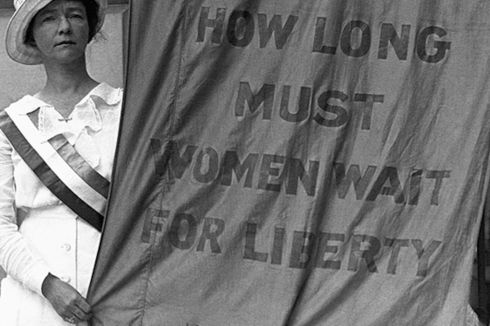
The decision against Amy Hamm, detailed in the Justice Centre for Constitutional Freedoms document from March 13, 2025, casts a shadow over the rights of women to speak freely. As a nurse, Hamm faced professional misconduct charges for sharing gender-critical views, a ruling that suggests her words were too heavy a burden for her profession to bear. This outcome feels like a quiet wound to women who rely on open expression to navigate a world that often overlooks their perspectives. It raises a somber question: if a woman’s honest thoughts can cost her livelihood, what space remains for her to speak without fear?
Women’s rights depend so much on the ability to voice what matters—whether it’s about their bodies, their work, or the policies that shape their lives. The Hamm case hints at a troubling pattern: when women step outside accepted lines, even thoughtfully, they risk being muted by those meant to protect fairness. It’s disheartening to think that a nurse, someone who cares for others daily, could be penalized not for her actions but for her words. This doesn’t just touch Hamm—it brushes against every woman who hesitates to speak up, wondering if her voice might carry too high a price.
Please, let’s hold onto the simple truth that free speech is a lifeline for women. I ask for a gentler approach, one that doesn’t rush to punish but listens instead. Hamm’s story shouldn’t end with her silence; it should remind us to safeguard the right of women to express themselves, even when it’s hard to hear. We need a world where women like her can share their views—raw, real, and human—without losing what they’ve worked so hard to build. That’s not too much to hope for, is it?

The term “Islamophobia” is bunk because it conflates legitimate criticism of ideas with irrational hatred of people, muddling discourse and shielding a religion from scrutiny. Islam, like any ideology, isn’t immune to critique—its texts and practices have inspired both beauty and brutality, from poetry to jihadist violence. Calling out the latter, like the 7th-century conquests or modern extremism, isn’t a phobia; it’s reason. Yet, the label gets weaponized to silence dissent, branding skeptics as bigots instead of engaging their arguments. This isn’t about fear—it’s about clarity. Smearing it as “Islamophobia” cheapens real prejudice, like anti-Muslim hate crimes, which deserve condemnation without dragging ideology into the mix.
It’s cancer for Western societies because it erodes free speech, the bedrock of open debate. The term’s vagueness—covering everything from mosque vandalism to Quran critiques—lets activists and governments police thought, as seen in Europe’s hate speech laws or campus cancel culture. In 2023, a UK teacher was suspended for showing a Muhammad cartoon, not out of malice but context; “Islamophobia” was the cudgel. This stifles honest discussion about integration, values, or security—like the 2015 Paris attacks tied to Islamist ideology—pushing problems underground where they fester. Fear of the label paralyzes policymakers, leaving societies less cohesive and more brittle.
Worse, it fuels division by infantilizing Muslims and alienating everyone else. Painting criticism as phobia assumes Muslims can’t handle tough questions, which is patronizing nonsense—many critique their own faith internally. Meanwhile, it drives a wedge in pluralistic nations, making non-Muslims resentful of a double standard: Christianity gets roasted daily, but Islam’s off-limits? The West thrives on challenging sacred cows, not coddling them. “Islamophobia” isn’t just a flawed concept—it’s a self-inflicted wound, rotting the guts of societies that prize reason over dogma.
The recent ruling against Amy Hamm by the British Columbia College of Nurses and Midwives (BCCNM) is nothing short of a travesty, a glaring assault on free speech and common sense that should leave any reasonable person fuming. Hamm, a nurse and vocal advocate for women’s sex-based rights, was found guilty of “professional misconduct” in March 2025 for stating biological facts and expressing opinions critical of gender identity ideology. Specifically, the disciplinary panel zeroed in on a handful of her online statements—made while identifying as a nurse—deeming them “discriminatory and derogatory” toward transgender individuals. This isn’t just a punishment for Hamm; it’s a warning shot to every professional in Canada: step out of line with the prevailing ideology, and your career could be next. How dare a regulatory body, meant to ensure competence in healthcare, stretch its tentacles into policing personal beliefs expressed off-duty?
What’s particularly infuriating is the absurdity of the tribunal’s reasoning—or lack thereof. One so-called expert reportedly argued that being a woman is a “social identity category rather than a biological reality,” a statement so detached from science it’s laughable if it weren’t so dangerous. Hamm’s crime? Asserting that biological sex is real and matters, especially when it comes to women’s spaces and rights—a position grounded in observable fact, not hate. Yet, the panel chose to side with ideological fantasy over evidence, slapping Hamm with a guilty verdict for daring to speak her mind. This isn’t about protecting anyone; it’s about control, about silencing dissent under the guise of professionalism. The fact that her extensive Twitter posts, where she didn’t explicitly tie her nurse status, were spared only highlights the flimsy, cherry-picked nature of this witch hunt.
The implications of this ruling are chilling, and that’s putting it mildly. If a nurse can be professionally crucified for advocating for women’s rights and biological truth, what hope is there for free discourse in Canada? The BCCNM’s decision doesn’t just harm Hamm—it erodes the freedom of every regulated professional, from doctors to teachers, who now must tiptoe around controversial issues or risk their livelihoods. This is the kind of dystopian overreach that should spark outrage, not apathy. Hamm’s fight isn’t over—she’s hinted at appeals, potentially up to the Supreme Court—and thank goodness, because someone needs to stand up to this madness. We should all be rooting for her, not because we agree with every word she says, but because the principle at stake is too precious to let slip away without a fight.

The Liberal Party of Canada, under its current leadership, has repeatedly demonstrated a troubling tendency to prioritize internal politics over the nation’s welfare, most notably through its strategic proroguing of Parliament to facilitate a leadership race. Much like Nero, who legendarily strummed his lyre as flames consumed Rome, the Liberals have effectively stalled the machinery of governance to tune their own political instrument. Prorogation, a legitimate parliamentary tool meant for resetting legislative agendas, has been wielded here as a shield to dodge accountability and buy time for party infighting. In a time of economic uncertainty, with inflation biting and housing crises deepening, this self-imposed paralysis echoes Nero’s detachment—fiddling with succession while Canadians grapple with unchecked challenges.
The decision to suspend Parliament undermines democratic integrity and erodes public trust, leaving critical issues to fester unattended. As the leadership race unfolds, debates over party direction supersede the urgent needs of a nation facing healthcare strains and geopolitical tensions. The Liberals’ focus on their own house recalls Nero’s negligence as Rome’s infrastructure crumbled; instead of fortifying Canada’s resilience, they’ve opted to redecorate their political facade. This isn’t merely a pause in governance—it’s an abdication of responsibility, with committees halted, bills delayed, and oversight of government spending effectively silenced. The prorogation serves as a curtain behind which the party orchestrates its drama, while the public is left watching the stage go dark.
History may yet judge this moment as a turning point where partisan vanity trumped national stewardship, risking long-term damage to Canada’s well-being. Nero’s Rome didn’t burn in a day, but his indifference hastened its ruin; similarly, the Liberals’ gambit threatens to weaken institutional stability for fleeting political gain. By proroguing Parliament, they’ve not only delayed action on pressing issues like climate policy and Indigenous reconciliation but also signaled that power consolidation outweighs public service. Canadians deserve a government that governs, not one that retreats to rehearse its next act. As the leadership race plays on, the Liberals risk leaving behind a legacy less of progress and more of a smoldering neglect, with the echoes of Nero’s tune lingering in the air.












 bleatmop
 Mystro
 The Arbourist


 Dead Wild Roses
Your opinions…