
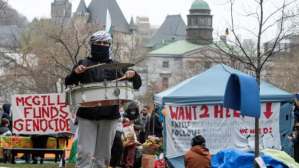
 The protests at McGill University in April 2025 and the Trucker Convoy of 2022, while distinct in their scale, context, and authority, offer a compelling lens through which to examine accountability and lawbreaking in Canada. The McGill protests, driven by anti-Israel activists, involved physically blocking lecture halls and disrupting classes, as reported by B’nai Brith Canada, thereby denying students their right to education. In contrast, the Trucker Convoy, a nationwide movement against COVID-19 mandates, paralyzed critical infrastructure like the Ambassador Bridge, causing billions in economic losses and prompting the federal government to invoke the Emergencies Act. The scale of the Trucker Convoy’s impact was far greater, affecting national and international trade, while McGill’s disruptions were localized to a university campus. Additionally, the authority responding differed—McGill’s administration, a private institution, managed the campus protests, whereas the federal government, with its broader legal powers, tackled the Trucker Convoy. These differences in scope and jurisdiction naturally shaped the responses, but they also highlight a shared challenge: ensuring accountability when laws or rules are broken.
Acknowledging the protesters’ perspectives strengthens the case for consistent accountability. At McGill, the activists likely saw their actions as a moral imperative, aiming to pressure the university into divesting from companies linked to Israel’s actions in Gaza, which they framed as complicity in genocide. Similarly, the Trucker Convoy participants believed they were defending personal freedoms against government overreach, with some public support reflecting sympathy for their cause, as noted in historical polling data. Both groups may argue that their lawbreaking was justified by higher ethical goals—whether social justice or individual rights. However, this justification does not negate the harm caused: McGill students were intimidated and denied education, while the Trucker Convoy’s blockades disrupted livelihoods and public safety, with reports of harassment like defecating on lawns, as documented in news coverage from the time. The principle of free expression, a cornerstone of Canadian democracy, does not extend to actions that violate others’ rights or break laws, whether on a university campus or a national border. Recognizing the protesters’ motivations does not absolve them of responsibility; rather, it underscores the need for equitable enforcement to maintain social order and trust in institutions.
 The disparity in official responses to these events reveals a troubling inconsistency in addressing lawbreaking in Canada, fueling perceptions of a two-tier justice system. The Trucker Convoy faced severe consequences—hundreds of arrests, vehicle seizures, and frozen bank accounts under the Emergencies Act, as reported by Globalnews.ca—reflecting the government’s prioritization of economic and public safety. In contrast, McGill’s response was tepid, with the university implementing ID-based access controls only after days of disruption, and no immediate legal consequences like arrests or suspensions for the protesters, despite calls from advocacy groups for decisive action. While the federal government’s authority and the national stakes justified a stronger response to the Trucker Convoy, McGill’s leniency raises questions about institutional accountability on Canadian campuses. This inconsistency—where one group faces significant repercussions while another does not—erodes public confidence in the rule of law, suggesting that the consequences of lawbreaking may depend on the cause, context, or authority involved. Canada must strive for a balanced approach, ensuring that all acts of lawbreaking, regardless of scale or motivation, are met with fair and proportionate accountability to uphold the principles of justice and equality that define the nation.











 bleatmop
 Mystro


 Dead Wild Roses
Your opinions…