
You are currently browsing The Arbourist’s articles.
Introduction
The dialectic—a philosophical method as dynamic as history itself—reveals change as a clash of opposites, forging new realities from their wreckage. It’s not mere argument but a structured process where contradictions propel progress, whether in ideas or societies. Crafted by Georg Wilhelm Friedrich Hegel and reshaped by Karl Marx, this framework illuminates how tensions—between freedom and order, or wealth and labor—drive transformation. For those new to these thinkers, the dialectic is a lens to see society’s churn as neither random nor inevitable but as a dance of conflict and resolution. This post, the first of a three-part series, traces the dialectic’s history through Hegel and Marx, highlighting its role as a cornerstone for social constructivists who view society as malleable, sculpted by human action. By grasping this method, we equip ourselves to dissect social movements—like third-wave feminism and gender ideology, the latter fraught with contention[^1]—probing whether they rise, clash, and fade in history’s relentless dialectical churn [Hegel’s Dialectics, Stanford Encyclopedia of Philosophy, https://plato.stanford.edu/entries/hegel-dialectics/].
Hegel’s Dialectic: The Pulse of Ideas
Georg Wilhelm Friedrich Hegel (1770–1831), a German philosopher, saw the dialectic as reality’s heartbeat, pulsing through ideas and history. Contrary to popular myth, Hegel never used the terms “thesis, antithesis, synthesis”—a simplification attributed to Johann Fichte. Instead, his method is a fluid interplay where concepts contain contradictions that demand resolution, birthing new, richer concepts. Take “Being,” pure existence: it’s so abstract it collapses into “Nothing,” its negation; their unity forms “Becoming,” capturing change itself. This process, which Hegel called Aufhebung (sublation), both negates and preserves what came before. His dialectic—less a formula, more a metaphysical rhythm—suggests that every idea or social stage carries the seeds of its own undoing, pushing toward a grander truth, the Absolute. Critics like Karl Popper decry its abstraction as mystifying, yet its influence endures, offering a lens to see history’s ceaseless evolution [Hegel’s Dialectics, Stanford Encyclopedia of Philosophy, https://plato.stanford.edu/entries/hegel-dialectics/].
Marx’s Materialist Revolution
Karl Marx (1818–1883), a radical thinker and Hegel’s intellectual heir, found idealism wanting—too ethereal, too divorced from gritty reality. He forged dialectical materialism, grounding change in material conditions: economics, labor, class. For Marx, history advances through contradictions in the mode of production—like capitalism’s clash between bourgeoisie (owners) and proletariat (workers). The exploitation of labor for profit creates inequality, a contradiction that foments class struggle, potentially sparking revolution toward socialism. Unlike Hegel’s dance of ideas, Marx’s dialectic is rooted in tangible conflicts: the factory’s grind, the worker’s plight. This materialist lens sees society’s “base” (economic system) shaping its “superstructure” (politics, culture), offering a blueprint for analyzing power dynamics. Though critics like Mario Bunge call it reductionist, Marx’s framework electrifies social constructivists, arming them to dissect and challenge societal structures [Dialectical Materialism, Wikipedia, https://en.wikipedia.org/wiki/Dialectical_materialism].
The Dialectic as a Social Constructivist Tool
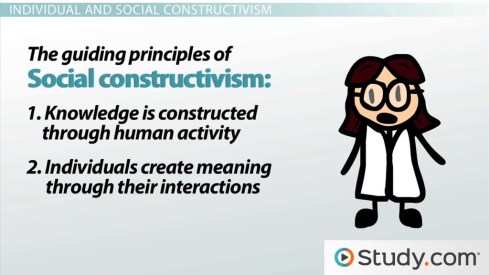
Social constructivists—those who see society as a human creation, not a fixed truth—wield the dialectic to decode and reshape social realities. They view norms, like gender roles or racial hierarchies, as stages ripe for contradiction and transformation. For example, the Black Lives Matter movement, sparked by police violence in 2020, identified contradictions between America’s egalitarian ideals and systemic racism, pushing for reforms like defunding police or restructuring criminal justice. This mirrors the dialectic’s rhythm: a dominant structure (legal equality) meets its negation (racial injustice), yielding a synthesis (policy reform). Hegel’s idealism informs the conceptual evolution, while Marx’s materialism highlights economic and social forces driving change. Yet, the dialectic’s critics—Popper among them—warn it risks oversimplifying complex realities, potentially fostering dogmatic solutions. For constructivists, though, it’s a scalpel: contradictions are not flaws but catalysts, empowering movements to forge new social orders [Social Constructionism, Wikipedia, https://en.wikipedia.org/wiki/Social_constructionism].
Conclusion: A Lens for Social Dynamics
The dialectic—Hegel’s idealistic churn, Marx’s materialist struggle—offers a profound framework for understanding change. It reveals history and society as dynamic, driven by contradictions that demand resolution. Social constructivists harness this method to challenge norms and envision progress, seeing tensions as opportunities, not dead ends. Yet, its abstraction and potential for oversimplification invite scrutiny, demanding rigorous application. In the next posts, we’ll apply this lens to third-wave feminism and gender ideology, probing whether their contradictions—fragmentation, anti-science stances—mark them as tools used and discarded in history’s dialectical march. This foundation equips us to dissect social movements with precision, resisting divisive simplifications in pursuit of unifying truths.

Table: Hegel vs. Marx on the Dialectic
| Aspect | Hegel’s Dialectic | Marx’s Dialectical Materialism |
|---|---|---|
| Focus | Evolution of ideas toward the Absolute | Material conditions and class struggles |
| Driving Force | Internal contradictions within concepts | Economic contradictions and class conflicts |
| Example | Being → Nothing → Becoming | Bourgeoisie vs. Proletariat → Socialism |
| Outcome | Conceptual progress toward ultimate truth | Social revolution toward classless society |
| Criticism | Overly abstract, mystifying | Reductionist, overly economic-focused |
Footnotes
[^1]: Gender ideology’s contentious nature is evident in polarized debates, with proponents advocating for self-identification and critics citing conflicts with empirical science and women’s rights. See, for example, policy reversals like the UK’s 2024 decision to ban puberty blockers for minors, reflecting growing skepticism [NHS England, Cass Review, https://www.england.nhs.uk/commissioning/spec-services/npc-crg/gender-dysphoria-clinical-programme/implementing-advice-from-the-cass-review/].
Sources
- Hegel’s Dialectics, Stanford Encyclopedia of Philosophy, https://plato.stanford.edu/entries/hegel-dialectics/
- Dialectical Materialism, Wikipedia, https://en.wikipedia.org/wiki/Dialectical_materialism
- Social Constructionism, Wikipedia, https://en.wikipedia.org/wiki/Social_constructionism
- NHS England, Cass Review, https://www.england.nhs.uk/commissioning/spec-services/npc-crg/gender-dysphoria-clinical-programme/implementing-advice-from-the-cass-review/
A Rocky Revelation: Unearthing Tim Sledge’s Lithic Liturgy
Picture this: a humble backyard transformed into a cathedral of stone, where a solitary rock—nay, a geological godhead—receives prayers with the stoicism of a million-year-old monolith. Tim Sledge, under the banner @GoodbyeJesus, has chiseled out a niche faith, turning a sedimentary slab into his spiritual bedrock. This isn’t just any pebble in the rough; it’s a gneiss guardian, a metamorphic marvel that outcrops as the cornerstone of his daily devotion.
Prepare for a pun-strewn pilgrimage through this rocky rhetoric. We’ll quarry the depths of his belief, where gratitude flows like a lava stream and forgiveness is hewn from the hardest schist. Expect puns that will shale your foundations, wit sharp enough to cleave granite, and a tribute so polished it could rival marble. This lithic liturgy promises to uplift—or at least erode—your preconceptions, one boulderous confession at a time.

This post is inspired by the writing of James Lindsay on X.
The Mechanics of Woke Sociognosticism: A Persuasive Analysis
Contemporary “woke” ideology—focused on systemic injustice, identity-based power dynamics, and cultural transformation—has morphed into a quasi-religious framework that claims exclusive access to sociological truth. Its adherents, wielding an implacable certainty, cast dissent as ignorance or complicity, undermining the pluralism essential to liberal societies. This essay argues that woke ideology operates as sociognosticism: a fusion of critical social theory with gnostic epistemology, where salvation lies in “awakening” to hidden structures of oppression. While its moral aim to address inequities is undeniable, its totalizing worldview risks authoritarianism, stifling dialogue and fracturing society.
I. Defining Sociognosticism
Sociognosticism marries sociological critique with a gnostic belief in hidden, redemptive knowledge. Historically, gnosticism posits that gnosis—secret knowledge—unlocks salvation by revealing a dualistic reality of light versus darkness (Voegelin, 1952). Political theorist Eric Voegelin applied this to ideologies like Marxism, which claim to expose a veiled truth behind social structures. In woke sociognosticism, society is a prison crafted by hegemonic groups (e.g., white, male, capitalist), who maintain power through a “false consciousness” internalized by the masses (Gramsci, 1971). Activists position themselves as enlightened guides, dismantling this illusion. Yet, their framework is often presented not as one perspective but as the sole legitimate lens, dismissing alternative views as inherently flawed.
II. The Elect and the Awakened: Epistemic Elitism
Woke ideology fosters an “elect” class—those “awakened” to systemic oppression—who view their insight as both morally and intellectually unassailable (Lindsay, 2025). This mirrors Herbert Marcuse’s argument in Repressive Tolerance, where dissenting views are deemed intolerable if they perpetuate systemic harm (Marcuse, 1965). Disagreement is recast as evidence of false consciousness, as seen in online campaigns on platforms like X, where critics of woke orthodoxy face accusations of racism or transphobia (e.g., high-profile cancellations of public figures for questioning prevailing narratives, X, 2024–2025). Such epistemic elitism conditions dialogue on ideological conformity, punishing dissent with social ostracism or demands for public “self-education,” effectively silencing pluralistic debate.
III. Struggle, Awakening, and the Maoist Echo
Woke sociognosticism employs rituals of struggle and awakening, echoing Maoist techniques of “self-criticism” and “struggle sessions” (Mao, 1967). Originating during the Chinese Cultural Revolution, these were public rituals of ideological repentance in which individuals were forced to confess alleged wrongthink to reinforce social conformity. Contemporary analogues include institutional diversity training programs that require participants to acknowledge privilege or complicity in systemic bias. For example, several corporate and university DEI (Diversity, Equity, and Inclusion) initiatives between 2023 and 2025 have included exercises in which employees or students must complete “privilege checklists” or write statements of commitment to anti-racism. Refusal to comply is often interpreted as regression or resistance to enlightenment.
The concept of “allyship” reinforces this structure, demanding continuous affirmation of anti-oppression principles, with failure interpreted as betrayal. This creates a narrative of inevitability: crises—social, economic, or personal—are seen as catalysts for “waking up” to the truth. While rooted in a desire to address inequities, these tactics prioritize conformity over dialectic, substituting performative repentance for genuine inquiry.
IV. A Closed Epistemology
The woke worldview is self-sealing, absorbing contradictions into its narrative. Karl Popper’s critique of unfalsifiable theories applies here: counter-evidence is reinterpreted as proof of the system’s pervasive influence (Popper, 1963). For instance, when a woman denies experiencing gender-based oppression, she may be accused of internalized misogyny; when a Black individual critiques critical race theory, they are often labeled as “anti-Black” or as supporting white supremacy. Notably, prominent Black academics who voice heterodox views—such as critiques of DEI bureaucracy—have been targeted with denunciations on platforms like X (2025), reinforcing the idea that dissent is heresy. This totalizing simplicity reduces complex realities to a binary of oppressors versus oppressed, rendering the ideology immune to challenge and hostile to nuance, even when confronting legitimate inequities.
V. The Political Danger
While woke ideology seeks justice—a noble aim—its sociognostic structure threatens pluralism. Hannah Arendt warned that ideologies reducing reality to a single explanatory framework erode judgment and shared political life (Arendt, 1951). Woke influence in institutions like academia and media, where speech codes and DEI policies increasingly frame dissent as harm, raises concerns about encroaching authoritarianism. For example, university speech guidelines updated in 2024 at several U.S. campuses have redefined “harmful speech” to include disagreement with concepts such as gender self-identification or systemic racism, chilling open discourse.
If silence, speech, or disagreement can be deemed oppressive, liberal norms—due process, open debate, individual conscience—are subordinated to a dogmatic moral code. Acknowledging the validity of addressing systemic inequities does not negate the danger: a worldview that pathologizes dissent risks fracturing the very society it aims to redeem.
Conclusion
Woke sociognosticism, while driven by a moral impulse to rectify injustice, operates as a closed belief system that stifles dissent and undermines pluralism. Its adherents’ certainty—rooted in a gnostic claim to hidden truth—casts disagreement as ignorance or sin, fostering division over dialogue. For a liberal society reliant on free inquiry and epistemic humility, this poses a profound challenge. Justice is essential, but it must not sacrifice the principles—open debate, mutual respect—that make justice possible.

References
Arendt, H. (1951). The Origins of Totalitarianism. New York: Harcourt, Brace.
Gramsci, A. (1971). Selections from the Prison Notebooks. New York: International Publishers.
Lindsay, J. (2025). X Post, July 5, 2025. Retrieved from https://x.com/ConceptualJames/status/1941564050707501548
Mao, Z. (1967). Quotations from Chairman Mao Tse-Tung. Peking: Foreign Languages Press.
Marcuse, H. (1965). Repressive Tolerance. In R. P. Wolff, B. Moore Jr., & H. Marcuse, A Critique of Pure Tolerance (pp. 81–123). Boston: Beacon Press.
Popper, K. (1963). Conjectures and Refutations: The Growth of Scientific Knowledge. London: Routledge.
Voegelin, E. (1952). The New Science of Politics: An Introduction. Chicago: University of Chicago Press
About fucking time the facade of youth gender medicine’s supposed infallibility is crumbling. For years, the trans rights movement has peddled the emotionally manipulative lie that denying children puberty blockers or cross-sex hormones is tantamount to signing their death warrants—a claim rooted in social blackmail rather than evidence. The Atlantic article exposes this narrative, epitomized by phrases like “Would you rather have a dead son than a live daughter?” as collapsing under scrutiny. During Supreme Court arguments in the Skrmetti case, ACLU lawyer Chase Strangio admitted there’s no evidence linking medical transition to reduced adolescent suicide rates, a concession that exposes the hollowness of the movement’s loudest rallying cry. Systematic reviews further debunk the myth, showing no increase in suicides when blockers were restricted in England. The left’s bubble, sustained by zombie facts and a refusal to engage with critics, has been punctured by undeniable truths—truths skeptics have long pointed out, only to be shouted down.
I told you so: the so-called evidence base for youth gender medicine is a house of cards built on citation laundering and ideological zeal. American clinics, deviating from the cautious Dutch protocol, often prescribe blockers on first visits, bypassing thorough assessments. WPATH, the supposed gold standard, has been caught suppressing inconvenient research, with internal doubts about weak evidence buried to protect political goals. Rachel Levine’s push to remove age minimums for surgeries was a calculated move to dodge conservative attacks, not a science-driven decision. Meanwhile, practitioners like Johanna Olson-Kennedy, who casually dismissed adolescent regret with “you can go and get [breasts],” reveal a cavalier attitude toward irreversible procedures. The left’s sanctimonious insistence on “settled science” is nothing but a confabulation, propped up by medical associations’ politically influenced consensus rather than rigorous data.
The legal system, for all its flaws, has finally dragged these lies into the light—about fucking time. Court cases like Skrmetti and Alabama’s litigation exposed WPATH’s internal admissions of shaky evidence and their efforts to muzzle researchers whose findings didn’t align with the narrative. The Cass report, dismissed by American advocates as “subjective,” challenged WPATH’s authority with systematic reviews recommending caution. Yet, the left clings to its bubble, accusing outlets like The New York Times of “manufacturing” debate. Skeptics, long vilified as bigots, have been vindicated: the evidence is inconclusive, the risks are real, and the emotional blackmail is unconscionable. Supporting trans rights doesn’t require endorsing experimental treatments for kids, and it’s high time liberals faced this reality instead of doubling down on discredited dogma.

Bibliography
- Lewis, Helen. “The Liberal Misinformation Bubble About Youth Gender Medicine.” The Atlantic, June 29, 2025. https://archive.is/1PP0D.
The debate over sex differences—biological or socially constructed—ignites fierce contention. Social constructivism posits that gender disparities stem from cultural norms, predicting their erosion in egalitarian societies. Yet, a startling paradox emerges: in nations with greater gender equality, certain differences amplify. This essay argues that biological factors—hormones, evolutionary pressures—significantly shape sex differences, revealed vividly when societal constraints loosen. However, the paradox’s complexity—some gaps narrow—demands nuance. Social constructivism’s overemphasis on socialization risks ideological blind spots, necessitating a balanced synthesis of nature and nurture.
Social constructivism asserts that gender differences are sculpted by relentless socialization: parents, schools, and media mold girls into nurturing roles, boys into assertive ones. Historical shifts, like women’s rising STEM participation—from 14% of U.S. engineering jobs in 1980 to 27% in 2020 (Women in STEM)—suggest that equal opportunities can diminish disparities. Cross-cultural variability in gender roles strengthens their case: if society shapes gender, egalitarian policies should align behaviors. This view, compelling in its focus on malleability, falters when data reveals growing differences in freer societies, hinting at deeper, innate forces.
The biological perspective counters with robust evidence: sex differences are rooted in hormones, brain structures, and evolutionary imperatives. Testosterone drives male-typical traits like risk-taking, while evolutionary pressures link women’s nurturing to reproductive success (Neuroscience and Sex/Gender). In egalitarian nations, these differences often widen—a gender-equality paradox. Stoet and Geary (2018) found larger STEM attitude gaps in gender-equal countries (Gender-Equality Paradox in STEM), while Falk and Hermle (2018) noted greater preference divergences in wealthier nations (Gender Differences in Preferences). Schmitt et al. (2008) observed amplified personality differences in prosperous cultures (Sex Differences in Personality). Freedom, it seems, unveils biology’s hand.
Yet, the paradox isn’t universal. Herlitz et al. (2024) found that while personality and cognitive gaps widen in egalitarian societies, math performance differences shrink, reflecting socialization’s role (Gender-Equality Paradox Review). Methodological critiques—replication issues in Stoet and Geary (2018), questionable indices in Falk and Hermle (2018)—urge caution. Social constructivists might argue that residual stereotypes persist, subtly shaping choices. Still, cross-cultural patterns suggest biology’s enduring influence. A balanced view integrates both: biology sets the foundation, socialization shapes its expression, with egalitarianism amplifying innate tendencies while narrowing specific gaps.
Social constructivism’s overreliance on culture risks a debacle: ignoring biology can lead to policies—like rigid quotas—that dismiss individual choice, undermining equality’s spirit. The gender-equality paradox corrodes its premise, revealing biology’s weight. Yet, socialization’s role in domains like math demands respect. Truth-seeking requires unity, not division—a synthesis of nature and nurture. By embracing this complexity, we can craft policies that honor human diversity, resisting ideological traps that obscure the intricate tapestry of sex differences.
Bibliography
-
Falk, A., & Hermle, J. (2018). Relationship of gender differences in preferences to economic development and gender equality. Science, 362(6412), eaas9899. https://science.sciencemag.org/content/362/6412/eaas9899
-
Herlitz, A., et al. (2024). A Systematic Review and New Analyses of the Gender-Equality Paradox. Perspectives on Psychological Science, 19(1), 147–165. https://pubmed.ncbi.nlm.nih.gov/38170215/
-
Hines, M. (2020). Neuroscience and Sex/Gender: Looking Back and Forward. Journal of Neuroscience Research, 98(4), 559–568. https://onlinelibrary.wiley.com/doi/10.1002/jnr.24609
-
Schmitt, D. P., Realo, A., Voracek, M., & Allik, J. (2008). Why can’t a man be more like a woman? Sex differences in Big Five personality traits across 55 cultures. Journal of Personality and Social Psychology, 94(1), 168–182. https://psycnet.apa.org/doi/10.1037/0022-3514.94.1.168
-
Stoet, G., & Geary, D. C. (2018). The gender-equality paradox in science, technology, engineering, and mathematics education. Psychological Science, 29(4), 581–593. https://journals.sagepub.com/doi/10.1177/0956797617741719
Gender Affirming Care (GAC)—a suite of medical, surgical, and psychosocial interventions for transgender and gender-diverse individuals—commands fervent support despite a precarious evidence base. Major medical associations, wielding the authority of over 1.3 million doctors, proclaim its necessity, yet systematic reviews from health authorities in Finland, Sweden, and England expose a stark reality: the long-term efficacy and safety of GAC, particularly for minors, lack robust substantiation. This dissonance—between passionate advocacy and scientific uncertainty—begs scrutiny. What drives individuals to champion GAC when the evidence falters? Five primary reasons emerge: empathy for marginalized groups, belief in autonomy, trust in institutions, fear of social backlash, and perceived life-saving benefits. Each, though rooted in human impulses, corrodes critical inquiry, elevating ideology over empiricism. This essay dissects these drivers, weaving examples and citations into a tapestry of analysis, before concluding that the evidence fails to justify the claims propelling GAC’s ascent.
Empathy and Support for Marginalized Groups
Transgender individuals endure a gauntlet of social stigma—discrimination, microaggressions, and a 61% higher likelihood of suicidal ideation among youth with gender dysphoria. This suffering ignites empathy, compelling many to view GAC as a moral necessity, a lifeline for those drowning in despair. The emotional weight of personal narratives overshadows the absence of long-term data, transforming support into a crusade against perceived injustice. Consider Kelly Fleming, a Texas resident using they/them pronouns, who battled decades of depression, shaving in darkness to avoid their reflection. After a gender dysphoria diagnosis and low-dose estradiol, their anguish gave way to joy in their physical self. Such stories, visceral and compelling, sway supporters to prioritize lived experiences over empirical gaps, even as systematic reviews question GAC’s long-term mental health benefits (Scientific American, 2022). Empathy, while noble, risks blinding advocates to the need for rigorous validation.
Belief in Autonomy and Self-Identification
The ethos of self-identification—where one’s internal gender defines reality—fuels GAC’s appeal. This ideology, ascendant in progressive circles, holds that individuals must control their bodies, even if medical outcomes remain uncertain. Denying GAC, supporters argue, violates personal agency, a sin deemed antithetical to modern ethics. Katherine Imborek, MD, co-director of UI Health Care’s LGBTQ Clinic, likens GAC to insulin for diabetes: a non-negotiable intervention (AAMC, 2022). This analogy, wielded with clinical gravitas, frames GAC as an ethical imperative, sidelining concerns about irreversible effects like infertility or adolescent decision-making capacity. Supporters cling to autonomy as sacrosanct, undeterred by critiques—like those in Current Sexual Health Reports—that highlight the paucity of evidence for long-term benefits (Block, 2023). The conviction that choice trumps uncertainty drives this support, even when science lags.
Trust in Medical and Advocacy Institutions
Institutional endorsements lend GAC a veneer of unimpeachable legitimacy. The American Medical Association, American Academy of Pediatrics, and others, representing over 1.3 million physicians, assert GAC’s safety and necessity, often citing short-term studies. Advocacy groups like the Human Rights Campaign amplify this, claiming “decades of research” affirm efficacy (HRC, n.d.). For many, this imprimatur suffices, quelling skepticism. Yet, the irony is biting: systematic reviews, such as those by NICE and Sweden’s health authority, reveal methodological flaws in these studies, with no reliable evidence of long-term mental health gains (Block, 2023). The Human Rights Campaign’s amicus briefs, wielded against state bans, persuade laypeople and policymakers who trust institutions implicitly, unaware of the chasm between claims and reality. This blind faith in authority—however well-intentioned—corrodes the demand for scientific rigor.
Fear of Social Backlash
The cultural crucible of 2025 scorches dissenters. Questioning GAC invites accusations of transphobia, risking social ostracism or professional ruin—a modern scarlet letter. This fear, amplified by cancel culture’s swift retribution, coerces conformity. While specific cases are elusive, the broader dynamics are undeniable: public figures face X platform pile-ons for challenging progressive orthodoxies, a fate that looms over academics, clinicians, or laypeople alike. A hypothetical professor questioning GAC’s evidence base might lose grants, tenure, or reputation, a risk that stifles debate. This chilling effect, though undocumented in specific GAC contexts, mirrors broader trends in polarized discourse, ensuring support persists not from conviction but from dread. The absence of open dialogue—smothered by ideological zeal—betrays the pursuit of truth.
Perceived Life-Saving Benefits
Short-term studies, like a JAMA Network Open analysis, link GAC to reduced depression and suicidality in transgender youth within 12 months, fueling perceptions of its life-saving potential (Tordoff et al., 2022). These findings, though limited, galvanize advocates who see GAC as a bulwark against despair. Yet, the evidence is fragile: European reviews highlight risks—sexual dysfunction, infertility, even a 19-fold higher suicide rate in transitioned adults—while long-term benefits remain unproven (Block, 2023). A Dutch study noted a death from surgical complications, underscoring the stakes (Block, 2023). Despite this, the JAMA study’s mental health improvements dominate advocacy narratives, overshadowing concerns about detransition rates (potentially 10–30%) or ethical dilemmas over adolescent consent. The urgency to save lives, however compelling, outpaces the caution demanded by incomplete data.
Conclusion: A House Built on Sand
The fervor for Gender Affirming Care—woven from empathy, autonomy, institutional trust, fear, and hope—collapses under scrutiny. Systematic reviews from Finland, Sweden, and England, alongside critical analyses like those in Current Sexual Health Reports, reveal a stark truth: the evidence does not support the grandiose claims of GAC’s efficacy or safety. Short-term mental health gains, while promising, are dwarfed by unanswered questions about long-term outcomes—risks of infertility, regret, or mortality loom large. Institutional endorsements, though authoritative, lean on flawed studies; empathy, though human, cannot substitute for data; and fear of backlash stifles the debate essential for progress. The moral urgency to affirm identities, however heartfelt, builds a house on sand when divorced from rigorous science. Until comprehensive, long-term studies validate GAC’s benefits, its advocates—however well-meaning—peddle hope over truth, a debacle that risks harm to those they aim to help.

Bibliography
- Association of American Medical Colleges. (2022). “What is Gender-Affirming Care? Your Questions Answered.” https://www.aamc.org/news/what-gender-affirming-care-your-questions-answered
- Block, J. (2023). “Gender dysphoria in young people is rising—and so is professional disagreement.” Current Sexual Health Reports. https://pmc.ncbi.nlm.nih.gov/articles/PMC10039166/
- Human Rights Campaign. (n.d.). “Get the Facts on Gender-Affirming Care.” https://www.hrc.org/resources/get-the-facts-on-gender-affirming-care
- Scientific American. (2022). “What the Science on Gender-Affirming Care for Transgender Kids Really Shows.” https://www.scientificamerican.com/video/what-the-science-on-gender-affirming-care-for-transgender-kids-really-shows/
- Tordoff, D. M., et al. (2022). “Mental Health Outcomes in Transgender and Nonbinary Youths Receiving Gender-Affirming Care.” JAMA Network Open. https://jamanetwork.com/journals/jamanetworkopen/fullarticle/2789423











 bleatmop
 Mystro
 The Arbourist


 Dead Wild Roses
Your opinions…