
You are currently browsing The Arbourist’s articles.
it’s fun-fact woke learning time! First a new vocabulary word!
Polysemy – Having a word or concept that has multiple meanings. What it does is allow the activists to say one thing, while meaning something completely different.
Employed skillfully, the woke can flit between the reasonable definition and the one they really intend.

The “woke mind virus” is a dogmatic, control-seeking ideology, not the benign traits listed. These 10 points misfire by assigning warped meanings to common virtues, fueling confusion and division.
- “Reading books, not burning them” sounds noble, but woke ideology often curates what’s “acceptable” to read, banning dissent subtly.
- “Embracing science” shifts to cherry-picking studies that fit narratives, not raw inquiry.
- “Changing your mind” becomes abandoning principles for trending dogma, not reasoned flexibility.
- “Issues aren’t black and white” morphs into relativism that dodges accountability.
- “True equality” redefines as forced sameness, not equal opportunity.
- “Liking to share” turns into mandating redistribution, not generosity.
- “Embracing cooperation” means silencing disagreement for fake unity.
- “Respecting rights” flips to prioritizing select groups’ feelings over universal freedoms.
- “Valuing culture and arts” becomes worshipping approved expressions, not creativity.
- “Caring for the planet” slides into eco-orthodoxy, shaming nonconformists.
By cloaking coercion in virtuous terms without admitting the shift, these points don’t expose the virus—they spread it, eroding clarity and free thought under a moral mask.
High-trust societies are defined by robust interpersonal trust and shared ethical norms, enabling seamless cooperation and social stability. These societies rely on transparent governance, respected legal systems, and an unspoken confidence that individuals and institutions will act with integrity. This trust fuels efficiency—people leave doors unlocked or engage in transactions with minimal suspicion. In contrast, low-trust societies lack this cohesion, marked by skepticism, weak institutions, and reliance on tight-knit groups like family. Corruption and self-preservation dominate, stalling broader societal progress as trust remains scarce outside personal circles.
The 2025 incident involving two Australian Muslim nurses, Sarah Abu Lebdeh and Ahmad Rashad Nadir, at Bankstown Hospital exemplifies a severe breach of trust in a high-trust society. Caught on a viral video threatening to harm or refuse treatment to Israeli patients, their statements shattered the assumption that healthcare professionals prioritize care over prejudice. In Australia, where patients entrust their lives to medical staff without hesitation, this betrayal undermines confidence in a cornerstone institution. The public backlash and swift suspension reflect the shock of such behavior in a system built on mutual reliability.
This breach highlights why high-trust societies must impose strong sanctions. When trust is compromised, the fallout threatens social and economic harmony, as people question the safety of once-reliable systems. The nurses’ actions prompted criminal charges—threatening violence and menacing communication—carrying potential decades-long sentences, alongside professional bans. Such measures deter future violations and reaffirm societal standards. Without them, trust could erode, pushing Australia toward the inefficiencies and wariness of low-trust environments, where institutional faith is perpetually in doubt.
In low-trust societies, such threats might be shrugged off as routine bravado, met with cynicism rather than accountability. But in high-trust contexts, the expectation of integrity amplifies the need for a firm response. The nurses’ remarks, even if hyperbolic, exploit the openness of a trusting system, risking a broader chilling effect if unpunished. Australia’s reaction—legal action, political condemnation, and ongoing investigations—aims to preserve its high-trust framework, signaling that such behavior is anathema to its values.
Ultimately, strong sanctions in high-trust societies like Australia are vital to protect their fragile ecosystem of trust. The 2025 Bankstown incident underscores the stakes: tolerating such breaches could unravel the mutual reliance that distinguishes high-trust from low-trust worlds. By prosecuting the nurses and reinforcing ethical boundaries, Australia defends the trust that underpins its social order. This resolute stance ensures that the benefits of a high-trust society—cooperation, safety, and prosperity—endure against those who would exploit its openness.

A Canadian Department of Government Efficiency (DOGE) could offer significant positives by tackling the perennial issue of bureaucratic bloat. With a mandate to optimize processes, cut waste, and boost accountability, DOGE could save taxpayers billions—think of trimming redundant programs or digitizing outdated paper-based systems. Inspired perhaps by Elon Musk’s and Vivek Ramaswamy’s vision for a U.S. version, it might bring a results-driven ethos to Ottawa, using data analytics and AI to identify inefficiencies, like overlapping agency roles or sluggish service delivery. For a country with a sprawling public sector, this could mean faster disaster relief, shorter healthcare wait times, and a leaner government that actually delivers what citizens need without the usual red tape.
However, the negatives could stack up quickly if DOGE isn’t carefully designed. Critics might fear it becomes a Trojan horse for slashing essential services under the guise of “efficiency”—imagine cuts to social programs or environmental oversight that hit vulnerable Canadians hardest. There’s also the risk of over-centralization: a ministry obsessed with streamlining could steamroll local nuances, like the unique needs of rural provinces versus urban centers, creating one-size-fits-none solutions. And let’s not ignore the irony—if DOGE itself gets bogged down in political infighting or mismanagement, it could end up as another layer of bureaucracy, costing more than it saves while fueling public cynicism about government competence.
The success of a Canadian DOGE would hinge on its ability to balance ambition with pragmatism. Done right, it could be a game-changer, modernizing governance and restoring trust in a system often seen as sluggish and out of touch. Picture a DOGE that collaborates with provinces, respects regional diversity, and prioritizes citizen outcomes over blind cost-cutting—like speeding up infrastructure approvals without gutting safety standards. But if it devolves into a ideological buzzsaw or a toothless paper tiger, it’d just be another acronym in the alphabet soup of government failures. Canada would need clear metrics, transparent oversight, and a willingness to adapt to make DOGE more than a catchy name—it’d have to prove efficiency isn’t just a buzzword, but a promise kept.

Environmental, Social, and Governance (ESG) frameworks in America have drawn scrutiny for parallels to Maoist ideology, particularly in their emphasis on collectivism, ideological conformity, and the reshaping of societal norms. Maoism, rooted in Marxist-Leninist principles, sought to dismantle traditional structures—family, religion, and individual liberties—through mass mobilization and centralized control, often under the guise of egalitarianism. Similarly, ESG proponents push for a unified moral framework where corporations and individuals are judged not by profit or merit but by adherence to progressive ideals like climate justice, equity, and systemic overhaul. Critics argue this mirrors Mao’s Cultural Revolution, which weaponized social pressure and reeducation to enforce compliance, suggesting ESG acts as a soft authoritarian tool to erode personal agency and economic freedom in favor of a homogenized, state-aligned culture.
In practice, ESG’s Maoist undertones emerge through its mechanisms of enforcement and cultural disruption. Companies are scored and ranked by ESG metrics, often dictated by unelected bodies like rating agencies or activist investors, reminiscent of Mao’s cadre-led purges of dissenters. Non-compliant businesses face boycotts, divestment, or public shaming—tactics akin to Maoist struggle sessions—while employees are subjected to diversity training and sustainability pledges that echo Mao’s thought reform campaigns. This creates a climate where profit motives are subordinated to ideological loyalty, fracturing the traditional American ethos of individualism and free enterprise. By prioritizing stakeholder consensus over shareholder value, ESG shifts power from market dynamics to a quasi-collective authority, dissolving the cultural bedrock of competition and innovation that once defined the U.S. economy.
The cultural dissolution accelerates as ESG intertwines with political polarization, amplifying its revolutionary zeal. In America, it’s become a battleground: progressives champion it as a moral imperative, while conservatives decry it as “woke capitalism” undermining national identity. This echoes Mao’s strategy of pitting classes against each other to destabilize and rebuild society. ESG’s focus on dismantling “systemic inequities” and rewriting corporate purpose challenges foundational American values—meritocracy, liberty, and limited government—replacing them with a narrative of perpetual grievance and centralized oversight. Critics contend this slow erosion, masked as virtue, mirrors Mao’s long-term goal of cultural erasure, leaving a society unmoored from its historical anchors and vulnerable to control by an elite vanguard, whether corporate or governmental.

In Maoist China, the regime employed a rigid system of identity categories to divide and control the population, most notably through the “red” and “black” classifications. The “red” category included those deemed loyal to the Communist Party—workers, peasants, and revolutionary soldiers—while the “black” category encompassed perceived enemies of the state, such as landlords, capitalists, and intellectuals. These labels were not mere descriptors but tools of social engineering, designed to pit groups against one another, justify purges, and dismantle traditional societal bonds. By fostering resentment and mistrust, Mao’s identity politics eroded community cohesion, replacing it with a fractured hierarchy where allegiance to the state superseded all else, ultimately destabilizing Chinese society for decades.
Fast forward to the present, and the “woke” identity categories of today—centered around race, gender, sexuality, and privilege—bear a striking resemblance to Mao’s framework, though cloaked in progressive rhetoric. Instead of “red” and “black,” we have “oppressor” and “oppressed,” with whiteness, maleness, or heterosexuality marking one as inherently guilty, while marginalized identities confer moral superiority. Like their Maoist predecessors, these categories are weaponized to sow division, encouraging individuals to see themselves and others primarily through the lens of grievance or shame. The result is a society obsessed with policing language, canceling dissenters, and dismantling shared cultural norms under the guise of justice, mirroring the Cultural Revolution’s assault on tradition and unity.
The broader point is that identity politics, whether Maoist or woke, are not about liberation but destruction. By reducing individuals to immutable traits or ideological loyalty, they fracture the social fabric, turning neighbors into adversaries and dialogue into denunciation. This corrosion serves those in power—be it a totalitarian regime or a cultural elite—by weakening collective resistance and redirecting energy toward internal conflict. Both systems reveal a timeless truth: when identity becomes the battleground, society itself becomes the casualty, leaving behind a hollowed-out shell ripe for manipulation and control.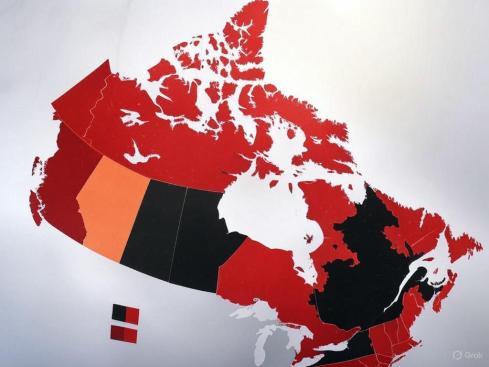
The Kamloops grave hoax, sparked by the 2021 announcement from the Tk’emlúps te Secwépemc First Nation claiming the discovery of 215 unmarked graves at the former Kamloops Indian Residential School, ignited a firestorm of outrage across Canada. This claim, based on preliminary ground-penetrating radar findings and later proven to lack physical evidence of human remains, fueled a wave of anti-Christian sentiment that resulted in the burning or vandalism of over 85 churches, predominantly Catholic, between 2021 and 2024. These acts of arson and destruction were not random; they were a direct response to a narrative that falsely accused the Church of mass atrocities, a narrative amplified by political leaders and media without rigorous verification. The churches, many of which were historic and served as community pillars, were reduced to ashes, leaving congregations devastated and their sacred spaces irreparably lost.
The case for reparations for these destroyed churches rests on the principle of justice for the innocent. The Canadian government and media played a significant role in perpetuating the hoax, with Prime Minister Justin Trudeau lowering flags and offering statements that fanned the flames of retribution, while outlets like the CBC reported the claims as fact without evidence. This reckless endorsement led to millions of dollars in damages and the loss of cultural heritage, all based on a falsehood that has yet to yield a single confirmed body despite nearly $8 million spent on investigations. The churches and their parishioners, who were not complicit in the alleged crimes, bore the brunt of this misinformation campaign. Reparations—whether through government funding or community restitution—would acknowledge this wrong, providing resources to rebuild and heal the wounds inflicted on these faith communities.
Moreover, reparations align with the broader call for truth and reconciliation, ironically the very framework used to justify the initial outrage. If reconciliation is to be genuine, it must extend to all victims, including those unjustly targeted in the fallout of the Kamloops narrative. The destruction of churches did not uncover hidden graves or bring closure to Indigenous communities; instead, it deepened division and punished the blameless. By offering reparations, Canada could demonstrate a commitment to correcting the record and supporting the restoration of these sacred spaces, many of which had served both Indigenous and non-Indigenous congregants. This act would not erase the painful history of residential schools but would rectify a modern injustice born of haste and falsehood, ensuring that the pursuit of truth does not leave new victims in its wake.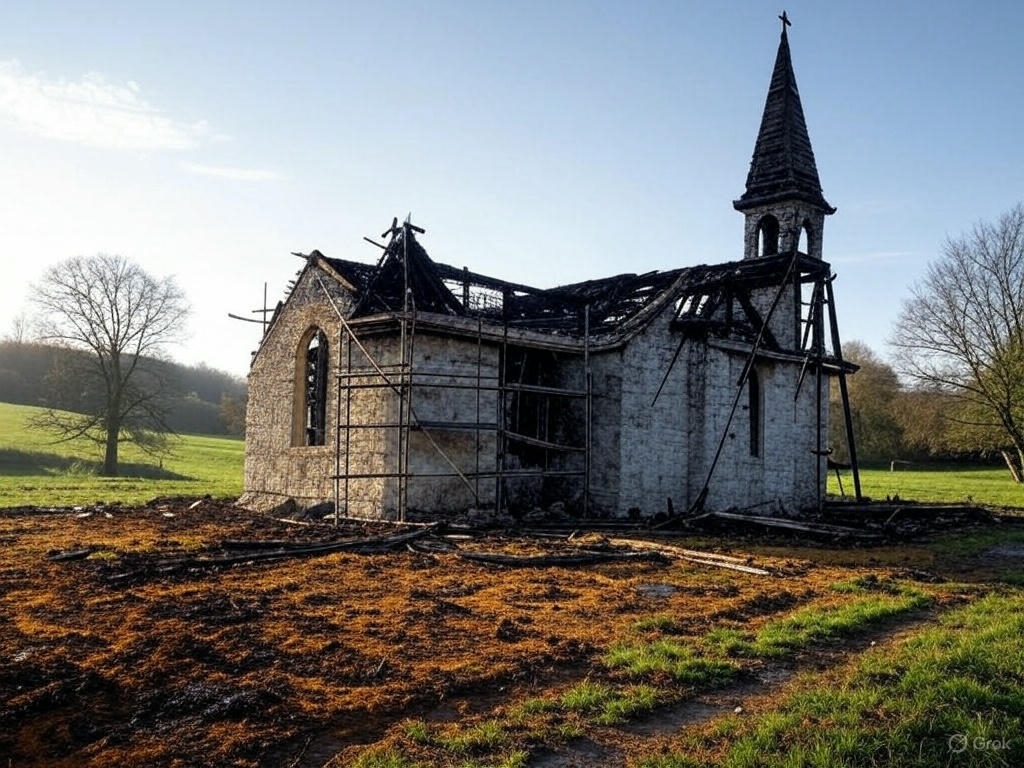
The Liberal Party of Canada’s (LPC) strategy of proroguing Parliament, seemingly to bide time for external political currents like Trump Derangement Syndrome to shift public sentiment, is a calculated maneuver that reeks of opportunism. By suspending legislative proceedings, the Liberals create a convenient pause, allowing them to sidestep immediate accountability while waiting for a wave of anti-Trump sentiment to bolster their image as a preferable alternative to the Conservative Party of Canada (CPC). This approach hinges on the hope that Canadians, distracted by U.S. political chaos, will overlook the LPC’s own inconsistencies and rally behind them as a bulwark against perceived extremism. It’s a crafty exploitation of timing, leveraging international headlines to mask domestic shortcomings, but it betrays a cynical reliance on external factors rather than a principled stand.
The LPC’s subsequent pivot to adopt key planks of the CPC platform—eliminating GST on new homes, scrapping the carbon tax, and revoking the capital gains tax—further exposes their strategy as a shameless theft dressed up as pragmatism. These policies, long championed by the Conservatives under Pierre Poilievre, were once derided by the Liberals as impractical or regressive, yet now they’re conveniently repackaged as bold, voter-friendly moves under Mark Carney’s leadership. This isn’t adaptation; it’s a bald-faced grab at populist appeal, executed with a sleight of hand that assumes Canadians won’t notice the hypocrisy. The Liberals’ willingness to jettison their own ideological moorings—once centered on progressive taxation and climate action—demonstrates a craftiness that prioritizes electoral success over coherence, revealing a party more devoted to power than to any governing philosophy.
This unctuous display underscores the LPC’s unflinching and unethical commitment to clinging to power at any cost, even if it means sacrificing integrity. Proroguing Parliament to dodge scrutiny, waiting for Trump-related hysteria to tilt the field, and then pilfering their rival’s playbook isn’t just strategic—it’s a slimy betrayal of public trust. It paints the Liberals as a party willing to bend any principle, adopt any stance, and manipulate any situation to avoid losing their grip on Ottawa. While the tactic may prove effective in the short term, especially with polls showing a Liberal surge as of March 22, 2025, it leaves a lingering stench of desperation and dishonesty, suggesting that for the LPC, the ends will always justify the means, no matter how greasy the path.












 bleatmop
 Mystro
 The Arbourist


 Dead Wild Roses
Your opinions…