
You are currently browsing the category archive for the ‘Alberta’ category.

We all know the UCP are scum. Just terrible garbage people. Broken promises left and right, austerity for everyone, and harming the poor, the young, the old, the severely handicapped, and everyone. Then they lie about doing these things even as they are doing them. This is pretty much neo-liberalism 101. It’s been going on since Reagan, Thatcher, and our very own Brian M. and Klein. What’s also true is that your average UCP supporter is also trash.
Yup, that’s right. I’m calling you all trash. That, after all that’s been going on, the UCP would still win an election if it was called today is reprehensible. It means one of three things is happening. It means either you don’t know what’s going on, or you don’t care what’s going on, or you support what’s going on. In any of these three situations you are trash but it’s the people who don’t know what is going on that are the worst of you. Not that this distinction matters much as the scale ranges from sewage byproducts to nuclear waste. But ya, those of you who don’t know what is going on are the nuclear waste.
Seriously, if you are in ignorance of what is going on all that means is that it is purposeful ignorance, the worst of all ignorance. It would take a concerted effort to avoid all media and be unaware of how your choice at the polling station is decimating this province. But I’m guessing if you are reading this then you aren’t one of those people because they are likely unicorns. As in they don’t exist or if they do they are so rare that they’ve never been spotted by another person.
As for the other two, which is worse you ask? Well, you guessed it, it’s those that don’t care. At least those who support this selling off of our province stand for something. I mean it’s a terrible and evil something, but at least it’s something. If you are one of those people that just shrug your shoulders and go “ehh.. one politician is as bad as another” then you are the problem. You’ve literally just lived through a politician that kept the lights on during one of the worst economic downturns we’ve ever had and are seeing a politician that took a bad but improving situation and immediate turned it into dog shit and see no difference. Honestly, you are bad and you should feel bad.
But wait, there is still time! You can contact your MLA, tell them you voted for them and you are very angry and will not be voting for them next …. BWAHAHAHAHA. Nope. Sorry. It’s too late. Kenney is an unaccountable king for the next few years and by the time he is done with his first term the damage will take generations to repair. But don’t worry, because that won’t happen either because you idiots will still keep voting UCP because one politician is as bad as another, am I right?
So to sum things up, the UCP are trash and so are their supporters. Their austerity is causing generational damage to our province and everyone will suffer, especially the most vulnerable. Nothing they do will bring back the heydays of $100/barrel of oil and nothing they can do can even affect that. So we’re all screwed because garbage people are voting for garbage politicians.


To Solidarity and Liberation!
Please go and support feminist organizations that are carrying on the struggle for female rights and safety.


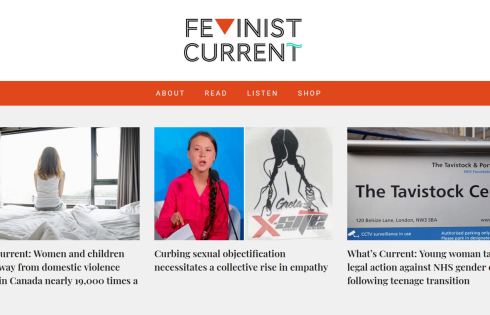


Also, why women are joining the Canadian Women for Sex Based Rights group:



We better have turned the damn corner on this cold snap. The week of -40 has well worn out its welcome.

MATLAB Handle Graphics
Let the great mini-thaw begin. More of this please.
Some days I really do wonder about the social fabric of my province. There is apparently a market for human sized anatomically correct dolls in Calgary (and thus another good reason to believe nothing good comes from there except the road North).
What I’m amazed at is the everyday occurrance tone the article takes, for example…
“The whole thing takes place while the body of the doll hangs from a hook over a tub to catch the water and soap, its head removed, legs bent.
“The first thing we do is we bring the doll back here and begin our cleaning procedure immediately,” says one of the new service’s co-owners, whom CBC News has agreed not to identify because he feared repercussions at his other job, but who we’ll call Steve.
“So we disassemble the doll, we take out any removable orifices, we take off the head, then we proceed to do a rinse with hot water to get any surface bacteria or surface solids off.
“Then we begin with our anti-bacterial soap.”
Yep, nothing out of the ordinary here, just our elaborate cleaning procedures necessary to wash the spunk off of our female replica dolls.
“Then there’s the sponge on the medical pincers and more peroxide and more cleaning.
A similar process happens in a smaller sink for the head and the inserts that fill the orifices.
“Obviously, this cleaning procedure, no one does this to themselves in the shower, which just proves another point that these are cleaner than any person or escort that you could find,” said Steve.
And yes, there is documentation of the cleaning process.
But it’s not just about the cleaning, is it?”
It cannot just be me who feels like we’ve merrily skipped into the uncanny valley.

“Beyond just the physical features, like different bodies and hair and even elf ears, each doll comes with its own story and personality.
Ariana, for example, is a 26-year-old bikini model from Venezuela, while Bella “comes from an Icelandic clan of mushroom forest elves where women are forbidden from refusing sex to their lovers.”
Cameron, the sole male of the bunch, is pretty much up for anything, and while he’s not as popular as the women, Steve says he’s been kept pretty busy. “
Nope, this isn’t harmful fetish fuel at all.
“They’re not just sex dolls, they’re also great for companionship,” he said.
“They’re someone to talk to, they’re someone to listen to you, they’re someone to cuddle with and, of course, they’re just someone to be there with you in an empty room.”
He also says his business doesn’t exploit anyone, while still providing a sexual service.
“These are a much safer and legal alternative [to prostitution],” he said.
“They don’t have any feelings, they can’t be abused. They aren’t real. So there is no objectification.”
Nope, no objectification at all, the backstory of ‘Bella’ proves that completely: “Bella comes from an Icelandic clan of mushroom forest elves where women are forbidden from refusing sex to their lovers.”
Adding another plank to the large raft of evidence of the power that male paraphilia exerts on society. :(
I, for one, am not looking forward to the social fabric of our province being torn asunder by the austerity crazed UCP government in 2020.
“Speaking of blaming others for Alberta’s ills, 2020 will see the UCP government maintain its pugilistic approach to issues via its Fight Back Strategy that includes the “war room” — officially, the Canadian Energy Centre — the public inquiry into the government’s foreign-funded conspiracy theory, and the “fair deal” panel that is looking into whether Alberta should have, for example, its own police force and pension plan.
These are all tactics designed to keep Alberta on a war footing and keep Albertans angry, frustrated and easily manipulated by a government that equates legitimate opposition with sedition.
The past year ended with some frustrated public sector workers musing about a general strike. That strike never happened and perhaps it never will. But we might see strikes by individual public sector unions in 2020. They are upset by a government that is pressing workers to take wage cuts. The government has made it clear if the unions win wage hikes, they can expect job cuts.”
Good times ahead folks. :(
It would be nice if our current government would start taking responsibility for the mess that they are creating. Blaming the “Anti-Alberta Conspiracy” for the lacklustre economic performance of the economy reeks of desperation and deceit. Alberta’s Premier is busily talking out of both sides of his mouth when it comes to Moody’s Investor Service.
“When Moody’s Investors Service downgraded Alberta’s credit rating this week, Premier Jason Kenney reacted swiftly and decisively — to attack the messenger.He took aim at Moody’s for daring to include environmental risk in its report card. As Moody’s pointed out: “Alberta’s oil and gas sector is carbon intensive and Alberta’s greenhouse gas emissions are the highest among provinces. Alberta is also susceptible to natural disasters including wildfires and floods which could lead to significant mitigation costs by the province.”
Moody’s conclusion was understandable. In a time of climate change, credit rating agencies are taking environmental risk into account.
But Kenney refuses to accept that.
For him, this is just one more example of an anti-Alberta conspiracy. According to Kenney, financial institutions, including Moody’s, “are buying into the political agenda emanating from Europe, which is trying to stigmatize development of hydrocarbon energy. And I just think they are completely factually wrong.”
Kenney all but accused Moody’s of being part of the foreign-funded conspiracy he claims is out to landlock Alberta’s oil.”
Wait for it…
“The UCP, while in opposition, was happy to accept the conclusions of agencies, including Moody’s, whenever they downgraded the NDP government’s credit rating.
Consider this quote from UCP MLA Jason Nixon back in December of 2017 after the NDP government-of-the-day suffered yet another credit downgrade: “We have a government that is showing no signs of controlling their spending and clearly the credit agencies don’t trust them right now.”
However, as former-premier Ralph Klein was fond of saying, that was then, this is now.
According to the UCP back then, Moody’s was a purveyor of the truth.
According to the UCP now, Moody’s is “completely factually wrong.”
The Moody’s report, of course, put the UCP government in an awkward spot. This is a government that promised to turn the Alberta economy around with jobs and pipelines. Even though the Trans Mountain pipeline expansion is forging ahead, significant job creation is stuck in neutral.”
Yeah. The bullshit is that thick here in Alberta. It would be nice, for once, to let the facts speak for themselves without the partisan glaze that has become the norm. The UCP has demonstrated a distinct lack of leadership when it comes to the promises made on the campaign trail – job losses, negative economic growth, and more taxes (user fees) for the people of Alberta. Nothing like ‘making Alberta open for business, and getting people back to work’.











 bleatmop
 Mystro


 Dead Wild Roses
Your opinions…