
You are currently browsing the category archive for the ‘Canada’ category.
You would think that our dear UCP government wouldn’t be so brazen in their attempt scuttle the investigation into their dark little web of political hackery. Apparently not. Their solution to being investigated by the Electoral commissioner is well… fire the electoral commissioner.
*blinks*
“The Office of the Election Commissioner has been dissolved and transferred to the Office of the Chief Electoral Officer, Elections Alberta said in a news release Friday.Bill 22, the Reform of Agencies, Boards and Commissions and Government Enterprises Act, came into effect on Friday, the agency said.On Thursday, the legislature passed the bill, which included the firing of election commissioner Lorne Gibson. Alberta NDP Leader Rachel Notley said Thursday the quick passage of the bill is the mark of a premier and government “consumed by power and unconcerned by the views of Albertans.” Gibson was leading the investigation into the so-called “kamikaze” campaign of UCP leadership candidate Jeff Callaway and had levied fines against 15 people totalling $207,223.
Callaway allegedly entered the race to discredit former Wildrose leader, and Kenney’s chief rival, Brian Jean, only to drop out and endorse Kenney weeks later. Kenney and Callaway deny they worked together to defeat Jean, but emails obtained by CBC News show high-ranking Kenney officials providing resources, including strategic political direction, media, and debate talking points, speeches, videos and attack advertisements, to the Callaway campaign.”
It should be readily apparent to both sides of the political spectrum that an investigation is warranted. We, as a populace, need to be able to trust our democratic institutions. It is bullshit like this that negates all the ‘get out the vote’ and ‘express your voice’ and ‘do your civic duty’ sentiment we are bombarded with before elections.
As a active citizenry we should be taking part in the political process the rest of the time, but that is another blog post.
“Edmonton-Manning MLA Heather Sweet, the NDP critic for democracy and ethics, sent a letter to Resler on Friday asking him to provide a report to the legislature on the steps he will take to preserve the material Gibson gathered during his investigation.
“Public confidence in the integrity of our democratic elections in Alberta has been significantly damaged,” Sweet wrote. “Any loss, misplacement or destruction of the evidence being gathered by Mr. Gibson in his investigations would lead to further irreparable damage to that confidence.”
This investigation is, rather ineptly, being swept under the carpet. Thankfully the NDP is doing what good oppositions do, and not letting the issue be buried.
Source: cbc.ca
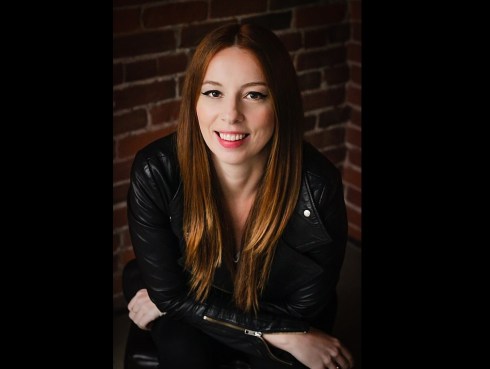
The rest of the article reprinted here with the exception of the hyperbolic response from the trans groups in NZ that who were afraid to debate Meghan Murphy in person on live TV.
“Meghan Murphy is a radical feminist who believes transgender women aren’t women – views that have seen her banned from Twitter.
She was the star guest at Feminism 2020 on Friday – an event organised by Speak Up For Women that was originally going to be hosted at Massey University, but cancelled before being picked up by ACT leader David Seymour and hosted at Parliament.
Murphy told Newshub Nation on Saturday her position was “pretty straightforward”.
“I don’t believe that it’s possible to change biological sex, so I think that you’re born either male or female, and you remain male or female for life.
“Being a woman isn’t a feeling – it’s a fact. I guess I don’t quite understand what the purpose is in identifying the opposite sex.”
Murphy said she has concerns about “women’s rights as a whole”, but added she feels “total empathy” towards people with gender dysphoria, mental illness and their identities.
“The problem with trans is there’s no definition of transgender – it’s just an announcement,” she told Newshub Nation. “There’s no way to discern who is transgender. It’s just something that you say.”
***Update*** Just found the transcript!
On Newshub Nation: Simon Shepherd interviews Meghan Murphy
Simon Shepherd: It’s Transgender Awareness Week, the same week a feminist group, Speak Up For Women, has brought Megan Murphy from Canada to speak in New Zealand. Murphy is a radical feminist who believes trans women aren’t women, views that have seen her banned from Twitter. We asked representatives from several trans and rainbow organisations to engage in a debate, but no one was available. So I began by asking Megan Murphy to explain her position.
Megan Murphy: Sure, I mean, my position is pretty straightforward, in my opinion. I don’t believe that it’s possible to change biological sex. So I think that you’re born either male or female, and you remain male of female for life. So I disagree with the idea that you can identify as female if you’re male. I also, of course, have concerns about gender identity legislation and policies and the way that they impact women, and particularly women’s spaces where women and girls might be particularly vulnerable, so change rooms, transition houses, prisons.
We’ll get to those specific examples in a moment. Gender self-identification — what is wrong with a trans person declaring that they’re a woman, though, if that’s how they feel?
Well, being a woman isn’t a feeling, it’s a fact. I guess I don’t quite understand what the purpose is, in identifying as the opposite sex. I understand that some people suffer from, you know, what you might call gender dysphoria.
That’s right. And that’s a medically recognised diagnosis, isn’t it?
Well, the problem is that now gender identity legislation and policy isn’t based on any kind of medical diagnosis. I would disagree with the concept of gender dysphoria, but that’s sort of a more complicated topic we could maybe get into later. But right now, what we’re talking about is literally just a person announcing that they’re the opposite sex, based on nothing, not based on any kind of mental illness or whatever.
Well, there is one thing that we should raise, though. What about intersex people — the definition is people who do not fit the typical definitions for male or female bodies. Where do they fit into this?
Well, they don’t fit into this, because trans people aren’t intersex, they’re just males or females who don’t identify with the gender stereotypes attached to males and females.
Yeah, but you are saying that biologically you are one or the other, but these people are both or neither.
Well, actually, with intersex conditions, usually those people are male or female, and then they have an intersex condition. There’s some people that it’s more complicated and harder to decipher, but for most people, it’s actually not that hard to decipher, and they just have abnormalities.
Right, so, if someone chooses — if they are intersex and they choose to become a female, is that acceptable to you?
Well, I mean, this conversation really doesn’t have anything to do with intersex, so I’m not particularly interested in debating that issue. I think that’s separate. And, you know, I’m not a doctor, so that’s an issue between the person and their doctor, how they want to go about dealing with this condition.
Sure, but it doesn’t fit into your—
But what we’re talking about is a male who’s obviously male, clearly male, simply saying, ‘I’m a woman,’ and expecting to be accepted as a literal female.
The non-binary community is tiny; some studies here put it at about 1%. So why does a feminist like yourself feel threatened by trans people calling themselves women?
Well, I don’t know that it’s about me feeling threatened per se. Is that I have concerns for the impact on women’s rights as a whole, and particularly marginalised women. So, for example, when we’re talking about female prisons, the women who are in female prisons are among the most marginalised people in the country. And men are being transferred to these prisons and assaulting and sexually harassing these women.
Trans people have a high suicide rate here. There’s a study recently that more than 50% of them have considered suicide in the past year. They are very marginalised as well. Shouldn’t there be some empathy towards them?
I totally have empathy towards people who struggle with gender dysphoria, who struggle with mental illness, who struggle with, you know, their identities, who are marginalised in various ways. It’s really not about empathy or a lack of empathy. I mean, we’re talking about legislation, so it has to be about more than just how you feel. And really, what I’m concerned about is why no one in this conversation seems to have empathy or concerns for women and girls — I mean, they’re totally being left out and shut out of this debate.
And you are fighting for what you say has been the oppression of women over centuries. Do you believe that, in a way, this is also the oppression of another minority, or a marginalised society — that your opinions about them is marginalising them and oppressing them?
Well, I mean, my opinions about people who identify as trans are not offensive or judgemental or hateful in any way. I’m really just saying these basic things like you can’t change your sex.
Yeah, but some cultures have accepted this for years. I mean, there’s cultures around the world that have a history of gender fluidity. So why is it an issue right now?
I don’t have an issue with gender fluidity. And many of those cultures actually didn’t necessarily accept these people as literally the opposite sex. They accepted them as, you know, a male who adopted feminine stereotypes. Or there was, like, a ‘third gender’, but it wasn’t the same as what we’re talking about now.
So you’re saying that society— In your view, should society treat trans people differently, have a different category than male or female?
No. I mean, the problem with trans is that there’s no definition of transgender. It’s just an announcement. So there’s no way to discern who is transgender. You know, what does that mean? What does it mean to be transgender? It’s just something that you say.
The transgender community feels feminists like yourself are what they call exclusionary. They call you TERFs — trans exclusionary radical feminists.
Mm-hm.
So you’re excluding them from society. That’s what their argument—
I’m definitely not excluding them from society.
So why do you object on the terms?
And I’m not excluding trans people from anything. I mean, females who identify as transgender are welcome in women’s spaces, males who identify as transgender are welcome in male spaces and welcome everywhere else. What we’re saying, what we’re talking about specifically is men, so I really feel frustrated when people start talking about it as oppression of trans people or about transphobia, for example, because it’s really not about the trans identity. It’s really about biological sex, and that’s it.
These people feel like they’ve been trapped in the wrong body. That’s one of the things that you hear.
Well, it’s not possible to be trapped in the wrong body. You’re just born with the body and you deal with it. I mean, lots of people don’t like their bodies and wish they had different bodies, but, you know, too bad.
So, you’re a male; you’re always going to be a male. That’s right? You just cannot identify—
Of course. And everyone knows that. I mean, you have to agree it’s not possible to change sex. How would that happen?
Well, medically, it’s possible to change sex.
It’s not possible to change your chromosomes. It’s not possible to change your bones. It’s not possible to change your pheromones. I mean, you can get cosmetic surgery, so you can be a male with breast implants or you can get genital surgery, but that doesn’t literally change your biological sex.
Do you think that you have the privilege in this debate?
Definitely not.
I mean, you know, you are a cis-gender woman, and—
I am not a cis-gender woman. I don’t identify with femininity.
All right.
I don’t identify with sexist gender stereotypes.
Okay. All right. So you’re a woman.
I’m a woman. I’m a female. That’s right.
Okay. You’re a female. But you are not being marginalized, are you? I mean, because women are 50% of the population. So therefore you have the power in this relationship with people—
I mean, I— Me personally— This conversation really isn’t about me personally. It’s about all women and girls, and around the world, you have to agree that women still suffer enormously in many parts of the world. I mean, in Saudi Arabia, women still, you know, can’t function on their own. They’re not allowed to drive.
Sure. So, I guess the argument is with that kind of understanding, why do you not have an understanding of people who feel like they are in the wrong bodies and they want to identify as women and that’s what their natural state should be?
You know, we can’t base legislation based on a few people’s feelings, especially when those people are male and potentially present a threat to women and girls.
Okay. Well, let’s talk—
I mean, just because a man identifies as a woman, I don’t think that means he should be allowed access to women’s change room and be able to be there naked with his penis out around women and girls.
All right. So, they can—
I think surely you can agree that’s inappropriate.
Okay, so let’s talk about the practicalities. You say that a trans woman who hasn’t had a genital change should not be allowed into women’s spaces. Is that right? In women’s changing rooms?
Definitely.
Okay. So you shouldn’t share bathrooms. What about sport? Should trans women compete against other women in sport?
I mean, this is a really big issue, and I’m really glad that you brought it up, because males have an obvious advantage over females in most sports, and that’s why they compete separately. So, you know, women fought to have the right to compete on fair ground, and that’s being rolled back really quickly, and they’re being forced to compete against males. And there’s no— There’s nothing that a man can do, you know— These are men who have gone through puberty; they have male bodies. Even if they reduce their testosterone, that doesn’t mean that they—
Because many sports bodies do have levels of testosterone that are acceptable to have trans women versus women.
I know, but those men still have more muscle mass, their bones are different. You know, males have, like— their bodies are completely different than female bodies. They have different organs — they have bigger lungs, they have bigger hands, they have longer limbs, and you can’t change any of that by reducing testosterone.
What about self-identification on passports and drivers’ licences, these official kinds of documents?
I mean, I don’t see the point, but, again, I think that it’s dangerous to legally change a person’s sex, because what that means is that then that person, if he’s male and he has changed his sex to female on his ID and whatnot, then he must be accepted in women’s transition houses, in female prisons, in women’s change rooms.
Are trans women really a threat in those kinds of places?
Definitely not trans women. Men. Males. So, it doesn’t matter if you identify as trans or not. I don’t think that trans women are any more dangerous or predatorial than any other man, and I don’t even think all men are predatorial. But we know that the people who are predatorial towards women, who sexually harass women, who sexually assault women are generally males, not females.
So you’re saying that a male cannot change their spots if they’re a bad male, whether they be a trans woman or a male?
I mean, I hope that men can change their spots. By transitioning, they’re definitely not changing anything. That’s not the kind of change that we’re looking for.
You say that self-identification is a regressive ideology that’s trying to erase sex-based rights. So you’re saying that if somebody wants to self-ID as a trans woman, they’re erasing women’s rights.
I think that if ‘woman’ no longer has a definition and there’s no such thing as a women, then there’s no basis for women’s rights.
Intersectionality is one of the positive additions that heralds from Kimberlé Williams Crenshaw. Her concept of intersectionality is as follows – “The main argument of this black feminist paper is that the experience of being a black woman cannot be understood in terms of being black and of being a woman considered independently, but must include the interactions between the two, which frequently reinforce each other.” Elegant isn’t it? Simply – one must consider the many axis of challenges and oppression that people face and how they interact with each other.
Intersectionality changes though once run through the mill of gender ideology. Intersectionality magically becomes synonymous with being inclusive which is distinctly not what the term means. I cringe when someone says that they are an ‘intersectional feminist’ because inevitably it means that they have gone down the rabbit-hole of regressive politics and now somehow believe that men should be centred in feminism because those men who choose to enact female sex stereotypes suddenly become the most oppressed people in society.
That friends, is grade ‘A’ bullshit. Feminism is necessarily an exclusive category, and it is reserved for those occupying the females sex class. One cannot refuse to be in said sex class, nor can others somehow magically identify into it. Patriarchy, whether you believe it exists or not, defines men and women into correspondingly dominant and subservient roles in society based on the immutable factor of which sex class you happen to be born into.
The embrace of this bastardized intersectionality leads to a great deal of confusion, as Andrew Sullivan illustrates in this excerpt.
“But now I’m confused, and I don’t think I’m alone. Slowly but surely, the term “sex” has slowly drifted in meaning and become muddled with gender. And that has major consequences for what homosexuality actually is, consequences that are only beginning to be properly understood. Take the Equality Act, the bill proposed by the biggest LGBTQ lobby group, the Human Rights Campaign, backed by every single Democratic presidential candidate, and passed by the House last May. Its core idea is to enhance the legal meaning of the word “sex” so it becomes “sex (including sexual orientation and gender identity).”
The Act provides four different ways to understand the word “sex,” only one of which has any reference to biology. Sex means first “a sex stereotype”; secondly “pregnancy, childbirth, or a related condition”; thirdly “sexual orientation or gender identity”; and last “sex characteristics, including intersex traits.” Yes, at the end, we have “sex characteristics” in there — i.e., biological males and females — qualified, as it should be, by the intersex condition. But it’s still vague. “Sex characteristics” can mean biologically male or female, but can also mean secondary sex characteristics, like chest hair, or breasts, which can be the effect of hormone therapy. So in fact, the Act never refers to men and women as almost every human being who has ever existed on Earth understands those terms.
The definition of “gender identity” in the Equality Act is “the gender-related identity, appearance, mannerisms, or other gender-related characteristics of the individual’s designated sex at birth.” Notice that this views “sex” as merely “designated” at birth. It seems to have no deeper meaning than a provisional social label attached by others. (That’s why the current trans-friendly terms for babies are not “male” and “female,” but “AMAB” — assigned male at birth — or “AFAB” — assigned female at birth.) It is as if we have redefined all of humanity around the tiny minority that is trans or intersex, so that the exception no longer proves the rule, but completely redefines it.
For a glimpse of what this means in practice, here’s a Canadian website, Sex-Ed School, relying on the resources of The Sex Information and Education Council of Canada. In this clip from their web series, the sex educators ask the elementary-school kids if “everyone born with a vulva is a girl.” Most of the kids say yes. But they’re wrong. The correct answer is that “our genitals don’t determine our gender and people born with vulvas can be boys.” Gender, the young kids are told, is “how you feel on the inside about whether you’re a boy or a girl, a man or a woman, if you’re nonbinary, feel like neither or both. People can also be fluid, feel more like female, more like a male based on the day or time. It’s all individual.” This is being taught to school kids ages 9 through 12 as fact by people who say they are sex researchers and educators.
And notice how “boy” and “girl” are in the very same category with the very same status as “fluid” and “nonbinary”. In the sex-ed course, the first lesson is not on the differences between men and women and how they make babies, as one might naïvely imagine. No, it’s on consent, not sex, and then there are episodes for gender and orientation, but still no lesson on sex itself, on the natural reproductive differences between boys and girls, which is how humans exist at all. The dolls they use for reference are sex-free, Ginger and Blue. The teacher tells us that one of them uses “they” as a pronoun. One lesson has the kids attaching toy versions of penises, vulvas, boobs, balls, which the kids assign at random. The teachers almost never say “boys” and “girls,” it’s always “people.” So some people have breasts and some people have penises.
In these lesson plans, here’s the definition of homosexuality: “a person’s sexual identity in relation to the gender to which they are attracted.” Homosexuality is thereby redefined as homogenderism. It’s no longer about attraction to the same sex, but to the same gender. I’m no longer homosexual; I’m homogender. But what if the whole point of my being gay is that I’ve always been physically attracted to men? And by men, I mean people with XY chromosomes, formed by natural testosterone, with male genitals, which is what almost every American outside these ideological bubbles means by “men.” I do not mean people with XX chromosomes, formed by estrogen, with female genitals, who have subsequently used testosterone to masculinize their female body — even though I would treat them with the respect and dignity they deserve in every context.”
How can we fight against sexism if we cannot define what a woman is, or what sex is? Reasonable people have to stand up against gender ideology, as it serves only to erode the rights, boundaries, and spaces of women.
I’m fairly new on Twitter but have already had the displeasure of witnessing the fury of faux-progressive backlash against feminism and feminists attempting to speak their mind in public places… in Canada. Canada?? The easy going, live and let live notions we like to believe in the more sensible regions of Canada seem to dissipate in our larger cities. Queer rights activists and trans activists have mounted a vigorous assault not on the arguments of gender critical feminists, but rather their character, the venues that host said feminists, and a rather hyperbolic set of straw assertions/mantras that serve as conversational dead ends/thought terminating cliches.
This is not the left that I grew up with, nor do I intend to ever associate with. These individuals seem to believe that their individualistic solutions to systemic social problems will somehow win the day. Not gonna happen.
The comparison between the regressive left and religious is worthy of examination. James Bloodworth makes the comparison in his essay on Unherd.
“But politics as religion invariably comes with a cost. There is, naturally, a constant hunt for heretics. Public denunciations followed by ‘cancellations’ are de rigueur. Rigid adherence to doctrine is celebrated, while those who err are pompously told that they are on the “wrong side of history”. Political spats focus on the moral character of a person rather than the content of their arguments. Public arguments in which, as Swift phrases it, “identity leftists spend a great deal of time expending venom… at fellow leftists with whom they have some minor disagreements” are ubiquitous on Twitter and other social media.
All of this takes the Left further into the echo chamber, away from the people it is supposed to represent. Attitudes which are held by the vast majority of Britons — that there should be some upper limit on immigration, that sex differences exist, that gender isn’t entirely a social construct — are enough to get a person ‘cancelled’ by today’s hobbyist Left. Moreover, the slippery equation of words — or even thoughts — with violence creates a censorious climate where activists feel justified in hounding people from public life completely.”
See the transactivists haranguing women and trying to disrupt two public (in Toronto and Vancouver respectively) gatherings that featured Meghan Murphy and other feminist speakers was solid proof for me of the parallel.
This is the talk that the transactivists don’t want you hear. They protested, they shouted, they tried to intimidate the Library and women organizing the event. Share this widely folks, do not let the woke totalitarians win.

Click the link to see the Q&A. This is what transactivists are trying to shut down. Do you see the hate? I most certainly do not.
Contact your MP, get bill C-16 revoked.

Meghan Murphy
This week, three Canadian writers launched a petition demanding the Toronto Public Library cancel a room rental for a sold-out event, ‘Gender Identity: What Does It Mean for Society, the Law, and Women?’ Sounds frightening, I know.
The local women organizing the event, a group called Radical Feminists Unite, asked me in June if they could bring me to Toronto to speak about gender identity legislation and women’s rights, unhappy that the debate was not being given space in their city. This is not an uncommon sentiment. The events I have been asked to participate in generally have been organized by regular women who have serious concerns about how gender identity ideology and policy could affect, and already is affecting, women’s sex-based rights. Canada in particular has been resistant to this discussion. Due to media blackouts, harassment, bullying, threats of violence, smear campaigns, censorship, and ostracization, a few brave women have had to force the conversation, at great risk.
In January, a couple women took it upon themselves to organize an event in Vancouver, ‘Gender Identity Ideology and Women’s Rights.’ These women had no budget, no public or political power, no history in activism or organizing events, and no agenda, other than to open up a conversation they feel is desperately needed. The panel, held at the Vancouver Public Library, featured me and two other longtime feminist activists with impeccable records fighting male violence against women. The organizers and I received numerous death and rape threats, were protested, and were libeled by politicians and the media. The VPL forced us to move the event after hours (to 9:30 p.m. on a weeknight), claiming that protesters posed a risk to patrons and staff. They attempted to charge us thousands in security fees in an effort to pressure us to choose another venue, surely aware we didn’t have that kind of budget. The chief librarian, Christina de Castell, issued a statement saying the library did not agree with ‘the views of Feminist Current,’ my website. Castell did not say which views the library disagreed with (protecting women’s sex-based rights or the idea that sexist gender stereotypes are not innate?), but regardless, she should not have taken a position, as a representative of a public institution meant to be neutral, nor should she have spoken on behalf of the VPL, as not everyone at the library is in agreement with her apparent opposition to both biology and women’s rights. Vancouver’s mayor labeled me ‘despicable’. Canada’s national public broadcaster, the CBC, located across the street from the library, refused to cover the event or contact me for comment, despite hosting a panel prior to the event, speculating whether panelists might say anything constituting ‘hate speech’. Of course none did. Despite protests, the event went off without a hitch and was incredibly respectful, inspiring, and galvanizing. The impassioned talks are available on YouTube for anyone to watch and see for themselves.
But why bother? Listening to words and forming an educated opinion based on said words is no longer a popular pastime.
Things have played out similarly in Toronto. The primary difference is that it is now writers leading the charge. You know, people who should be invested in reading and using words correctly.
Not only that, but writers of all people should be defending freedom of expression and a public library’s decision to uphold its mandate, which, per the TPL’s response to the petition, is to ensure meeting rooms are available to the public ‘on an equitable basis, regardless of the beliefs or affiliations of individuals or groups requesting their use’. The statement goes on to say: ‘As a public institution, our primary obligation is to uphold the fundamental freedoms of freedom of thought, belief, opinion and expression as enshrined in the Canadian Charter of Rights and Freedoms.’
This response was unacceptable to the writers and thousands of Torontonians (many of whom I’m certain would consider themselves ‘progressive,’ even ‘feminist’) wanting my talk canceled. Indeed, those who have signed the petition, ‘Stop Hate Speech from Being Spread at the Toronto Public Library,’ have publicly stated I am guilty of ‘hate speech’ and compared the organizers to a ‘hate group’. The petition, authored by Alicia Elliot, Catherine Hernandez, and Carrianne Leung, reads:
‘Those who want to disseminate hate speech today know that they can misrepresent, then weaponize the phrase ‘freedom of speech’ in order to get what they want: an audience, and space to speak to and then mobilize that audience against marginalized communities. While everyone has freedom of speech, we want to once again point to the limits of those freedoms when certain acts and speech infringe on the freedom of others, particularly those in marginalized communities. We also want to point out that hate groups do not have a right to use publicly funded facilities to meet and organize. This is precisely why TPL has a community and event space policy: to determine who and who does not have the right to use its facilities. There is a difference between denying free speech—and what is known as deplatforming, which is when you refuse to allow hate speech to be disseminated in your facility. This has been an effective tactic to stop those who capitalize on spreading hate speech, such as Meghan Murphy.’
The problem is I’ve never engaged in hate speech. I have made very basic statements about biology, such as ‘men aren’t women’ and ‘male bodies and female bodies are different.’ I have also argued that some spaces should be women-only, including changing rooms, transition houses, and prisons. I have said that individuals cannot change sex through self-declaration and that a boy is not a girl because he prefers dresses to pants. I have said that women have particular rights in this world due to the fact of being born female. I have said that women have not experienced discrimination in the workplace, in the home, in universities, and in politics because of anything they feel or because they somehow ‘identify’ with feminine stereotypes. In fact, it is the desire not to be limited to gender roles that inspired feminists’ ongoing fight.
Usually, I say this all warmly. I’m not generally an angry person but quite jovial, in fact. I don’t spend much of my energy hating anyone beyond slow walkers and morning people. I’m just telling the truth.
The writers who initiated the petition say they will no longer participate in events held at the TPL unless the library cancels my talk, which is fine, I suppose. It is their prerogative if they wish to hold readings for their friends in spaces untainted by free thought. Surely the condos their parents bought them have shared rec rooms available for such gatherings? Cozy bubbles seem better suited for those needing to protect themselves from triggers such as people with different opinions and experiences, anyway.
The whole scene strikes me as nauseatingly elitist, especially the entitlement with which these ‘progressive’ people approach members of the public — in this case, women with no particular social, political, or economic power — as though they should have the power to determine what we all think or say. As though they have the right to dictate what a library, of all places, should allow to be discussed within its walls.
These protesters are primarily middle- and upper-class people who have had access to opportunities most people in this world have not. Who live in relative safety, free from state persecution — who have the privilege of freedom in a world that continues to host dictatorships and incredibly repressive regimes that quite literally jail and murder those who fail to toe the party line. They have taken a postmodernist theory invented primarily within the walls of academia — that is, the notion that material reality is determined by inner feelings — and are attempting to impose it on the general public via force. These people have taken on the position of dictator, threatening to throw those who won’t adopt their nonsensical mantras in jail. Indeed, a former politician with the NDP, Canada’s leftist party, publicly claimed the event was ‘illegal’ while her supporters said I should be jailed.
On Thursday, Toronto mayor John Tory said he had contacted the library in an attempt to have the event canceled and is ‘disappointed’ the library declined to do so. What is in fact ‘disappointing’ (indeed, appalling) is that the mayor of Toronto does not understand the TPL’s mandate as a public institution and opposes freedom of expression.
These leftists seem unaware that opposition to free speech has not treated their presumed heroes kindly. They have so easily forgotten Emma Goldman, who was imprisoned for distributing information about birth control. And Rosa Luxemburg, arrested and killed by the GKSD, a German paramilitary unit instructed to suppress the communists. Surely the suffragettes deserved to be jailed and beaten for fighting to win women the right to vote, as their ideas were deemed too ‘radical’, not only by their opponents but other feminists and abolitionists. They have apparently not paid much attention to the female activists arrested and tortured in Saudi Arabia for advocating that women be allowed to drive. Journalists continue to be murdered in Mexico for reporting on police corruption and the drug war. But no matter. Protecting free expression is clearly a relic of the past, before we had multi-billion-dollar social media companies on hand to police dangerous speech. (‘On top of that, she has been banned from Twitter for violating their Hateful Conduct Policy’, the petition reads, as though In Big Tech We Trust is an appropriate mantra for supposed social justice advocates.)
At what point in history has suppressing subversive speech benefited the marginalized? Or anyone, really?
The CBC again failed to include the organizers or myself, the speaker, in its ‘coverage’ of the event. On a segment that aired Wednesday, Gill Deacon, host of Here and Now Toronto, spoke with Elliot, who stated that I was ‘trying to take away the rights of people’, ‘preach[ing] against human rights’, and did not believe ‘transwomen should have protections’ under the Human Rights Act or Criminal Code, claiming this constituted ‘spreading hate’. That none of this is accurate was of no concern to Deacon or Elliot. The CBC sees no need to allow me to speak for myself and explain my apprehensions because, I assume, my arguments are so reasonable people might agree with me. While Elliot claimed that I was ‘lying’ when arguing that gender identity legislation could override women’s rights, this has, unfortunately, already happened, as we’ve seen men transferred to women’s prisons, where they have assaulted female prisoners; women forced to leave shelters and transition houses on account of being made to share rooms with men; women and girls made to compete with and against males in sport; women’s organizations denied funding for having a women-only policy; and of course as we’ve seen a number of estheticians dragged to the British Columbia Human Rights Tribunal for declining to wax a man’s balls, because that man claimed to be female. What Elliot says there is no evidence for, there is ample evidence for. Which of course she would know, had she ever read my work, listened to my talks, or engaged in conversation with me, rather than using her platform to spout bigoted nonsense.
Ironically, if not for free speech, these individuals would not feel so safe to libel those they don’t like — which appears to be the go-to strategy of the Woke and Online. One wonders why they believe their speech should protected — even when hateful or slanderous — but not the speech of others. It is a modern hypocrisy I will never understand.
Unfortunately for these protesters and petitioners, the TPL will not be canceling the event, and I will continue to speak the truth in the face of threats, slander, harassment, ostracization, and actual hate speech. I will do this not because I have anything personally to gain from doing so but because I could not live with myself otherwise. I will not be silent while women’s rights are eroded, and I will not lie either under duress or to make friends. My integrity is worth more to me than my comfort or popularity, and yours should be too.
Meghan Murphy is a writer in Vancouver, British Columbia. Her website is Feminist Current.











 bleatmop
 Mystro


 Dead Wild Roses
Your opinions…