
You are currently browsing the category archive for the ‘Culture’ category.
This post is inspired by the writing of James Lindsay on X.
The Mechanics of Woke Sociognosticism: A Persuasive Analysis
Contemporary “woke” ideology—focused on systemic injustice, identity-based power dynamics, and cultural transformation—has morphed into a quasi-religious framework that claims exclusive access to sociological truth. Its adherents, wielding an implacable certainty, cast dissent as ignorance or complicity, undermining the pluralism essential to liberal societies. This essay argues that woke ideology operates as sociognosticism: a fusion of critical social theory with gnostic epistemology, where salvation lies in “awakening” to hidden structures of oppression. While its moral aim to address inequities is undeniable, its totalizing worldview risks authoritarianism, stifling dialogue and fracturing society.
I. Defining Sociognosticism
Sociognosticism marries sociological critique with a gnostic belief in hidden, redemptive knowledge. Historically, gnosticism posits that gnosis—secret knowledge—unlocks salvation by revealing a dualistic reality of light versus darkness (Voegelin, 1952). Political theorist Eric Voegelin applied this to ideologies like Marxism, which claim to expose a veiled truth behind social structures. In woke sociognosticism, society is a prison crafted by hegemonic groups (e.g., white, male, capitalist), who maintain power through a “false consciousness” internalized by the masses (Gramsci, 1971). Activists position themselves as enlightened guides, dismantling this illusion. Yet, their framework is often presented not as one perspective but as the sole legitimate lens, dismissing alternative views as inherently flawed.
II. The Elect and the Awakened: Epistemic Elitism
Woke ideology fosters an “elect” class—those “awakened” to systemic oppression—who view their insight as both morally and intellectually unassailable (Lindsay, 2025). This mirrors Herbert Marcuse’s argument in Repressive Tolerance, where dissenting views are deemed intolerable if they perpetuate systemic harm (Marcuse, 1965). Disagreement is recast as evidence of false consciousness, as seen in online campaigns on platforms like X, where critics of woke orthodoxy face accusations of racism or transphobia (e.g., high-profile cancellations of public figures for questioning prevailing narratives, X, 2024–2025). Such epistemic elitism conditions dialogue on ideological conformity, punishing dissent with social ostracism or demands for public “self-education,” effectively silencing pluralistic debate.
III. Struggle, Awakening, and the Maoist Echo
Woke sociognosticism employs rituals of struggle and awakening, echoing Maoist techniques of “self-criticism” and “struggle sessions” (Mao, 1967). Originating during the Chinese Cultural Revolution, these were public rituals of ideological repentance in which individuals were forced to confess alleged wrongthink to reinforce social conformity. Contemporary analogues include institutional diversity training programs that require participants to acknowledge privilege or complicity in systemic bias. For example, several corporate and university DEI (Diversity, Equity, and Inclusion) initiatives between 2023 and 2025 have included exercises in which employees or students must complete “privilege checklists” or write statements of commitment to anti-racism. Refusal to comply is often interpreted as regression or resistance to enlightenment.
The concept of “allyship” reinforces this structure, demanding continuous affirmation of anti-oppression principles, with failure interpreted as betrayal. This creates a narrative of inevitability: crises—social, economic, or personal—are seen as catalysts for “waking up” to the truth. While rooted in a desire to address inequities, these tactics prioritize conformity over dialectic, substituting performative repentance for genuine inquiry.
IV. A Closed Epistemology
The woke worldview is self-sealing, absorbing contradictions into its narrative. Karl Popper’s critique of unfalsifiable theories applies here: counter-evidence is reinterpreted as proof of the system’s pervasive influence (Popper, 1963). For instance, when a woman denies experiencing gender-based oppression, she may be accused of internalized misogyny; when a Black individual critiques critical race theory, they are often labeled as “anti-Black” or as supporting white supremacy. Notably, prominent Black academics who voice heterodox views—such as critiques of DEI bureaucracy—have been targeted with denunciations on platforms like X (2025), reinforcing the idea that dissent is heresy. This totalizing simplicity reduces complex realities to a binary of oppressors versus oppressed, rendering the ideology immune to challenge and hostile to nuance, even when confronting legitimate inequities.
V. The Political Danger
While woke ideology seeks justice—a noble aim—its sociognostic structure threatens pluralism. Hannah Arendt warned that ideologies reducing reality to a single explanatory framework erode judgment and shared political life (Arendt, 1951). Woke influence in institutions like academia and media, where speech codes and DEI policies increasingly frame dissent as harm, raises concerns about encroaching authoritarianism. For example, university speech guidelines updated in 2024 at several U.S. campuses have redefined “harmful speech” to include disagreement with concepts such as gender self-identification or systemic racism, chilling open discourse.
If silence, speech, or disagreement can be deemed oppressive, liberal norms—due process, open debate, individual conscience—are subordinated to a dogmatic moral code. Acknowledging the validity of addressing systemic inequities does not negate the danger: a worldview that pathologizes dissent risks fracturing the very society it aims to redeem.
Conclusion
Woke sociognosticism, while driven by a moral impulse to rectify injustice, operates as a closed belief system that stifles dissent and undermines pluralism. Its adherents’ certainty—rooted in a gnostic claim to hidden truth—casts disagreement as ignorance or sin, fostering division over dialogue. For a liberal society reliant on free inquiry and epistemic humility, this poses a profound challenge. Justice is essential, but it must not sacrifice the principles—open debate, mutual respect—that make justice possible.

References
Arendt, H. (1951). The Origins of Totalitarianism. New York: Harcourt, Brace.
Gramsci, A. (1971). Selections from the Prison Notebooks. New York: International Publishers.
Lindsay, J. (2025). X Post, July 5, 2025. Retrieved from https://x.com/ConceptualJames/status/1941564050707501548
Mao, Z. (1967). Quotations from Chairman Mao Tse-Tung. Peking: Foreign Languages Press.
Marcuse, H. (1965). Repressive Tolerance. In R. P. Wolff, B. Moore Jr., & H. Marcuse, A Critique of Pure Tolerance (pp. 81–123). Boston: Beacon Press.
Popper, K. (1963). Conjectures and Refutations: The Growth of Scientific Knowledge. London: Routledge.
Voegelin, E. (1952). The New Science of Politics: An Introduction. Chicago: University of Chicago Press
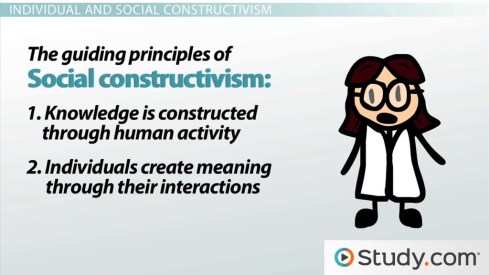
The debate over sex differences—biological or socially constructed—ignites fierce contention. Social constructivism posits that gender disparities stem from cultural norms, predicting their erosion in egalitarian societies. Yet, a startling paradox emerges: in nations with greater gender equality, certain differences amplify. This essay argues that biological factors—hormones, evolutionary pressures—significantly shape sex differences, revealed vividly when societal constraints loosen. However, the paradox’s complexity—some gaps narrow—demands nuance. Social constructivism’s overemphasis on socialization risks ideological blind spots, necessitating a balanced synthesis of nature and nurture.
Social constructivism asserts that gender differences are sculpted by relentless socialization: parents, schools, and media mold girls into nurturing roles, boys into assertive ones. Historical shifts, like women’s rising STEM participation—from 14% of U.S. engineering jobs in 1980 to 27% in 2020 (Women in STEM)—suggest that equal opportunities can diminish disparities. Cross-cultural variability in gender roles strengthens their case: if society shapes gender, egalitarian policies should align behaviors. This view, compelling in its focus on malleability, falters when data reveals growing differences in freer societies, hinting at deeper, innate forces.
The biological perspective counters with robust evidence: sex differences are rooted in hormones, brain structures, and evolutionary imperatives. Testosterone drives male-typical traits like risk-taking, while evolutionary pressures link women’s nurturing to reproductive success (Neuroscience and Sex/Gender). In egalitarian nations, these differences often widen—a gender-equality paradox. Stoet and Geary (2018) found larger STEM attitude gaps in gender-equal countries (Gender-Equality Paradox in STEM), while Falk and Hermle (2018) noted greater preference divergences in wealthier nations (Gender Differences in Preferences). Schmitt et al. (2008) observed amplified personality differences in prosperous cultures (Sex Differences in Personality). Freedom, it seems, unveils biology’s hand.
Yet, the paradox isn’t universal. Herlitz et al. (2024) found that while personality and cognitive gaps widen in egalitarian societies, math performance differences shrink, reflecting socialization’s role (Gender-Equality Paradox Review). Methodological critiques—replication issues in Stoet and Geary (2018), questionable indices in Falk and Hermle (2018)—urge caution. Social constructivists might argue that residual stereotypes persist, subtly shaping choices. Still, cross-cultural patterns suggest biology’s enduring influence. A balanced view integrates both: biology sets the foundation, socialization shapes its expression, with egalitarianism amplifying innate tendencies while narrowing specific gaps.
Social constructivism’s overreliance on culture risks a debacle: ignoring biology can lead to policies—like rigid quotas—that dismiss individual choice, undermining equality’s spirit. The gender-equality paradox corrodes its premise, revealing biology’s weight. Yet, socialization’s role in domains like math demands respect. Truth-seeking requires unity, not division—a synthesis of nature and nurture. By embracing this complexity, we can craft policies that honor human diversity, resisting ideological traps that obscure the intricate tapestry of sex differences.
Bibliography
-
Falk, A., & Hermle, J. (2018). Relationship of gender differences in preferences to economic development and gender equality. Science, 362(6412), eaas9899. https://science.sciencemag.org/content/362/6412/eaas9899
-
Herlitz, A., et al. (2024). A Systematic Review and New Analyses of the Gender-Equality Paradox. Perspectives on Psychological Science, 19(1), 147–165. https://pubmed.ncbi.nlm.nih.gov/38170215/
-
Hines, M. (2020). Neuroscience and Sex/Gender: Looking Back and Forward. Journal of Neuroscience Research, 98(4), 559–568. https://onlinelibrary.wiley.com/doi/10.1002/jnr.24609
-
Schmitt, D. P., Realo, A., Voracek, M., & Allik, J. (2008). Why can’t a man be more like a woman? Sex differences in Big Five personality traits across 55 cultures. Journal of Personality and Social Psychology, 94(1), 168–182. https://psycnet.apa.org/doi/10.1037/0022-3514.94.1.168
-
Stoet, G., & Geary, D. C. (2018). The gender-equality paradox in science, technology, engineering, and mathematics education. Psychological Science, 29(4), 581–593. https://journals.sagepub.com/doi/10.1177/0956797617741719
In recent years, we’ve seen protests that aren’t just peaceful marches but also aren’t as extreme as riots or wars. These actions are often called “mid-level violence.” Groups like activists and Antifa—a loosely organized movement against fascism—use them to fight what they see as unfair systems or dangerous ideas. This primer will explain what mid-level violence is, how it works, and why it can be both helpful and tricky.
What Is Mid-Level Violence and How Is It Used?
Mid-level violence is more intense than peaceful protests but less destructive than full-scale chaos. Think of actions like breaking windows, clashing with opponents in the street, or disrupting events. These groups use it to show they’re serious about their cause, whether it’s stopping oppression or challenging authority.
To make it work, they use specific tactics:
- Black umbrellas: Protesters hold these up to hide their faces from cameras, so police can’t easily identify them.
- Noisemakers: Loud horns or drums create confusion, overwhelming police or opponents.
- Filming confrontations: They record everything with their phones, especially if police or others react in a way that looks bad, to share their side of the story.
These tools help them push their message and protect themselves while doing it.
Why Does It Work Best With a Low-Information Audience?
These tactics are most effective when people don’t know the full story. Imagine you see a short video online of police pushing protesters. It might make you think the police are wrong—unless you saw what happened earlier, like protesters throwing things. This is called a “low-information audience”—people who only get a small piece of the puzzle.
Social media makes this even stronger. Videos spread fast, and people react before digging deeper. A clip that looks dramatic can get tons of attention, shaping opinions without showing the whole picture.
What Are the Risks?
While mid-level violence can grab attention and rally support, it has downsides. It can scare off people who aren’t sure where they stand—sometimes called “moderates.” If all they see is chaos, they might turn away from the cause. It can also make society more divided, as groups stop talking and start fighting instead. So, while it’s a powerful tool, it can backfire and make things harder to fix.
Why Understanding This Matters
Knowing how mid-level violence works helps us make sense of today’s protests. It reminds us to look past quick videos and find the full story. By doing that, we can figure out what’s really going on and work toward solutions that bring people together, not push them apart.

As a parent, you want your child’s education to focus on facts, skills, and values that prepare them for life. But in some classrooms, teachers are introducing queer theory—a radical ideology that challenges traditional norms about gender, sexuality, and society. This guide will help you understand what’s happening, why it’s a problem, and how you can take action to protect your child.
What Is the “Motte and Bailey” Tactic?
Imagine a castle with a strong, defensible tower (the “motte”) and a large, less defensible courtyard (the “bailey”). The motte and bailey tactic is a trick where someone makes a bold, controversial claim (the bailey) but, when challenged, retreats to a safer, less controversial claim (the motte). In education, this looks like:
- The Bailey (bold claim): Teachers say they’re “queering the curriculum” to challenge norms and promote radical ideas about gender and sexuality.
- The Motte (safe claim): When parents object, teachers retreat to saying they’re just being “inclusive” or “teaching diversity.”
This tactic makes it hard to argue against without seeming like you’re against inclusion. But inclusion and queerness are not the same thing, and it’s important to know the difference.
Key Terms You Need to Know
- Inclusivity: Making sure all students feel welcome and respected, regardless of their background (e.g., race, religion, disability). True inclusivity is about kindness and fairness, not ideology.
- Queer: Originally a slur, this term has been reclaimed by some to describe non-traditional sexual orientations or gender identities. In education, it often means challenging or rejecting societal norms.
- Queering the Curriculum: This means adding queer theory to lessons. Queer theory isn’t just about acceptance—it’s about questioning and destabilizing what’s considered “normal” (e.g., traditional family structures, biological sex). In elementary schools, this can confuse young children who need clear, factual learning.
Coercive and Deceptive Tactics Used in Schools
Some teachers push queer theory while dismissing parents’ concerns. Here are the main tactics they use:
- Hiding Behind “Inclusivity”: Teachers claim they’re just being inclusive, but they’re actually promoting queer ideology. For example, they might say they’re “teaching inclusively” to make it sound harmless, even though they’re introducing complex ideas about gender and sexuality.
- Using Critical Theory: Teachers use methods like critical literacy, which encourages students to question power and norms. This might sound educational, but it’s often a way to push activism instead of facts—too advanced and ideological for young kids.
- Ignoring Parents: When parents object, teachers might offer small compromises (like letting a child skip a lesson) but won’t change the overall curriculum. They dismiss concerns as unimportant or unreasonable.
- Leveraging Policy: Teachers use school rules or laws to defend their actions, even if parents disagree. This makes parents feel like they have no say.
These tactics are coercive because they force queer ideology into classrooms while sidelining parents. They’re deceptive because they hide behind feel-good words like “inclusivity” to avoid real discussion.
Why This Is a Problem
- It’s Not Age-Appropriate: Elementary students need to focus on basics like reading and math, not complex ideas about gender and sexuality.
- It Undermines Parental Authority: Parents should have a say in what their kids learn. Ignoring you breaks that trust.
- It Confuses Children: Challenging basic truths (like boys and girls) can unsettle young kids who need stability.
- It’s Activism, Not Education: Schools should teach facts, not push political ideas.
What Parents Can Do to Stop It
You have the power to protect your child’s education. Here’s how:
- Educate Yourself:
- Learn what queer theory is and how it’s used in schools. Look up articles or videos online.
- Ask for your school’s curriculum details—lesson plans, books, anything they’re teaching.
- Talk to Teachers:
- Ask clear questions: “What are you teaching about gender or sexuality? Why is this in the curriculum?”
- Stay calm but firm: “I’m all for kindness, but I’m worried about ideology in the classroom.”
- Engage with School Boards:
- Go to meetings and speak up. Bring examples of what’s being taught.
- Suggest focusing on core skills instead of controversial topics.
- Form Parent Groups:
- Team up with other parents who feel the same way.
- Share info and plan together—maybe write a group letter to the school.
- Monitor What Your Child Learns:
- Talk to your kid about their day. Check their homework or classwork.
- If something seems off, write it down and raise it with the teacher.
- Use Legal Resources:
- If the school won’t listen, talk to a lawyer who knows education law.
- Look up your state’s rules on parental rights.
- Advocate for Policy Changes:
- Push for rules that let parents approve or get notified about sensitive topics.
- Back school board members who care about parents’ voices.
- Consider Alternatives:
- If the school won’t budge, look into private schools or homeschooling.
- Find options that match your values and focus on real learning.
Final Thoughts
You’re your child’s best defender. Don’t let schools brush you off or confuse you with buzzwords. Demand clear answers and a focus on age-appropriate, fact-based education. By staying informed and active, you can keep your child’s classroom a place for learning—not ideology.

Key Points(TL;DR)
- The pride movement of the 1970s and 1980s focused on securing legal and social acceptance for lesbian, gay, and bisexual (LGB) individuals, achieving significant milestones like same-sex marriage legalization.
- With gay marriage widely accepted in the West, the original goals of the pride movement were largely fulfilled, suggesting a natural conclusion to its initial mission.
- The rise of queer theory and postmodern ideologies in the 1990s shifted the movement’s focus toward challenging all societal norms, diverging from its original aim of integration.
- Some critics argue that this shift, influenced by concepts like David Halperin’s “queer as an identity without essence,” has led to public behaviors that challenge traditional norms of decency.
- While personal freedom is valued, there is debate over whether certain expressions should be limited in public and professional spaces, reflecting tensions between individual rights and societal expectations.
Introduction to the Original Pride Movement
The pride movement, which gained momentum in the 1970s and 1980s, was a transformative force in advocating for the rights and acceptance of lesbian, gay, and bisexual (LGB) individuals in Western societies. Sparked by the 1969 Stonewall Riots, the movement crystallized with the first gay pride parade in 1970, known as the Christopher Street Liberation Day. This period saw significant achievements, such as the election of openly gay officials like Kathy Kozachenko and Harvey Milk, and the 1973 decision by the American Psychiatric Association to declassify homosexuality as a mental illness. The movement’s central aim was to secure legal recognition and social acceptance, with a particular focus on achieving same-sex marriage rights, a goal realized in many Western nations by the 2000s, notably with the U.S. Supreme Court’s 2015 ruling in Obergefell v. Hodges (History of Gay Rights).
Achievement of Core Goals
The legalization of same-sex marriage marked a pivotal victory for the LGB community, fulfilling a core objective of the original pride movement. By 2015, when the U.S. Supreme Court affirmed same-sex marriage as a constitutional right, many legal and social barriers that once marginalized LGB individuals had been dismantled. This milestone suggested that the movement had largely achieved its aim of integrating LGB individuals into societal frameworks, allowing them to live openly without systemic discrimination. However, rather than marking a point of closure, this success coincided with a significant ideological shift within the movement, redirecting its focus from acceptance to broader, more radical objectives.
Ideological Shift and Queer Theory
In the 1990s, the emergence of queer theory and postmodern ideologies reshaped the pride movement’s trajectory. Unlike the earlier focus on securing specific rights for LGB individuals, queer theory, as articulated by scholars like David M. Halperin, emphasizes the fluidity of identities and challenges all forms of normativity, including societal structures beyond sexuality. This perspective views “queer” not as a fixed identity but as a positionality that opposes dominant norms, fundamentally altering the movement’s goals from integration to deconstruction of societal frameworks (Queer Theory). Critics argue this shift has led to a movement that prioritizes subversion over acceptance, creating tension with the original pride ethos.
Queer as an Identity Without Essence
David Halperin’s concept of “queer” as an “identity without an essence” encapsulates this new direction, defining “queer” as “whatever is at odds with the normal, the legitimate, the dominant” (Saint Foucault). This framework has broadened the pride movement to include expressions that challenge traditional norms, such as public nudity or other behaviors some view as extreme. Critics contend that these displays, often seen at modern pride events, diverge from the movement’s original focus on dignity and acceptance, instead promoting a radical opposition to societal standards that can feel coercive to those who value traditional norms of public conduct (The Tyranny of Queer Theory).
Balancing Freedom and Public Norms
While personal freedom is a cornerstone of democratic societies, the evolution of the pride movement raises questions about the appropriateness of certain expressions in public and professional spaces. The original pride movement sought to ensure individuals could live authentically without fear of persecution, a goal many believe has been achieved in much of the West. However, the current movement’s emphasis on challenging all norms has led to debates about whether behaviors like public nudity or unconventional gender expressions should be normalized in shared spaces. Critics argue that while private expression is a right, imposing such behaviors in public settings can undermine the movement’s original intent, alienating those who supported its initial goals and prompting questions about whether the essence of “pride” has been lost.
Evolution of the Pride Movement: From Acceptance to Ideological Shift
Origins and Achievements of the Pride Movement
The pride movement, which took shape in the 1970s and 1980s, was a response to decades of systemic discrimination against lesbian, gay, and bisexual (LGB) individuals. The 1969 Stonewall Riots in New York City served as a catalyst, galvanizing activists to demand equal rights and societal acceptance. The first gay pride parade, held in 1970 as the Christopher Street Liberation Day, marked a significant step toward visibility and empowerment (History of Gay Rights). During the 1970s, the movement achieved notable milestones, including the election of Kathy Kozachenko to the Ann Arbor City Council in 1974, making her the first openly gay elected official in the United States, and Harvey Milk’s election in 1977 as a San Francisco supervisor. Another landmark was the American Psychiatric Association’s 1973 decision to remove homosexuality from its list of mental disorders, a critical step toward destigmatization (Milestones in Gay Rights). The 1980s, however, were overshadowed by the HIV/AIDS crisis, which shifted some focus to health advocacy while reinforcing the movement’s commitment to visibility and rights. The ultimate goal of legalizing same-sex marriage was realized in many Western countries, with a defining moment in the United States when the Supreme Court’s 2015 Obergefell v. Hodges decision affirmed marriage equality as a constitutional right, signaling the fulfillment of a core objective of the original pride movement.
Fulfillment of Original Goals
The legalization of same-sex marriage represented a triumph for the LGB community, effectively achieving the pride movement’s primary aim of securing legal and social acceptance. By 2015, same-sex marriage was recognized across much of the Western world, dismantling significant legal barriers that had marginalized LGB individuals. This milestone allowed many to live openly, marry, and access rights previously denied, such as inheritance and healthcare benefits. Social attitudes also shifted, with increasing acceptance of LGB identities in mainstream culture. This success suggested that the pride movement, as originally conceived, had accomplished its mission of integrating LGB individuals into societal frameworks. However, rather than marking a point of closure, this achievement coincided with a transformation in the movement’s focus, driven by new ideological currents that diverged from its foundational goals.
Rise of Queer Theory and Postmodernism
In the 1990s, the pride movement underwent a significant ideological shift with the emergence of queer theory and postmodern leftism. Queer theory, rooted in post-structuralist critical theory, challenges the notion of fixed identities and normativity, particularly heteronormativity. Scholars like Michel Foucault, Gloria Anzaldúa, and Judith Butler contributed to this framework, which views gender and sexuality as social constructs rather than essential truths (Queer Theory). Unlike the earlier pride movement’s focus on securing specific rights for LGB individuals, queer theory advocates for a broader deconstruction of societal norms, emphasizing fluidity and diversity in identities. This shift redirected the movement from seeking inclusion within existing structures to challenging those structures entirely, a departure that some critics argue has diluted the original focus on acceptance and equality (The Tyranny of Queer Theory).
David Halperin’s Queer Identity Without Essence
Central to this ideological shift is David M. Halperin’s concept of “queer” as an “identity without an essence,” articulated in his 1995 book Saint Foucault. Halperin defines “queer” as “whatever is at odds with the normal, the legitimate, the dominant,” suggesting it is not tied to any specific group or characteristic but rather exists in opposition to societal norms (Saint Foucault). This perspective has profoundly influenced the modern pride movement, broadening its scope to include a wide range of identities and expressions that challenge traditional norms. As a result, pride events have increasingly featured behaviors such as public nudity, BDSM displays, and other unconventional expressions, which some view as radical departures from the movement’s original focus on dignity and acceptance. Critics argue that this approach, rooted in Halperin’s framework, promotes a form of anti-normativity that can feel coercive, particularly when it demands public acceptance of behaviors many find inappropriate for shared spaces.
Contemporary Critiques and Public Space Concerns
The evolution of the pride movement has sparked significant debate about its current direction and impact. Critics contend that the incorporation of queer theory’s anti-normative stance has led to a movement that prioritizes subversion over integration, often at the expense of the broader social acceptance sought by earlier activists. Modern pride events, which sometimes include explicit displays or unconventional gender expressions, are seen by some as attempts to normalize behaviors that challenge traditional norms of public decency. This shift has been criticized as alienating those who supported the original goals of the pride movement, such as legal equality and social acceptance (The Tyranny of Queer Theory). Furthermore, the movement’s alignment with corporate interests, evident in the commercialization of Pride Month, has raised concerns about its loss of radical edge, transforming it into a mainstream spectacle that may dilute its political significance (Queer’ing Corporate Pride). The debate also touches on the balance between personal freedom and public responsibility, with some arguing that while individuals should have the right to express themselves privately, imposing such expressions in public or professional settings can undermine social cohesion and the movement’s original intent.
Balancing Freedom and Societal Norms
The tension between personal freedom and societal expectations lies at the heart of contemporary critiques of the pride movement. The original movement fought for the right of LGB individuals to live authentically without persecution, a goal largely achieved in many Western societies. However, the current movement’s emphasis on challenging all norms, as influenced by queer theory, has led to public expressions that some find excessive or inappropriate, such as public nudity or behaviors associated with niche subcultures. While personal freedom is a cornerstone of democratic societies, there is a growing sentiment that such expressions should be confined to private settings to respect shared public spaces. This perspective argues that the movement’s shift toward enforcing new norms, such as mandatory pronoun usage or the promotion of gender identities some view as anti-scientific, risks alienating supporters of the original pride movement and undermining its legacy of fostering inclusion and dignity.
Conclusion
The pride movement has undergone a profound transformation since its inception in the 1970s and 1980s. Initially focused on securing legal and social acceptance for LGB individuals, it achieved significant victories, most notably the legalization of same-sex marriage. However, the rise of queer theory and postmodern ideologies has redirected the movement toward a broader, more radical agenda that challenges all societal norms. David Halperin’s concept of “queer” as an identity without essence has contributed to this shift, leading to public expressions that some view as divergent from the movement’s original goals. While personal freedom remains a fundamental value, the debate over the appropriateness of certain behaviors in public spaces highlights a perceived loss of the pride movement’s original essence. As the movement continues to evolve, it faces the challenge of balancing individual expression with societal expectations, prompting reflection on whether the “pride” in pride remains true to its founding principles.
| Aspect | Original Pride Movement (1970s-1980s) | Modern Pride Movement (Post-1990s) |
|---|---|---|
| Primary Goal | Legal and social acceptance for LGB individuals, particularly same-sex marriage | Deconstruction of societal norms, including gender and sexuality norms |
| Key Achievements | Removal of homosexuality as a mental disorder (1973), election of openly gay officials, same-sex marriage legalization (2015 in the U.S.) | Increased visibility of diverse identities, mainstream corporate support for Pride Month |
| Ideological Basis | Civil rights and equality within existing societal frameworks | Queer theory and postmodernism, emphasizing anti-normativity |
| Public Expressions | Marches and parades focused on visibility and dignity | Inclusion of public nudity, BDSM, and other unconventional displays |
| Critiques | Faced opposition from conservative groups and societal stigma | Criticized for overreach, commercialization, and alienation of original supporters |
Key Citations
Introduction
Canada’s provincial and national parks are cherished public assets, symbolizing the nation’s commitment to preserving its natural heritage and fostering a shared sense of identity among its citizens. These spaces, funded by taxpayers and managed for the public good, serve as venues for recreation, education, and connection with the natural environment. However, in 2025, temporary closures of prominent British Columbia (BC) parks, such as Joffre Lakes Provincial Park and Botanical Beach in Juan de Fuca Park, have ignited significant controversy. These closures, primarily initiated by First Nations to facilitate cultural practices, environmental recovery, and reconciliation efforts, restrict access predominantly to non-Indigenous visitors. While the objectives of these closures—cultural preservation, environmental protection, and reconciliation—are undeniably important, this essay argues that restricting park access based on group identity is a divisive practice that does not benefit all Canadians. Canada’s parks are intended for all citizens, not solely for particular groups. By presenting the strongest arguments in favor of these closures and subsequently refuting them, this essay advocates for supererogatory and unifying policies that respect Indigenous rights while ensuring equitable access for all Canadians.
Steel Manning the Case for Park Closures
The rationale for the temporary closures of BC parks is grounded in compelling cultural, environmental, and reconciliatory imperatives. First, these closures enable First Nations to exercise their constitutionally protected rights to reconnect with their traditional territories through cultural and spiritual practices. For instance, at Joffre Lakes Park, the Lil’wat and N’Quatqua First Nations have established “Reconnection Periods” to engage in activities such as hunting, fishing, harvesting medicines, and spiritual ceremonies, which require privacy and exclusivity (CityNews). Second, the closures address significant environmental degradation caused by a surge in park visitors. Joffre Lakes experienced a 222% increase in annual visitors from 2010 to 2019, reaching nearly 200,000, resulting in trampled vegetation, litter, and trail congestion (The Narwhal). Temporary restrictions allow the land to recover, ensuring its sustainability for future generations. Third, these closures align with broader reconciliation efforts under the Declaration on the Rights of Indigenous Peoples Act (DRIPA), recognizing historical injustices and supporting Indigenous stewardship of their ancestral lands (BC Gov News). Collectively, these arguments present a robust case for the closures, emphasizing legal obligations, ecological necessity, and moral imperatives.
Refuting the Case for Closures
Despite the strength of these arguments, the approach of restricting park access based on group identity is fundamentally flawed and divisive. Canada’s parks are public spaces, established and maintained for the benefit of all citizens, regardless of background. Restricting access to non-Indigenous visitors creates a perception of inequality, where certain groups are prioritized over others, fostering resentment and undermining social cohesion. The closure of Joffre Lakes for over 100 days in 2025, including peak seasons, denies many Canadians the opportunity to experience this iconic destination, impacting not only individual enjoyment but also local economies reliant on tourism (CityNews). Critics argue that such policies set a troubling precedent, potentially allowing widespread restrictions across BC’s public lands, given that most of the province is claimed by Indigenous groups (National Post). Moreover, the environmental rationale, while valid, can be addressed through less exclusionary measures. For instance, implementing visitor quotas, reservation systems, or enhanced trail management could mitigate ecological impacts without barring non-Indigenous visitors entirely. Similarly, cultural practices could be accommodated by designating specific areas or times for exclusive use, rather than closing entire parks. These alternatives would achieve the same objectives—cultural preservation and environmental protection—while upholding the principle that parks are for all Canadians.
Advocating for Supererogatory and Unifying Policies
Rather than resorting to divisive measures, Canada should pursue supererogatory and unifying policies that go beyond legal obligations to promote inclusivity and national unity. Supererogatory policies, which exceed minimum requirements to promote goodwill, can bridge divides and create a shared sense of stewardship over public spaces. For example, parks could establish collaborative management frameworks involving both Indigenous and non-Indigenous stakeholders to ensure that cultural, environmental, and public access needs are balanced. Such models have been successfully implemented in other contexts, such as co-management agreements in national parks (Parks Canada). Additionally, parks could designate specific zones or time periods for cultural activities, allowing First Nations to practice their traditions without excluding others. Educational programs could also be introduced to inform visitors about Indigenous heritage, fostering mutual respect and understanding. These approaches would not only respect Indigenous rights but also reinforce the idea that Canada’s parks are a shared heritage, accessible to all citizens. By prioritizing inclusivity, such policies would strengthen social cohesion and mitigate the tensions exacerbated by exclusionary closures.
Addressing Broader Implications
The controversy surrounding BC park closures reflects broader challenges in balancing Indigenous rights with public access in a diverse nation. Critics of the closures, such as those cited in the National Post, argue that decisions made by small Indigenous governments without a democratic relationship to the broader population undermine public interest (National Post). This perception is amplified by public backlash, with some labeling the closures as “apartheid, Canadian-style” on platforms like X (Daily Mail). While such rhetoric is inflammatory, it underscores the need for transparent and inclusive decision-making processes. Conversely, supporters emphasize that these closures are a necessary step toward reconciliation, given the historical dispossession of Indigenous lands (The Narwhal). To navigate these tensions, Canada must adopt policies that acknowledge both the unique rights of Indigenous peoples and the collective rights of all citizens to access public spaces. Failure to do so risks deepening divisions and eroding the unifying potential of Canada’s parks.
Conclusion
In conclusion, while the temporary closures of BC parks like Joffre Lakes and Botanical Beach are driven by important cultural, environmental, and reconciliatory goals, their exclusionary nature is divisive and does not serve the best interests of all Canadians. Canada’s parks are public assets, intended to unite citizens through shared access to natural beauty and heritage. By restricting access based on group identity, these closures create inequality and foster resentment, undermining national unity. Instead, Canada should embrace supererogatory and inclusive policies that respect Indigenous rights while ensuring equitable access for all. Collaborative management, designated cultural zones, and enhanced visitor management offer viable alternatives that balance competing interests without exclusion. By prioritizing unity and inclusivity, Canada can uphold its commitment to both reconciliation and the principle that its parks are for every citizen.

Key Details of Park Closures
| Park Name | First Nations Involved | Closure Periods (2025) | Reasons for Closure |
|---|---|---|---|
| Joffre Lakes Provincial Park | Lil’wat and N’Quatqua | April 25–May 16, June 13–27, Aug 22–Oct 23 (over 100 days total) | Cultural practices (hunting, fishing, spiritual activities), environmental recovery |
| Juan de Fuca Park (Botanical Beach) | Pacheedaht | 24 hours over May 24 weekend | Harvest marine resources, cultural reconnection |
| Gulf Islands National Park Reserve | Not specified | Indefinite from April 15 | Protect natural and cultural resources |
| Pacific Rim National Park Reserve (Willis Island) | Not specified | Entire 2025 season | Management, cultural purposes, safety, infrastructure repairs |
References
- CityNews. (2025). Joffre Lakes Park to close again for First Nations reconnection. Retrieved from https://vancouver.citynews.ca/2025/05/26/joffre-lakes-closures-to-continue/
- The Narwhal. (2025). Why are First Nations closing B.C. parks? Retrieved from https://thenarwhal.ca/bc-parks-first-nations-closures-racism/
- National Post. (2025). Non-Indigenous visitors being turned away from B.C. public parks. Retrieved from https://nationalpost.com/opinion/non-indigenous-visitors-being-turned-away-from-b-c-public-parks
- National Post. (2025). Closures of B.C. parks to non-Indigenous visitors a sign of what’s to come. Retrieved from https://nationalpost.com/opinion/closures-of-b-c-parks-to-non-indigenous-visitors-a-sign-of-things-to-come
- @NVanCaroline. (2025). X Post on Joffre Lakes closures. Retrieved from https://x.com/NVanCaroline/status/1926677179217089001
- BC Gov News. (2025). B.C. supports land stewardship at Pipi7íyekw/Joffre Lakes Park. Retrieved from https://news.gov.bc.ca/releases/2025ENV0016-000364
- Daily Mail. (2025). Canada blocking millions from parks over ‘apartheid’ scheme. Retrieved from https://www.dailymail.co.uk/news/article-14757639/outrage-canada-beauty-spots-closed-natives-reconnect-land.html
- Parks Canada. (n.d.). Official website. Retrieved from https://www.canada.ca/en/parks-canada.html
Frantz Fanon’s seminal work, The Wretched of the Earth, provides a framework for understanding decolonization as a radical, often violent, restructuring of society, which some activists in Canada have adopted to challenge the foundations of Western civilization. Fanon argues that decolonization is inherently disruptive, stating, “Decolonization, which sets out to change the order of the world, is, obviously, a program of complete disorder” (Fanon, 1963, p. 36). In the Canadian context, this rhetoric is echoed in calls to dismantle institutions, reject Eurocentric histories, and prioritize Indigenous frameworks over established systems. A recent example is the controversy surrounding the Ontario Grade 9 Math Curriculum, where the inclusion of anti-racism and decolonization language—such as claims that mathematics has been used to “normalize racism”—led to significant backlash and eventual removal of such content (Global News, 2021). While presented as a pursuit of justice, this approach often amplifies societal fractures, pitting Indigenous and non-Indigenous groups against one another. By framing Canada’s history solely as a colonial oppression narrative, activists risk fostering resentment and division, undermining the shared societal cohesion necessary for a functioning democracy. This strategy aligns with Fanon’s vision of upending the status quo but ignores the complexities of Canada’s multicultural fabric, where reconciliation and cooperation have been attempted through dialogue and policy, however imperfectly.
The activist push for decolonization in Canada, inspired by Fanon’s ideas, often employs a rhetoric of moral absolutism that vilifies Western institutions while ignoring their contributions to global stability and progress. Fanon writes, “The colonial world is a Manichaean world” (Fanon, 1963, p. 41), casting the colonizer and colonized in stark, irreconcilable opposition. In Canada, this binary is reflected in demands to erase symbols of Western heritage—such as statues of historical figures or traditional educational curricula—in favor of an exclusively Indigenous narrative. For instance, Ryan McMahon’s 12-step guide to decolonizing Canada proposes radical changes, including the return of land to Indigenous peoples and reallocating 50% of natural resource export revenues to Indigenous nations (CBC Radio, 2017). Such proposals, while framed as reconciliation, can be seen as divisive and impractical by many Canadians, fostering a sense of cultural erasure among non-Indigenous Canadians while creating unrealistic expectations of systemic overhaul. By framing decolonization as a zero-sum conflict, activists inadvertently sow discord, weakening the social contract that binds diverse communities. Instead of fostering unity, this tactic mirrors Fanon’s call for a radical break, which may destabilize the very society it seeks to reform, playing into a broader narrative of internal collapse rather than constructive change.
Ultimately, the application of Fanon’s decolonization framework in Canada serves as a divisive tool that threatens the stability of Western societies by prioritizing ideological purity over pragmatic coexistence. Fanon asserts, “For the colonized, life can only spring up again out of the rotting corpse of the colonizer” (Fanon, 1963, p. 93), a statement that implies destruction as a prerequisite for renewal. In Canada, this translates into activist strategies that reject compromise, demanding sweeping societal transformations without acknowledging the complexities of a nation built on diverse contributions. A historical example is the Mackenzie Valley Pipeline Inquiry, where concerns over Indigenous land rights led to a 10-year moratorium on the project, delaying economic development and highlighting how decolonization efforts can significantly impact community relations and national progress (Berger, 1977). By weaponizing decolonization to vilify Western values, these efforts risk eroding the democratic principles—freedom, rule of law, and pluralism—that have enabled Canada’s relative stability. Rather than unifying society around shared goals, this approach fuels polarization, aligning with a broader agenda to dismantle Western institutions from within under the guise of justice, leaving little room for reconciliation or mutual progress.
Key Citations
- The Wretched of the Earth by Frantz Fanon
- Ontario removes anti-racism text from math curriculum preamble
- Ryan McMahon’s 12-step guide to decolonizing Canada
- Northern Frontier, Northern Homeland: Mackenzie Valley Pipeline Inquiry
- Mackenzie Valley Pipeline Proposals
- Decolonization at BC’s Office of the Human Rights Commissioner
- Catholic church north of Edmonton destroyed in fire
- School curriculum in Canada disputes view of math as objective











 bleatmop
 Mystro
 The Arbourist


 Dead Wild Roses
Your opinions…