
You are currently browsing the category archive for the ‘Education’ category.
Overlay recent events in Canada with what has happened in history. This is ride we do NOT want to be on.
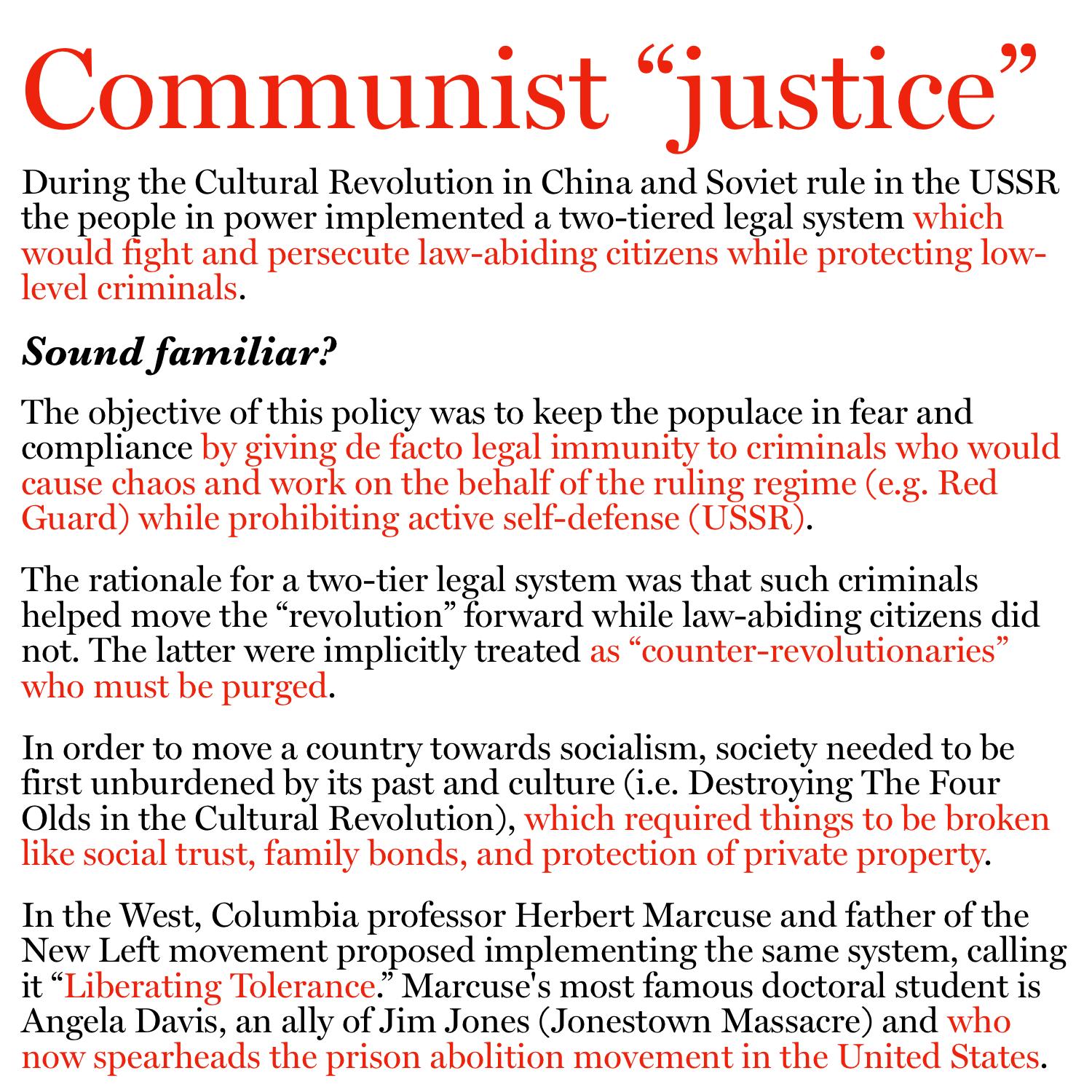
In the machinery of modern media, false narratives do not emerge spontaneously. They are the product of deliberate groundwork: the careful shaping of public perception before an event occurs. Borrowing from military doctrine this tactic is called operational preparation of the environment (OPE) which are defined as activities that enhance situational awareness and set conditions for future operations.1 When adapted to the information domain, OPE becomes narrative control: seeding frames, priming audiences, and conditioning reflexive responses that can be triggered later for maximum effect.
Adversaries whether geopolitical rivals, activist networks, or opportunistic elites exploit this tactic by sowing division. The result is a public primed for outrage, where engineered crises and isolated incidents ignite prearranged narratives. Spotting these patterns is the first step toward resisting them.
Repetition and Priming
Narrative preparation often begins with repetition. Specific terms are echoed across platforms until they seem self-evident. Phrases like “stochastic terrorism” or “rising anti-LGBTQ hate” do not spread organically; they are priming devices. For instance, drag events framed as battlegrounds for “bigotry” and “inclusion” gain prominence not because of isolated incidents alone, but because media amplification primes audiences to see a pattern of systemic oppression.2
Consider also the long arc of the “racist policing” narrative. From Ferguson in 2014, through the cases of Michael Brown and Breonna Taylor, to the killing of George Floyd in 2020, framing evolved but the groundwork ensured predictable outrage.3 Media studies confirm that such coverage often prioritizes framing over fact, shaping reflexive responses rather than reasoned analysis.4
Selective Amplification
Once the ground is prepared, selective amplification takes over. An isolated incident for instance, graffiti on a council office, a slur at a rally—balloons into emblematic proof of a “hate wave.” Counter-evidence, such as a shooter’s non-binary identity, often disappears from coverage because it disrupts the narrative arc.5
This is not journalism as truth-seeking; it is journalism as engineering. Narrative amplification corrodes credibility, manufacturing crises that serve political and cultural goals. International rivals such as Russia and China employ similar techniques, weaponizing narrative dominance in conflicts and domestic politics alike.6
Case Study: Edmonton Public Schools
A recent example illustrates how this process operates in Canada. In 2025, the Edmonton Public School Board (EPSB) was accused of “book banning” after it questioned the suitability of certain titles with explicit sexual themes. Activist networks and sympathetic media framed the issue as a matter of “queer affirmation” and censorship. Yet, as I argued in a prior essay, this was not about censorship at all but about narrative warfare; casting parental concerns as bigotry while advancing a predetermined ideological script.7 The case demonstrates how operational preparation of the environment works at the local level: emotional language, repetition of “book ban” rhetoric, and selective omission of context primed audiences for outrage.
Building Inoculation
What does media literacy look like in this landscape? It means detecting the telltale signs of OPE:
- Uniform Surges: Are identical phrases appearing simultaneously across news outlets and social media?
- Emotive Frames: Does coverage push outrage before evidence is fully presented?
- Suppressed Counterpoints: Are inconvenient facts downplayed or omitted?
- Pre-seeded Narratives: Does the framing seem rehearsed, echoing earlier campaigns?
The solution is not paranoia but discipline. Verify facts independently, resist outrage cycles, and name the tactic when you see it—“this is OPE unfolding.” Exposing the method robs it of its power. In the contested terrain of fifth-generation warfare, awareness is both shield and sword.
End Notes
- U.S. Department of Defense, Dictionary of Military and Associated Terms, s.v. “Operational Preparation of the Environment.”
- Britannica, “Stochastic Terrorism,” and GLAAD, “Accelerated Rhetoric and Anti-LGBTQ Incidents” (2023).
- The Conversation, “Media Narratives and the George Floyd Protests” (2020).
- Reny, T. & Newman, B. (2021). “The Opinion-Mobilizing Effect of Frames: Media Narratives in the Black Lives Matter Movement.” American Political Science Review.
- NBC News, “Nonbinary Identity of Colorado Springs Shooting Suspect Raises Questions” (2022).
- Canadian International Governance Innovation (CIGI), “Narrative Dominance in the Information Age” (2021); Army University Press, “Information Operations and the Modern Battlespace” (2020).
- The Arbourist, “Book Bans and Narrative Warfare: How the Edmonton Public School Board Plays the Queer Pedagogy Script,” Dead Wild Roses (August 30, 2025).
Picture a library, its shelves stripped of Orwell and Atwood, replaced by outrage: this is the activist’s trap. Critical social constructivism—commonly branded as “woke ideology”—does not depend on truth-seeking but on the imposition of narrative, luring well-meaning observers into excusing captured institutions as merely inept (Kincheloe, 2005). To extend such charity is to enable agendas that corrode trust in public institutions and divide communities.
The Edmonton Public School Board’s (EPSB) recent book removal controversy exemplifies this dynamic. In late August 2025, a leaked list of more than 200 titles slated for removal from K–12 school libraries ignited national outrage. The list included canonical works such as Margaret Atwood’s The Handmaid’s Tale and Aldous Huxley’s Brave New World. Media coverage swiftly framed the list as a right-wing purge: a literary witch-hunt torching academic freedom and signaling Alberta’s dystopian slide.
Yet this spectacle obscures the actual policy. In July 2025, Education Minister Demetrios Nicolaides issued a directive requiring school boards to remove sexually explicit materials by October 1, 2025, to ensure age-appropriate resources in K–12 libraries (Alberta Ministry of Education, 2025). The directive does not ban classics nor prohibit parents from providing controversial works privately. Its scope is limited: public schools, funded by taxpayers, must not circulate sexually explicit material to children.
Seen in this light, the EPSB’s list appears less a bureaucratic stumble than a narrative maneuver. By placing revered classics alongside contested titles such as Maia Kobabe’s Gender Queer—which contains explicit illustrations of sexual acts—and Jonathan Evison’s Lawn Boy, which describes sexual encounters between minors, the Board ensured the reaction would focus on “censorship” rather than explicit content. The outrage generated by the supposed “banning” of Atwood and Huxley distracts from the substantive question: whether K–12 libraries should carry graphic sexual material at all.
To be fair, some argue this was an honest misstep. Officials under pressure may have over-applied vague guidelines, fearing punishment if they erred on the side of permissiveness. From this perspective, the inflated list reflects incompetence, not ideology. This interpretation has surface plausibility—and acknowledging it is crucial. Yet it falters when weighed against the broader intellectual context.
The precise inclusion of classics alongside sexually explicit texts mirrors the rhetorical tactics of queer pedagogy, which openly embraces provocation as a teaching tool. In their influential article Drag Pedagogy: The Playful Practice of Queer Imagination in Early Childhood, Harper Keenan and Lil Miss Hot Mess (2021) describe initiatives such as Drag Queen Story Hour as “strategic defiance” designed to “disrupt normative understandings of childhood” (p. 433). Drawing on José Esteban Muñoz’s Cruising Utopia (2009), they frame queerness as a “future-oriented ideality” (p. 1), using performance and play to challenge authority, destabilize binary categories, and cultivate “embodied kinship” rather than passive empathy (Keenan & Lil Miss Hot Mess, 2021, pp. 434–436).
This framework is not hypothetical. It explicitly advocates the use of aesthetics, provocation, and imaginative unruliness to reshape children’s perceptions. In their words, “Drag pedagogy embraces an unruly vision of childhood as a site of potentiality” (p. 437). Texts like Gender Queer or Lawn Boy, with their focus on sexual exploration and destabilization of normative boundaries, can be read as curricular extensions of this agenda. Their presence in K–12 libraries is not incidental but reflects a coherent intellectual project to prioritize queer cultural forms over developmental appropriateness.
From this perspective, the EPSB’s list functions as a narrative cudgel. By spotlighting Orwell and Atwood, defenders can recast the government’s directive as authoritarian censorship while obscuring the ideological drive to embed queer pedagogy in public institutions. The effect is the same whether activists deliberately curated the list or whether bureaucrats, steeped in activist frameworks, reproduced them unconsciously: outrage is amplified, and the debate is reframed on activist terms.
This is the trap of charitable interpretation. To dismiss the list as simple incompetence is to ignore its functional alignment with queer pedagogy’s playbook: provoke, inflate, and obscure. Even if intent cannot be definitively proven, the effect is unmistakable—a shift of public discourse away from the legitimate question of protecting children’s developmental environments and toward a defensive posture about “book banning.”
The consequences are corrosive. Communities fracture, as defenders of childhood innocence are painted as censors, and activists wield “inclusivity” as a battering ram against parental concerns. Public trust in schools erodes further. And children—the supposed beneficiaries—are caught in the crossfire of ideological contestation.
Children deserve age-appropriate materials in their school libraries—full stop. No law prevents parents from accessing contested works privately, but schools should not be battlegrounds for ideological conquest. The EPSB controversy demonstrates how critical social constructivism (woke) thrives not on truth but on narrative imposition. To resist this, we must reject the activist trap of charitable interpretation and confront directly how such narratives are engineered. Only by doing so can we restore unity, rebuild trust, and protect the integrity of public education.

“Queer is by definition whatever is at odds with the normal, the legitimate, the dominant. There is nothing in particular to which it necessarily refers. It is an identity without an essence.”
(Halperin, 1995, p. 62)
References
-
Alberta Ministry of Education. (2025). Ministerial Order No. 2025-07: Age-Appropriate Resources in School Libraries. Edmonton, AB: Government of Alberta. Retrieved from https://www.alberta.ca/ministerial-orders
-
Keenan, H. B., & Lil Miss Hot Mess. (2021). Drag pedagogy: The playful practice of queer imagination in early childhood. Curriculum Inquiry, 51(5), 433–452. https://doi.org/10.1080/03626784.2020.1864621
-
Kincheloe, J. L. (2005). Critical constructivism. New York: Peter Lang.
-
Muñoz, J. E. (2009). Cruising utopia: The then and there of queer futurity. New York: NYU Press.
Taken together, Kincheloe’s twelve assumptions map the intellectual terrain from which contemporary woke ideology emerged. His framework asserts that reality is socially constructed, knowledge is saturated with power, neutrality is impossible, and subjugated voices must be centered. From these premises flow the characteristic behaviors of woke activism: deconstruction of norms, suspicion of institutions, censorship of dissent, and perpetual reconstruction of identity.
The compassionate rhetoric surrounding these practices often conceals coercion. A worldview built on the denial of objectivity readily drifts toward authoritarian enforcement of constructed “truths.” Inclusivity is pursued through exclusion; humility is displaced by moral arrogance.
The way forward lies not in mimicking these tactics but in reaffirming the value of shared standards. Truth tested by evidence, dialogue grounded in reason, and compassion tempered by humility remain essential to democratic life. Kincheloe’s Primer thus serves as a cautionary text: it demonstrates how theories of knowledge can become ideologies of control when detached from the pursuit of truth.
Synthesis.
Woke ideology persists because it offers moral certainty in a fractured world. Yet resistance requires reclaiming dialogue, evidence, and objectivity as the common ground of human community.

Notes
-
Kincheloe, Critical Constructivism Primer, 2–16.
Kincheloe’s final principles (points 10–12) intensify his critique of traditional epistemology. They call for elevating marginalized knowledge, rejecting neutrality, and valorizing subjugated traditions. These assumptions directly shape woke commitments to “decolonization,” epistemic relativism, and the politics of allyship.
10. Democratic and evocative knowledges.
Kincheloe calls for “democratic knowledge” that foregrounds the perspectives of historically excluded groups.¹ This principle justifies replacing established scientific and historical frameworks with indigenous epistemologies or other alternative systems. In policy debates, the effect is to amplify fringe perspectives under the rubric of “decolonization,” often at the expense of consensus.
11. No neutrality in knowledge.
“All knowledge is value-laden,” Kincheloe insists, and thus neutrality is impossible.² For the woke, this axiom explains why even empirical claims may be branded as “white supremacist” or “cisnormative.” The denial of objectivity fosters a sense of urgency, making protest and disruption appear as necessary responses to an inherently politicized reality.
12. Valorization of subjugated knowledge.
Kincheloe highlights cultural traditions such as the “blues idiom” as examples of counter-hegemonic epistemology.³ Woke discourse extends this by insisting that majority views are intrinsically oppressive, while marginalized voices hold unique epistemic authority. The result is the familiar practice of “allyship,” where individuals signal moral virtue by amplifying minority perspectives and discounting majority ones.
Synthesis.
These principles explain why woke discourse rejects neutrality, privileges marginalized epistemologies, and transforms allyship into a moral performance. What emerges is an inversion of authority: dominant views are treated as oppressive by default, while marginalized ones are sanctified regardless of content.
Notes
-
Kincheloe, Critical Constructivism Primer, 14.
-
Ibid., 15.
-
Ibid., 16.
Kincheloe’s middle triad (points 7–9) turns decisively to power. For him, knowledge is not a neutral enterprise but one thoroughly saturated by hierarchies and privilege. These assumptions illuminate why woke ideology so often revolves around suspicion of institutions, rejection of expertise, and elevation of subjective testimony.
7. Power saturates knowledge.
Kincheloe emphasizes that knowledge is “always shaped by the interests of those in positions of authority.”¹ This axiom fuels the woke suspicion that all institutions—media, medicine, law—are corrupt vehicles of domination. Cancel culture emerges naturally from this premise: deplatforming or boycotts are justified as dismantling oppressive structures, not as punitive measures.
8. Rejection of the “banking” model.
Borrowing from Paulo Freire, Kincheloe denounces the view of education as “depositing” knowledge from experts into passive students.² Authority itself becomes suspect. In contemporary woke practice, expertise is dismissed as patriarchal or hegemonic; the testimony of lived experience is elevated over professional judgment. This democratizing veneer conceals a broader anti-meritocratic impulse.
9. Knowledge at the intersection of the personal and the academic.
Kincheloe advocates a synthesis of scholarly inquiry and personal experience.³ The result is the infusion of trauma narratives into public debate, the adoption of therapeutic language in politics, and the privileging of anecdote over statistical analysis. This personalization of knowledge fragments discourse into individual perspectives that resist reconciliation.
Synthesis.
Kincheloe’s power-centered principles explain the characteristic features of woke discourse: perpetual suspicion of institutions, rejection of expertise, and valorization of subjective experience. These tendencies transform disagreement into oppression and render consensus increasingly unattainable.
Notes
-
Kincheloe, Critical Constructivism Primer, 10–11.
-
Ibid., 12.
-
Ibid., 13.
Kincheloe’s Critical Constructivism Primer moves quickly from general epistemology to pedagogy. His next three assumptions (points 4–6) reconceive education not as the transmission of facts but as the critical interrogation of how knowledge is validated and reproduced. This reorientation has deeply influenced contemporary educational practice and explains much of the ideological character of woke pedagogy.
4. Knowledge production as process.
Kincheloe rejects the idea of “isolated facts” and insists that education must examine “the processes by which knowledge is created and legitimated.”¹ For him, knowing is never neutral; it is a ritual of justification. In practice, this has produced curricular frameworks that treat history and science less as cumulative bodies of evidence than as fields to be audited for power dynamics. Critical race theory’s reframing of history exemplifies this: neutrality is redefined as complicity, and students are trained to identify oppression rather than to master chronology.
5. Knowledge must be complex.
According to Kincheloe, socially responsible inquiry must account for multiple variables, producing a “thicker description” of human life.² While intellectually appealing, this commitment manifests in intersectionality’s proliferation of categories—race, class, gender, sexuality, ability—layered endlessly upon one another. Simplicity becomes suspect, and theoretical density is valorized. The effect is to generate discourses so complex they alienate outsiders while binding insiders through shared fluency in jargon.
6. Students as co-constructors of knowledge.
Education, Kincheloe argues, must involve students in actively constructing knowledge from their own perspectives.³ This is presented as democratic and emancipatory, but it often results in pedagogy where microaggressions workshops or identity-based reflections displace substantive content. The classroom becomes a site of ideological apprenticeship; graduates emerge not simply informed but politically mobilized, predisposed to interpret dissent as harm.
Synthesis.
These three assumptions explain how education became a primary engine of woke ideology. Knowledge is not transmitted but ritualized, complexity becomes a moral imperative, and students are enlisted as constructors of ideological frameworks. The result is an education system that produces activists rather than citizens united around shared truths.
Notes
-
Joe L. Kincheloe, Critical Constructivism Primer (New York: Peter Lang Publishing, 2005), 6.
-
Ibid., 7.
-
Ibid., 8.











 bleatmop
 Mystro
 The Arbourist


 Dead Wild Roses
Your opinions…