
You are currently browsing the category archive for the ‘Education’ category.
 Blueprints for understanding the perspective of the marginalized can often be summarized succinctly as “STFU and listen”. Here is a longer version though just to be extra clear. A big thanks to Shakesville for the summary.
This, then, is a very rudimentary, but also very straightforward, primer for dudes who want to communicate more effectively with female partners, friends, relatives, and colleagues during good faith conversations about feminist issues:
1. Every woman is an expert on her own life and experiences.
2. No woman speaks for all women.
3. No woman speaks for all feminists.
4. Because of the way cultural dominance/privilege works, marginalized people are, by necessity and unavoidability, more knowledgeable about the lives of privileged people than the other way around. Immersion in a culture where male is treated as the Norm (and female a deviation of that Norm), and where masculinity is treated as aspirational (and femininity as undesirable), and where men’s stories are considered the Stories Worth Telling, and where manhood and mankind are so easily used as synonymous with personhood and humankind, and where everything down to the human forms on street signs reinforce the idea of maleness as default humanness, inevitably makes women de facto more conversant in male privilege than men are in female marginalization. That’s the practical reality of any kind of privilege—the dominant group can exist without knowing anything about marginalized group, but the marginalized group cannot safely or effectively exist without knowing something about the privileged group and its norms and values.
5. Which is not to say that men can’t become fluent, with effort. But it is important to remember that it does take effort. Even though men’s and women’s lives can look so similar at first glance, it is shocking how very different they can actually be. (For example.)
6. A woman with intersectional marginalizations cannot wrench herself into parts. Asking a woman to set aside her race, or disability, or sexuality, or body size, or stature, or whatever, in order to discuss a “woman’s issue,” is to fail to understand that one’s womanhood is inextricably linked to the other aspects of one’s identity.
7. It is similarly unfair to ask a woman to leave aside her personal experience and discuss feminist issues in the abstract. You are discussing the stuff of her life. Asking her to “not make it personal” is to ask her to wrench her womanhood from her personhood.
8. You are not objective on women’s issues because you’re not a woman. Your perception is just as subjective as hers is, but for a different reason. Either we stand to be marginalized by privilege or stand to benefit from it. That’s the reality of institutional bias; it compromises us all.
9. Don’t play Devil’s advocate. Seriously. Just don’t.
10. Listen.
Subnormality even has comics that match my feminist information week theme. I’m impressed. ;)

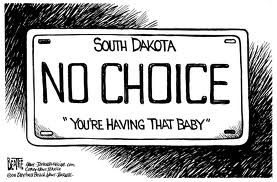 It is nice to see the
 infringement on the rights of women abortion debate framed in such a succinct manner.
“As I’ve said before (and will almost certainly have occasion to say many times again, until everyone is yawning about what a goddamn broken record I am), the anti-choice position is inherently violent, no matter how politely it is stated. If anyone else suggested that I should be forced to submit my body against my will to nine months of potential discomfort and pain, followed by an act that might include the skin and muscle between my vagina and anus being torn open, I don’t think we’d mince words about whether they were using violent rhetoric. But because we can couch it in the bullshit terminology of “a pro-life position,” that’s supposed to be evidence of civility.
That’s supposed to evidence of an unyielding belief in the sanctity of human life.
LULZ.
I am a human. That does not in any way feel like a respect for the sanctity of my life, or the quality of my life, or the agency over my life to which I am meant to have a public (and, according to Huckabee’s own religion, divine) right.
No one can argue, with any honesty or credibility, that they give a fuck about the sanctity of life if they would force a woman to carry to term an unwanted or unviable pregnancy against her will. That is the opposite of a respect for life, if the definition of “life” is to have any meaning at all.”
Run along anti-choice zealots…run along.
Discussing our society is difficult at the best of times. Getting a handle on some of the basics can never hurt as we struggle to make our civilization more progressive and humane. Toward that end a look at some of the salient features of how we have organized our society is in order. I’m borrowing from FinallyaFeminism101, a blog that helps set the stage and create the tools for discussions on how society has been structured.
**update** – A big thanks to Rob F from the Words on What for bring to my attention to a specific listing of male privilege on the blog, Alas a blog.
The first installment is about privilege or white male privilege (WMP) and how it affects all aspects of our society.
Privilege is: About how society accommodates you. It’s about advantages you have that you think are normal. It’s about you being normal, and others being the deviation from normal. It’s about fate dealing from the bottom of the deck on your behalf.
[Betty, A primer on privilege.]
Since social status is conferred in many different ways — everything from race to geography to class — all people are both privileged and non-privileged in certain aspects of their life. Furthermore, since dynamics of social status are highly dependent on situation, a person can benefit from privilege in one situation while not benefiting from it in another. It is also possible to have a situation in which a person simultaneously is the beneficiary of privilege while also being the recipient of discrimination in an area which they do not benefit from privilege.
Male privilege is a set of privileges that are given to men as a class due to their institutional power in relation to women as a class. While every man experiences privilege differently due to his own individual position in the social hierarchy, every man, by virtue of being read as male by society, benefits from male privilege.
When first dealing with the concept it might be easier to approach it from a systematic, rather than personal, approach. Consider what Lucy says here:
[T]rue gender equality is actually perceived as inequality. A group that is made up of 50% women is perceived as being mostly women. A situation that is perfectly equal between men and women is perceived as being biased in favor of women.
And if you don’t believe me, you’ve never been a married woman who kept her family name. I have had students hold that up as proof of my “sexism.” My own brother told me that he could never marry a woman who kept her name because “everyone would know who ruled that relationship.” Perfect equality – my husband keeps his name and I keep mine – is held as a statement of superiority on my part.
In this case the inequality is perceived, in part, because taking one’s husband’s name is considered “normal” for a woman, whereas choosing to keep one’s own name deviates from that. Popular culture often labels this behavior as “emasculating” to a man, but never bothers to question how a woman might feel being asked to give up something that has been part of her since her birth. This is an example of a culture of male privilege — where a man’s position and feelings are placed above that of the woman’s in a way that is seen as normal, natural, and traditional.
Going back to Lucy’s article, this is what she said in the paragraph directly preceding the one quoted above:
Male privilege may be more obvious in other cultures, but in so-called Western culture it’s still ubiquitous. In fact, it’s so ubiquitous that it’s invisible. It is so pervasive as to be normalized, and so normalized as to be visible only in its absence. The vast, vast, vast majority of institutions, spaces, and subcultures privilege male interests, but because male is the default in this culture, such interests are very often considered ungendered. As a result, we only really notice when something privileges female interests.
Most people do not think twice about a woman who shares the same name as her husband; they simply assume that the shared name is his family name. This is an illustration about how male privilege operates in stealth. When a wife does not share the same name as the husband, however, it often leads to confusion and even anger — as Lucy’s example illustrated. This is because the male-oriented option (wife taking husband’s name) is seen as default, and the neutral option (both parties keeping their original names) is a deviation from that norm and therefore comes across as privileging the woman because it doesn’t privilege the man.
It is important to keep in mind that the above example is not an outside incident; male privilege is an institutional problem that has a long history associated with it. In addition to her anecdote above, Lucy discusses how male privilege interacts with fandom; in “Occasionally Conversations with my Man Are Instructive” Ilyka talks about the impact of it in terms of male commenters on feminist blogs; and in her “Privilege in Action” series tekanji takes instances of privilege that she’s witnessed in various aspects of her life (both online and off) and deconstructs them, looking specifically at why they are problematic. All of which points to one thing: it’s not about one person saying or doing one thing, it’s about a whole lot of people saying and doing things that, collectively, end up giving men an overall advantage.
Sociological Images also comes through with some data about women and the workforce and the precentage of money they make in relation to a man doing the same job.


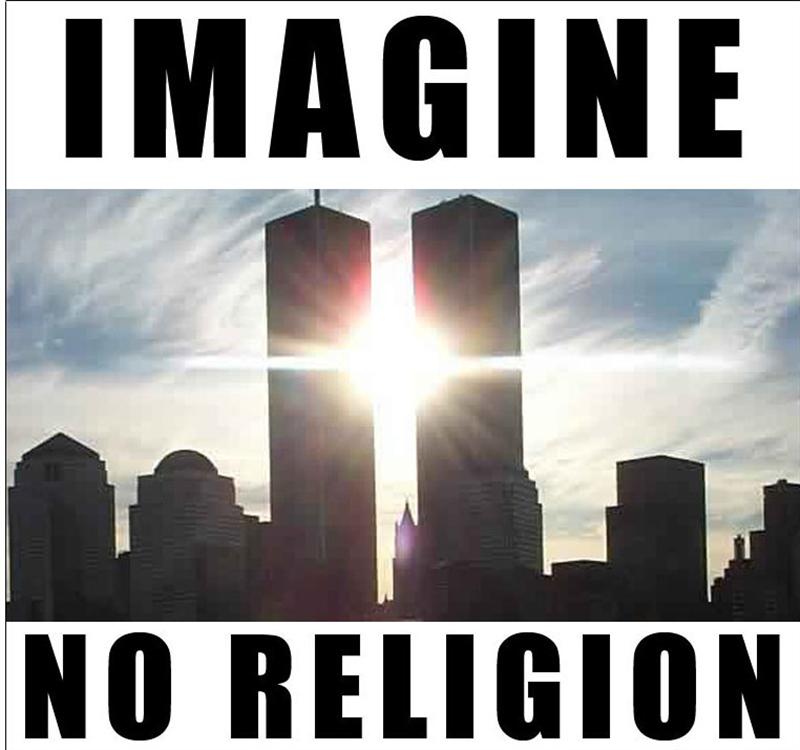 The following clip is not surprising if you have been following the news about the Roman Catholic Church and the multitude of sexual assault cases it is been implicated in. Furthermore, the individual in charge of the
 rape-brigade priests is none other than Joseph Ratzinger, who now is the high exalted one in the RCC. Essentially the Cardinal’s role was to take the side of the abuser and to delay and obfuscate the process enough to maintain the status-quo.
What sort of moral fibre is this current pope made of considering that, by his writ, he allowed the abuse of children to continue under his watch? It is news like this that is always close to the top of my mind when I hear the pious bloviating on how there would be no morality without religion. Indeed.

Not all self-talk is postive… another homerun for Subnormality.

I just love these animates, this one is a little shallow compared to the others but still worth watching.











 bleatmop
 Mystro
 The Arbourist


 Dead Wild Roses
Your opinions…