
You are currently browsing the category archive for the ‘Gender Issues’ category.
Global National ran an “overnight” segment after the Tumbler Ridge massacre under a framing that is, in its own way, a confession: “Anti-trans disinformation circulates after mass shooting.” (Global News)
Not Who died? Not How did this happen? Not What failed? Not What do we change Monday morning?
The story, as packaged, is not forensic. It’s prophylactic. The first institutional instinct is not to look hard at systems and sequences, but to manage reputational spillover: prevent a narrative from becoming “dangerous,” protect a constituency from backlash, and pre-label certain lines of inquiry as moral contamination.
That choice matters, because a town is burying children.
And because when journalism reaches for a firewall before it reaches for an autopsy, it stops being a public service and becomes a public-relations function.
What Actually Happened: Sequence Before Sermon
On February 10, 2026, an 18-year-old, Jesse Van Rootselaar, killed people at home and then attacked Tumbler Ridge Secondary School before dying by suicide. Multiple accounts report that the attack began with the killing of the shooter’s mother and 11-year-old half-brother, followed by the school shooting. (The Wall Street Journal)
The victims include five students (ages 12–13) and a 39-year-old education assistant, with the mother and half-brother killed beforehand. Names and details have been published widely and confirmed in Canadian Press reporting and related coverage. (People.com) The BC RCMP also issued a public confirmation of deceased victims. (RCMP)
That’s the baseline: a chain of events with a clear order—home, then school—ending in a pile of dead kids and a town whose grief will not be solved by better discourse hygiene.
Sequence matters because it points to systems:
- What warnings existed and where?
- What interventions were attempted and by whom?
- How were firearms stored and accessed?
- What did the school know, and when?
- What did police know, and what tools were used (or not used)?
- What gaps exist between “we did a wellness check” and “we prevented a catastrophe”?
Reporting indicates a history of mental-health-related police interactions and investigators reviewing digital footprint and online activity. (The Wall Street Journal)
These are the questions you chase when you treat murder as a real event in the world—not as a pretext for messaging.
What Global Chose to Do Instead
Global’s piece does not begin at the crime scene. It begins in the information ecosystem.
In the related Global coverage and clip description, the emphasis is on how the suspected shooter’s trans identity is “being used to fuel misinformation online,” and the segment elevates advocacy voices concerned about anti-trans sentiment. (Global News)
To be blunt: they treat the massacre as a vector for disinformation, rather than as a symptom of institutional failure.
This isn’t a claim that concerns about backlash are always illegitimate. It’s a claim about priority and timing.
You can caution against scapegoating without making that caution the lead, the thesis, and the moral center—while the basic forensic questions remain unasked in the same breath.
Worse, the frame is fortified by official moral language. BC’s Human Rights Commissioner issued a statement warning against conflating trans identity with violence and calling such conflation “incorrect, irresponsible and frankly dangerous.” (bchumanrights.ca)
Again: that statement may be true as a general principle—identity is not destiny—but it is also rhetorically useful as a solvent. It dissolves scrutiny by implying that scrutiny is the harm.
And in the current media climate, once a question is placed inside the “dangerous” bucket, it stops being investigated and starts being policed.
That is what narrative-commitment looks like: not lying, necessarily—just selecting a reality tunnel and treating alternate tunnels as morally suspicious.
Why This Reads as Out of Touch
Because the public is not asking for a sermon. The public is asking for accountability you can measure.
When parents hear “anti-trans disinformation” as the headline after a school attack, the implied hierarchy is:
- protect the narrative
- protect the vulnerable (as defined by the segment)
- later, perhaps, protect the public
That hierarchy does real damage.
It tells the bereaved: “We have already decided what the real emergency is.”
It tells the skeptical: “Your questions are morally tainted.”
It tells institutions: “If your policies intersect with a protected narrative, you will be insulated from the normal post-disaster autopsy.”
And it tells everyone else to stop trusting the gatekeepers.
Journalism doesn’t lose trust because it has values. It loses trust because it has values that pre-empt facts.
What a Forensic Post-Tumbler Ridge Agenda Looks Like
If you want a serious follow-up—one that serves victims, not narratives—here are the obvious “system” targets. None of this requires scapegoating an identity. It requires the courage to audit failures like adults.
1) A full public timeline, cross-agency
A public accounting that stitches together: school records, police contacts, mental-health interventions, family context, and warning signs—chronologically, with decision points. This is how you find the failure nodes.
2) Firearms access: storage, compliance, and enforcement gaps
Reporting indicates multiple firearms were used and investigators are examining how they were obtained. (The Wall Street Journal)
The question is not “gun control” as a slogan. The question is: What specific mechanisms failed—safe storage, licensing, supervision, enforcement, reporting? Fix the mechanism, not the talking point.
3) Threat assessment and school safety protocols that actually bite
Most institutions are good at paperwork and bad at escalation. Schools need a protocol that converts “concerning behavior” into structured threat assessment, and threat assessment into action—without letting “this might stigmatize” become the veto.
4) Mental-health intervention that doesn’t stop at “wellness checks”
If repeated mental-health-related police visits are part of the story—as reporting suggests—then the system question is: what happens after the tenth check? (NBC 5 Dallas-Fort Worth)
Communities need a bridge between crisis contact and sustained containment: follow-up, risk management, family support, and clear thresholds for escalation.
5) Media standards: separate “backlash management” from “causal inquiry”
A newsroom can do both—but not in a way that treats one as taboo. Post-massacre coverage should have a simple rule:
- Name the victims.
- Lay out the timeline.
- Identify plausible failure points.
- Present what is known, what is not, and what must be investigated.
- Only then: address secondary narratives (backlash, misinformation, online dynamics).
Right now, too many outlets reverse that order.
The Real Test: Can We Ask the Questions Without Being Moralized Into Silence?
There is a difference between scapegoating and scrutiny.
Scrutiny is what you owe dead children.
If the media class cannot bring itself to treat Tumbler Ridge as a forensic event first—if it must immediately translate it into a morality play about discourse—then it is not merely “out of touch.” It is structurally incapable of learning.
And systems that cannot learn repeat.
Not because people are evil, but because the firewall held—until it didn’t.
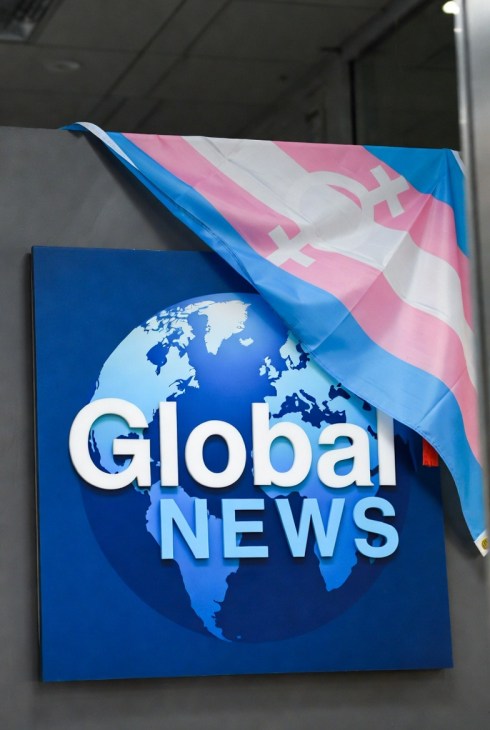
On February 10, 2026, Tumbler Ridge, B.C. (population ~2,400) was hit with a catastrophe it will carry for decades. RCMP have confirmed eight victims: five students aged 12–13, one education assistant (39), and—before the school attack—the shooter’s mother (39) and 11-year-old half-brother. The perpetrator, 18-year-old Jesse Van Rootselaar, then died by suicide.
Name the dead, because that’s the baseline for honest coverage. Abel Mwansa (12). Ezekiel Schofield (13). Kylie Smith (12). Zoey Benoit (12). Ticaria Lampert (12). Shannda Aviugana-Durand (39). Jennifer Jacobs (39). Emmett Jacobs (11). The family tributes are almost unbearable. Ticaria’s mother called her “my Tiki torch… a blazing light in the darkness.” Kylie’s father pleaded with the world to “hold your kids tight.” This is a tight community. The loss isn’t “eight fatalities.” It’s eight holes in a town where most people can point to the exact place those kids used to stand.
Now the media problem: within days, a noticeable slice of Canadian coverage pivoted to managing the public’s reaction to the shooter’s transgender identification. Global News ran a segment framed around “misinformation about trans people” being fueled by the shooting. The Tyee published an opinion piece warning that suffering “should never be weaponized,” focused less on the dead children than on backlash narratives. Even wire coverage foregrounded the shooter’s identity and used female pronouns while naming victims in the same breath—an editorial decision that tells you what frame is being protected.
Let me be precise about the critique, because this is where defenders hide behind a strawman. Nobody reasonable is arguing that “all trans people are responsible” for anything. The question is simpler: why was the instinct—right after slaughtered children—to warn Canadians about transphobia and “disinformation” rather than interrogate the failure chain that got us here? Reporting has already described a history of serious mental health issues and police encounters connected to the shooter, including firearm-related interactions. What interventions happened? What warnings were missed? How did access to weapons occur? Those are the adult questions. “Don’t be mean online” is not an answer to a mass killing.
This is what ideological capture looks like in practice: a hierarchy of empathy enforced by institutions. The victims are mourned, yes—but the “secondary story” rapidly becomes protecting a narrative category from reputational harm. That is not compassion. It’s brand management, and it trains the public to understand tragedy through approved lenses: some facts are treated as volatile, some questions as taboo, and anyone who notices patterns is pre-emptively suspected of malice.
Tumbler Ridge deserves better than that. Journalism’s first duty in a massacre is not to pre-scold the audience. It is to tell the truth, foreground the human cost, and pursue the causal chain without fear or favour. Start with the dead kids. Keep them at the center. And then do the hard work—because if the press won’t, the vacuum gets filled by cynics, activists, and conspiracy merchants. That isn’t “safety.” It’s surrender.

References
- RCMP victim identifications & family statements: https://www.cbc.ca/news/canada/british-columbia/livestory/active-shooter-alert-tumbler-ridge-secondary-school-bc-live-updates-9.7083740
- CNN victim profiles: https://www.cnn.com/2026/02/13/americas/victims-tumbler-ridge-shooting-intl
- Global News on “misinformation”: https://globalnews.ca/news/11667066/tumbler-ridge-shooting-misinformation-trans-people/
- The Tyee op-ed: https://thetyee.ca/Opinion/2026/02/12/Suffering-Should-Never-Be-Weaponized-Tumbler-Ridge-Tragedy/
- BBC/RCMP timeline: https://www.bbc.com/news/articles/c1e98w35qyjo
At the core of much of the tension surrounding transgender issues lies a profound and inescapable cognitive dissonance.
P
Biological reality is clear and immutable.
P
Human sex is binary—male or female—and determined at conception. No medical intervention, no amount of social affirmation, and no subjective feeling can change this fundamental fact. You will always and forever remain the sex you were born.
P
Transgender ideology asserts the opposite. It claims that whatever sex you feel you are, you become in reality. Your internal sense of self overrides chromosomes, reproductive anatomy, and every observable marker of biological sex. This ideology is inherently anti-reality.
P
Those who fully internalize it place themselves in a state of permanent conflict—not just with their own bodies, but with the entire external world. Reality itself becomes the enemy, repeatedly negating their subjective self-perception.
P
Queer Theory provides the escape hatch. Rather than confronting the mismatch between feelings and facts, adherents are guided to externalize the source of their distress. Through an oppressor/oppressed lens, the cause of their pain is never their own faulty perception of self—absolutely not. Instead, it is “normative” society that is actively oppressing them, enforcing rigid gender norms and inflicting all their suffering. This framework transforms personal dissonance into righteous grievance. The distress is no longer internal; it is the fault of everyone else.
P
Medical interventions amplify the problem. So-called “gender-affirming care”—puberty blockers followed by cross-sex hormones—adds fuel to the fire. These treatments carry serious, well-documented deleterious effects on both mental and physical health. Far from resolving underlying issues, they often deepen psychological instability while creating permanent physical changes.
P
The result is a perfect storm: individuals who were already vulnerable, now further destabilized, carrying a massive chip on their shoulders. They view the rest of society—the “normative” majority—as the active source of their pain. To defend their constructed identity and quiet the cognitive dissonance, they feel compelled to strike back against this perceived evil force: you and me.In this worldview, disagreement equals enmity.
P
If you refuse to affirm their ideology, you are not offering a different opinion—you are the oppressor who must be confronted, silenced, or defeated.
P
Dissent is violence.
P
Reality itself is violence.
P
This dynamic helps explain patterns of hostility, aggression, and, in extreme cases, violence that emerge from certain segments of transgender activism. It does not stem primarily from societal rejection, but from a foundational rejection of biological reality and the refusal to address internal distress with honesty.
True compassion does not mean enabling delusion.
P
It means grounding support in reality—the only place where genuine mental health and social peace can be found.

Tyler Cowen once tried to name the biggest “revolutions” he’s lived through—moon landing, collapse of communism, the internet, and now AI. In the middle of that list he drops one that most people still don’t treat like a revolution at all: “Feminization.” (Marginal REVOLUTION)
That word isn’t a complaint. It’s a category. It says: a long-run compositional change is underway, and it matters.
Helen Andrews’ “Great Feminization” thesis—popularized in a talk and elaborated in her Compact essay—takes the next step: as women become a larger share of institutions, institutions don’t merely “include” women; they become substantively feminized, and what we call “wokeness” is basically the cultural exhaust of that process. (Compact)
Here’s my position up front: the demographic shift is real and measurable in Canada; the “feminization = wokeness” equation is an overconfident master key.
It explains too much, too easily, by psychologizing demographics instead of interrogating incentives.
Canadian anchors: the shift is measurable (not vibes)
Start with a handful of Canadian facts you can actually point to.
- Parliament: the House of Commons sits at 104 women out of 343 MPs (30.3%). (IPU Parline)
- Judiciary: the share of federally appointed judges who are women rose from 43.8% (2021) to 46.7% (2023), per Statistics Canada. (Statistics Canada)
- Universities: women are 43.7% of full-time teaching staff in 2024/2025, up from 15.9% in 1984/1985. (Statistics Canada)
- Management: women are 51.9% of public-sector managers but 35.2% of private-sector managers (2023), and hold 42.7% of middle management vs 30.8% of senior management (2021). (Statistics Canada)
- Psychology (Alberta snapshot): Job Bank puts psychologists at 81% women / 19% men in Alberta. (Job Bank)
You don’t need to think any of this is good or bad to recognize the basic point: elite and semi-elite Canadian pipelines have changed composition in living memory. The “Great Feminization,” at minimum, names something real.
Why composition changes institutions (and why noticing this isn’t misogyny)
Here’s the move that poisons discussion: someone observes a demographic shift and asks what it does to norms; the response is to treat the question itself as hatred.
That’s not an argument; it’s a veto.
Institutions aren’t just rulebooks. They are reward systems: what gets you promoted, what gets you ostracized, what gets you hauled into a meeting, what everyone learns not to say out loud. When composition changes, the informal equilibrium can change too—sometimes for the better, sometimes not.
Before anyone reaches for the “misogyny” stamp, three obvious distinctions:
- Descriptive claims aren’t moral verdicts. Saying “X is now 47% female” is not saying “women ruined X.”
- Group averages aren’t destinies. Even if differences exist on average, overlap is huge. Plenty of women are rule-first and combative; plenty of men are harmony-first and censorious.
- The target is incentives, not women. If a system rewards reputational risk-avoidance and punishes open conflict, it will drift toward soft enforcement and speech management—regardless of who staffs it.
Those distinctions don’t sanitize the topic. They make it discussable.
Where Andrews helps—and where her thesis becomes a master key
Steelman Andrews first: she’s right that the shift is large, and she’s right that institutions can be remade through changes in who occupies them. If you pretend otherwise, you’re pretending humans don’t do social enforcement.
Where she overreaches is the claim (often treated as self-evident) that “feminization = wokeness.” (Compact)
Two problems.
1) One variable can’t carry a multi-cause phenomenon
The rise of “woke” managerial dynamics tracks at least four forces that are not reducible to gender composition:
- social media: instant reputational escalation; permanent records of mistakes; a public audience for internal disputes
- liability culture: institutions optimizing to avoid lawsuits, complaints, and scandal
- bureaucratic expansion: more compliance, more policy, more internal language policing
- credential sorting: ideological clustering in certain professional strata
In Canada, you can see the basic direction without naming villains: risk management becomes a career track; “process” becomes protection; disputes become “incidents”; leaders learn to value quiet over truth because quiet is legible as safety.
You can believe feminization is one contributor. But treating it as the engine is an interpretive leap, not an established causal law.
2) It tempts essentialism even when it gestures at nuance
If “wokeness” is “women’s morality,” you’ve turned a complex institutional pathology into a personality profile of half the species. That’s analytically brittle and politically stupid: it hands critics the easiest rebuttal (“you’re essentializing women”) and it blinds you to male-led versions of the same pathologies (purges, conformity spirals, status policing), which history supplies in bulk.
If you want to criticize a norm regime, criticize the regime. Don’t smuggle in contempt.
What the evidence can support—more modestly
A defensible claim, one that doesn’t require you to psychologize women as a class, looks like this:
- Some sex-linked preference gaps show up in some contexts, especially around speech, conflict, and social sanction. For example, a Knight Foundation/College Pulse study reports large gender differences among U.S. college students: 41% of college women prioritized protecting free speech versus 71% of college men, while women were more likely to prioritize promoting an inclusive society.
- Institutions are sensitive to preference distributions because norms are enforced socially, not just formally.
- Incentives decide which preferences become “policy.” Liability, reputation, and managerial bureaucracy amplify harm-avoidance.
And this is the part Andrews gestures at, but doesn’t fully own: if you want to understand modern speech policing, HR creep, and the new professional fearfulness, start with incentives. The incentives turn every controversy into a corporate emergency; then people behave accordingly.
On that view, feminization isn’t the whole story. It’s a relevant input—and its effects depend on the system it enters.
The real Canadian question: can we preserve hard virtues mid-transition?
Canada is useful here because we’re visibly mid-shift rather than at some imagined endpoint. Parliament is at 30% women, not parity. (IPU Parline) The federal judiciary is closing on parity. (Statistics Canada) Universities have moved dramatically since the 1980s, but remain below parity in full-time teaching staff. (Statistics Canada) Management splits sharply by public vs private sector, and senior leadership remains male-skewed. (Statistics Canada)
So the live question isn’t “should women be here?” They are here, and they belong here.
The question is narrower and more urgent:
As composition changes, what norms do we want to protect because they are fragile?
A short list:
- due process and evidence standards (law)
- viewpoint tolerance and intellectual risk-taking (academia)
- candid disagreement and non-performative conflict (organizations)
- the capacity to make decisions that feel “unkind” but are necessary (policy)
If you think those virtues are real and fragile, you don’t need to scapegoat women. You need to design institutions that reward truth-telling and competence more than “harm management” and reputational prophylaxis. That means fewer performative “values” rituals and more procedural backbone: clear standards, clearer speech norms, and leaders who can say “no” without laundering it through therapy language.
Verdict and prediction
The Great Feminization is real in Canada. The numbers are not subtle. (IPU Parline)
But “feminization = wokeness” is a bad master key. It explains too much, too easily, by psychologizing demographics rather than interrogating incentives. (Compact)
My bet is that the next decade won’t be settled by shouting “misogyny” or shouting “women did this.” It will be settled by whether our institutions relearn a difficult skill: distinguishing “this feels harmful” from “this is false,” and building cultures where adults can endure disagreement without turning every conflict into a moral emergency.

Glossary
- Confounders — other factors that could be the real cause, making cause-and-effect hard to prove.
- Essentialism / essentialize — treating a group as if it has one fixed “essence” (“women are X”), ignoring variation.
- Epiphenomenon — a byproduct; something that looks important but is really “exhaust” from a deeper cause.
- Monocausal — blaming one cause for a complex outcome.
- Pathology (institutional pathology) — a recurring dysfunctional pattern inside an institution.
- Prophylaxis — preventative action; here, pre-emptive “avoid scandal” behavior.
- Psychologizing — explaining political/institutional behavior by reducing it to personality traits or “mental makeup.”
This quote from@prof_curiosity on X: Piaget: The construction of learning
“Piaget viewed children as “little scientists” who actively construct knowledge by testing and refining mental schemas, most often through play. Through assimilation (fitting new experiences into existing schemas) and accommodation (adjusting schemas when they do not fit), driven by equilibration (resolving confusion), children progress through four stages: sensorimotor, preoperational, concrete operational, and formal operational.Development is a self-motivated process of making sense of the world. Adults naturally introduce their own schemas to children; most are well-meaning and beneficial. However, it is hard to imagine a more destructive schema for young children than that of ‘gender identity.’ Piaget’s theory explains how and why children adopt this adult shortcut to achieve equilibration.Simply it provides easy answers to difficult questions.What transgender ideology offers these playful child scientists is a highly self-destructive, adult schema (construct) wholly unsuitable for their developing, vulnerable minds. This schema, if pushed by significant adults, can easily be assimilated into a child’s learning patterns, providing ready made answers (equilibration) to questions the child would be years away from naturally asking; along with terrible, self-destructive answers to natural self-doubts. Thus, for a toddler girl: “Why do I prefer to play with boys’ things, etc.?” The inserted adult schema answers, “Because you are really a boy.” Of course the correct answer would be, “Because that is who you are” backed up with, “And you are perfect as you are – so carry on playing”.However transgenderism is not interested in children growing into well balanced adults. It targets vulnerable, especially autistic children, with undeveloped schemas who can be convinced that the way to achieve equilibration is to perform “being transgender”. It needs these (trans) children to provide cover for adult autogynephiles.This brilliant application of Piaget’s theory highlights why imposing adult “gender identity” concepts on children short-circuits their natural cognitive development—and why it’s especially harmful for vulnerable groups like autistic kids.”
Evidence backs this up: A 2023 systematic review and meta-analysis found a clear overlap between autism spectrum disorder (ASD) and gender dysphoria/incongruence, with autistic youth far more likely to experience it, likely due to challenges with flexible schemas and social understanding.”
https://pubmed.ncbi.nlm.nih.gov/35596023/The UK’s independent Cass Review (2024) went further: after rigorous systematic evidence reviews, it concluded the evidence for puberty blockers and hormones in minors is weak, with risks (e.g., bone density loss, fertility impacts) outweighing unproven benefits. It recommends extreme caution and holistic care over rapid affirmation.
Full report: https://cass.independent-review.uk/final-report/We must protect children’s natural exploration through play and affirm their bodies as they are. Imposing ideology that locks in confusion isn’t kindness—it’s harm. Prioritize evidence-based therapy and watchful waiting.

In a ruling that should alarm every woman—and indeed every citizen—who values free speech and the right to defend sex-based protections, Australian women’s rights advocate Kirralie Smith has been ordered to pay $95,000 in damages and issue a forced public statement for the “crime” of accurately describing biological males as men. Smith’s offence? Highlighting the participation of two transgender-identifying males in women’s football competitions and refusing to pretend that men can become women.
Kirralie Smith, director of Binary Australia, an organisation dedicated to affirming that there are only two sexes, was found guilty under New South Wales anti-vilification laws of unlawfully vilifying the individuals by referring to them with male pronouns and terms like “bloke.” She shared publicly available information from football clubs and raised legitimate concerns about fairness, safety, and the integrity of women’s sport. For this, a court has branded her words as inciting “hatred and serious contempt,” imposing a hefty financial penalty that will double if not paid within 28 days, alongside orders to remove posts and pin a court-mandated statement on her social media.This is not justice—it is the state-enforced erasure of women.
When a woman can be punished for stating the undeniable reality that no man can ever be a woman, we have reached a dystopian low. Women fought for decades to establish sex-based rights: single-sex sports, spaces, and services designed to protect female privacy, dignity, and fair competition. These protections exist precisely because biological sex matters—men, on average, retain physical advantages even after hormone treatments, and no amount of self-identification changes chromosomes, reproductive biology, or the lived experience of being female.Yet in modern Australia, courts are increasingly prioritising the feelings of a tiny minority over the rights of half the population.
Smith’s case echoes broader trends, such as the ongoing fallout from rulings like Tickle v Giggle, where biological reality is subordinated to gender identity claims. The message is clear: women must surrender their language, their boundaries, and their advocacy, or face ruinous consequences.What makes this particularly tragic is that Smith’s advocacy was not born of malice but of concern for women and girls. Males entering female sports displace women from teams, podiums, and scholarships. They compromise safety in contact sports. And when women speak up—as Smith did—they are silenced, fined, and forced to “confess” to thought crimes.
Kirralie Smith has vowed to appeal, declaring: “Nothing will steal my joy in knowing that I am a woman and no male ever will be. I am proud to stand for truth and reality.” Her courage is an inspiration. This ruling sets a dangerous precedent not just for activists, but for journalists, politicians, parents, and everyday women who dare to say the obvious: sex is real, immutable, and worth protecting.Women’s rights are not negotiable. They are not “inclusive” costumes for men to don. Until laws stop punishing women for naming reality, the fight must continue.
Support voices like Kirralie’s—because if they can come for her today, they can come for any of us tomorrow.

- Kirralie Smith’s original X post announcing the penalty (primary source):
https://x.com/KirralieS/status/1996731443264037335 - Binary Australia official statement on the vilification judgements (August 2025, detailing the guilty finding):
https://www.binary.org.au/vilification_judgements_in_full - Reduxx report on the penalty (women’s rights-focused outlet):
https://reduxx.info/australian-woman-ordered-to-pay-95000-to-two-trans-identified-males-playing-in-womens-football-for-misgendering/ - Rebel News report on the ruling and appeal vow:
https://www.rebelnews.com/women_s_rights_campaigner_fined_95k_vows_immediate_appeal - The Daily Declaration article on the fine and forced statement:
https://dailydeclaration.org.au/2025/12/05/kirralie-smith-fined/ - OUTinPerth report (LGBTQ+ media outlet confirming the $95,000 damages and constitutional finding):
https://www.outinperth.com/binary-leader-kirralie-smith-ordered-t-pay-95000-and-make-public-apology/ - Star Observer report (LGBTQ+ media outlet on the vilification finding and apology order):
https://www.starobserver.com.au/news/anti-trans-activist-kirralie-smith-ordered-to-pay-almost-100k-issue-public-apology-following-vilification-ruling/239923 - Equality Australia statement welcoming the ruling (trans advocacy perspective):
https://equalityaustralia.org.au/court-ruling-that-anti-trans-campaigner-unlawfully-vilified-two-trans-women-is-welcomed-by-equality-australia/
The rapid proliferation of gender ideology over the past decade—especially the surge of adolescent-onset gender dysphoria—stands as one of the clearest examples of social contagion in modern Western societies. A clinical framework once reserved for a very small number of adults with persistent, childhood-onset dysphoria was transformed into a cultural mandate through the convergence of three forces: institutional capture, algorithm-driven identity formation, and activist-driven medical practice.
Between 2015 and the early 2020s, referrals for gender services exploded—driven overwhelmingly by teenage girls with no prior history of dysphoria. Peer-group clustering, sudden identity shifts following intense online exposure, and the complete inversion of historic sex ratios all point to a socially transmitted phenomenon rather than a newly discovered biological one. Yet under the “affirmation” model, minors were placed on puberty blockers, cross-sex hormones, and permanent surgeries despite limited evidence, poorly understood risks, and a professional culture that increasingly discouraged clinical skepticism.
The hardest obstacle to unwind, however, will not be the institutions that enabled this shift. Policies can change, clinics can be restructured, and professional bodies can revise guidelines—as they already have across parts of Europe. The most immovable barrier will be parents. Many acted from compassion, social pressure, or a sincere desire to be “supportive,” but they now face an excruciating truth: they approved irreversible medical interventions on psychologically vulnerable teenagers during a developmental window historically marked by transient distress, identity confusion, and social sensitivity.
Double mastectomies on minors, lifetime fertility loss, and surgeries with complication rates exceeding anything considered acceptable elsewhere in medicine are not abstract debates. They are lived consequences. For parents, acknowledging error would require confronting a moral reality few can bear: that they were active participants in harming their own child. The human mind is built to avoid that revelation at all costs.
As a result, the detransition wave—real, growing, and increasingly documented—will face its fiercest resistance not from clinics or activists, but from within families. Parents will cling to the “lifesaving care” narrative long after the institutions that encouraged it have quietly retreated. They will reinterpret events to preserve psychic stability, even if doing so deepens the suffering of the child who must now live with the consequences.
Reversing the damage will require more than policy reform or legal accountability. It will require a public reckoning with the psychological mechanisms of self-deception, moral injury, and sunk-cost loyalty that allowed an entire society to medicate and operate on distressed adolescents in the name of affirmation. That reckoning—private, painful, and unavoidable—is the hardest part still to come.

References
-
The Cass Review – Independent Review of Gender Identity Services for Children and Young People (Interim Report) — NHS-commissioned review (Feb 2022) by Dr. Hilary Cass. Sex Matters
-
The Cass Review: Final Report (April 2024) — Hilary Cass’s full independent review. BASW+1
-
NHS England: Public Consultation Analysis & Summary – Interim Clinical Policy on Puberty-Suppressing Hormones (Jan 2024) — analysis of feedback on proposed policy changes. NHS England
-
Commission on Human Medicines (UK) Report – Proposed Restriction on GnRH Agonists for Under-18s — recommendation to restrict puberty blockers. GOV.UK
-
Equality & Health Inequalities Impact Assessment (EHIA), NHS England — assessment of health-inequality risks from the policy change on puberty blockers. GOV.UK+1
-
Karolinska Institutet Systematic Review on Hormonal Treatment in Youths (<18) — finds that GnRHa treatment should be considered experimental due to lack of long-term data. Karolinska Institutet News
-
Karolinska Hospital Policy Statement (April 2021) — stops prescribing puberty blockers and cross-sex hormones to minors under 16 except in research settings. Feminist Legal Clinic











 bleatmop
 Mystro
 The Arbourist


 Dead Wild Roses
Your opinions…