
You are currently browsing the category archive for the ‘Gender Issues’ category.
“There’s a saying in medicine that goes, “when you hear hooves, think horses not zebras.” Meaning always opt for the most plausible explanation first.
So let’s apply that to the enormous surge in adolescent girls identifying as transgender in the past decade.
Option 1:
All throughout human history, there have been girls who showed no sign of gender distress during childhood who suddenly at puberty realised that they were actually boys, but modern medicine had yet to be invented so they had to suffer the lifelong agony of being trapped in the wrong-sexed body. Curiously, not one ever gave voice to this pain.
Then, only when the caring, benevolent medical industrial complex invented the concept of transsexualism and out of the goodness of their hearts made puberty blockers, cross-sex hormones and surgeries available were these tortured souls able to embrace their true authentic selves.
As well, miraculously, the modern trans rights movement began in 2014 and achieved immediate and complete societal acceptance of transgender people, so all of these boys trapped in female bodies felt comfortable coming out en masse starting in 2015.
Or, option 2:
It’s an internet-fuelled social contagion on steroids.
Incredibly, in gender clinics all over North America, doctors are still opting for zebras.”
Let’s think of horses in 2025, for the sake of the children and adults who need to foreground reality and not gender fantasy this fine New Year.
“I am more convincved than ever the trans movement is a deeply misogynistic destructive force created by those who want to destroy the fabric of society, harm women, and harm children.”
Well done, trans activists.
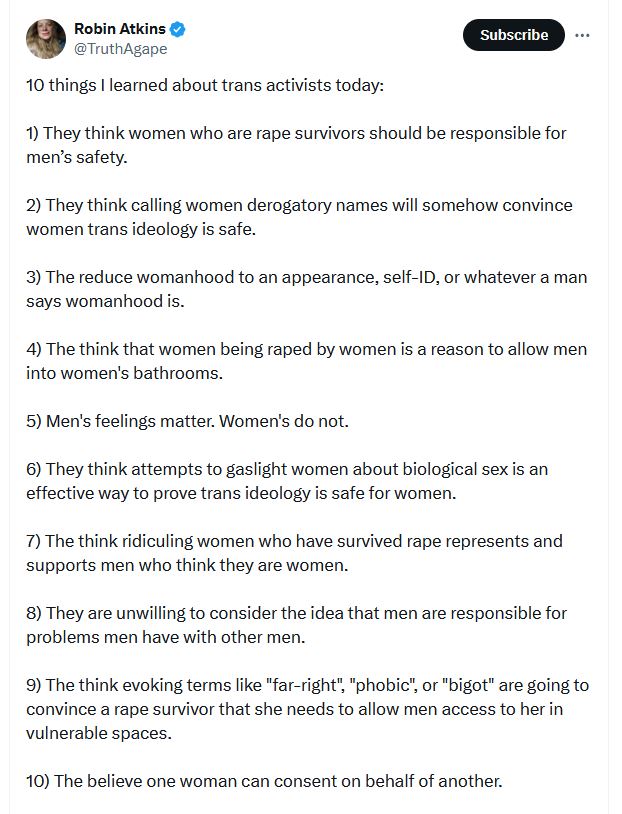
There are positive stories of people overcoming this toxic ideology. Let’s try and have more of these moments – the ones where we don’t destroy children’s futures in the name of the gender religion.

This is such a good turn. Dissent against gender ideology is breaking into the mainstream. Reprinting here to boost awareness.

“As a kid, I was your classic tomboy. I wore short hair, boys’ clothes, and spent most of my time running around outside with my mostly male friends. But it went deeper than that. I fantasized about being the prince and not the princess in Disney stories, and as my body started developing, it didn’t match my expectations.
I would have easily fit the diagnostic criteria for childhood gender dysphoria — back when there actually were diagnostic criteria and before today’s “affirming” approach that does away with any veneer of caution.
Article contentWhen I hit puberty, I started to develop feelings for girls, reinforcing the sense that I was different. By that point, Canada had become a much more accepting place, and I am grateful for that. I just wanted to be left alone to figure things out for myself.
And I did figure things out. At 16, I met my girlfriend and we’ve been together ever since. I am 34 now, and we recently got married and am expecting a child. It has been something of a fairy tale, and we both got to be the princess.
At the same time, there was also an ideology growing around me that could have radically altered my course in life. The idea that some people are “born into the wrong body” was going mainstream. I initially bought into this idea. It was positioned as a natural extension of gay rights. How? I didn’t really know, but it seems like the good, progressive thing to believe.
I wondered into my late 20s whether transition was something I should have done and if I would one day wake up miserable because I was supposed to be a man. After all, so many of the women who were transitioning seemed to be so much like me.
But then I started to hear about “trans kids.” I instinctively knew that it was wrong for youth under 18. It is wrong to medicalize them, and it is wrong to confuse them about their sex at a vulnerable age.
That was more than five years ago, and I’ve been an advocate for preserving young people’s bodies and fertility ever since. For a long time, it didn’t feel like this topic would ever get the attention it deserved. Slowly but surely, the conversation started to reach a wider audience.
Last year, New Brunswick Premier Blaine Higgs and Saskatchewan Premier Scott Moe both introduced policies on name and pronoun changes in schools. While these “social transition” steps seem harmless, they are psychological interventions that can encourage a child to lock in their identity and proceed to more permanent changes.
Early this year, Alberta Premier Danielle Smith announced the most comprehensive set of policies in Canada focusing on the areas of schools, medicine and sports. Recently, she announced that legislation will be tabled this fall
I am grateful to Smith and I applaud her courage in the face of attacks. The premier is constantly accused of hatred and bigotry for seeking to preserve the bodily integrity of youth under 18 and their ability to make fully informed decisions when they reach adulthood.
Article contentSmith has helped move the needle. In a political climate that can get vitriolic, it was far from a safe bet to introduce these policies.
It’s time for the other perspective to be offered. I am a married lesbian and I support Smith. I am grateful for her willingness to take on this issue.
I got lucky. I was able to grow up without the influence of activists making me believe that I should change my body because of my gender nonconformity. My baby and my ability to carry her are the biggest blessings of my life.
For so many young girls, this opportunity has been taken from them. Smith’s proposed legislation will help prevent this from happening to others, and we all owe her a great debt for that.
-Eva Kurilova is a freelance writer who has been engaged with the province’s gender policies.”
Hilarious. However this does represent an important point about activist behaviour: They almost always put narratives ahead of truth and reality, never give them that leg to stand on in an conversation. Always insist your conversations be grounded in the objective material reality we all share.

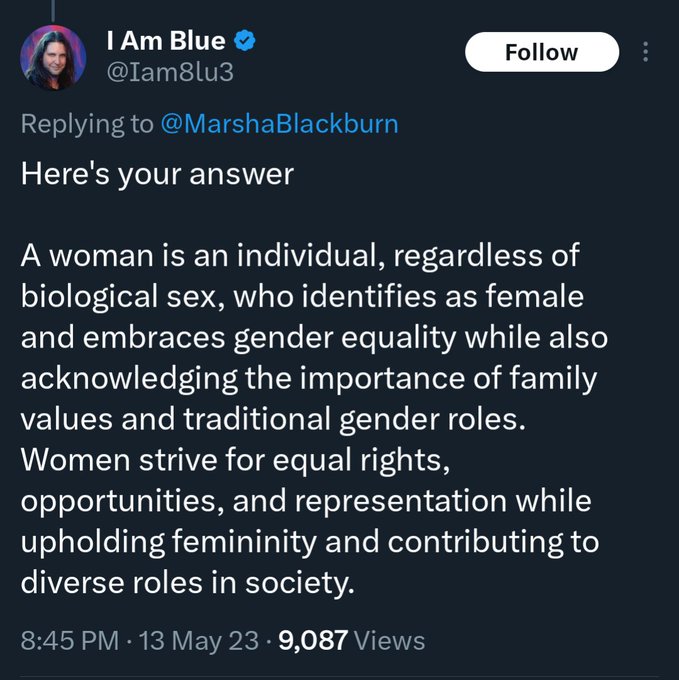


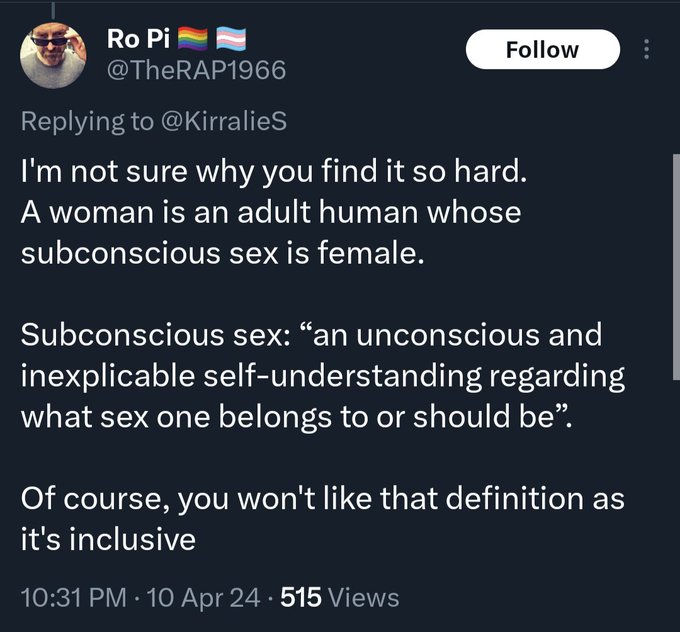
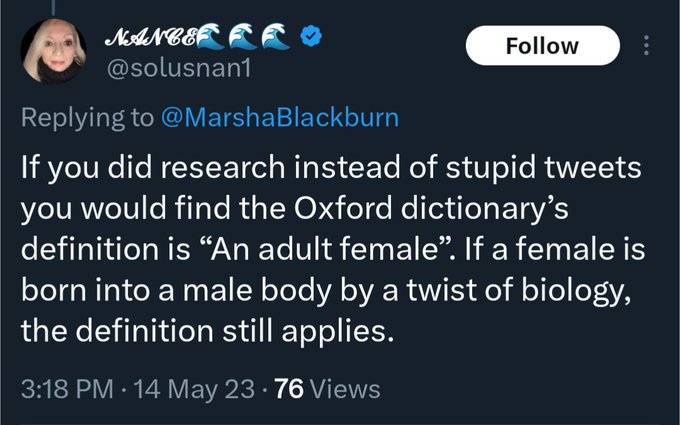

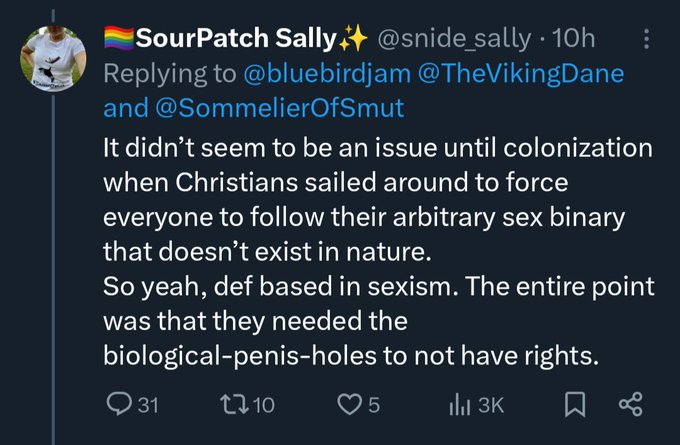


Some highlights of Spiked Online’s interview with Helen Joyce.
Myers: Does this particularly affect young boys and girls who would normally grow up to be gay?
Joyce: Of course it does. How are you meant to know whether you’re gay or straight if you block puberty? By definition, gay people are more gender-nonconforming. This is because being attracted to someone of the same sex is gender-nonconforming. Research shows that people who are very notably gender-nonconforming in early youth often grow up to be gay. Of course, it’s more nuanced than that, because there are lots of little boys who want to play with dolls and are straight. But statistically speaking, if you’re very gender-nonconforming pre-puberty, you’re something like 20-times more likely to grow up gay.
These boys are now the people who are being told they’re probably girls. I think this is kind of a modern gay conversion therapy. They’re turning proto-gay boys into sterile facsimiles of straight girls.
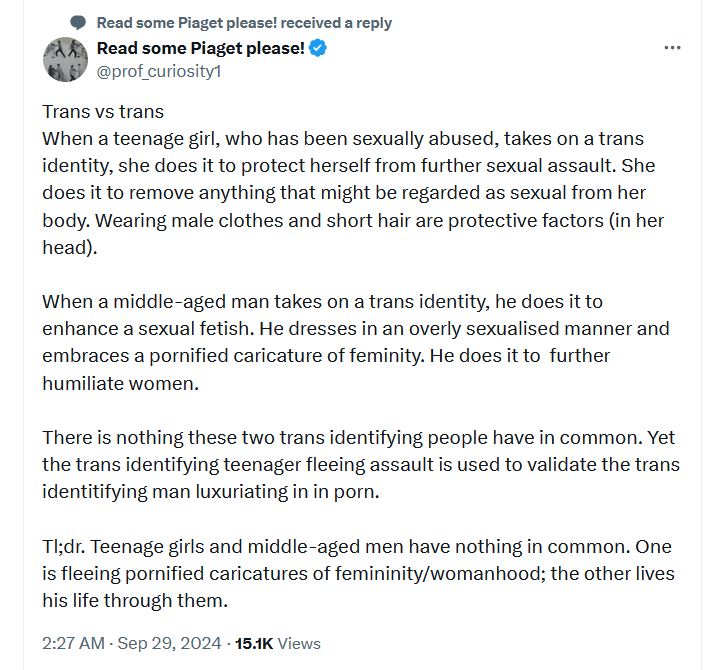
Oh, and the updated accurate version of the trans umbrella.











 bleatmop
 Mystro


 Dead Wild Roses
Your opinions…