
You are currently browsing the category archive for the ‘History’ category.
On May 15, 2012, Arb and I took possession of the house we now live in.
Back in early April 2012, literally the same day we closed on the house, I started looking on Petfinder for a dog. We were going to have a fenced yard, and I had always wanted a dog. Arb grew up with dogs, but I had never had one. Arb wanted a Sheltie. I wanted a senior, because I love older dogs, and because they often have trouble finding homes. My search for a senior Sheltie brought up exactly one result. I wrote the rescue right away, explaining that we were interested but we couldn’t bring her home until we actually had the home to bring her to. The rescue took a loooong time to write back, but eventually, the week before move-in, we were invited to meet up with her foster mum at the local Petsmart.
It wasn’t quite love at first sight – Shadow was kindof a mess, with mats the size of golfballs in the fur behind her ears and behind her armpits. And she was a little bit shy. But then she stuck that adorable pointy nose under our hands and demanded pettins, and our hearts went poof, and we decided she had to be our dog.

Arb meeting Shadow for the first time
We brought her home four years ago today. She has absolutely blossomed in confidence and happiness – and beauty, once we took her to the groomer and got her mats shaved off. (No more mats since then due to Arb’s rigorous program to teach her to accept brushing (which involves a lot of high-value treats)).

She has mastered the herding dog stare when she wants you to do something:

And somewhere along the line, I accidentally trained her that if she did a nice down-stay, I would give her just about anything she wants:

They told us she was 10-ish when we got her, but there’s no way she’s 14 now; she still zooms around the yard barking her fool head off like a puppy.

Thank you for being our dog, Shadow, and happy GotchaVersairy!

The history that we’re not told about, the history that we need to know. Twenty five minutes of what we are not supposed to know.
Nick Turse describes the horror that is war.
It takes dedicated effort to remove these sorts of fiery speeches from the history of women. Oratory like this somehow doesn’t make it into the classrooms, or history lectures. So the lessons need to be discovered, theorized, and fought for in each generation of women making progress glacially slow. Yet we have helpful mnemonics for the British Monarchy, US presidents and Canadian PM’s that we teach to children. Yet nothing for the bold female speakers of the 60’s and 70’s who set their minds to one of the most important projects facing humankind – the dismantling of patriarchy.
Unless you seek information like this out, you won’t be told about it by your choice of news station, you most likely won’t hear it on the radio and I’m almost certain you wont get this in secondary school. The exclusion of feminist history in the mainstream is not an accidental omission, but a tactical choice.
 – [Source:Notes from the Third Year]
Excerpts from Elizabeth Stanton’s address to the National American Woman Suffrage Association.
“Some men tell us we must be patient and persuasive; that we must be womanly. My friends, what is man’s idea of womanliness? Is it to have a manner which pleases him- quiet, deferential, submissive, approaching him as a subject does a master. He wants no self-assertion on our part, no defiance, no vehement arraignment of him as a robber and a criminal …. while every right achieved by the oppressed has been wrung from tyrants by force; while the darkest page on human history is the outrages on women – shall men still tell us to be patient, persuasive and womanly?
What do we know as yet of the womanly? The women we have seen thus far have been, with rare exception, the mere echoes of men. Men has spoken in the State, the Church and the Home, and made the codes, creeds and customs which govern every relation in life, and women have simply echoed all his thoughts and walked in the paths he prescribed. And they call this womanly! When Joan of Arch led the French army to victory I dare say the carpet knights of England thought her unwomanly. When Florence Nightingale, in search of blankets for the soldiers in the Crimean War, cut her way through all the orders and red tape, commanded with vehemence and determination those who guarded the supplies to “unlock the doors and not talk to her of proper authorities when brave men were shivering in their beds,” no doubt she was called unwomanly. To me, “unlock the doors” sounds better than any words of circumlocution, however sweet and persuasive, and I consider that she took the most womanly way of accomplishing her object.
Patience and persuasiveness are beautiful virtues in dealing with children and feeble-minded adults, but those who have the gift of reason and understand the principles of justice, it is our duty to compel to act up to the highest light that is in them, and as promptly as possible…”
-Elizabeth Cady Stanton
Ms. Stanton had the revolutionary fire that, as of late has been sputtering and spitting; hopefully new female leaders can step forth and reanimate the movement and bring back the revolutionary zeal that in 1890’s (and henceforth) got things done.
John Stuart Mill wrote an essay in 1861 (published 1869) called the Subjection of Women. From this brief quote we can see the evidence that even in the 19th century there were people who understood how socialization effects people and how they behave. I’m constantly amazed that here and now in the 21st century I run across people who don’t get basic shit like this. It isn’t rocket science and doesn’t take a keen sociological mind to identify the concepts and start to make the relations and come to the conclusions that Mill was making 150 years ago.
“When we put together three things – first, the natural attraction between the opposite sexes; secondly, the wife’s entire dependence on the husband, every
privilege or pleasure she has being either his gift, or depending entirely on his will; and lastly, that the principal object of human pursuit, consideration, and all objects of social ambition, can in general be sought or obtained by her only through him, it would be a miracle if the object of being attractive to men had not become the polar star of feminine education and formation of character. And, this great means of influence over the minds of women having been acquired, an instinct of selfishness made men avail themselves of it to the utmost as a means of holding women in subjection, by representing to them meekness, submissiveness, and resignation of all individual will into the hands of a man, as an essential part of sexual attractiveness.
Can it be doubted that any of the other yokes which mankind have succeeded in breaking, would have subsisted till now if the same means had existed, and had been so sedulously used, to bow their minds to it?”
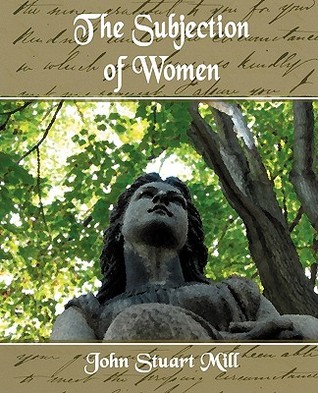
The tl;dr of what is being said – women are raised in a society that glorifies the toxic notion of femininity and the constellation of man pleasing behaviours that femininity entails (patriarchy anyone?). Surprisingly enough(?), this state of affairs is bad for women.
“Sarah Moore Grimké (1792 – 1873) was born in South Carolina, to a slave holding family. As an adult she came to Pennsylvania to live. Later, describing the agonies of conscience she suffered on the account of slavery, Sarah Grimké referred to the South as a “wilderness” in which they saw nothing “but desolation and suffering”.
[…]
Sarah Grimké”s Letters on the Equality of the Sexes and the Condition of Women were originally designed to present her views on feminism but she used them as a means to answer the churchmen [her detractors] as well. The central theme is woman’s equal moral responsibility with man to act for the good of humanity. The author employs wit and acerbity as formidable weapons: all she asks of her brothers, says Grimké is that they “take their feet from off our necks”; when women rely on men for protection, she notes sarcastically, they are apt to find “that what they have leaned upon has proved a broken reed at best, and oft a spear.” She did not hesitate to declare that the word “husband” was “synonymous with tyrant.” She herself never married. “
The excerpt from her letters illustrates the lockstep that religion and patriarchy enforced upon women and her objects to said oppression.
“Haverhill, 7th Mo.17, 1837
“The New Testament has been referred to, and I am willing to abide by its decisions, but must enter my protest against the false translations of some passages by the MEN that did that work, and against the perverted interpretation by the MEN who undertook to write commentaries thereon. I am inclined to think, when we are admitted to the honor of studying Greek and Hebrew, we shall produce some various readings of the Bible a little different from those we know have.
The Lord Jesus defines the duties of his followers in his Sermon on the Mount. He lays down grand principles by which they should be governed, without any reference to sex or condition:- ‘Ye are the light of the world. A city that is set on a hill cannot be hid. Neither do men light a candle and put it under a bushel, but on a candlestick, and it giveth light unto all that are in the house. […]
I follow Him through all his precepts, and find him giving the same directions to women as to men, never even referring to the distinction now so strenuously insisted upon between masculine and feminine virtues: this is one of the anti-christian ‘traditions of men’ which are taught instead of the ‘commandments of God.’ Men and women were CREATED EQUAL; they are both moral and accountable beings, and whatever is right for he man to do, is right for a woman.
[…]
How monstrous, how anti-christian, is the doctrine that woman is to be dependant on man! Where, in all the sacred Scriptures, is this taught? Alas! she has too well learned the lesson which MAN has laboured to teach her. She has surrendered her dearest RIGHTS, and been satisfied with the privileges which man has assumed to grant her; she has been amused with the show of power, whilst man has absorbed all the reality into himself. He has adorned the creature whom God gave him as a companion, with baubles and gewgaws, turned her attention to personal attractions, offered incense to her vanity, and made her the instrument of his selfish gratification, a plaything to please his eye and amuse his hours of leisure. ‘Rule by obedience and by submission sway’, or in other words, study to by a hypocrite, pretend to submit, but gain your point, has been the code of the household morality that women have been taught. The poet has sung, in sickly strains, the loveliness of woman’s dependence upon man, and now we find it reechoed by those who profess to teach the religion of the Bible.
[…]
This doctrine of dependence upon man is utterly at variance with the doctrine of the Bible. In that book I find nothing like the softness of a woman, nor the sternness of a man: both are equally commanded to bring forth the fruits of the Spirit, love, meekness, gentleness, etc. “
Easy to win or be the winner when you design the system , no? Grimké addresses this point and of course, much more, in her analysis.
–Feminism: The Essential Historical Writings. Miriam Schneir ed. p. 40-41
TL;DR – Religion even the olden tymes was all plum fracked up but was markedly worse if you happened to be female.
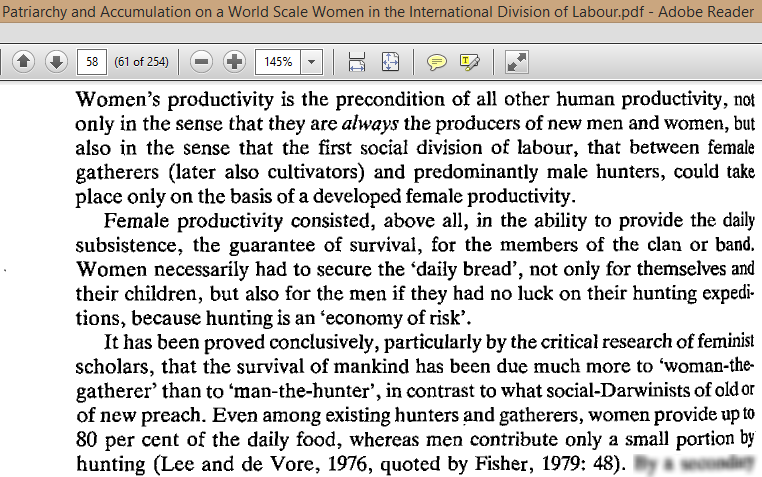
Some food for thought regarding some of the assumptions of Social Darwinism.











 bleatmop
 Mystro


 Dead Wild Roses
Your opinions…