
You are currently browsing the category archive for the ‘Politics’ category.
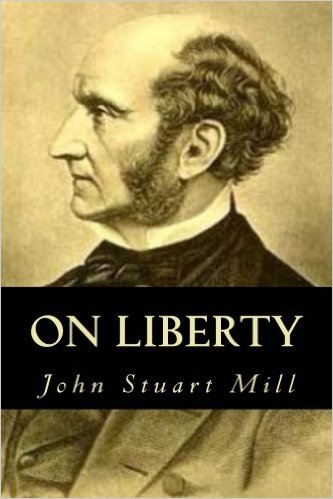
Arendt exposed ideological conformity, Gramsci revealed cultural capture, and Orwell diagnosed linguistic decay. Now, John Stuart Mill’s On Liberty (1859) offers a moral and philosophical counter to critical social constructivism’s (CSC) hostility toward open inquiry and individual conscience. Mill’s insistence that liberty of thought, speech, and character fuels social and moral progress stands as a principled rebuke to CSC’s attempts to bind individuality to collective dogma. Together, these thinkers—Arendt, Gramsci, Orwell, and Mill—equip us to resist CSC’s illiberal advance.
Mill argues that silencing expression harms not only the speaker but society as a whole, which is deprived of truth’s refinement through open contest (Mill, 1859, Ch. II). Even false opinions, he writes, may contain a kernel of truth; and true ones grow weak without opposition. CSC, meanwhile, appeals by promising equity through collective identity. Yet it treats dissent as a moral failure. Disagreement with DEI orthodoxy or critical race theory is labeled “harmful” or dismissed as “white fragility,” producing what Mill called “the tyranny of the prevailing opinion.” In 2024, University of Washington faculty guidelines equated merely questioning anti-racism initiatives with creating a “hostile environment,” thereby chilling discussion.
CSC’s moral coercion inverts Mill’s epistemic humility—his belief that all ideas deserve scrutiny, no matter how widely accepted. Mandatory DEI trainings, such as a 2024 policy at a major tech firm requiring employees to affirm “lived experience” as a primary form of knowledge, preclude rational dissent. In K–12 education, 2024 California curriculum guidance redefined “authenticity” as alignment with racial or gender identity groups, effectively suppressing individual thought. These tactics substitute ritual affirmation for genuine intellectual contest—exactly what Mill warned against.
Mill’s defense of individuality as a moral ideal—his celebration of “originality” and “nonconformity” (Ch. III)—clashes with CSC’s group-based scripts. By prioritizing identity categories over self-authorship, CSC undermines human flourishing. Mill does not reject social justice, but insists that no ideal justifies silencing dissent. His Enlightenment liberalism calls us to restore a culture of contestation and protect the individual as a source of moral insight.
Where Orwell showed how language is manipulated to close debate, Mill reveals why debate must remain open—because liberty depends on it. This series—Arendt’s pluralism, Gramsci’s cultural strategy, Orwell’s linguistic clarity, and Mill’s defense of liberty—forms a unified resistance to CSC’s totalizing ambitions.
Read Mill. Restore the contest of ideas. Reclaim individuality in classrooms, workplaces, and public life as the cornerstone of a free society.
Three Salient Points for Arguments Against Critical Social Constructivism
- Silencing Dissent Erodes Truth: CSC’s labeling of CRT critiques as “hostile,” as in 2024 campus policies, violates Mill’s warning that suppressing dissent impoverishes collective understanding.
- Moral Coercion Replaces Rational Persuasion: CSC’s mandates—like 2024 DEI affirmations in workplaces—replace Mill’s marketplace of ideas with conformity. Challenging these in policy debates restores reasoned inquiry.
- Individuality Is Suppressed by Group Identity: CSC’s identity scripts, seen in 2024 K–12 curricula, undermine Mill’s ideal of self-authorship. Promoting merit-based and pluralistic policies can counter this trend.
Reference
Mill, J. S. (1859). On Liberty. London: John W. Parker and Son.
Arendt exposed ideological conformity, Gramsci revealed cultural capture, and now George Orwell’s Politics and the English Language (1946) unveils critical social constructivism’s (CSC) subtlest weapon: the corruption of language. Orwell warned that vague, euphemistic language obscures reality, trapping thought in a labyrinth of abstraction. CSC wields this tactic to redefine terms, enforce orthodoxy, and render dissent unthinkable. As we turn next to Mill’s defense of liberty, Orwell’s insights equip us to resist CSC’s assault on meaning.
Orwell argued that sloppy language fosters sloppy thought, and vice versa, creating a cycle in which “language becomes ugly and inaccurate because our thoughts are foolish” (Orwell, 1946). CSC exploits this feedback loop by emptying words like harm, justice, and truth of any stable, shared meaning. Disagreement becomes “harm,” objectivity becomes “whiteness,” merit becomes “systemic bias.” The appeal lies in the promise of inclusivity, yet clarity is sacrificed for ideological control. In 2024, university style guides—such as Stanford’s—discouraged terms like “mother” and “father” in favor of “birthing parent” and “non-birthing parent,” narrowing language to conform with CSC imperatives. That same year, journalism guidelines at outlets like NPR labeled objective reporting as a manifestation of “whiteness,” stifling evidence-based discourse.
Like Orwell’s Newspeak, CSC’s linguistic shifts shrink vocabulary and moral nuance, making dissent socially radioactive. To question CSC isn’t to be wrong—it’s to enact “violence.” This mirrors Orwell’s warning that vague language can “make lies sound truthful” (1946), a tactic used to protect ideological dogma. Unlike Gramsci’s cultural trenches, Orwell targets the battlefield of meaning, where CSC renders opposition not just incorrect but unintelligible within its moral grammar.
Orwell’s antidote—short words, active verbs, and concrete images—is a blueprint for resistance. Language must be a window, not a smokescreen. When language no longer corresponds to shared experience, political manipulation becomes inevitable. Restoring clarity means demanding precise, evidence-based definitions in institutions captured by CSC. This series—Arendt on totalitarianism, Gramsci on hegemony, Orwell on language, and Mill on liberty—reveals CSC as a coordinated project to redefine reality.
Read Orwell. Restore language through precise debate. Reclaim meaning in schools, workplaces, and public forums as the first act of resistance.

Three Salient Points for Arguments Against Critical Social Constructivism
- Language Obscures, Then Controls: CSC’s redefinition of “violence” to include speech, as in 2024 campus policies, severs language from reality and undermines open discourse—just as Orwell warned.
- Vagueness Is a Weapon, Not a Flaw: CSC’s reliance on unverifiable concepts like “lived experience,” seen in 2024 DEI reports, avoids falsifiability and shields ideological claims from challenge.
- Clarity Is Resistance: Demanding evidence-based definitions in DEI training and policy debates—guided by Orwell’s principles—undermines CSC’s ideological capture and restores intellectual integrity.
References
Orwell, G. (1946). Politics and the English Language. London: Horizon.
(Additional references: Orwell, G. (1949). 1984; Orwell, G. (1946). The Prevention of Literature.)
Our series began with Hannah Arendt’s The Origins of Totalitarianism, exposing how ideological systems crush complexity and silence dissent. Now, Antonio Gramsci’s Selections from the Prison Notebooks (1971) reveals how such systems entrench themselves not through violence, but through culture. His concept of cultural hegemony—the ruling class’s ability to weave its worldview into society’s “common sense”—underpins the activist-theoretical complex of critical social constructivism (CSC). Gramsci’s insights—soon to be joined by Orwell’s warnings on language and Mill’s defense of liberty—illuminate the strategic depth of CSC and arm us to resist its totalizing spread.
A Marxist imprisoned by Mussolini’s regime, Gramsci argued that dominance endures not just through state coercion, but by shaping the cultural narratives expressed in schools, media, and civil institutions (Gramsci, 1971). CSC wields this strategy skillfully, capturing universities, HR departments, and K–12 curricula to redefine concepts like justice, harm, and truth. Its appeal lies in promising equity through structural change, yet it betrays this promise by erecting a new orthodoxy in which dissent becomes unintelligible. In 2024, university DEI training at institutions like UCLA required faculty to affirm “anti-racism” principles, silencing questions about ideological framing—a Gramscian maneuver designed to remake “common sense” itself.
CSC’s genius—and its danger—lies in rewiring the cultural fabric, thread by thread, until dissent appears as an unthinkable pattern. In contrast to Gramsci’s vision of empowering the marginalized from below, CSC’s elites impose orthodoxy from above. DEI mandates, such as 2024 corporate policies that require employees to affirm contested ideologies, mirror what Gramsci called the “trenches” of cultural warfare. Speech codes that label disagreement as “harmful” render opposition not merely wrong but morally deviant, echoing the totalitarian logic Arendt identified. These tactics reshape the public square, narrowing moral and linguistic boundaries until alternative worldviews are excluded by default.
Gramsci reveals why CSC resists debate: it redefines the very terms of discourse. Understanding this strategy is essential to resisting it. By recognizing how CSC transforms institutions into ideological instruments, we can begin to reclaim pluralism and open inquiry. This series, bridging Gramsci to Orwell and Mill, equips us to understand CSC not just as a collection of radical ideas, but as a cultural project aimed at monopolizing moral and linguistic legitimacy. CSC’s spread—like a tapestry quietly rewoven to exclude dissent—demands a unified stand for liberal principles: free inquiry, reasoned debate, and intellectual freedom. Read Gramsci critically. Decode the cultural strategy.
Reclaim our institutions through open forums, Socratic seminars, and a revival of pluralistic values.

Three Salient Points for Arguments Against Critical Social Constructivism
Cultural Hegemony Is Real—and Reversible
Gramsci showed how norms are shaped through education and language. Reversing CSC’s dominance starts with advocating parental choice in curricula and open academic forums like Socratic seminars.
Institutional Capture, Not State Revolution, Is the Threat
CSC’s infiltration of institutions—such as 2024 UCLA DEI mandates enforcing ideological affirmations—mirrors Gramsci’s cultural revolution, reshaping society without needing to seize state power.
Ideas Become Unquestioned as ‘Common Sense’
By normalizing its ideology, CSC renders dissent immoral, as seen in 2024 speech codes. Supporting pluralism and open debate in schools and workplaces restores the possibility of reasoned disagreement.
Reference
Gramsci, A. (1971). Selections from the Prison Notebooks. New York: International Publishers.
Introduction
The dialectic—Hegel’s clash of ideas, Marx’s material struggles—cuts through the fog of social change, exposing contradictions that forge new realities. In this second installment of our series, we wield this lens to dissect third-wave feminism and queer theory-based gender ideology, two movements that have corroded entrenched norms around gender and identity. By defining their origins, principles, and tangible impacts, we reveal their roles as dialectical antitheses: challenging rigid structures, igniting conflict, and birthing new social orders. Yet, their trajectories—shaped by the neoliberal churn of the 1990s—are fraught with contention, from feminist schisms to charges of anti-science dogma. We must probe their material roots and critiques to grasp their dialectical force, setting the stage for our final inquiry into whether these movements, absorbed by institutions or still radically potent, persist in history’s unyielding spiral.
Third-Wave Feminism: A Dialectical Force for Inclusivity
Third-wave feminism, emerging in the early 1990s, arose as a fierce critique of second-wave feminism’s homogeneity. The second wave (1960s–1980s) secured legal victories—reproductive rights, workplace protections—but often centered white, middle-class women, marginalizing others. Third-wave feminists, galvanized by Kimberlé Crenshaw’s 1989 concept of intersectionality (Crenshaw, 1989), which posits that oppressions like race, class, and gender interlock, sought to rectify this. Judith Butler’s Gender Trouble (1990) deconstructed gender as performative, while Patricia Hill Collins’ Black Feminist Thought (1990) amplified Black women’s voices. This wave embraced diversity and individual agency, challenging the second wave’s universalist bent.
Dialectically, third-wave feminism is an antithesis to the second wave’s thesis. The thesis—legal equality—harbored a contradiction: its narrow scope ignored compounded oppressions. The antithesis, third-wave’s intersectional critique, exposed this flaw, pushing for a synthesis: a fragmented yet inclusive feminism. This corrodes the second wave’s monolithic framework, but critics—radical feminists like Sheila Jeffreys—argue it dilutes focus on sex-based oppression, prioritizing fluid identities over material realities (Jeffreys, 2014). Liberal feminists, meanwhile, clash with its poststructuralist leanings, favoring pragmatic reforms over theoretical deconstructions.
The material conditions of the 1990s—global capitalism, neoliberal individualism, and media saturation—fueled this shift. Second-wave gains, like increased economic power for women, created space for diverse voices, while neoliberalism’s emphasis on personal choice shaped third-wave’s focus on identity politics (Evans, 2015). Yet, this context also introduced contradictions: the commodification of feminism risked co-opting its radical edge, a tension that persists.
Concrete Examples
The Riot Grrrl movement, a feminist punk subculture born in Olympia, Washington, in the early 1990s, exemplifies third-wave feminism’s dialectical force. Punk’s male-dominated culture (thesis) was challenged by Riot Grrrl’s fierce activism (antithesis)—bands like Bikini Kill and zines like Girl Germs championed DIY ethics and female empowerment. The synthesis: a punk scene more inclusive of women, influencing broader cultural gender representations (Gottlieb & Wald, 1994). Digital activism, via 1990s blogs and e-zines, further challenged traditional feminist discourse (thesis) with decentralized voices (antithesis), yielding a globalized feminist movement amplifying marginalized perspectives (Evans, 2015). Yet, this digital sprawl fractured unity, a critique levied by radical feminists who see it as diluting feminist goals.
Queer Theory-Based Gender Ideology: Disrupting Binary Norms
Queer theory-based gender ideology, rooted in 1990s scholarship, rejects fixed gender and sexuality categories as socially constructed. Judith Butler’s Gender Trouble (1990) argued gender is performative, while David Halperin defined “queer” as “by definition whatever is at odds with the normal, the legitimate, the dominant. There is nothing in particular to which it necessarily refers. It is an identity without an essence” (Halperin, 1995, p. 62). This oppositional stance—antithetical to normative structures—drives its dialectical role, advocating for fluid identities and reshaping social, legal, and cultural landscapes. Its rise, however, ignites fierce debate, with critics decrying its rejection of biological realities.
Dialectically, gender ideology is an antithesis to traditional gender norms (thesis), which enforce a binary system rooted in biological sex. By deconstructing these norms as constructed, it pushes for a synthesis: inclusive policies and cultural shifts accommodating diverse identities. This synthesis, however, is contested. Helen Pluckrose and James Lindsay (2020) argue in Cynical Theories that queer theory’s dismissal of biology as “bollocks” misrepresents scientific facts to prioritize political disruption, undermining empirical rigor. Feminist critics like Rosemary Hennessy (1995) contend it sidelines materialist concerns—capitalism, patriarchy—focusing on discursive representations over systemic oppressions. Radical feminists, like Andrea Dworkin, reject queer theory outright, arguing its fluidity erases sex-based categories essential for addressing women’s oppression (Dworkin, 1994).
The 1990s neoliberal context—marked by consumer culture and identity commodification—amplified queer theory’s rise. Global capitalism’s emphasis on individual expression aligned with its focus on fluid identities, but institutional absorption (e.g., corporate pride campaigns) risks diluting its radical critique, a tension mirroring third-wave feminism’s challenges (Fraser, 2009).
Concrete Examples
The push for gender-neutral bathrooms challenges binary facilities (thesis) with inclusive spaces (antithesis), yielding a synthesis: institutions adopting such facilities, though resistance persists (Engenderings, 2017). Legal recognition of non-binary gender markers on passports in countries like Canada and Germany negates binary legal frameworks (thesis) with fluid identities (antithesis), fostering inclusive systems (synthesis), despite pushback from biological essentialists (Butler, 2019). Media visibility of transgender figures like Laverne Cox challenges traditional representations (thesis) with diverse portrayals (antithesis), shaping inclusive media landscapes (synthesis), though backlash underscores ongoing contradictions.
Conclusion
Third-wave feminism and queer theory-based gender ideology embody the dialectic’s relentless drive: contradictions expose flaws, ignite conflict, and forge new realities. Third-wave feminism, through intersectionality and movements like Riot Grrrl, negated second-wave limitations, birthing an inclusive yet fragmented feminism. Gender ideology, rooted in queer theory’s oppositional stance, drives changes like gender-neutral bathrooms—yet its anti-science critiques and feminist tensions invite skepticism. Rather than facing obsolescence, these movements navigate a tension between institutional absorption and radical potential, integrated into mainstream discourse yet still pushing boundaries. In our final installment, we’ll probe whether this tension sustains their transformative power or risks their co-optation in history’s dialectical churn.

Table: Dialectical Analysis of Third-Wave Feminism and Gender Ideology
| Aspect | Third-Wave Feminism | Queer Theory-Based Gender Ideology |
|---|---|---|
| Thesis | Second-wave feminism’s universalist focus | Traditional binary gender norms |
| Antithesis | Intersectionality and diversity critiques | Fluid, non-binary gender identities |
| Synthesis | Inclusive, fragmented feminist movement | Inclusive policies and cultural shifts |
| Examples | Riot Grrrl, digital activism | Gender-neutral bathrooms, non-binary passports |
| Contention | Dilutes sex-based focus (radical feminists) | Anti-science, sidelines materialist concerns |
| Material Context | Neoliberalism, global capitalism | Consumer culture, identity commodification |
Sources
- Butler, J. (1990). Gender Trouble: Feminism and the Subversion of Identity. Routledge. [https://www.routledge.com/Gender-Trouble-Feminism-and-the-Subversion-of-Identity/Butler/p/book/9780415389556]
- Butler, J. (2019). Gender Trouble: Tenth Anniversary Edition. Routledge.
- Collins, P. H. (1990). Black Feminist Thought: Knowledge, Consciousness, and the Politics of Empowerment. Unwin Hyman.
- Crenshaw, K. (1989). Demarginalizing the Intersection of Race and Sex: A Black Feminist Critique of Antidiscrimination Doctrine, Feminist Theory and Antiracist Politics. University of Chicago Legal Forum, 1989(1), 139–167. [https://chicagounbound.uchicago.edu/uclf/vol1989/iss1/8]
- Dworkin, A. (1994). Letters from a War Zone. Lawrence Hill Books.
- Engenderings. (2017). Gender Ideology: Tracking Its Origins and Meanings in Current Gender Politics.
- Evans, E. (2015). The Politics of Third Wave Feminisms: Neoliberalism, Intersectionality, and Hegemony. Palgrave Macmillan. [https://link.springer.com/book/10.1057/9781137295279]
- Fraser, N. (2009). Feminism, Capitalism, and the Cunning of History. New Left Review, 56, 97–117. [https://newleftreview.org/issues/ii56/articles/nancy-fraser-feminism-capitalism-and-the-cunning-of-history]
- Gottlieb, J., & Wald, G. (1994). Smells Like Teen Spirit: Riot Grrrls, Revolution, and Women in Independent Rock. Microphone Fiends: Youth Music and Youth Culture, 25–44.
- Halperin, D. M. (1995). Saint Foucault: Towards a Gay Hagiography. Oxford University Press. [https://global.oup.com/academic/product/saint-foucault-9780195093711]
- Hennessy, R. (1995). Queer Visibility in Commodity Culture. Cultural Critique, 29, 31–76. [https://www.jstor.org/stable/1354519]
- Jeffreys, S. (2014). Gender Hurts: A Feminist Analysis of the Politics of Transgenderism. Routledge. [https://www.routledge.com/Gender-Hurts-A-Feminist-Analysis-of-the-Politics-of-Transgenderism/Jeffreys/p/book/9780415539401]
- Pluckrose, H., & Lindsay, J. (2020). Cynical Theories: How Activist Scholarship Made Everything about Race, Gender, and Identity—and Why This Harms Everybody. Swift Press. [https://www.swiftpress.com/book/cynical-theories]
Introduction
The dialectic—a philosophical method as dynamic as history itself—reveals change as a clash of opposites, forging new realities from their wreckage. It’s not mere argument but a structured process where contradictions propel progress, whether in ideas or societies. Crafted by Georg Wilhelm Friedrich Hegel and reshaped by Karl Marx, this framework illuminates how tensions—between freedom and order, or wealth and labor—drive transformation. For those new to these thinkers, the dialectic is a lens to see society’s churn as neither random nor inevitable but as a dance of conflict and resolution. This post, the first of a three-part series, traces the dialectic’s history through Hegel and Marx, highlighting its role as a cornerstone for social constructivists who view society as malleable, sculpted by human action. By grasping this method, we equip ourselves to dissect social movements—like third-wave feminism and gender ideology, the latter fraught with contention[^1]—probing whether they rise, clash, and fade in history’s relentless dialectical churn [Hegel’s Dialectics, Stanford Encyclopedia of Philosophy, https://plato.stanford.edu/entries/hegel-dialectics/].
Hegel’s Dialectic: The Pulse of Ideas
Georg Wilhelm Friedrich Hegel (1770–1831), a German philosopher, saw the dialectic as reality’s heartbeat, pulsing through ideas and history. Contrary to popular myth, Hegel never used the terms “thesis, antithesis, synthesis”—a simplification attributed to Johann Fichte. Instead, his method is a fluid interplay where concepts contain contradictions that demand resolution, birthing new, richer concepts. Take “Being,” pure existence: it’s so abstract it collapses into “Nothing,” its negation; their unity forms “Becoming,” capturing change itself. This process, which Hegel called Aufhebung (sublation), both negates and preserves what came before. His dialectic—less a formula, more a metaphysical rhythm—suggests that every idea or social stage carries the seeds of its own undoing, pushing toward a grander truth, the Absolute. Critics like Karl Popper decry its abstraction as mystifying, yet its influence endures, offering a lens to see history’s ceaseless evolution [Hegel’s Dialectics, Stanford Encyclopedia of Philosophy, https://plato.stanford.edu/entries/hegel-dialectics/].
Marx’s Materialist Revolution
Karl Marx (1818–1883), a radical thinker and Hegel’s intellectual heir, found idealism wanting—too ethereal, too divorced from gritty reality. He forged dialectical materialism, grounding change in material conditions: economics, labor, class. For Marx, history advances through contradictions in the mode of production—like capitalism’s clash between bourgeoisie (owners) and proletariat (workers). The exploitation of labor for profit creates inequality, a contradiction that foments class struggle, potentially sparking revolution toward socialism. Unlike Hegel’s dance of ideas, Marx’s dialectic is rooted in tangible conflicts: the factory’s grind, the worker’s plight. This materialist lens sees society’s “base” (economic system) shaping its “superstructure” (politics, culture), offering a blueprint for analyzing power dynamics. Though critics like Mario Bunge call it reductionist, Marx’s framework electrifies social constructivists, arming them to dissect and challenge societal structures [Dialectical Materialism, Wikipedia, https://en.wikipedia.org/wiki/Dialectical_materialism].
The Dialectic as a Social Constructivist Tool
Social constructivists—those who see society as a human creation, not a fixed truth—wield the dialectic to decode and reshape social realities. They view norms, like gender roles or racial hierarchies, as stages ripe for contradiction and transformation. For example, the Black Lives Matter movement, sparked by police violence in 2020, identified contradictions between America’s egalitarian ideals and systemic racism, pushing for reforms like defunding police or restructuring criminal justice. This mirrors the dialectic’s rhythm: a dominant structure (legal equality) meets its negation (racial injustice), yielding a synthesis (policy reform). Hegel’s idealism informs the conceptual evolution, while Marx’s materialism highlights economic and social forces driving change. Yet, the dialectic’s critics—Popper among them—warn it risks oversimplifying complex realities, potentially fostering dogmatic solutions. For constructivists, though, it’s a scalpel: contradictions are not flaws but catalysts, empowering movements to forge new social orders [Social Constructionism, Wikipedia, https://en.wikipedia.org/wiki/Social_constructionism].
Conclusion: A Lens for Social Dynamics
The dialectic—Hegel’s idealistic churn, Marx’s materialist struggle—offers a profound framework for understanding change. It reveals history and society as dynamic, driven by contradictions that demand resolution. Social constructivists harness this method to challenge norms and envision progress, seeing tensions as opportunities, not dead ends. Yet, its abstraction and potential for oversimplification invite scrutiny, demanding rigorous application. In the next posts, we’ll apply this lens to third-wave feminism and gender ideology, probing whether their contradictions—fragmentation, anti-science stances—mark them as tools used and discarded in history’s dialectical march. This foundation equips us to dissect social movements with precision, resisting divisive simplifications in pursuit of unifying truths.
Table: Hegel vs. Marx on the Dialectic
| Aspect | Hegel’s Dialectic | Marx’s Dialectical Materialism |
|---|---|---|
| Focus | Evolution of ideas toward the Absolute | Material conditions and class struggles |
| Driving Force | Internal contradictions within concepts | Economic contradictions and class conflicts |
| Example | Being → Nothing → Becoming | Bourgeoisie vs. Proletariat → Socialism |
| Outcome | Conceptual progress toward ultimate truth | Social revolution toward classless society |
| Criticism | Overly abstract, mystifying | Reductionist, overly economic-focused |
Footnotes
[^1]: Gender ideology’s contentious nature is evident in polarized debates, with proponents advocating for self-identification and critics citing conflicts with empirical science and women’s rights. See, for example, policy reversals like the UK’s 2024 decision to ban puberty blockers for minors, reflecting growing skepticism [NHS England, Cass Review, https://www.england.nhs.uk/commissioning/spec-services/npc-crg/gender-dysphoria-clinical-programme/implementing-advice-from-the-cass-review/].
Sources
- Hegel’s Dialectics, Stanford Encyclopedia of Philosophy, https://plato.stanford.edu/entries/hegel-dialectics/
- Dialectical Materialism, Wikipedia, https://en.wikipedia.org/wiki/Dialectical_materialism
- Social Constructionism, Wikipedia, https://en.wikipedia.org/wiki/Social_constructionism
- NHS England, Cass Review, https://www.england.nhs.uk/commissioning/spec-services/npc-crg/gender-dysphoria-clinical-programme/implementing-advice-from-the-cass-review/
 Naomi Klein’s The Shock Doctrine: The Rise of Disaster Capitalism (2007) is a searing indictment of neoliberalism, wielding a scalpel to dissect what Klein terms “disaster capitalism.” With relentless clarity, she argues that crises—natural, military, or economic—are exploited to ram through free-market policies that enrich elites while impoverishing the masses. The book’s 500-plus pages pulse with urgency, weaving history, economics, and geopolitics into a narrative as gripping as it is grim. Yet, its polemical zeal and occasional overreach—stretching causal links to near-conspiracy—risk undermining its rigor. This review outlines Klein’s thesis, summarizes the book’s contents, and critically assesses its claims with precise quotations and citations.
Thesis: Crisis as Capitalist Opportunity
Klein’s central thesis is that neoliberal policies, championed by Milton Friedman and the Chicago School, thrive on chaos. She argues that “the shock doctrine” exploits moments of collective trauma—wars, coups, natural disasters—to impose deregulation, privatization, and austerity, policies that “no one votes for” in free elections (Klein, 2007, p. 140). These shocks create a “blank slate” for corporate interests, as populations, disoriented by crisis, cannot mount effective resistance. “An economic system that requires constant growth… generates a steady stream of disasters all on its own,” she writes, citing financial crashes and wars as both byproduct and enabler of this system (p. 425). Klein challenges the myth of neoliberalism’s democratic triumph, asserting it relies on “violence and shock perpetrated on people, on countries, on economies” (p. 9). While compelling, her thesis occasionally flirts with hyperbole, implying intent where chaos and opportunism may suffice.
Summary of Contents
The Shock Doctrine spans seven parts, tracing neoliberalism’s rise through global case studies. Part 1 draws a provocative parallel between economic “shock therapy” and psychiatric experiments by Ewen Cameron, whose CIA-funded electroshock treatments aimed to “wipe” patients’ minds for reprogramming—a metaphor for neoliberalism’s erasure of existing economic orders (p. 29). Part 2 examines South America in the 1970s, focusing on Chile’s 1973 coup against Salvador Allende. Klein details how “Chicago Boys,” Friedman-trained economists, used Pinochet’s dictatorship to impose “shock treatment” policies like privatization, noting that “torture… was a tool used to build and maintain this free-market laboratory” (p. 105).
Parts 3 and 4 analyze the doctrine’s spread to Poland, Russia, South Africa, and Asia during the 1997 financial crisis, where “the destruction of entire societies” enabled rapid market reforms (p. 237). Part 5 introduces the “disaster capitalism complex,” a network of corporations profiting from privatized disaster response, as seen in post-tsunami Sri Lanka, where “developers… cleared fishing communities off the coasts” for luxury hotels (p. 381). Part 6 dissects Iraq post-2003, described as “the ultimate expression” of the doctrine, with “an orgy of privatization” amid war’s chaos (p. 381). The Conclusion highlights resistance, citing South America’s rollback of neoliberal policies and grassroots activism in Lebanon and South Africa as signs of hope (p. 455). Klein’s narrative is vivid, but her reliance on dramatic examples sometimes overshadows systemic analysis.
Critical Assessment
Klein’s strength lies in her meticulous research—four years of on-the-ground reporting—and her ability to connect disparate events into a coherent narrative. Reviewers like John Gray praise it as “one of the very few books that really help us understand the present,” noting its exposure of neoliberalism’s reliance on crisis (The Guardian, 2007). Stephen Amidon affirms its relevance to Iraq, where “Rumsfeld’s decision to allow the looting of the nation’s cultural identity” aligns with Klein’s thesis (New York Observer, 2007). Yet, critics like Joseph Stiglitz argue that her parallel between Cameron’s experiments and economic policy is “overdramatic and unconvincing,” stretching causality (The New York Times, 2007). The Economist is harsher, calling the book “a true economics disaster” for claims like the Falklands War spurring neoliberalism in Britain, which lack robust evidence (The Economist, 2007).
Klein’s portrayal of neoliberalism as a monolithic force can oversimplify. Her claim that “the Argentinian invasion of the Falklands was done in order to spur neoliberal reforms in Britain” (p. 131) is speculative, as geopolitical motives were more complex. Similarly, her assertion that Tiananmen Square “spurred China’s turn to the market” ignores China’s pre-1989 economic reforms (p. 171). As Shashi Tharoor notes, Klein is “too ready to see conspiracies where others might discern… chaos and confusion” (The Washington Post, 2007). Her focus on corporatism—where “public wealth [is turned] to private companies” (Bookbrowse, 2007)—is incisive, but risks conflating opportunistic profiteering with deliberate orchestration. Still, her evidence of profiteering, like Halliburton’s profits in Iraq’s “ghoulish dystopia” (p. 429), is damning and well-documented.
Conclusion
The Shock Doctrine is a tour de force, exposing the predatory underbelly of neoliberalism with a ferocity that demands attention. Its narrative, as Arundhati Roy declares, is “nothing less than the secret history of what we call the ‘free market’” (Amazon, 2007). Yet, its occasional lapses into exaggeration—casting every crisis as a calculated capitalist plot—dilute its precision. Klein’s call to resist, grounded in examples of grassroots pushback, offers hope, but her vision of systemic change feels underdeveloped. Read it for its revelatory scope, but temper its claims with skepticism: the truth of disaster capitalism is chilling enough without embellishment.
References
- Klein, N. (2007). The Shock Doctrine: The Rise of Disaster Capitalism. Picador.
- Gray, J. (2007). “The Shock Doctrine by Naomi Klein.” The Guardian. Retrieved from https://www.theguardian.com/books/2007/sep/15/politics.
- Amidon, S. (2007). “The Shock Doctrine.” New York Observer. Retrieved from https://observer.com/2007/09/the-shock-doctrine/.
- Stiglitz, J. E. (2007). “The Shock Doctrine by Naomi Klein.” The New York Times. Retrieved from https://www.nytimes.com/2007/09/29/books/review/Stiglitz-t.html.
- The Economist. (2007). “Naomi Klein Smackdown Roundup.” Retrieved from https://www.economist.com/blogs/freeexchange/2007/10/naomi_klein_smackdown_roundup.
- Tharoor, S. (2007). “The Shock Doctrine by Naomi Klein.” The Washington Post. Retrieved from https://www.washingtonpost.com/wp-dyn/content/article/2007/09/28/AR2007092801350.html.
- Bookbrowse. (2007). “The Shock Doctrine by Naomi Klein.” Retrieved from https://www.bookbrowse.com/reviews/index.cfm/book_number/2025/the-shock-doctrine.











 bleatmop
 Mystro
 The Arbourist


 Dead Wild Roses
Your opinions…