
You are currently browsing the category archive for the ‘Politics’ category.
I cannot vote for a party that is favour of undermining parents’ relationship with their children, and a party that is favour of putting children on medical pathways that lead to sterilization and life long medicalization.

Then the Leader of the NDP decides to hide replies like this:
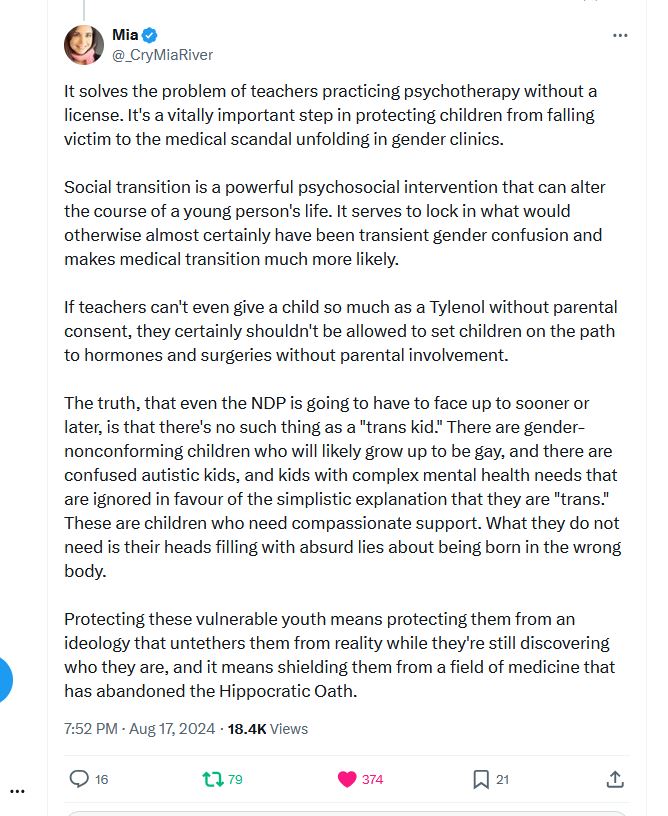
Nope, nope, nope. We can’t have people who major in medical science denial anywhere near the levers of power.
I look forward to the all the major news organizations issuing retractions for their untruthful reporting.
Trying to find video evidence of this… event was a bit challenging. If the video does not start at 6:24 please navigate to that timestamp to witness a PHd demonstrate her craft in ‘breaking’.
Let’s look at some samples of her “scholarship”.
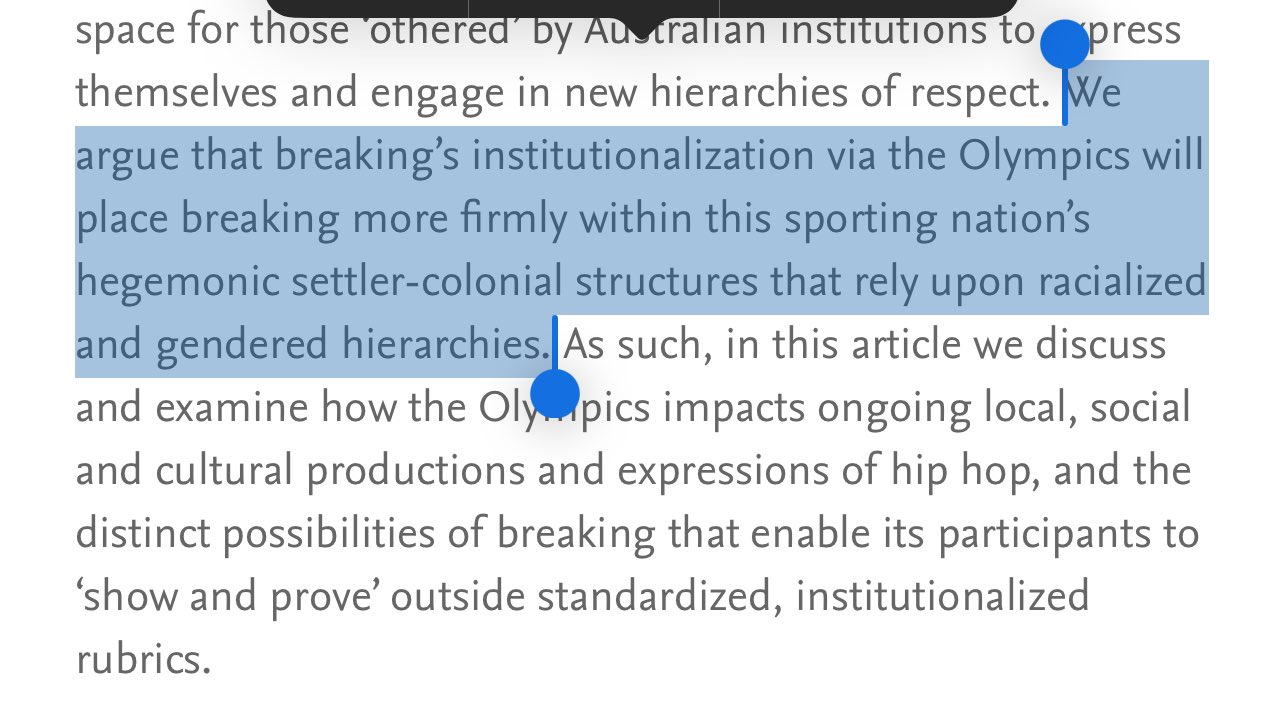
“We argue that breaking’s institutionalization via the Olympics will place breaking more firmly within this sporting nation’s hegemonic settler-colonial structures that rely upon racialized and gendered hierarchies.”
This intentional word salad is endemic across all of the Grievance Study fields – for those not in the know – any course that ends in “Studies” usually qualifies as a Grievance Study. Essentially these are ‘fields’ that have been set up to give employment to ‘scholars’ that otherwise would not be able to find a job anywhere in society.
Thus the only vocation available is one of indoctrinating others into the bullshit and churning out vacuous papers that cite other bullshit papers (citation laundering) in attempt to look like a credible academic subject.
Let’s see what the good Dr.Gunn says on ‘breaking’.
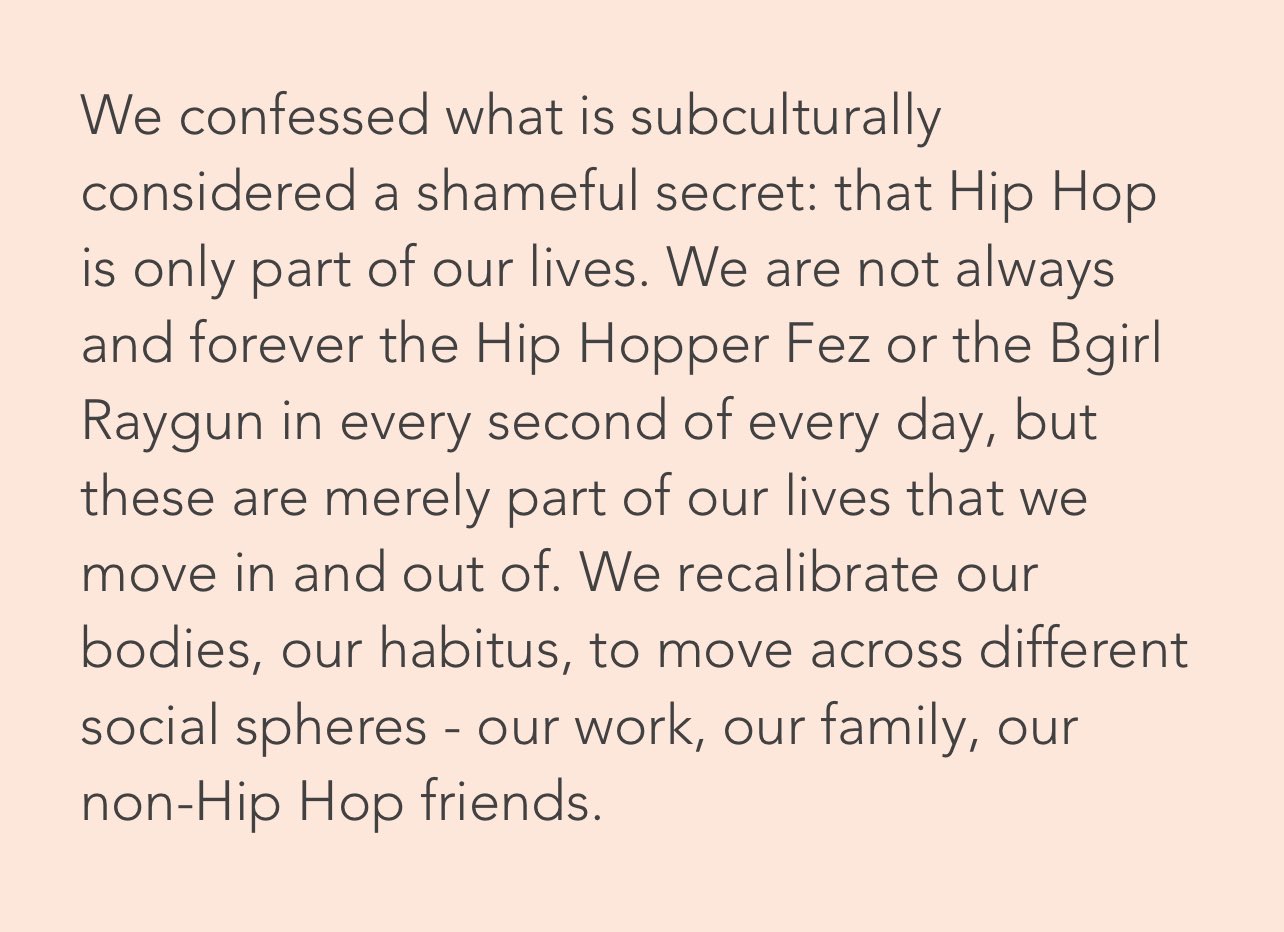
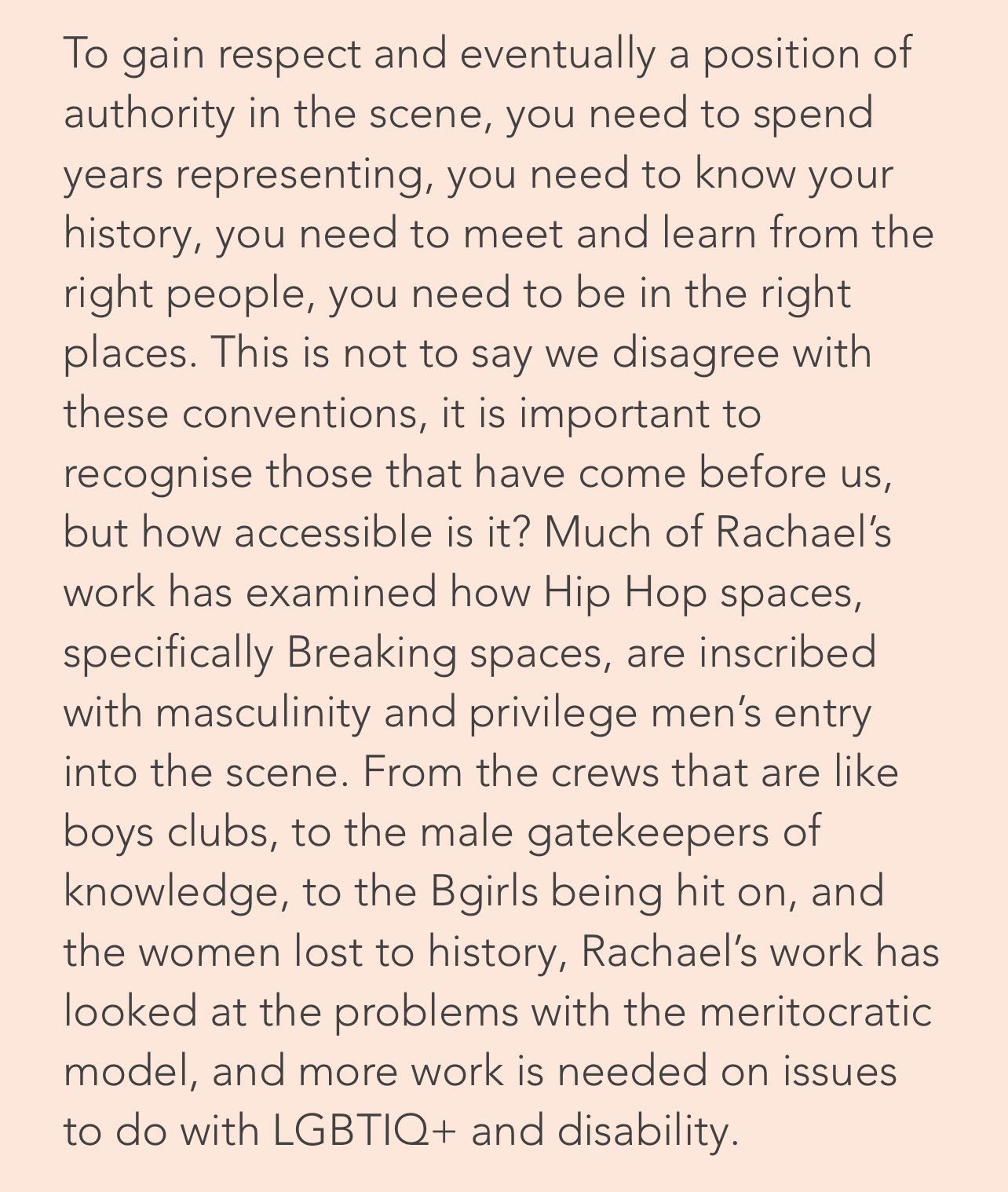
And finally the best for last:
So to put things in perspective – the video of Gunn ‘breaking’ is the prefect illustration of her grasp of the subject, and really her connection to reality.
This is a brutal attack on freedom of speech and expression. The people of the UK need to stand up and stand up quickly before they lose more of their rights and freedoms.

Just the imagine the tangled nightmare of how this is enforced. Who decides what is “hate speech”? What is the metric used? I cannot believe this is actually a thing in 2024.
That couldn’t possible happen in Canada…

Oh dear…
Take a gander at the discourse around the Olympic Boxing debacle. False narratives rather than facts are being propagated at an alarming pace. Here is a FAQ intended to clear up the questions around this boxing scandal.
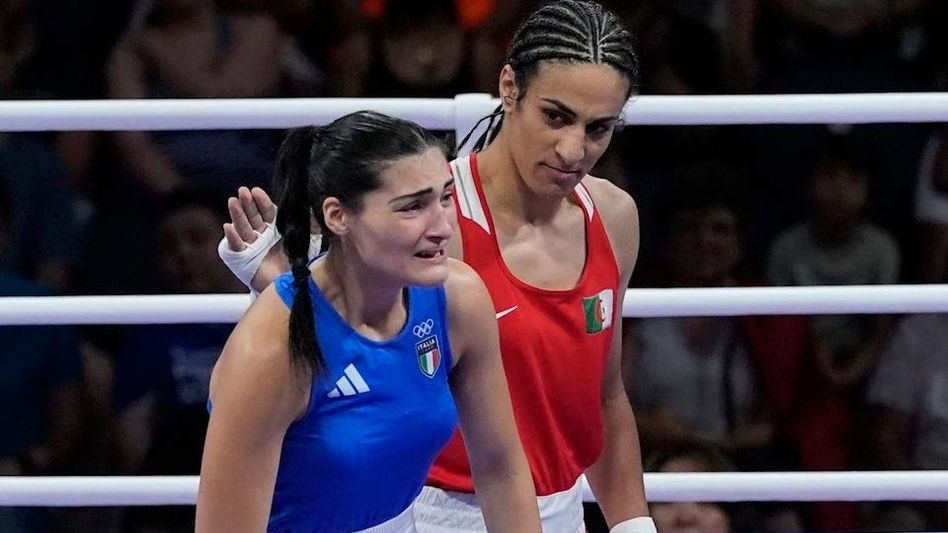
1. “L & K are just women with high testosterone!” Khelif and Lin were never tested for their testosterone levels. The claims that they were disqualified from the 2023 Women’s World Boxing Championship due to simple testosterone abnormalities were made by their respective national sporting bodies, who, obviously, have some motivation to lie here.
AAAA
2. “L & K have female ID!” Khelif and Lin are not believed to be transgender, and @ReduxxMag made that VERY clear in our July 28 article. They are believed to be impacted by a Difference of Sexual Development, in which there is a developmental abnormality in secondary sex characteristics. This is a medical condition which can manifest with children being born with ambiguous or disfigured genitalia. Male children impacted by DSDs are often “assigned female at birth” due to these genital defects, as there is a genuine assumption they are girls. Thus, their identification documents would be completely irrelevant in this case. As is the fact they were “raised as girls.” That’s entirely expected for male children with DSDs. Even more so for male children with DSDs in socially conservative countries. Is a boy without a penis more likely to be raised as a boy or a girl?
Exactly. 3. “The IBA never said they had XY chromosomes!” On March 25, 2023, IBA President Umar Kremlev said that the boxers disqualified at the championships had XY chromosomes. He said this in a statement to TASS News. There were only two boxers disqualified at the championships: Lin and Khelif.
4. “But Kremlev could be lying!” Over the last 72 hours, the IBA has released two separate statements confirming that Khelif and Lin were not subject to testosterone testing, but had instead been subjected to a separate test validated by two independent laboratories. That test confirmed they were not eligible to compete in women’s boxing as per the IBA guidelines. Crucially, the IBA defines “woman” as “an individual with XX chromosomes.” In their guidelines, they also indicate that the gender tests they use to determine if a person is eligible to compete with women is a chromosomal test, not a hormone test. In their second statement, the IBA condemned the IOC for allowing Khelif and Lin to proceed as they believed it was putting female boxers at risk and that they did not support “boxing between the genders.”
5. “Why doesn’t the IBA release the test!” They cannot. It is protected medical information. They would be sued. Khelif and Lin, however, can agree to have the laboratories release those tests themselves… Why haven’t they?
6. “The IBA didn’t let L & K appeal their disqualification!” Yes they did. They have no choice in the matter. The Court of Arbitration for Sport (CAS) is a fully independent tribunal which oversees all disputes in elite athletics. Every athlete has a right to bring a case to the CAS. Lin did not challenge the disqualification. Khelif challenged the disqualification but withdrew the appeal before it could proceed through the court. Please ask yourself why. If they were genuinely female, why would they have chosen to refuse their opportunity to establish that in an irrefutable and legally binding way at a fully independent venue? Literally none of this would have happened had they simply submitted their tests to the CAS. Buuuut… Consider that all decisions at the CAS are public information. It was through a CAS challenge that the world became aware that Caster Semenya had XY chromosomes, for example. If Khelif and Lin had proceeded through the CAS, there would have been irrefutable evidence, documented by an independent body, that they were either male or female. So why? Why did they not want the CAS to examine their tests? Why did they not want this information to be public? I think the reason is obvious.
7. “But the IOC approved their eligibility for 2024!” The IOC stopped sex testing athletes in 1999. Since then, they have deferred to individual sporting bodies to ensure athletes were eligible. HOWEVER, for the purposes of the 2024 Paris Olympics, there is no formal oversight body for boxing. This is the first time this ever happened. As a result, the IOC created an ad-hoc boxing unit to temporarily oversee the boxing competitions in Paris. This unit has no guidelines for gender eligibility, and has apparently just been allowing boxers to compete “as females” if they have female gender markers on their passports/legal documents.
8. “The IBA is corrupt and cannot be trusted!” The IOC has long had an issue with the IBA because the IBA has refused to disqualify Russian athletes on the basis of their national identity. Claims of the IBA’s “corruption” can basically be summarized to “Russia bad, Russians evil.” The IBA has literally no history of bullshitting about the sex of boxers involved and it doesn’t benefit them in any kind of way to do so.
9. “The IBA only disqualified L & K because they beat Russian boxers at the 2023 championships!” No they did not. I started seeing this weird, completely false claim circulating over the last 24 hours. Khelif beat Thailand’s Janjaem Suwannapheng and was set to compete against China’s Yang Liu for gold in the Welterweight category. Lin beat Bulgaria’s Svetlana Kamenova Staneva for bronze in the Featherweight category. They were scheduled to fight no Russian boxers in either one of their categories, and only one Russian boxer won a gold medal in the entire championship (Anastasiia Demurchian, Light Middleweight). India won the most gold medals (4) at the 2023 Women’s Championship. China won the most medals overall (7). Kazakhstan won the second most medals overall (6). Russia only won 3 medals at the championship. Also worth noting that another Taiwanese boxer, Huang Hsiao-wen, won gold in the Bantamweight category. So for all the Taiwanese mouthpieces claiming Lin’s disqualification was just “discrimination against Taiwan”… lol no.
10. “L & K were only singled out because they don’t look feminine!” This idea that Lin and Khelif were singled out for not meeting some “western feminine beauty standard” is atrocious and quite easily refutable when you look at literally any of their competitors, most of whom do not meet that arbitrary standard themselves because boxing is a physically demanding sport for robust people, male or female. Below is Khadija El-Mardi of Morocco, for example, who likely would be accused of failing to meet this supposed “western feminine beauty standard.” El-Mardi won gold in the Heavyweight category at the 2023 World Championships. She is advancing to the quarter-finals in Paris as we speak. She’s one of the best female boxers out there. She is a woman. Her features and tall stature literally do not matter. She is biologically female. Sex testing would return an XX. Women are adult human females. This is true regardless of their external appearance. Likewise, men are adult human males. This is true regardless of abnormalities or defects in their secondary sex characteristics.”
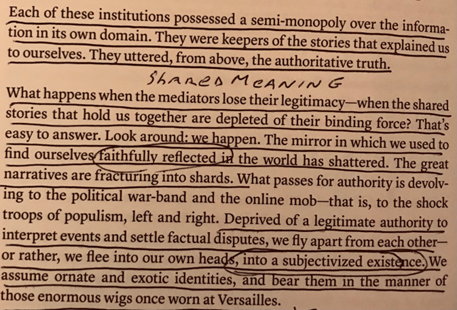
Society must progress, but not at the cost of the ideas and values that brought it together in the first place. The balance between progress and conserving has been off for awhile. The values that hold society together and the institutions that uphold them are in decline as people are distrusting what is coming out of our institutions.
We need to be able to put our trust in the institutions that represent us and should work toward restoring their place in society.

Look. Just look. People with wildly different political allegiances have a heated, spirited, and RESPECTFUL discussion of contentious issues. It can be done.
Discourse is the lifeblood of democratic societies and thus, we should be wary of people who would shut down discourse rather than defend their ideas in the public square.











 bleatmop
 Mystro
 The Arbourist


 Dead Wild Roses
Your opinions…