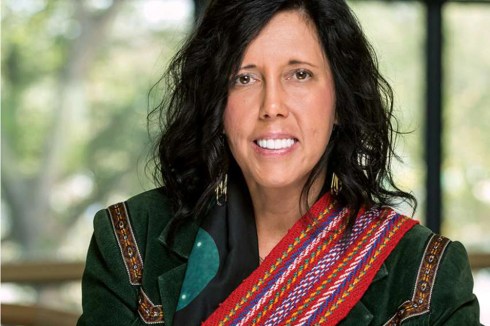
“A Canadian medical researcher who rose to become the nation’s top voice on indigenous health has been ousted from her government job and her university professorship — after suspicious colleagues investigated her increasingly fanciful claims of Native American heritage and learned she was a fraud.”
“Far from being a member of the Métis nation, as she had long claimed, a laborious trace of Bourassa’s family tree revealed that her supposedly indigenous ancestors were in fact immigrant farmers who hailed from Russia, Poland, and Czechoslovakia.
Wheeler, a documented member of Manitoba’s Fisher River Cree Nation, started digging into Bourassa’s genealogical records — and took her findings to the media.
But when pressed to provide evidence of Native American heritage, Bourassa suddenly changed her story — saying that she had been adopted into the Métis community by an unnamed Métis friend of her deceased grandfather, Clifford Laroque.
“Even though Clifford passed, those bonds are even deeper than death because the family has taken me as if I was their blood family,” she insisted in a statement. “In turn, I serve the Métis community to the best of my ability.”
“Wheeler said the fact that the letter advocates sidelining genealogical proof is alarming at a time when Indigenous people are fighting for their rights and their land.
“That’s opening the doors to every Tom, Dick and Harry to claim Indigeneity,” she said. “Then suddenly out of the woodwork, everybody’s Indigenous because they feel like it.”
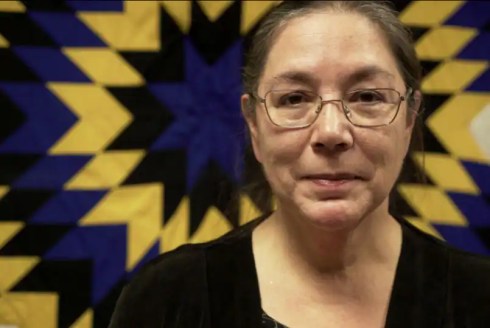
University of Saskatchewan associate professor of Indigenous studies Winona Wheeler says Bourassa’s story is built on a fundamental falsehood. (Chanss Lagaden/CBC)
According to an email from the University of Saskatchewan, if Indigenous identity or experience is required for a role, the university “accepts self-declaration in matters of employment.”
Wheeler said that’s not enough.
“When I apply for an academic job, I have to give them a copy of my certificate for my PhD,” she said. “But if I’m applying for a position that’s targeted only for Indigenous people, I’m not required to provide anything except self-identification. Now that’s lowering standards.”
Smylie said she decided to speak up, despite the risks to her career, because the consequences of continued silence are grave.
“If I was to stay quiet and let somebody who’s an impostor regularly inform the nation and lead the nation like in Indigenous health, then I guess then I wouldn’t [have] earned the right to call myself Métis anymore,” she said. “And that will be the end of our people.”
The discrimination and hatred that transracial individuals receive in Canada is real, and their very existence is being questioned. When will this rampant transracialphobia and marginalization stop?
Is there a better example of how utterly inconsistent and deranged transgender ideology is? Why in the case as ‘someone who identifies as Indigenous’ is lambasted in the press and yet, somehow a man can identify as a woman and all is well in the world (it really isn’t).
Like, come on CBC, either self identification all the time or none of the time – it can’t just be for men who think they are women. You should be championing Bourassa’s case not denigrating her and questioning her ‘validity’. So what if the established facts of the matter point to the exact opposite of her identity claims? How can we not endorse Bourassa while tirelessly advocating for men to freely claim womanhood because they self-identify as such?
What is the metric you are using to promote one aspect of self-id, but not the other?
Asking for the female population of Canada that is being erased in Canadian society through the wildly inappropriate application of gender identity laws.
William Astore writes for Tom’s Dispatch on the overreach of the American Industrial complex. The reality of the situation is this, the only thing that arms manufacturers cannot create is peace.
Paraphrasing Joe Biden, show me your budget and I’ll tell you what you worship. In that context, there can’t be the slightest doubt: America worships its Pentagod and the weapons and wars that feed it.
Prefabricated War, Made in the U.S.A.
I confess that I’m floored by this simple fact: for two decades in which “forever war” has served as an apt descriptor of America’s true state of the union, the Pentagod has failed to deliver on any of its promises. Iraq and Afghanistan? Just the most obvious of a series of war-on-terror quagmires and failures galore.
That ultimate deity can’t even pass a simple financial audit to account for what it does with those endless funds shoved its way, yet our representatives in Washington keep doing so by the trillions. Spectacular failure after spectacular failure and yet that all-American god just rolls on, seemingly unstoppable, unquenchable, rarely questioned, never penalized, always on top.
Talk about blind faith!
The Pentagod advances a peculiar form of war, one that would puzzle most classic military strategists. In fact, its version of war is beyond strategy of the Clausewitzian sort. I think of it as prefabricated war, borrowing a term from the inestimable Ann Jones’s recent piece for TomDispatch on our Afghan disaster. It’s a term pregnant with meaning.
Prefabricated war is how the Pentagod has ruled for so endlessly long. There is, as a start, the fabrication of false causes for war. In Vietnam, it was the Gulf of Tonkin Incident, the “attacks” on U.S. Navy ships that never happened. In Afghanistan, it was vengeance for the 9/11 attacks against a people who neither planned nor committed them. In Iraq, it was the weapons of mass destruction that Saddam Hussein didn’t have. Real causes don’t matter much to America’s war god since false ones can always be fabricated, after which enough true believers — especially in Congress — will embrace them fervently and faithfully.
But prefabricated war doesn’t just start with or consist of manufactured causes. It’s fabricated far ahead of time in a colossal cathedral of violence — President Eisenhower’s military-industrial-congressional complex — that sends its missionaries and minions around the planet on a mission of global reach, global power, and full-spectrum dominance. War is prefabricated on 750 military bases scattered across the globe on every continent except Antarctica, in America’s giant arms corporations like Boeing, Lockheed Martin, and Raytheon, and by Special Operations forces that act much like the Jesuits of the Catholic Counter-Reformation, spreading the one true faith to 150 countries.
Since America’s war god is also a jealous deity, it insists on dominating all domains — not just land, sea, and air but space as well. Even more ethereal realms like cyberspace and virtual/augmented realities must be captured and controlled. It seeks omnipotence and omniscience in the name of your safety and, if you let it, will also know everything about you, while having the power to smite you, should you stop blindly worshipping it and feeding it more money.
It won’t be business as usual for very much longer. The mantle of world power is quite possibly changing hands within my life time. Lovely. Alfred McCoy tackles the large geopolitical issues that we will all be facing in the future.
America’s decline started at home as a distinctly bipartisan affair. After all, Washington wasted two decades in an extravagant fashion fighting costly conflicts in distant lands, in part to secure the Middle East’s oil at a time when that fuel was already destined to join cordwood and coal in the dustbin of history (though not faintly soon enough). Beijing, in contrast, used those same years to build industries that would make it the world’s workshop.
In 2001, in a major miscalculation, Washington admitted Beijing to the World Trade Organization, bizarrely confident that a compliant China would somehow join the world economy without challenging American global power. “Across the ideological spectrum, we in the U.S. foreign policy community,” wrote two former members of the Obama administration, “shared the underlying belief that U.S. power and hegemony could readily mold China to the United States’ liking… All sides of the policy debate erred.”
A bit more bluntly, foreign policy expert John Mearsheimer recently concluded that “both Democratic and Republican administrations… promoted investment in China and welcomed the country into the global trading system, thinking it would become a peace-loving democracy and a responsible stakeholder in a U.S.-led international order.”
In the 15 years since then, Beijing’s exports to the U.S. grew nearly fivefold to $462 billion annually. By 2014, its foreign currency reserves had surged from just $200 billion to an unprecedented $4 trillion — a vast hoard of cash it used to build a modern military and win allies across Eurasia and Africa. Meanwhile, Washington was wasting more than $8 trillion on profitless wars in the Greater Middle East and Africa in lieu of spending such funds domestically on infrastructure, innovation, or education — a time-tested formula for imperial decline.
When a Pentagon team assessing the war in Afghanistan interviewed Jeffrey Eggers, a former White House staffer and Navy SEAL veteran, he asked rhetorically: “What did we get for this $1 trillion effort? Was it worth a trillion? After the killing of Osama bin Laden, I said that Osama was probably laughing in his watery grave considering how much we have spent on Afghanistan.” (And keep in mind that the best estimate now is that the true cost to America of that lost war alone was $2.3 trillion.) Consider it an imperial lesson of the first order that the most extravagantly funded military on Earth has not won a war since the start of the twenty-first century.
Donald Trump’s presidency brought a growing realization, at home and abroad, that Washington’s world leadership was ending far sooner than anyone had imagined. For four years, Trump attacked long-standing U.S. alliances, while making an obvious effort to dismiss or demolish the international organizations that had been the hallmark of Washington’s world system. To top that off, he denounced a fair American election as “fraudulent” and sparked a mob attack on the U.S. Capitol, functionally making a mockery of America’s long history of promoting the idea of democracy to legitimate its global leadership (even as it overthrew unfriendly democratic governments in distant lands via covert interventions).
In that riot’s aftermath, most of the Republican Party has embraced Trump’s demagoguery about electoral fraud as an article of faith. As it happens, no nation can exercise global leadership if one of its ruling parties descends into persistent irrationality, something Britain’s Conservative Party demonstrated all too clearly during that country’s imperial decline in the 1950s.
Liz Theoharis writing for Tom’s Dispatch on poverty and the solidarity and ingenuity of the American people when it came to helping the poor in their country. The underclasses in the USA have begun to organize again, I just hope it isn’t too late because the road before them is steep and filled with many pitfalls. The recent addition of social media to the mix with it’s tendency to fragment and cause division among groups will provide a significant challenge for those organizations that wish to once again reform and reforge the poor into a political force in the US. I hope they succeed as the survival of their nation is dependent on them achieving their goals.
“Another example was the transformative work of the Black Panther Party, whose legacy still impacts our political life, even if the image of the party remains distorted by myths, misrepresentations, and racist fearmongering. This October marked the 55th anniversary of its founding. For many Americans, its enduring image is still of ominous looking men in black berets and leather jackets carrying guns. But most of their time was spent meeting the needs of their community and building a movement that could transform life for poor Black people.
In a recent interview, Fredericka Jones, a Black Panther herself and the widow of the party’s co-founder, Huey Newton, explained that among their projects,
“the most famous and most notable would be the free breakfast the Panthers offered to thousands of children in Oakland and other cities, providing basic nutrition for kids from poor families, long before the government took on this responsibility. We knew that children could not learn if they were hungry, but we also had free clinics. We had free clothing. We had a service called SAFE (Seniors Against a Fearful Environment) where we would escort seniors to the bank, or, you know, to do their grocery shopping. We had a free ambulance program in North Carolina. Black people were dying because the ambulance wouldn’t even come and pick them up.”
Before his murder in 1989, Newton himself characterized their work this way:
“The Black Panther Party was doing what the government should’ve done. We were providing these basic survival programs, as we called them, for the Black community and oppressed communities, when the government wasn’t doing it. The government refused to, so the community loved the Party. And that was not what you saw in the media. You didn’t see brothers feeding kids. You saw a picture of a brother who was looking menacing with a gun.”
As Newton pointed out, the Panthers bravely stepped into the void left by the government to feed, educate, and care for communities. But they were also clear that their survival programs were not just about meeting immediate needs. For one thing, they purposefully used those programs to highlight the failures of President Lyndon Johnson’s War on Poverty and the contradictions between America’s staggering wealth and its staggering poverty and racism, which existed side by side and yet in separate universes. In those years, the Panthers quite consciously tried to shine a light on the grim paradox of a nation that claimed there was never enough money to fight poverty at home, even as it spent endless billions of dollars fighting a war on the poor in Southeast Asia.
Their programs also gave them a base of operations from which to organize new people into a human-rights movement, which meant that all of their community work would be interwoven with political education, highly visible protest, cultural organizing, and a commitment to sustaining leaders for the long haul. While deeply rooted in poor black urban communities, the Panthers both inspired and linked up to similar efforts by Latino and poor-white organizations.
These were, of course, the most treacherous of waters. At the time, J. Edgar Hoover’s FBI listed the Black Panthers and their breakfast program as “the greatest threat to internal security in the country.” Government officials recognized that such organizing could potentially catch fire across far wider groups of poor Americans at a moment when the War on Poverty was being dismantled and the age of neoliberal economics was already on the rise.”
The COP26 Summit, like other climate initiatives will be remembered as yet another paving stone laid on the path of collective good intentions by the nations of the world (excluding Russia and China…).
“It is not a secret that COP26 is a failure. It should be obvious that we cannot solve the crisis with the same methods that got us into it in the first place,” Thunberg said.
“The COP has turned into a PR event, where leaders are giving beautiful speeches and announcing fancy commitments and targets, while behind the curtains governments of the Global North countries are still refusing to take any drastic climate action.”
Well, there looks to be a little substance behind all of the green washing:
COP26 president Alok Sharma said coal was “no longer king” but admitted more needed to be done
The influential International Energy Agency said that promises made at the conference would keep the world to a 1.8C degree rise in temperatures
However that would depend on all promises being kept and delivered – which experts say is far from certain”
Glad to see all those promises being rolled out. I think that a lukewarm response is justified as such promises, once they hit the reality of country’s national politics and ‘interests’ will be quickly ignored and the business will return to usual.
I think many, including myself, are now entertaining their own Dr.Strangelove moment. Presently, renamed to How I Stopped Worrying and Love the Climate-Change.
The forthcoming changes to our way of lives will simply happen.
We will have arable farmland until after the nth season of drought, thenwe will not.
We will have polar vortex events consistently through Canada’s winter at a great pace.
We will have affordable energy and energy infrastructure, until well, we don’t.
“Trevor Riggen, the head of the American Red Cross’s domestic disaster program, said the agency is “testing the limits” of its network. This week alone, more than 2,000 staff and volunteers have deployed across 10 states. Many of them are on their second or third crisis of the summer.
“It’s no longer, ‘We have a big event and then there’s time to recover,’” Riggen said. “Disaster has become a chronic condition.”
But the extent of damage wrought by climate change will be determined by how the nation plans for it, and how the communities rebuild.
Almost half of public roadways are currently in poor or mediocre condition, according to the American Society of Civil Engineers — making events like the deadly collapse of a Mississippi highway during Hurricane Ida more likely. The location and condition of some 10,000 miles of levees in the United States are unknown. Chronically underfunded storm water systems are unable to cope with record rainfall. Many electric utilities have not taken steps to ensure the grid keeps functioning amid worsening hurricanes and wildfires.
Communities need to start preparing for the unprecedented, Fugate said. Coastal cities should develop alternative evacuation plans to avoid getting caught off-guard by rapidly intensifying storms — for example, building comfortable, well-equipped shelters for people who don’t have time to flee. Levees and storm-water systems must be built to withstand floods that would have been impossible in a cooler world. Amid unstoppable wildfires, homes at the edge of forests can be made safer with flameproof building materials.
Social systems are also in need of repair, said Arcaya. During heat waves, early warning systems and check-ins from neighbors have been proved to save hundreds of lives. After hurricanes, research shows, people with strong connections to their neighbors experience less trauma and are better able to get back on their feet.
The country will need a robust support system to help thousands of displaced people navigate the bureaucracy required to obtain federal assistance, Arcaya said. And since disasters often destroy affordable housing, the nation will need to invest in building more places for people to live.
These changes will be expensive, Fugate acknowledged. But the cost of responding to disasters already totals more than $81 billion per year. “It’s a choice between spending now or spending more in the future.”
I’m not going to go out on a limb here and state that we are going to choose to spend now aaaand spend more in the future as we try to correct the fuck ups of the present day.
The saving grace of the entire situation is that when the truly calamitous events start, I most likely will be dead. Strangely reassuring I suppose, but honestly, I think it’s the only way the exploitation driven economic system we have ends. When it starts fucking over the ‘important’ people – then and only then – will we move as a collective to ‘save the earth’. Vastly too little too late, but at least the effort will be genuine then.
The power to make decisions in society must remain primarily in the hands of a democratically elected government. In private hands, there is only one concern, and that is the bottom line. We have too much ‘bottom line’ directed policy as it is.
“There’s a striking difference between physicists and economists. Physicists don’t say, hey, let’s try an experiment that might destroy the world, because it would be interesting to see what would happen. But economists do that. On the basis of neoclassical theories, they instituted a major revolution in world affairs in the early 1980s that took off with Carter, and accelerated with Reagan and Thatcher. Given the power of the United States compared with the rest of the world, the neoliberal assault, a major experiment in economic theory, had a devastating result. It didn’t take a genius to figure it out. Their motto has been, “Government is the problem.”
That doesn’t mean you eliminate decisions; it just means you transfer them. Decisions still have to be made. If they’re not made by government, which is, in a limited way, under popular influence, they will be made by concentrations of private power, which have no accountability to the public. And following the Friedman instructions, have no responsibility to the society that gave them the gift of incorporation. They have only the imperative of self-enrichment.
Margaret Thatcher then comes along and says there is no such thing as society, just atomized individuals who are somehow managing in the market. Of course, there is a small footnote that she didn’t bother to add: for the rich and powerful, there is plenty of society. Organizations like the Chamber of Commerce, the Business Roundtable, ALEC, all kinds of others. They get together, they defend themselves, and so on. There is plenty of society for them, just not for the rest of us. Most people have to face the ravages of the market. And, of course, the rich don’t. Corporations count on a powerful state to bail them out every time there’s some trouble. The rich have to have the powerful state — as well as its police powers — to be sure nobody gets in their way.”
What is ad block? It is an application that, at your discretion blocks out advertising so you can browse the internet for content as opposed to ads. If you do not have it, get it here so you can enjoy my blog without the insidious advertising.












 bleatmop
 Mystro


 Dead Wild Roses
Your opinions…