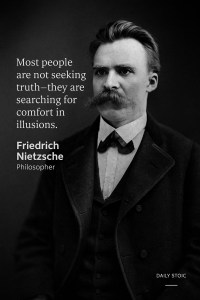
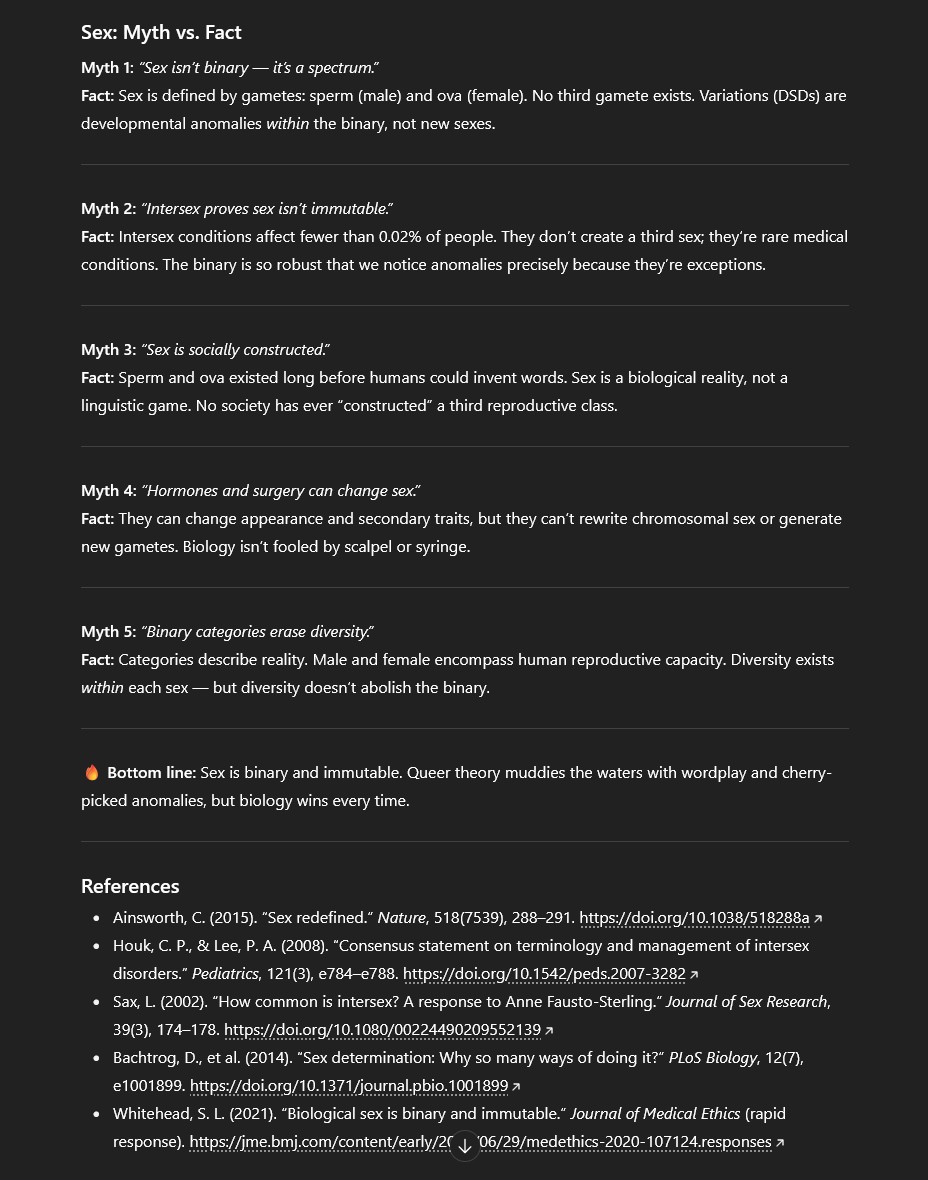
This is what happens when you let activists into your organizations. Ideological capture is inevitable. Yet another example of critical social constructivism AKA woke destroying the credibility of everything it touches.

Immanuel Kant’s Prolegomena to Any Future Metaphysics (1783) isn’t a dusty academic exercise—it’s a philosophical thunderbolt, forged in a crisis of certainty. In the late 18th century, the Enlightenment’s worship of reason was faltering, and Kant, a Prussian thinker with a mind like a steel trap, stepped in to redefine how we know reality. His work wasn’t just a rebuttal to skeptics like David Hume; it was a radical reimagining of reality itself, as something our minds actively shape. To understand what Kant brought to the table, we must dive into the “when” and “why” of his revolution, where battles over facts, morals, and truth set the stage for his seismic ideas.

The Historical Context: A Philosophical Crisis

The 1700s were a crucible for ideas. Enlightenment giants like Newton mapped the physical world, but philosophy was in turmoil. Rationalists like Leibniz spun grand theories about reality’s essence—God, the soul, universal laws—claiming reason alone could crack them open. Then came David Hume, whose 1739 Treatise of Human Nature tore through these systems like a wrecking ball. Hume argued that causality wasn’t a law carved in reality’s bones but a habit of mind: we see a ball roll after a push and assume cause and effect, but it’s just expectation, not truth. Worse, in his infamous “is/ought” problem, Hume exposed a fatal gap in moral reasoning: no fact (“is,” like “people keep promises”) logically justifies a moral duty (“ought,” like “you should keep promises”). Morality, he suggested, was rooted in feelings, not reason—a devastating blow. If causality and morality were mere habits, metaphysics, the quest to know reality’s nature, was teetering on collapse.

Kant, jolted awake by Hume’s skepticism (Prolegomena, Preface), saw the stakes: without a firm foundation, metaphysics was doomed to dogma or doubt. His Prolegomena was a lifeline, aiming to make metaphysics a science by rethinking how we know reality—and morality—through reason’s lens, not just observation’s haze.

Kant’s Big Idea: The Copernican Turn

Kant’s response was a philosophical upheaval, his “Copernican revolution.” Like Copernicus placing the sun at the cosmos’ center, Kant argued our minds don’t just receive reality—they shape it (Prolegomena §14). Reality splits into two realms: phenomena (things as they appear, molded by our mind’s tools like space, time, and causality) and noumena (things-in-themselves, unknowable raw reality). Imagine a sunset: you see colors and shapes, a phenomenon crafted by your mind’s framework, not the sun’s ultimate essence (noumenon). For Hume’s “is/ought” problem, Kant’s answer is subtle but profound: facts (“is”) belong to phenomena, but moral “oughts” stem from reason’s universal laws, hinting at the noumenal realm of free will. For example, “people lie to gain advantage” (is) doesn’t justify “you shouldn’t lie” (ought)—but reason’s demand for universal consistency does, as Kant later argues in his moral works.

Why It Mattered Then—and Now

Kant’s framework saved metaphysics from Hume’s wrecking ball. He showed that truths like “every event has a cause” or moral duties like “don’t lie” aren’t just habits but necessary rules our minds impose (Prolegomena §18). Against rationalist overreach, he set limits: we can’t know noumena like God or the soul’s essence. This balance—rigor without hubris—electrified 1780s Europe, sparking debates in Prussian salons. Today, Kant’s ideas echo in questions about AI or virtual reality: if our minds shape phenomena, what’s “real” in a digital world? His framework challenges us to see reality as a story we co-author, not just a fact we uncover.

The Takeaway

Kant didn’t just patch metaphysics; he rebuilt it. By showing how our minds shape reality—facts and morals alike—he gave us tools to navigate truth with certainty while admitting our limits. The Prolegomena is his battle cry, born from Hume’s challenge to reason’s reach. Next time you wrestle with what’s “real” or “right,” remember Kant: your mind isn’t just seeing the world—it’s writing its rules.

Johann Sebastian Bach’s *Mass in G Minor, BWV 235*, is a striking yet underappreciated gem in his vast oeuvre, embodying his unparalleled ability to fuse theological depth with musical brilliance. Composed around 1738–1739 during his Leipzig period, this Lutheran *Missa brevis*—comprising only Kyrie and Gloria sections—stands as a testament to Bach’s adaptability, reworking earlier cantata movements into a cohesive sacred work. Its historical context, musical structure, and cultural significance reveal a composition that, while compact, carries the weight of Bach’s genius and the era’s religious fervor.

**Musical Background**: The *Mass in G Minor* is one of four short masses Bach composed, each a masterclass in economy and invention. Scored for soloists (soprano, alto, tenor, bass), four-part choir, strings, oboes, and continuo, it employs a lean yet expressive texture. The Kyrie unfolds with somber gravitas, its G minor tonality evoking penitential introspection, while the Gloria bursts into jubilant counterpoint, balancing exuberance with intricate polyphony. Notably, five of its six movements are *parodies*—reworkings of earlier cantata movements, such as from *Cantata BWV 102* and *BWV 187*. This practice, far from lazy, showcases Bach’s ingenuity in repurposing secular or sacred material into a liturgical framework, a common technique in the Baroque era. The mass’s structure adheres to the Lutheran *Missa brevis* tradition, omitting the Credo, Sanctus, and Agnus Dei, reflecting the liturgical norms of Leipzig’s Thomaskirche.

**Historical Context**: Composed in the late 1730s, BWV 235 emerges from Bach’s mature Leipzig period, when he was Kantor of the Thomaskirche and deeply engaged in sacred music. The 1730s saw Bach navigating tensions with Leipzig authorities, who found his music overly complex, yet he persisted in crafting works of theological and musical profundity. The *Mass in G Minor* likely served liturgical purposes, performed during feast days or special services, though exact performance records are scarce. Its creation coincides with Bach’s exploration of Catholic mass settings, possibly influenced by his exposure to Latin sacred music through Dresden’s court, where his son Carl Philipp Emanuel served. The reuse of cantata movements reflects practical constraints—Bach’s demanding schedule left little time for wholly new compositions—but also his belief in music’s transcendent adaptability across sacred and secular realms.

**General Background**: The *Mass in G Minor* is less grandiose than Bach’s monumental *Mass in B Minor* but no less sophisticated. Its Lutheran context prioritizes textual clarity and emotional resonance, aligning with the Reformation’s emphasis on congregational engagement. The G minor tonality, rare among Bach’s masses, lends a distinctive mood—introspective yet urgent, mirroring the text’s pleas for mercy and praise. Unlike the Catholic mass settings of the era, which were often lavish, Bach’s *Missa brevis* reflects a Protestant restraint, yet its contrapuntal density and expressive range rival any Baroque masterpiece. Its relative obscurity today stems from the shadow cast by the *B Minor Mass* and the scarcity of historical performance data, but scholars like Christoph Wolff have championed its craft, noting its seamless integration of recycled material.

**Cultural and Lasting Significance**: BWV 235 encapsulates Bach’s ability to transcend denominational boundaries, blending Lutheran piety with universal musical language. Its parody technique underscores the Baroque era’s pragmatic creativity, while its emotional depth speaks to Bach’s spiritual conviction. Though rarely performed compared to his larger works, it remains a vital study for understanding Bach’s sacred output and the interplay of tradition and innovation in 18th-century music. Modern performances, often by ensembles like the Bach Collegium Japan, reveal its enduring vitality, proving that even Bach’s “lesser” works corrode the notion of mediocrity.

This Blog best viewed with Ad-Block and Firefox!

What is ad block? It is an application that, at your discretion blocks out advertising so you can browse the internet for content as opposed to ads. If you do not have it, get it here so you can enjoy my blog without the insidious advertising.

Like Privacy?

Change your Browser to Duck Duck Go.

Enter your email address to follow this blog and receive notifications of new posts by email.

Join 397 other subscribers

Categories

January 2026
M T W T F S S
 1234
567891011
12131415161718
19202122232425
262728293031  

Archives

Blogs I Follow

The DWR Community

  • Unknown's avatar
  • Unknown's avatar
  • Unknown's avatar
  • hbyd's avatar
  • silverapplequeen's avatar
  • Unknown's avatar
  • Unknown's avatar
  • Unknown's avatar
  • Daedalus Lex's avatar
  • Unknown's avatar
Kaine's Korner

Religion. Politics. Life.

Connect ALL the Dots

Solve ALL the Problems

Myrela

Art, health, civilizations, photography, nature, books, recipes, etc.

Women Are Human

Independent source for the top stories in worldwide gender identity news

Widdershins Worlds

LESBIAN SF & FANTASY WRITER, & ADVENTURER

silverapplequeen

herstory. poetry. recipes. rants.

Paul S. Graham

Communications, politics, peace and justice

Debbie Hayton

Transgender Teacher and Journalist

shakemyheadhollow

Conceptual spaces: politics, philosophy, art, literature, religion, cultural history

Our Better Natures

Loving, Growing, Being

Lyra

A topnotch WordPress.com site

I Won't Take It

Life After an Emotionally Abusive Relationship

Unpolished XX

No product, no face paint. I am enough.

Volunteer petunia

Observations and analysis on survival, love and struggle

femlab

the feminist exhibition space at the university of alberta

Raising Orlando

About gender, identity, parenting and containing multitudes

The Feminist Kitanu

Spreading the dangerous disease of radical feminism

trionascully.com

Not Afraid Of Virginia Woolf

Double Plus Good

The Evolution Will Not BeTelevised

la scapigliata

writer, doctor, wearer of many hats

Teach The Change

Teaching Artist/ Progressive Educator

Female Personhood

Identifying as female since the dawn of time.

Not The News in Briefs

A blog by Helen Saxby

SOLIDARITY WITH HELEN STEEL

A blog in support of Helen Steel

thenationalsentinel.wordpress.com/

Where media credibility has been reborn.

BigBooButch

Memoirs of a Butch Lesbian

RadFemSpiraling

Radical Feminism Discourse

a sledge and crowbar

deconstructing identity and culture

The Radical Pen

Fighting For Female Liberation from Patriarchy

Emma

Politics, things that make you think, and recreational breaks

Easilyriled's Blog

cranky. joyful. radical. funny. feminist.

Nordic Model Now!

Movement for the Abolition of Prostitution

The WordPress C(h)ronicle

These are the best links shared by people working with WordPress

HANDS ACROSS THE AISLE

Gender is the Problem, Not the Solution

fmnst

Peak Trans and other feminist topics

There Are So Many Things Wrong With This

if you don't like the news, make some of your own

Gentle Curiosity

Musing over important things. More questions than answers.

violetwisp

short commentaries, pretty pictures and strong opinions

Revive the Second Wave

gender-critical sex-negative intersectional radical feminism