The Carney Liberals have cast themselves as vigilant guardians of democratic accountability, sounding alarms about the creeping threat of right-wing fascism undermining Canada’s institutions. However, their decision to prorogue Parliament in 2025 reveals a stark hypocrisy, as it silenced legislative debate and evaded scrutiny at a pivotal moment. While they might argue this was a pragmatic response to a crisis requiring a reset of the legislative agenda, the lack of a clear, specific rationale and their history of using prorogation to sidestep controversies suggest political expediency over necessity. This move, which stalls the democratic process they claim to protect, casts doubt on their commitment to transparency and accountability.

Their refusal to table a federal budget in 2025 further erodes their credibility as champions of responsible governance. By skipping this cornerstone of fiscal accountability, they’ve left Canadians without clarity on economic priorities during a time of global uncertainty, prioritizing political maneuvering over public trust. The Liberals might counter that global economic volatility demanded delaying the budget to ensure fiscal prudence, but their failure to provide interim fiscal updates or a timeline for a future budget undermines this claim. Such an omission hampers Parliament’s oversight role, contradicting their stated dedication to open and accountable governance.

The Liberals’ warnings about authoritarian threats ring hollow when their own actions weaken the democratic norms they vow to uphold. Proroguing Parliament and bypassing a budget are not mere procedural hiccups but deliberate retreats from accountability that echo the authoritarian tendencies they condemn. They may argue that these steps are minor compared to global populist threats, but this defense falters when their governance choices invite skepticism about their motives. For a party campaigning on safeguarding democracy, the Carney Liberals’ actions—prorogation and budget avoidance—reveal a troubling disconnect between their rhetoric and reality, fueling doubts about their true priorities.

The Humane Society kitty lottery came through in spades for me. Meet Quincy, a energetic yet loving fellow who is quite passionate about food and looking out the window. :)


  1. “Sex is complex and not binary”
    Claiming sex is a spectrum oversimplifies biological reality. Chromosomes (XX/XY) determine sex in mammals, with rare intersex conditions (DSDs) being specific, diagnosable deviations, not evidence of a spectrum.
  2. “Gender identity is more important than sex”
    Prioritizing self-identified gender over biological sex ignores the material reality of sex-based differences, which matter in contexts like healthcare, sports, and safeguarding.
  3. “Data on sex doesn’t matter”
    Dismissing accurate sex data undermines policy and research. Sex-specific data is critical for addressing issues like medical treatment efficacy or crime statistics.
  4. “Asking for sex data is transphobic”
    Equating requests for accurate sex data with bigotry stifles legitimate discussion. Recording biological sex is necessary for practical purposes, not an attack on identity.
  5. “Historical data collection was flawed, so why bother?”
    Past inaccuracies in sex data collection don’t justify abandoning it. Improved, standardized methods can ensure reliable data without compromising privacy.

These arguments often rely on emotional appeals or misrepresentations of biology to dismiss the importance of sex. Accurate data and clear definitions are essential for fair and effective policies.

Source: Sex Matters

*Sicut Cervus* by Giovanni Pierluigi da Palestrina is a sublime four-voice motet, composed in the late 16th century, that sets Psalm 42:1 to music with profound spiritual depth and technical mastery. Its polyphonic texture weaves imitative lines that evoke the text’s yearning imagery of a deer longing for water, reflecting the soul’s desire for God. The smooth, flowing melodies and balanced harmonies create a serene yet emotionally resonant atmosphere, characteristic of Palestrina’s refined Renaissance style. This motet remains a cornerstone of sacred choral music, celebrated for its clarity, expressiveness, and timeless devotion.

The atheist movement, once a beacon of skepticism and rational inquiry, was significantly disrupted by the emergence of Atheism+ in the early 2010s. Atheism+, an attempt to merge atheism with progressive social justice ideologies, particularly feminism and identity politics, shifted the focus from critiquing religious dogma to enforcing ideological conformity on issues like gender and sexuality. This pivot alienated many atheists who valued the movement’s original emphasis on evidence-based reasoning. As Amarnath Amarasingam notes in The Rise and Fall of the New Atheism, the integration of identity politics created tensions within the movement, with activists like Jen McCreight, who spearheaded campaigns like Boobquake, highlighting the schism by prioritizing feminist concerns over universal skeptical principles. The resulting infighting, as seen in online forums like Reddit’s r/atheism, fractured the community, with many feeling that Atheism+ mirrored the dogmatic rigidity it once opposed.

This ideological shift led some atheists to adopt tactics reminiscent of religious apologetics—name-calling, shaming, and deflections—particularly when defending progressive stances on biological sex. Rather than applying the same skepticism they used to dismantle theistic claims, many “woke” atheists embraced gender ideology without rigorous scrutiny, treating it as an unassailable truth akin to a new deity. Posts on X from 2021 highlight this irony, with users like @SwipeWright observing that a significant portion of the atheist community “fully bought into gender ideology and sex denialism,” abandoning critical thinking for ideological loyalty. This uncritical acceptance echoes the blind faith atheists once criticized, as arguments about biological sex are often dismissed with moralistic fervor rather than engaged with empirically, revealing a departure from the movement’s foundational commitment to reason.

The implosion of the atheist movement, driven by these internal conflicts, underscores a broader lesson: skepticism must be consistently applied, whether to gods or to fashionable ideologies. The New Atheism, once galvanized by figures like Dawkins and Harris, faltered as it became entangled with identity politics, losing its coherence as a unified force. Today, the movement’s legacy is a cautionary tale of how even rationalist communities can succumb to ideological pressures, adopting the same dogmatic tactics they once decried. For atheism to reclaim its intellectual rigor, it must return to its roots, questioning all claims—divine or secular—with unflinching skepticism.


In this series, we’ve explored the oppressor/oppressed lens—a framework that divides society into those with power (oppressors) and those without (oppressed). The first post traced its roots to the Combahee River Collective, Paulo Freire, and Kimberlé Crenshaw, showing how intersectionality and class consciousness shaped a tool for naming systemic injustice, though Freire’s ideological focus sidelined factual learning. The second post examined its modern applications through Judith Butler’s fluid view of power, Robin DiAngelo’s struggle session-like workshops, and John McWhorter’s critique of its dogmatic turn. While the lens has illuminated real harms, it often oversimplifies morality, fosters division, and stifles dialogue. In this final post, we’ll dig into its deepest limitations with insights from Peter Boghossian, James Lindsay, Jonathan Haidt, bell hooks, and Joe L. Kincheloe. Then, we’ll propose a more nuanced moral framework for navigating our complex world.

The Lens’s Fatal Flaws

The oppressor/oppressed lens promises clarity: identify the oppressor, uplift the oppressed, and justice follows. But in practice, it falters as a universal moral guide. It reduces people to group identities, suppresses critical inquiry, and fuels tribalism, leaving little room for the messy realities of human experience. Five thinkers help us see why—and point toward a better way.

Peter Boghossian: Stifling Inquiry

Peter Boghossian, in How to Have Impossible Conversations (2019), argues that the oppressor/oppressed lens creates ideological echo chambers where questioning is taboo. He describes how labeling someone an “oppressor” based on identity—like race or gender—shuts down dialogue, as dissent is framed as defending privilege. For example, in a college seminar, a student questioning a claim about systemic racism might be silenced with accusations of “fragility,” echoing DiAngelo’s tactics. Boghossian emphasizes that true critical thinking requires open inquiry, not moral litmus tests. The lens’s binary framing discourages this, turning discussions into battles over who’s “right” rather than what’s true. By prioritizing ideology over evidence, it undermines the very understanding it seeks to foster.

James Lindsay: Ideological Rigidity

James Lindsay, through his work in Cynical Theories (2020) and on New Discourses (https://newdiscourses.com/), argues that the oppressor/oppressed lens, rooted in critical theory, imposes a power-obsessed worldview that distorts reality and suppresses dialogue. He contends that the lens reduces every issue—from education to science—to a battle between oppressors and oppressed, deeming “oppressed” perspectives inherently valid and “oppressor” ones suspect. For example, Lindsay cites school restorative justice programs, which often prioritize systemic oppression narratives over individual accountability, leading to increased classroom disruption (New Discourses Podcast, Ep. 160). On X, a scientific study might be dismissed as “colonial” if it challenges the lens, ignoring empirical evidence. Lindsay warns that this creates a moral absolutism where questioning the lens is equated with upholding oppression, stifling reason and fostering division. Like Freire’s class consciousness, this rigid ideology prioritizes narrative over nuance, limiting our ability to address complex problems.

Jonathan Haidt: Moral Tribalism

Jonathan Haidt, in The Coddling of the American Mind (2018) and The Righteous Mind (2012), shows how the lens fuels moral tribalism—dividing society into “us” (the oppressed or their allies) and “them” (the oppressors). He argues that it amplifies cognitive distortions, like catastrophizing, where minor slights are seen as existential threats. For example, a workplace disagreements might escalate into accusations of “oppression” if framed through the lens, as seen in DiAngelo-inspired DEI sessions. Haidt’s research on moral foundations suggests humans value not just fairness (the lens’s focus) but also loyalty, care, and liberty. By fixating on oppression, the lens neglects these other values, alienating people who might otherwise support justice. This tribalism turns potential allies into enemies, undermining collective progress.

bell hooks: Division Over Solidarity

bell hooks, in Feminist Theory: From Margin to Center (1984), critiques the oppressor/oppressed lens for fostering division rather than solidarity. She argues that pitting groups against each other—men vs. women, white vs. Black—reinforces hierarchies rather than dismantling them. For hooks, true liberation requires love and mutual understanding, not just naming oppressors. For instance, a feminist movement that vilifies all men as oppressors, as the lens might encourage, alienates male allies and ignores how class or race complicates gender dynamics. hooks’ vision of a “beloved community” emphasizes shared humanity over binary conflict, offering a moral framework that transcends the lens’s zero-sum approach.

Joe L. Kincheloe: Contextual Complexity

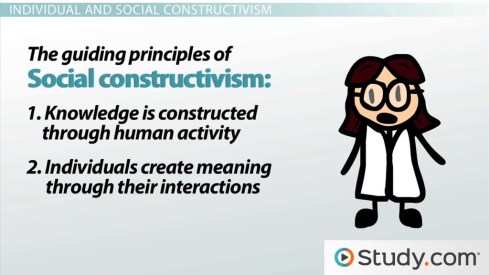
Joe L. Kincheloe, in Critical Constructivism: A Primer (2005), offers a nuanced alternative to the oppressor/oppressed lens by emphasizing that knowledge and power are co-constructed through social, cultural, and historical contexts. Building on social constructivism, Kincheloe argues that truth is negotiated through critical dialogue and evidence, not merely a function of power, rejecting the radical relativism that can accompany postmodern interpretations. He advocates empowering students to analyze their realities collaboratively, questioning how power shapes knowledge without reducing issues to a binary of oppressors vs. oppressed. For example, a teacher might guide students to investigate how local economic policies impact their community, fostering shared inquiry that considers multiple perspectives and real-world consequences. Kincheloe critiques universalizing frameworks like the oppressor/oppressed lens for ignoring local nuances and individual agency. By promoting a critical consciousness rooted in contextual, evidence-based analysis, he supports a moral framework that values complexity and collaboration over ideological absolutes.

A Better Way Forward

The oppressor/oppressed lens has illuminated systemic wrongs, from Maya’s workplace barriers to the interlocking oppressions Crenshaw described. But as Boghossian, Lindsay, Haidt, hooks, and Kincheloe show, it falls short as a moral compass. It stifles inquiry, rigidifies thought, fuels tribalism, divides communities, and oversimplifies power. So, what’s the alternative?

A more nuanced moral framework starts with three principles:

  1. Context Over Categories: Instead of judging people by group identities, consider their actions and circumstances. A white worker struggling with poverty isn’t inherently an “oppressor,” just as a wealthy person of color isn’t automatically “oppressed.” Context, as Kincheloe’s critical constructivism and Butler’s performativity suggest, reveals the fluidity of power.
  2. Dialogue Over Dogma: Following Boghossian and hooks, prioritize open conversation over moral litmus tests. Ask questions, listen, and assume good faith, even when views differ. This builds bridges, not walls.
  3. Shared Humanity Over Tribalism: Inspired by hooks and Haidt, focus on common values—care, fairness, resilience—rather than pitting groups against each other. Solutions to injustice come from collaboration, not zero-sum battles.

In practice, this might look like a workplace addressing Maya’s barriers by examining hiring data and fostering inclusive policies, not just hosting struggle sessions. Or an X discussion where users debate ideas with evidence, not identity-based accusations. This framework doesn’t ignore systemic issues—it builds on the lens’s insights—but approaches them with humility, curiosity, and a commitment to unity.

Closing Thoughts

The oppressor/oppressed lens gave voice to the marginalized, but it’s not the whole story. Its binary moralism, as we’ve seen, often divides more than it heals. By embracing context, dialogue, and shared humanity, we can move toward a morality that honors complexity and fosters progress. What do you think of this approach? Share your thoughts in the comments—I’d love to hear how you navigate these issues.

Sources: Peter Boghossian’s How to Have Impossible Conversations (2019), James Lindsay and Helen Pluckrose’s Cynical Theories (2020), New Discourses (https://newdiscourses.com/), Jonathan Haidt’s The Coddling of the American Mind (2018) and The Righteous Mind (2012), bell hooks’ Feminist Theory: From Margin to Center (1984), Joe L. Kincheloe’s Critical Constructivism: A Primer (2005, p. 23).


Epilogue: Reflecting on Truth and a Path Forward

This series has unpacked the oppressor/oppressed lens, a framework that shapes how we view justice and morality. We traced its roots to intersectionality and class consciousness, explored its modern misuses—from struggle sessions to dogmatic cancellations—and critiqued its limitations with insights on power, tribalism, and solidarity. The lens reveals systemic wrongs, like Maya’s workplace barriers, but its binary moralism often fuels division over dialogue.

We proposed a better way: a moral framework of context over categories, dialogue over dogma, and shared humanity over tribalism. This approach tackles injustice with nuance—think workplaces analyzing hiring data, not just moral confessions, or X debates grounded in evidence, not accusations. It honors complexity while fostering progress.

Why explore these ideas? For me, it’s about pursuing objective truth and working across divides—the only way forward, in my view. The lens’s ideology, from rigid narratives to tribal pile-ons, obscures truth and fractures us. I’m driven to seek truth through reason, as Kincheloe’s critical constructivism urges, and to bridge gaps, as hooks’ beloved community envisions. Truth and unity require tough conversations, not moral absolutes.

I invite you to reflect: How does the lens shape your world? Can we collaborate across divides? Try applying context and dialogue in your next discussion—whether at work or online. Share your thoughts in the comments. Let’s build a path forward together.


This Blog best viewed with Ad-Block and Firefox!

What is ad block? It is an application that, at your discretion blocks out advertising so you can browse the internet for content as opposed to ads. If you do not have it, get it here so you can enjoy my blog without the insidious advertising.

Like Privacy?

Change your Browser to Duck Duck Go.

Enter your email address to follow this blog and receive notifications of new posts by email.

Join 397 other subscribers

Categories

January 2026
M T W T F S S
 1234
567891011
12131415161718
19202122232425
262728293031  

Archives

Blogs I Follow

The DWR Community

  • Daedalus Lex's avatar
  • windupmyskirt's avatar
  • silverapplequeen's avatar
  • Unknown's avatar
  • Unknown's avatar
  • Unknown's avatar
  • Unknown's avatar
  • Unknown's avatar
  • Unknown's avatar
  • Unknown's avatar
Kaine's Korner

Religion. Politics. Life.

Connect ALL the Dots

Solve ALL the Problems

Myrela

Art, health, civilizations, photography, nature, books, recipes, etc.

Women Are Human

Independent source for the top stories in worldwide gender identity news

Widdershins Worlds

LESBIAN SF & FANTASY WRITER, & ADVENTURER

silverapplequeen

herstory. poetry. recipes. rants.

Paul S. Graham

Communications, politics, peace and justice

Debbie Hayton

Transgender Teacher and Journalist

shakemyheadhollow

Conceptual spaces: politics, philosophy, art, literature, religion, cultural history

Our Better Natures

Loving, Growing, Being

Lyra

A topnotch WordPress.com site

I Won't Take It

Life After an Emotionally Abusive Relationship

Unpolished XX

No product, no face paint. I am enough.

Volunteer petunia

Observations and analysis on survival, love and struggle

femlab

the feminist exhibition space at the university of alberta

Raising Orlando

About gender, identity, parenting and containing multitudes

The Feminist Kitanu

Spreading the dangerous disease of radical feminism

trionascully.com

Not Afraid Of Virginia Woolf

Double Plus Good

The Evolution Will Not BeTelevised

la scapigliata

writer, doctor, wearer of many hats

Teach The Change

Teaching Artist/ Progressive Educator

Female Personhood

Identifying as female since the dawn of time.

Not The News in Briefs

A blog by Helen Saxby

SOLIDARITY WITH HELEN STEEL

A blog in support of Helen Steel

thenationalsentinel.wordpress.com/

Where media credibility has been reborn.

BigBooButch

Memoirs of a Butch Lesbian

RadFemSpiraling

Radical Feminism Discourse

a sledge and crowbar

deconstructing identity and culture

The Radical Pen

Fighting For Female Liberation from Patriarchy

Emma

Politics, things that make you think, and recreational breaks

Easilyriled's Blog

cranky. joyful. radical. funny. feminist.

Nordic Model Now!

Movement for the Abolition of Prostitution

The WordPress C(h)ronicle

These are the best links shared by people working with WordPress

HANDS ACROSS THE AISLE

Gender is the Problem, Not the Solution

fmnst

Peak Trans and other feminist topics

There Are So Many Things Wrong With This

if you don't like the news, make some of your own

Gentle Curiosity

Musing over important things. More questions than answers.

violetwisp

short commentaries, pretty pictures and strong opinions

Revive the Second Wave

gender-critical sex-negative intersectional radical feminism