
You are currently browsing the tag archive for the ‘Advertising’ tag.
 Don’t feel bad about this, we are all in the same boat when it comes to making bad decisions or being unduly influenced. The science behind advertising and persuasion has come a long ways, and knowing how they manipulate you and the rest of the public is valuable knowledge. James Garvey lists three of the ways we are vulnerable to persuasion the Representative Heuristic, the Availability Heuristic, and the Anchoring Effect. Before we can discuss these systems though a brief overview of how we think and the short cutting our brain does that makes life generally go well but not always thoughtfully.
[…] by distinguishing between two kind of thinking:fast, automatic, intuitive thinking and slow, reflective, rational thinking. You can imagine that these two kinds of mental activities are the work of two parts of your mind, two systems that swing into different kinds of action to accomplish different tasks. The part that is responsible for first kind of thinking is called system 1 or the Automatic System, and the part the engages in slower, more careful thought is called system 2 of the Reflective System.
System 1 operates quickly and automatically, This feels instinctive and intuitive, and it requires no effort on your part. System 1 is in charge when you orient yourself to a sudden sound, wince involuntarily when you see something that disgusts you, read anger in the lines on someone’s face, and recognize written words in your native tongue – it all just clicks fluently and automatically, without you thinking about it at all.
The work of System 2, the Reflective system, takes effort, an act of deliberate concentration on your part. Your deliberative efforts are limited and cannot be sustained for very long without degradation, a phenomenon called ego depletion. System 2’s work is voluntary, slower that your gut reactions, and associated with the experience of choice and agency.
[…]
The two systems interact with each other in a number of surprising ways, System 1 typically engages in a kind of constant monitoring, throwing up a series of impressions and feelings that System 2 might endorse, ignore, check, focus on, act upon, or simply go along with. Much of the time System 2 is in a low power state, aroused only when the Automatic system encounters something it cannot handle.
[…]
Our mental resources are therefore limited. It is an effort to bring System 2 into play, and it can be overloaded by trying to do too much. So evolution has taught us a number of shortcuts, rules of thumb or heuristics, which conserve our mental energies and serve us well most of the time.
[…]
But it also means that we go wrong in systematic, predictable ways – we are constitutionally susceptible to cognitive biases, and in turn, we can be nudged.
[…]
We use shortcuts to arrive at judgments too. […] It’s a large part of the theoretical framework behind contemporary persuasion, and it’s already shaping our world and changing our lives.
Consider this description of Steve.
‘Steve is very shy and withdrawn, invariably helpful, but with little interest in people, or in the world of reality. A meek and tidy soul, he has a need for order and structure, and a passion for detail’
What do you think Steve does for a living? Is he more likely to be a farmer, salesman, airline pilot, librarian, or physician? Once you have an answer to that question , ask yourself what job he is least likely to have.
[…]
Very many people, including me when I first read that description , conclude that Steve is most likely a librarian – how could this shy guy like that possibly be a salesman? – and in coming to this conclusion we make use of what Kahneman and Tversky call the representativeness heuristic. We let our automatic faculties rip and take a short cut to an answer. If one slows down and thinks about it, though, there are a lot more farmers than librarians in the world. That’s extremely pertinent information if you are trying to guess which job on a list is most likely for anybody, and it should lead us to conclude that it’s most likely Steve is a farmer, maybe a shy and withdrawn farmer, but still a farmer. The probability that Steve is a librarian is instead assessed by the extent to which the description of Steve matches up with or is representative of stereotype of a librarian we have in our heads.
[…]
We do this entirely automatically, and it has an effect on a host of judgments – how likely we think politicians are to be good leaders, how likely a new business is to succeed, and how likely our doctor is to be competent.
[…]
People who understand persuasion will take care to fit the right stereotype and make it easier for us to come to conclusions about them automatically.
A second set of biases result from what Kahneman and Tversky call the availability heuristic. When we think about how likely some even is, we’re affected by how readily examples come to mind.
[…]
We are likely to over-estimate the number of wayward politicians, shark attacks and meltdowns at nuclear plants because we can probably easily recall instance of such things. The problem is that how easily we can recall something has less to do with how likely or common or worrying an occurrence is and more to do with what we happen to have heard about in the news recently and how striking that news was to us. The news you choose to watch therefore has a lot of power over you, The stories it repeats reinforce your susceptibility to the availability effect.
[…]
We over-react at first, then under-react as time goes on. […] Because of its salience, we think homicide is more common that suicide, but it isn’t. In fact, Americans are more likely to take their own lives than be murdered or die in a car crash, but because murder and car accidents are more newsworthy, dramatic and available that suicide, we concern ourselves more with home alarm systems and airbags than the signs of depression.
A final kind of bias identified by Kahneman and Tversky, perhaps the most interesting and difficult to accept of the three, is called the anchoring effect. When people first think about a number and try to estimate an unknown quality, the initial number affect their guess, anchors it – the estimate they make tends to stay near by. Again, the rule of thumb in play isn’t too bad a guide, and we use it all the time. What’s the population of Pittsburgh? If you don’t know, but you do know that Philadelphia is the largest city in Pennsylvania, and it has about 1.5 million people in it, you might feel able to guess about Pittsburgh. It’s certainly smaller than Philadelphia – maybe it’s half the size, so perhaps Pittsburgh has a population of few than 750,000, Maybe 600,000?
There are two very weird facts about this familiar process of guessing a quantity, First we tend to undercook the adjustments we make from the original guess. Once we have a number and begin adjusting in the direction we think is right, we tend to stay too close to the anchor, possibly because once we find ourselves in uncertainty, we can’t think of a good raise to carry on, so we play it safe and stop too soon. Pittsburgh is smaller that Philadelphia, so we adjust downwards, but how far downwards? In fact, this example we stayed much too close to the anchor, as we usually do. Just 300,000 people live in Pittsburgh.
Second, it doesn’t matter where the first figure comes from, it will still anchor our estimates, even it has nothing at all to do with the domain in question. According to at least one understanding of what’s going on in such cases, sometimes System 2 is in charge, finding what it hopes to be a reasonable anchor and adjusting off it to estimate an unknown quantity. But sometimes System 1 gets hooked on an anchor and freely associates, without our conscious control, and the cascade of associations ends up affecting our later estimate, whether it’s reasonable or not.
Tversky and Kahneman illustrated this second kind of anchoring with a rigged roulette wheel – it showed numbers from 0 to 100 but it actually stopped on either 10 or 65. They spun the wheel and asked a group of students to write the number down, and then answer two questions.
‘Is the percentage of African nations among the UN members larger or smaller than the number you just wrote?’
‘What is your best guess of the percentage of African nations in the UN?’
The average guess of those who saw the number 10 was 25 percent. The average guess of those who saw the number 65 was 45 percent. A roulette wheel is not a particularly informative thing if you’re trying to work out how many African nations are members of the UN, but still, those who saw the high number guessed higher than those that saw the low number. Even ludicrous anchors have an effect on us”
-James Garvey. The Persuaders pp. 55 – 66

Yeah, so being wary of your System 1 answers is probably a good thing. Bad news for the anchoring effect, as even when you’re told about it, it still works on you. :/

 Due to broken promises and subsequent budget cuts, our previous government forced CBC radio to resort to using advertisements to supplement funding. It was outrageous then and it is outrageous now. The CRTC is now inviting the public to express their opinions on the matter and Friends of Canadian Broadcasting has set up a convenient online form to do just that.
I have submitted my letter and I strongly encourage all of you to do the same. Unlike other online campaigns, this online form does not come with a cookie cutter letter that you can just throw your name at the bottom of. That’s right, you will actually have to write the letter. If that feels a bit daunting, don’t be discouraged. It is not as hard or as time consuming as you might think, I assure you. For the especially reluctant, I am including the letter I wrote. Use some, all, or none of itl to help you write your own letter.
To whom it may concern,
CBC radio is a cornerstone of Canadian culture. It ties this large country together. It is a huge part of who we are individually and, as a result, who we are as a nation. Being such an important part of our identity, CBC radio is an essential service and should be fully funded by the government.
The cuts to CBC’s funding and the subsequent need for them to use advertising to keep afloat felt like a deeply personal betrayal. Our bright shining gem was tainted and dulled with the ugly tar of commercial advertising. This should not be!
Like access to water free of contagions, access to CBC free of advertisements is a fundamental right of Canadians. After all this time, I still feel the sting of each wretched ad I hear on CBC – like a thorn jabbing in and reopening a wound, making healing impossible.
I beseech all who have influence in such matters, all that can be done to get CBC fully funded and ad free, must be done. An ad free CBC is something that made Canada great. We cannot let that greatness slip away.
This just isn’t right, not at any time or circumstance. Yet, these witty ad-wizards have decided that sexism sells and are trying to promote a translation device that allows you, as demonstrated, to creep on non-English speakers.
Awesome.
Cringe worthy to say the least.

Snapped at a red light on the way home last week
This ad only makes sense in the presence of the following cultural subtext:
Women’s anger is not valid in the same way that full adult humans’ (i.e. men’s) anger is valid. You don’t need to get to the root of the problem and address it; just spend the right amount of money to show you love her. She couldn’t possibly be having a reasonable reaction to being treated badly, she’s just feeling insecure or jealous or maybe on her period.
 Coming to work today I was listening to the CBC morning news there was the usual doom and gloom, but what was remarkable was the amount of time devoted to telling Canadians about how awesome the commercials were going to be for the Superbowl and the lengths people were going to get the American cable feeds to be able to watch the commercials.
To watch the commercials.
I think of the amount of creative energy expended to make a mere advertising and despair. The creative genius of our society is not only being flushed down the crapper, but smeared in an orgy of debauched garish technicolour into the cultivated passive brain boxes of eager consumers. Not citizens, not people in living in a vibrant culture, not enabled beings in a swirling maw of democratic give and take. Nothing like that.
Nothing like that at all.
People wonder why stunning masterworks are not frequently made anymore. Looking at the fetid mess that is commercial culture is not a bad place to start. Does anyone, while growing up say, “Wow, I think I can realize my potential in the wonderful world of Advertising!” The creative genius being cravenly abused in the pursuit of profit is emblematic of what is wrong with our culture.
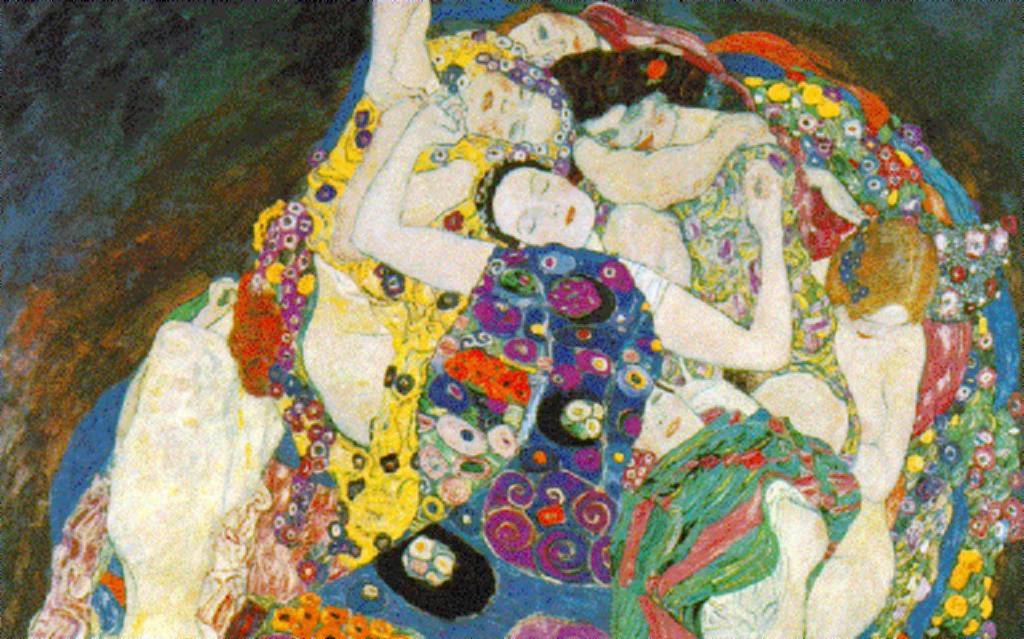
Imagine, if just for second, if we made the choice to channel our creative forces back into meaningful pursuits. What if we valued art, music and literature as much as we value the tawdry glorification of consumer culture. How many Klimts would be painting? How many Beethovens would be composing? How many Jane Austins would be writing? How much many more cultural epochs would we have reached by now if not for hollow banality of consumer culture?
Humanity’s grand claim for the 21st century should not be “perfecting the exploitation of everything for the short sighted benefit of the few”. It is shit; and irredeemably so.
Thanks for pointing that out Sociological Images.
“[…][A]nother over-the-top example of the objectification of female athletes. The commercial is for RoadID, a company that sells “identification gear.” Autumn saw it while watching the Tour de France; she found this shortened version online, which she says actually features less objectification than the original did.
The main focus of the ad is a slow investigation of various aspects of cyclist Jenny Fletcher’s body. The camera travels slowly up her leg, then shows her full profile before zooming in on her breasts as she zips up her shirt:
Jenny Fletcher has no dialogue. She exists as a body to be broken down into eroticized parts for the consumption of the viewer. As Autumn put it, it’s frustrating that, a fan of the “the male-centric Tour de France,” that “when they do FINALLY feature a female cyclist, it is as a sexual object.”











 bleatmop
 Mystro


 Dead Wild Roses
Your opinions…