In the context of Alberta’s recent teacher strike, which began on October 6, 2025, following the rejection of a government contract offer, a pertinent question arises. The offer included a 12 percent wage increase for teachers over four years. Rather than applying this raise, what if the equivalent funds were allocated to hire additional educational assistants? Such a reallocation could address classroom support needs directly. This analysis relies on publicly available data to compute the potential impact, prioritizing transparency in figures and assumptions.
Alberta’s education system employs 51,000 teachers under the Alberta Teachers’ Association. Their average annual salary is $85,523. This results in a total annual payroll of approximately $4.36 billion. Implementing a 12 percent increase would add roughly $523 million to this payroll each year, once fully phased in, based on the offer’s structure.
Educational assistants in Alberta earn an average of $33,811 per year. If the $523 million earmarked for the teacher raise were instead used for hiring these support staff, it could fund approximately 15,480 new positions. This figure assumes full-time roles with comparable benefits and no significant overhead variances, focusing on direct salary costs.
This hypothetical redirection highlights trade-offs in education funding. While teachers seek compensation adjustments amid rising class sizes and workloads, bolstering assistant roles could alleviate immediate pressures in classrooms. The calculation underscores the scale of resources involved, inviting scrutiny of priorities in public spending.
Sources and Methodology
To ensure reproducibility, below are the key sources and the step-by-step mathematics used. All data points are drawn from recent, credible reports as of October 2025, with links provided for verification.
Step-by-Step Calculations
1. Total teacher payroll: Number of teachers × Average salary = 51,000 × $85,523 = $4,361,673,000.
2. Cost of 12 percent increase: 0.12 × $4,361,673,000 = $523,400,760 (annualized, post-phasing).
3. Number of educational assistants fundable: Increase amount ÷ Average EA salary = $523,400,760 ÷ $33,811 ≈ 15,480 (rounded to nearest 10 for practicality).
These steps assume the increase represents a permanent uplift in payroll costs. Variations could occur if considering phased implementation or additional factors like benefits (typically 20-30 percent of salary), but the core estimate holds for illustrative purposes. Readers are encouraged to cross-check with primary sources for any updates.
The Alberta government’s recent initiative to establish provincewide standards for school library materials, announced on May 26, 2025, underscores the critical role of parental input in ensuring that educational resources align with community values and developmental needs. The online survey, open until June 6, 2025, seeks feedback from Albertans to create consistent guidelines for selecting age-appropriate materials, particularly addressing concerns about sexually explicit content in K-12 school libraries. Parental involvement is essential because parents, as primary caregivers, have a vested interest in their children’s moral and intellectual development. They possess unique insights into their children’s emotional and psychological readiness, which standardized systems may overlook. By involving parents, the government ensures that library materials reflect the values and expectations of the families they serve, fostering trust and transparency in the education system. As Education Minister Demetrios Nicolaides emphasized, the goal is to create “guardrails” to protect students from accessing inappropriate content, such as graphic novels containing explicit depictions of sexual acts, molestation, or self-harm, which were found in some Edmonton and Calgary school libraries.
Ensuring age-appropriate materials in school libraries is paramount to safeguarding children’s well-being and supporting their developmental stages. Young students, particularly in elementary and junior high schools, are at formative stages where exposure to graphic content—such as nudity, explicit sexual acts, or themes of molestation—can be confusing or harmful. The Alberta government’s survey highlights specific concerns about four graphic novels, including Gender Queer by Maia Kobabe and Fun Home by Alison Bechdel, which contain explicit content deemed inappropriate for K-9 students. Age-appropriate materials should align with cognitive and emotional maturity, providing resources that educate without overwhelming or exposing children to mature themes prematurely. School libraries must balance fostering a love for reading with ensuring content is suitable for the intended age group, as outlined in the government’s call for developmentally appropriate resources to meet diverse student needs. This approach not only protects students but also supports teachers and librarians in curating collections that enhance learning while respecting parental expectations.
Critics often argue that restricting access to certain materials constitutes censorship or a “book ban,” potentially limiting students’ exposure to diverse perspectives, especially on topics like 2SLGBTQ+ identities. This perspective, voiced by the Alberta Teachers’ Association (ATA) and others, suggests that such standards could disproportionately target marginalized communities and stifle students’ ability to see themselves represented in literature. While diversity in literature is important, this argument overlooks the distinction between censorship and age-appropriate curation. The Alberta government explicitly states that the initiative is not about banning books but about establishing consistent standards to ensure materials are suitable for specific age groups. For instance, Nicolaides clarified that content related to 2SLGBTQ+ themes is not the target; the focus is on graphic sexual content, regardless of subject matter. A book on astrophysics with explicit imagery would face the same scrutiny, demonstrating that the policy aims to protect, not exclude. Moreover, existing school board processes, like those in Edmonton and Calgary, already include mechanisms for reviewing content, suggesting that standardized guidelines would enhance, not replace, professional judgment.
Another common counterargument is that restricting access to certain materials could hinder students’ ability to access information about sensitive topics, such as sexual abuse, which may be critical for their safety. Some, including voices on social media, argue that libraries provide a safe space for students to explore topics that parents might not address at home, citing cases where books helped children identify and report abuse. While this concern is valid, it does not negate the need for age-appropriate standards. Libraries can still provide educational resources on sensitive topics, such as body safety or abuse prevention, without including graphic depictions unsuitable for young readers. The government’s survey asks who should determine appropriateness—options include teachers, librarians, parents, or students—indicating a collaborative approach that values professional expertise alongside parental input. By setting clear standards, schools can ensure that resources on critical topics are accessible in a manner that respects developmental readiness, thus maintaining a balance between safety and education.
In conclusion, the Alberta government’s survey on school library materials reflects a commitment to balancing parental input with the need for age-appropriate resources, ensuring that school libraries remain safe and supportive environments for students. By involving parents, the government acknowledges their role in shaping educational content that aligns with community values and protects children from inappropriate material. While critics raise concerns about censorship or restricted access to vital information, these arguments fail to account for the nuanced approach of setting consistent, transparent standards rather than outright bans. The initiative, set to inform policies for the 2025-26 school year, aims to create a framework where professional judgment, parental concerns, and student needs converge. Albertans’ participation in the survey will be crucial in shaping a system that prioritizes both educational freedom and the well-being of young learners.
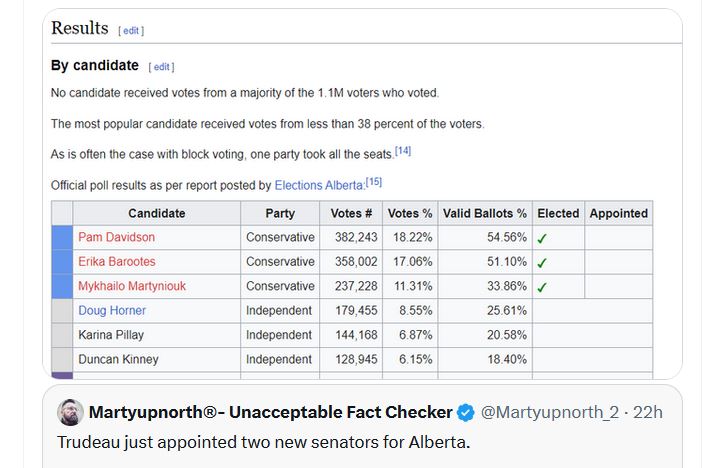
Here is the list of Senators the citizens of Alberta have democratically nominated for the Senate:
So we have a partisan appointment:
“Fridhandler is a corporate lawyer, arbitrator, mediator, and businessman with over 40 years of legal experience.
[…]
Fridhandler has been an active supporter of the federal Liberal Party during his career, serving as the party’s election co-chair in Alberta between 2004 and 2009, according to his biography page on the website of Calgary law firm Burnet, Duckworth & Palmer LLP, where he has been a partner since 1990.”
And then we have the wacko rainbow gender activist:
“Kristopher Wells’s biography describes him as “an educator and a champion for the 2SLGBTQ+ community who has used research and advocacy to help advance diversity, equity, and human rights in Alberta and across the country.”
He is the editor-in-chief of Journal of LGBT Youth, which is the “world’s leading research publication on 2SLGBTQ+ youth,” according to his biography on the website for MacEwan University in Edmonton, where Wells is an associate professor.
Wells has also helped with the creation of the Pride Tape initiative, which several National Hockey League players have adopted in recent years.”
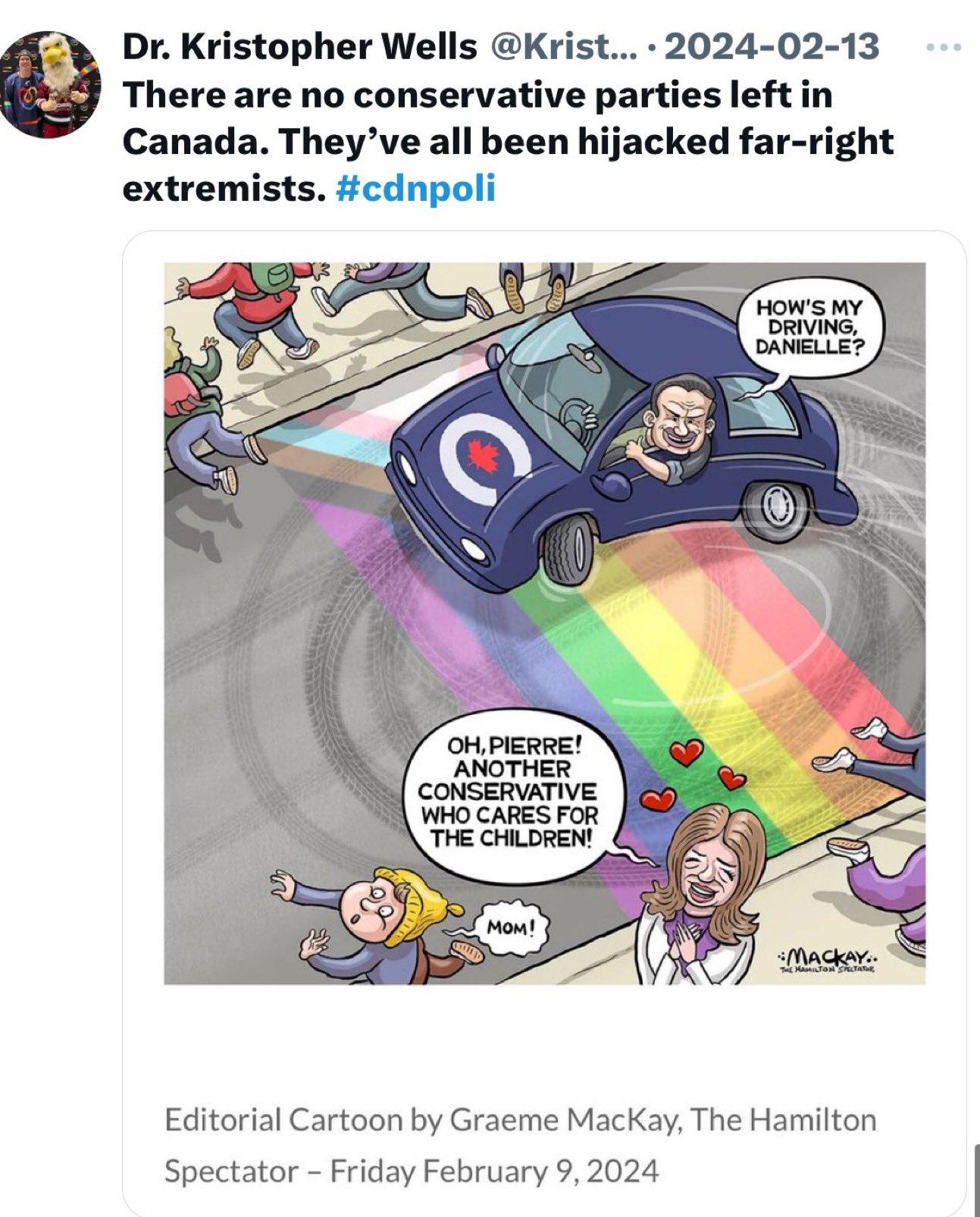
I’m not sure Trudeau could have picked people LESS representative of the people of Alberta. Let’s take a peek at the calibre of Well’s interaction with the public.
JFC. This is the fringe of the fringe. What a completely inappropriate and disappointing decision made by the Liberal Party of Canada.
It is important that news like this gets proper exposure and to illustrate how the MSM is not doing its job. Plus it gets it on Facebook around the stupid news censorship in Canada.
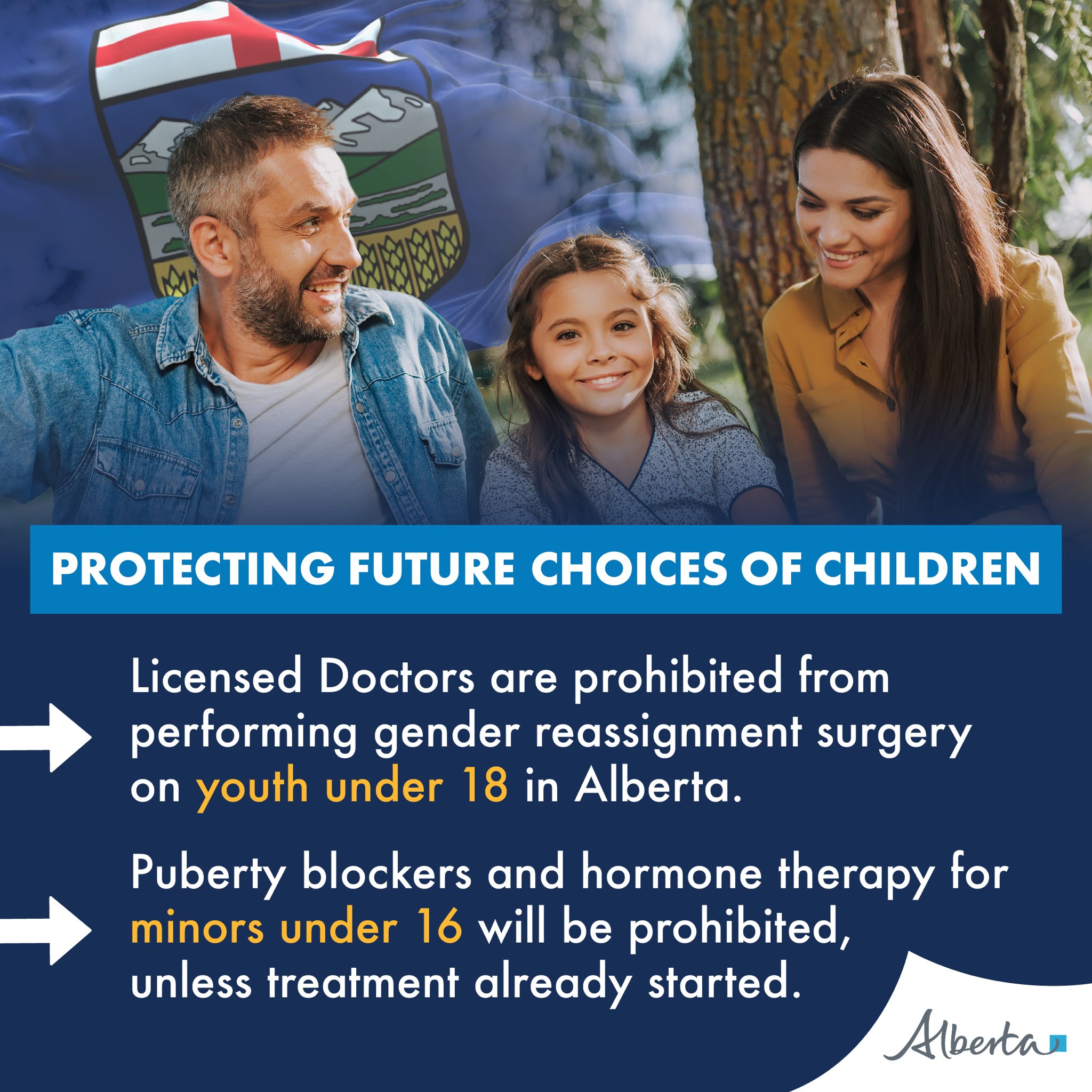
By now, every Canadian has heard the news out of Alberta. Although depending where you get your news, you’ve either heard that Alberta Premier Danielle Smith has announced a forthcoming genocide camp for LGBT youth or—for those who’ve not lost their grip on reality—you’ve heard that Smith is taking an evidence-based stance on transgender healthcare for minors, protecting female athletes in sports, and ensuring parents have the right to safeguard the well-being and best interests of their children.
There will be no more puberty blockers or cross sex hormones for children under 16. No gender surgeries—such as double mastectomies or penile inversions—for minors under 18. No more teachers changing under-16 students’ names or pronouns without parental permission. No more leaving parents in the dark about gender-identity school lessons. Parents can continue to opt their children out. For female athletes, they will have sports leagues of their own: no males can identify their way in.
Screenshot from Alberta Premier Danielle Smith’s gender law announcement video.
Smith is bringing safety, fairness, parental rights, and reason back to her province. She is bringing Albertans exactly what the majority of Canadians support, as per a recent Angus Reid poll that shows parents expect to be notified if their kids suddenly identify as transgender at school. (What loving parent wouldn’t want to be?) Similarly, a 2021 poll reveals that Canadians want sports segregated by sex, not gender self-identification.
There’s no denying that Smith’s new legislation is reflective of majority Canadian sentiment. So naturally, Canada’s activists and hard left, plus their sycophant Liberal and NDP bootlickers—fringe minority that they are—had a Chernobyl-level nuclear meltdown, with a fallout zone well beyond Alberta’s borders.
Notably, our national broadcaster trotted out vile misogynist Fae Johnstone, slapped an “expert” label on the transgender-identified male, and hit “publish” on another gaslighting piece of state propaganda. They quoted Johnstone on Smith’s new rules: “This is interfering ideologically in the provision of medically necessary healthcare for trans and gender diverse young people.” He also claimed the new legislation “flies in the face of establishing medical best practice.”
All of what Johnstone said is demonstrably—and infuriatingly—false. The only ideology at play is his. Gender “affirming” healthcare for minors is being globally outed as the medical scandal that it is, with numerous Scandinavian and European countries implementing restrictions or bans on the treatment of children. The World Health Organization just released trans care guidelines that do not include standards for youth or minors; they cite a lack of evidence to support childhood transition guidelines.
Persons like Fae Johnstone are desperate to bury the truth. When not lying via our government-funded media platform, Johnstone can be found trolling and threatening women with differing political opinions online. “I actually do want a political environment in which TERFs are so vilified they don’t dare speak their views publicly,” he once wrote. Because if you can’t beat them, shut them down.
And then there’s Canada’s Special Advisor to the Prime Minister on LGBTQ2 issues, Randy Boissonnault, who took the good news from Alberta particularly poorly. In a presser, the man insisted that joining your school’s chess club or debate team is no different than changing your gender and going on Lupron, the puberty-blocking drug used off-label for trans kids and also to castrate sex offenders.
“Nobody calls your parents when you join the debate team. But now, if somebody thinks you’re questioning or queer, they’re gonna tell the teacher and the teacher’s gonna call the parents,” said Boissonnault. “This is our NATO moment as an LGBTQ community. An attack on one of our communities is an attack on us all.” Boissonnault, a gay man, seems blissfully unaware that childhood medical transition is disproportionately inflicted upon gender-confused kids who, if left alone to go through puberty, would simply end upgay. What Canada is doing to “trans” kids, in many cases, is “transing the gay away”; it’s a modern form of conversion therapy. It must stop. We are an international embarrassment on several fronts, most appallingly so for ignoring the global demise of gender ideology and destroying the bodies and minds of untold numbers of vulnerable children.
In response to Premier Smith, legal group Egale Canada has called her proposed legislation “unconstitutional” and claims they will launch a court challenge. It’s possible that the federal government will, too. Minister Boissonnault is promoting a rally to protest Smith’s proposed changes at the Edmonton Legislature this weekend.
Premier Smith is not backing down. Good for her. Canada needs an enormous dose of reality, and our petulant gender activists need their tantrums to go ignored. Let them stamp and shout and lie—the adults in the country are finally having a conversation.
I was a strong proponent of the Harm Reduction strategy until more data has come out about its effectiveness and benefits for society versus other methods. There might be a case for Harm Reduction, but as currently implemented in BC it is a like a 4 legged stool that is missing three legs -harm reduction, law enforcement, prevention and treatment – just focusing on harm reduction and not the other areas is a recipe for social disaster.
The Alberta rehabilitation model has been modestly more successful in dealing with the problems of addictions. Both systems require overlapping programs working together to get people out of the drug abuse loop – whether Alberta has been more successful in coordinating the synergy of anti-addiction programs or that rehabilitation programs are just more effective remains to be seen. Initial data points to the Alberta method being more successful.
The divergent policies and politics of B.C. and Alberta have played a major role in determining the public perception of Canada’s opioid crisis. Left-leaning media outlets have tended to laud B.C.’s harm reduction as being more compassionate, while conservative voices point to Alberta’s focus on treatment as more practical and realistic. What Canada had lacked until recently was an impartial, data-driven assessment of the two competing systems.
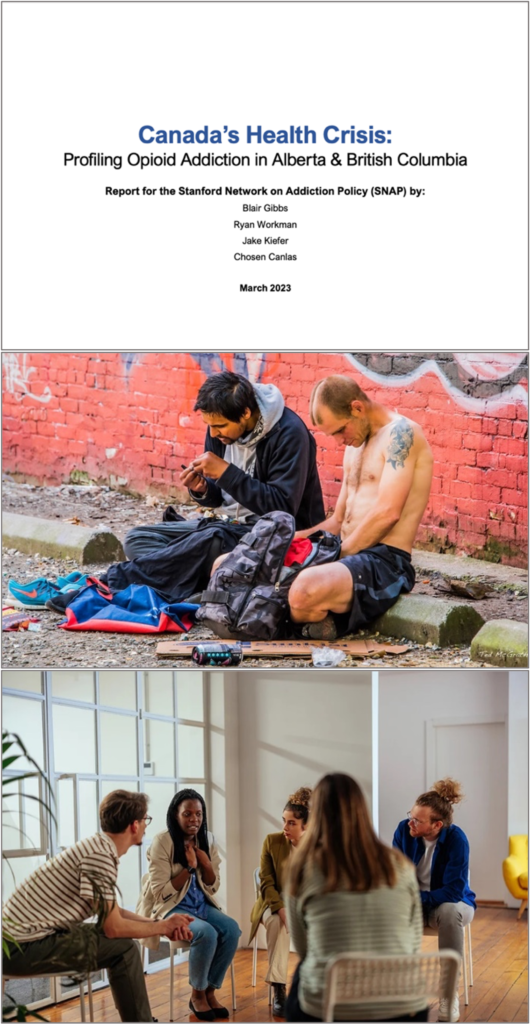
Advantage Alberta: The Stanford Network on Addiction Policy’s 2023 report (depicted above) observes that, “Alberta is currently experiencing a reduction in key addiction-related harms,” while “Canada overall, and BC in particular, is not yet showing the progress that the public and those impacted by drug addiction deserve.” At middle, a typical street scene in Vancouver’s Downtown Eastside; at bottom, a therapy session at Alberta’s new Red Deer Recovery Community. (Sources of photos: (middle) Ted McGrath, licensed under CC BY-NC-SA 2.0 DEED; (bottom) EHN Canada)
That problem was partially solved last year with the release of a report from the U.S.-based Stanford Network on Addiction Policy. Entitled Canada’s Health Crisis: Profiling Opioid Addiction in Alberta & British Columbia, the document offers an even-handed review of the differing policies of the two provinces, summarizes the latest available data (which it criticizes as inadequate) and cautiously evaluates the results. B.C., the report notes, emphasizes harm reduction, “safe supply” of illicit drugs, decriminalization of possession and reduction of addiction stigma. Alberta, by contrast, is focusing on “investment in rehabilitation beds and spaces, such as therapeutic communities,” while moving away from “safe supply” of opioids and instead providing addicts with medications.
Using these differences as a natural experiment, the Stanford report comes to a few key conclusions. First, it observes “a lack of policy innovation in BC on the issue of drug addiction.” Obsessive attention to harm reduction appears to have blinded politicians and public health officials to the longer-term consequences of their favoured policy. “Enforcement against drug crime has [been] reduced in recent years,” the report notes, “indicating a general lessening of criminal justice enforcement against drug offences in Canada during the escalating health crisis of opioid addiction.”
Second, “Of the two provinces studied for this report, Alberta is currently experiencing a reduction in key addiction-related harms.” The province’s rate of overdose deaths declined by 17 percent from 2021 to 2022 (B.C.’s remained almost unchanged), although it was still Alberta’s second-worst year on record. Using the most recent data available, the Stanford researchers point to B.C.’s higher death rate as suggestive of the two approaches’ relative effectiveness: “Our research indicates that Canada overall, and BC in particular, is not yet showing the progress that the public and those impacted by drug addiction deserve.”
What is ad block? It is an application that, at your discretion blocks out advertising so you can browse the internet for content as opposed to ads. If you do not have it, get it here so you can enjoy my blog without the insidious advertising.



















 bleatmop
 Mystro


 Dead Wild Roses
Your opinions…