
You are currently browsing the tag archive for the ‘Greece’ tag.
The tortures that the Grecian people are being subjected to by the neo-liberal institutions of Europe (European Commission, European Central Bank and IMF) are unnecessarily brutal and threaten to unravel the fabric of their society. We can learn what is in store for other nations that dare to act against the ‘good prudence’ of the current economic elite. Robert Hunziker writes about the toxic economic prescription being forced onto Greece and some of the reasoning behind it.
“Mysteriously, but maybe not so mysterious, this particular Greek Tragedy does not pass the sniff test. Something is rotten, somewhere. In order to get to the bottom of it, according to Dimitris Konstantakopoulos, member Secretariat of Syriza: “The Greek Reform Program was no mistake but was and remains the premeditated assassination, by economic and political means, of a European nation and its state, for reasons of much wider significance than the significance of the country itself,” Ibid.
Which prompts: Why so brutally horribly dehumanizing?
According to one analysis, Greece is the scapegoat for all European ills, thus it represents a looming threat to all other abusers of neoliberal dicta. The rationale: Other delinquent southern European countries were spared the hatchet only because, if Troika brutalized them as well, it risks alliances of like-minded protagonists and revolt all across half of Europe. Which would exceed the wherewithal of the grand neoliberal crusade and possibly blow its covert operations wide open for all to see. As it happens, Greece was/is low hanging fruit and a perfect whipping boy that hopefully knocks some sense into spendthrift Mediterranean lefties, or so the Troika likely assumes. Otherwise, why destroy Greece?
As it happened, Troika misrepresented good intentions, and in fact lied by publicly claiming Greece was receiving enormous amounts of financial support from its European partners, whereas 95% of those funds zip-zip right back to Deutsche Bank, PNB Paribas, and other U.S. and European banks, bypassing Greece’s banks and citizens as quickly as a finger click. But wait; of course, Greece keeps five percent.
In order to receive Troika’s financial bailout, Greece has undergone a massive transfer of public assets, all the best stuff, to privatization interests, part of the hardcore hypothesis behind neoliberalism, e.g., (1) 14 major regional airports sold to Germany’s Fraport, (2) the Port of Piraeus, one of the largest ports in Europe sold to China’s Cosco, (3) the Port of Thessaloniki, which is Greece’s second largest city, sold to a German consortium, and (4) privatization funds created, under Germany’s direction, for water utility transfers to private hands, prompting the president of the Greece water company trade union to forewarn that the for-profit model often times raises prices for consumers and sometimes service degrades. But then it’s too late to do much about it.
And, come to think of it, why should water be a for-profit enterprise in the first instance? And, why should ports, as old as the city of Athens, be for-profit private enterprises? By longevity alone, it is an iconic attachment to Greece, dating back centuries upon centuries. Maybe some precious things in life should escape the dictates of profit for the few in favor of the common interests of the many.
Regardless, financial colonization is ripping Greece to shreds same as 19th-century European colonization of Africa, in harmony with the Industrial Revolution, shredded natural resources. But, nowadays Industrial Revolution is passé as the Internet revolutionizes everything, other than the onslaught of neoliberalism’s transnational elite special forces.”
I think we, as Canadians, should be aware of what is in the toolbox of the world’s financial instituions when it comes to deal with countries that are ‘in need of financial discipline’.
It seems like so few people understand the context of empire and how it affects American foreign policy. Let’s take a quick peek at Greece and how we treat fellow democracies when it comes to maintaining ‘interests of state’.
“In the case of Spain there is some plausibility to the argument that the United States had to deal with the leader that it found there, even if he happened to be a fascist. But the story was different in Greece. We helped bring the militarists to power there, and the legacy of our complicity still poisons Greek attitudes toward the United States. There is probably no democratic public anywhere on earth with more deeply entrenched anti-American views than the Greeks. The roots of these attitudes go back to the birth of the Cold War itself, to the Greek civil war of 1946 – 49 and the U.S. decision embodied by the Truman Doctrine to intervene on the neofascist side because the wartime Greek partisan forces had been Communist-dominated. In 1949, the neofascists won and created a brutal right-wing government protected by the Greek secret police, composed of officers trained in the United States by the wartime Office of Strategic Services and its successor, the CIA.
[…]

All you need to know from U.S. President Lyndon Baines Johnston about promoting peace and democracy abroad. – “Fuck your parliament and your constitution. We pay a lot of good American dollars to the Greeks. If your prime minister gives me talk about democracy, parliament, and constitution, he, his parliament, and his constitution may not last very long.”
In February of 1964, George Papandreou was elected prime minister by a huge majority. He tried to remain on friendly terms with the the Americans, but President Lyndon Johnson’s White House was pressuring him to sacrifice Greek interests on the disputed island of Cyprus in favour of Turkey, where the United States was also building military bases. Both Greece and Turkey had been members of NATO since 1952, but by the mid – 1960’s the United States seemed more interested in cultivating Turkey. When the Greek ambassador told President Johnson that his proposed solution to the Cyprus dispute was unacceptable to the Greek parliament, Johnson reportedly responded, “Fuck your parliament and your constitution. We pay a lot of good American dollars to the Greeks. If your prime minister gives me talk about democracy, parliament, and constitution, he, his parliament, and his constitution may not last very long.” And they did not.
The CIA, under its Athens station chief, John Muary, immediately began plotting with Greek military officers they had trained and cultivated for over twenty years. In order to create a sense of crisis, the Greek intelligence service, the KYP, carried out an extensive program of terrorist attacks and bombings that it blamed on the left. Constantin Costa-Gavras’s 1969 film, Z, accurately depicts those days. On April 21, 1967, just before the beginning of an election campaign that would have returned Papandreou as prime minister, the military acted. Claiming they were protecting the country from a communist coup, a five-man junta, four of whom had close connections with either the CIA or the U.S. military in Greece, established one of the most repressive regimes sponsored by either side during the Cold War.
The “Greek colonels”, as they came to be known, opened up the country to American missile launch sites and espionage bases, and they donated some $549,000 to the Nixon-Agnew election campaign.
[…]
The leader of the junta, Colonel George Papadopoulos, was an avowed fascist and admirer of Adolf Hitler. He had been trained in the United States during World War II and had been on the CIA payroll for fifteen years preceding the coup. His regime was noted for it’s brutality. During the colonel’s first month in power some 8,000 professionals, students, and others disliked by the junta were seized and tortured. Many were executed. In 1969, the eighteen member countries of the European Commission of Human Rights threatened to expel Greece – it walked out before the commission could act -but even this had no effect on American policies. “
-The Sorrows of Empire – Chalmers Johnson. pp. 204 – 206
Just in case you were unsure of how realpolitik worked and in need of your levels of depression and ennui topped up.
 Here at DWR we’ve been keeping an eye on the Greek economic situation. As early as 2010 we commented that the IMF had been working its magic on the Greek economy:
“Did you ever want to see a society remade into the corporatist mode? Greece is going down that path right now. The IMF is gleefully setting out conditions and ‘austerity measures’ necessary for Greece to qualify for the bailout package. How much would you wager that the Public Sector is going to take a beating? Today’s news is part of a cycle of the forced privatization of the Greek economy.”
Here we are in 2015:
“Greek lawmakers have approved a government motion that allows reform proposals [AUSTERITY] to be used as a basis for negotiations with international creditors, as the country seeks a third bailout.
The 300-member parliament passed the motion by majority vote, with 251 lawmakers voting in favor, 32 against and 8 voting ‘present’ — a form of abstention indicating dissent from their own party line.
In a speech delivered ahead of the vote, Greek Prime Minister Alexis Tsipras sought to persuade lawmakers, including dissenters within his own left-wing Syriza party, to back the proposals and grant his finance minister the authorization to use them as a basis for negotiations with creditors over the weekend.”
You see? The IMF hasn’t stopped its slow destruction of the Greek economy, like slowly metastasizing cancer, the financial skulduggery makes fixing the economy untenable. The recently ousted Greek finance minister Yanis Varoufakis comments:
“Varoufakis explains exactly why he fought for a NO vote and how unfair and irrational the creditors have been in refusing to discuss debt re-structuring. As Varoufakis points out, it is perfectly normal in the world of finance for us to be offered long term loans that suit our budget. It happens every day, yet Greece has not been offered a sustainable debt repayment plan that will enable it to pay back its creditors with interest, without forcing people at home to suffer as they do right now. If Greece has no money left, then how can it possibly pay what the IMF and the ECB expect it to? Varoufakis had suggested that his country pay an increased sum of money back over a longer time period, enabling the economy to grow over time. The creditors refused. When Prime Minister Tspiras announced a referendum would take place, the creditors were absolutely furious. Democracy is not something they understand, it seems.”
This is exactly the no-win situation that Disaster Capitalism sets up. Which leads to this inescapable conclusion:
“And herein lies the problem. We live in a neo-liberal, globalized plutocracy. An elite group of bankers control the global money supply (and the politicians we vote for), and here’s the thing: they do not believe in democracy. They do not believe that ordinary people have the right to an opinion, let alone a vote, on issues as enormous as the one facing Greece. This is all the more infuriating when you consider the fact that it’s regular members of the public who are being forced to bail out private banking debts. Worst of all, rather than listen with interest to Varoufakis’s logical and intelligent argument, corporate journos like Paul Mason prefer to doggedly defend the position of Greece’s creditors, while peddling fear and lies about the consequences of a Greek exit from the Eurozone.”
So what to do in Greece? The proposed “bailout plan” is shite, and the people of Greece have already said no to similar BS:
“The proposed measures, including tax hikes and cuts in pension spending, are certain to inflict more pain on a Greek public who just days ago voted overwhelmingly against a similar plan.”
“The new measures overturn many of the election promises of Tsipras’ left-wing Syriza party, which had vowed to overturn bailout austerity, and come less than a week after 61 per cent of voters opposed similar reforms, proposed by creditors, in last Sunday’s referendum.”
The Greek people have said “No” to Austerity and Greece’s political elite are apoplectically pretzelling trying to make the societal poison known as Austerity somehow palatable to masses.
A quick review of what is coming next:
We need to watch what happens in Greece very carefully now. The forces of international neo-liberal capitalism need to make an example of Greece to scare other countries in similar situations (Spain, Italy) into accepting the resculpting of society for the benefit of the hyper-rich.
Democracy is expected to bend a knee toward this insidious neo-liberal economic paradigm – the will of the people subsumed to corporate interests – an for what?
We all know the answer.
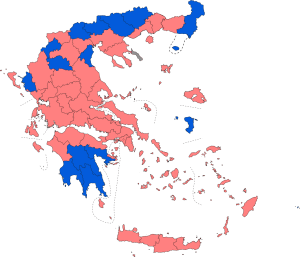 *Update – The election results are in.
There might be hope for the people of Greece in their upcoming elections. Excerpts of an interview of Tariq Ali hosted by Kostas Vlahopoulos and Thomas Giourgas.
“3. What is your view of the current sociopolitical situation in Greece?
Tariq Ali: The situation is polarised. The fascists of Golden Dawn and the Conservative descendants of the wrong side in the Greek Civil war have the support of a sizeable section of the Greek population. This cannot be ignored and we do so at our peril. The emergence and growing support for SYRIZA (and PODEMOS in Spain) is the post positive development in Europe, but in order for it to move another step forward without moving backwards it will have to challenge the Greek oligarchs, confront the ship-owners mafia that owns the media, that pays few taxes, if any, and also to remove the tax free status of the Orthodox Church. Its not that the Church is poor. Its ownership of property makes the institution an oligarch in its own right. In the case of the ship-owners they must be compelled to pay taxes in retrospect so that the country can move forward economically again and start functioning properly. Such a move will annoy the more backward sections of the EU elite but will be popular in Europe as a whole and will lay the basis for a political battle with the Troika by splitting their supporters.
1. For the first time in Greek political history, a radical left party, SYRIZA, is the strong favorite to win the general elections taking place in January the 25th. What kind of reaction do you expect from the neo-liberal Europe and in particular from Germany?
Tariq Ali: If SYRIZA wins it will mark the beginnings of a fightback against austerity and neo-liberalism in Europe. Two concurrent processes will be in motion from the beginning of the victory. There will be a strong attempt by the EU elite led by Germany to try and tame SYRIZA via a combination of threats and concessions. The aim of this operation is simple. To try and split SYRIZA at a very early stage.
Secondly there will be a high level of expectation from SYRIZA’s electorate and beyond. Mass mobilizations will be extremely important to sustain the new government and push it to carry through the first necessary measures. The debt and the readjustment measures must be repudiated immediately before moving on to implement a plan that restores the social gains that have been achieved and are being dismantled by the Troika-led governments. The first three months will be decisive in terms of revealing the contours of the political and economic landscape envisaged by SYRIZA. Neo-liberalism can not be dismantled overnight but the will to do so must be paramount. Bandwagon careerists must not be allowed to sabotage what can and should be done
6. Financial markets are considered to be the omnipotent regulators of politics and democracy itself in some cases. Could it be possible for a left government to clash with market system within the capitalist framework?
Tariq Ali: Yes, that is what is on the agenda today and what the Bolivarian governments in South America have been doing for the last fifteen years with relative success. Market-fundamentalism has led to a sharp decline in democracy (Wolfgang Streek, the German sociologist has explained the process of decline very well in his books and essays) and the Wall Street crash of 2008. What is needed is a combination of regulation, state intervention to take back the public utilities and create and own industries that can help fund the former andsenhanced democracy on every level to ensure popular participation.
This can be our only minimum programme at the present moment.”
One can only hope that the push back against the neo-liberal tide will take root in Greece, blazing the trail for the rest of the EU to follow.
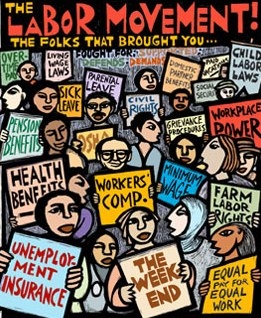 The rights we enjoy today in Canada as workers and professionals were not given to us. It was through determined, bloody at times, never-say-die, collective struggle that our rights as workers were imposed on the capitalist class. Power never makes concessions – struggles for basic working benefits must be fought for and taken. The price for humane working conditions can be as high as death or as in the case of Cleaning Workers Union in Greece, permanent disfigurement.
“Vassilis Kikilias, didn’t lose time. Less than an hour after he took office, riot police cracked down on a protest of the cleaning staff of the ministry of finance.
The protesters are more than 500 women of all ages and national backgrounds who were cleaning tax offices, the ministry of finance and customs services until a ministerial decree, fired them all indiscriminately and permanently.
The austerity rationale behind the decision was spurious because these women were not a fiscal burden – quite the contrary. The privatisation of cleaning services has increased the amount spent in order to keep public working spaces decently clean.”
Ah, there we go, the popular myth that privatization is solution to all problems in the public sector. It usually isn’t when it comes to saving money as privatized services cost more and treat their employees badly; less pay, less benefits, less job security. Embrace job insecurity! It is but one of the lovely intrinsic features of privatization of society and a necessary feature of the capitalist paradigm.
“The fate of these 500 women is nothing new in Greece; for years now, and especially since the financial crisis, workers have had to take to the streets to reclaim their rights.”
“Overall, privatising services and reverting to temporary contracts for workers has been associated with slavery-like conditions of labour exploitation.”
We must never forget the blood price paid by earlier generations to erect the bulwarks of labour protections against the capitalist tide. People fought and died for what we consider “normal” working conditions.
“Kouneva, a trained historian, emigrated to Greece from Bulgaria in 2001, because of the financial troubles many countries in Eastern Europe were going through at the time.
In 2003 she was hired as a janitor by private company OIKOMET, which had a contract with the Athenian railway service. Seeing the conditions in which her colleagues were working (low and infrequent pay, lack of insurance, mistreatment), Kouneva entered the janitors union of Athens and soon became one of its leading figures.
From that moment on, she didn’t stop protesting working conditions, struggling for the rights of cleaning staff, who were often ignored by the main trade unions.
She ignored threats against her life and never regretted her decision to continue the fight for labour rights.
One night in December 2008, Konstantina Kouneva was attacked by two men while walking back home in downtown Athens. They threw sulfuric acid on her face and forced her to drink the rest in what could have been a fatal attack.”
What was her crime? Protesting for decent working conditions. People need to realize the coercive power capital holds and guard against it regaining the sort of destructive influence observed in Greece.
“This doesn’t change the significance of the cleaners’ story: Fired from governmental institutions some of these women will be hired back at half of their original salaries, no insurance in some cases, and incapable to fight employer blackmail as employees.
This is what the austerity programme is all about.
A lot has been written about the high unemployment figures in Greece due to the crisis but there’s another aspect that affects the working population. Salaries drop, conditions worsen and the negotiating power of workers is annihilated.
500 women are continuing the struggle Konstantina Kouneva paid for with her health, fighting hard to keep the gates that lead to the precarious underclass, closed .
Despite the fact that they have already won their litigation against the Greek state, they are being constantly attacked by conservative politicians, the mainstream media, and riot police. Just recently they were brutally beaten again while trying to reach the finance ministry and demonstrate for, yet another day.”
People fighting for their lives while conservatives, the media and of course the police try to crush them. This was commonplace here in North America not long ago and the conservative capitalist forces of today are doing their very best to erase the memory of workers popular struggle so they can continue to chip away at the hard fought rights and benefits we enjoy today.
[Source]
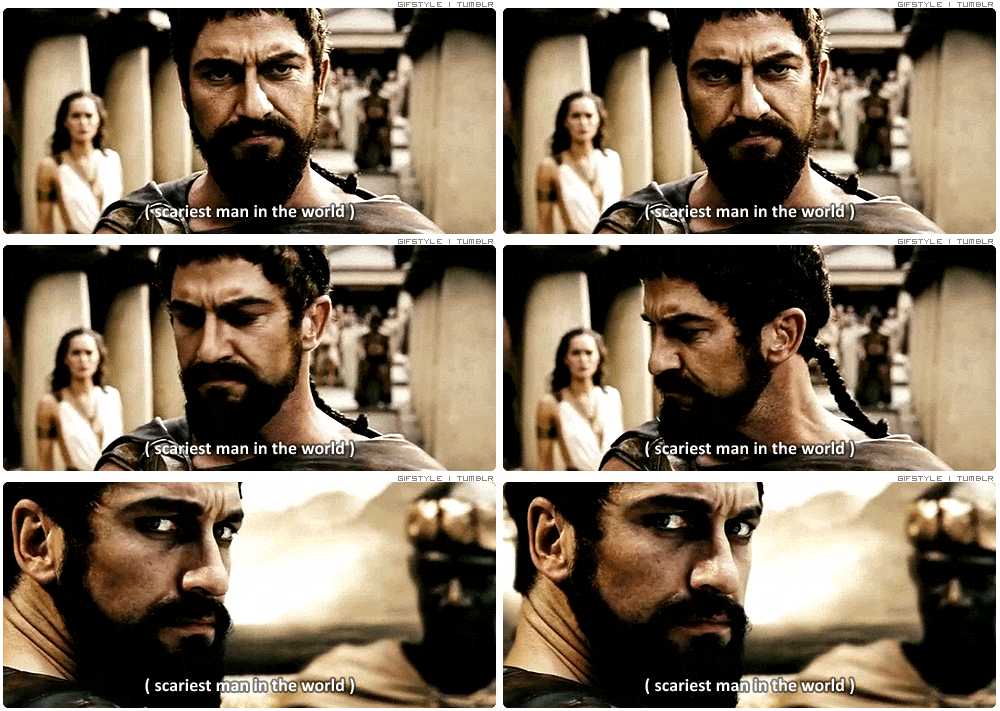
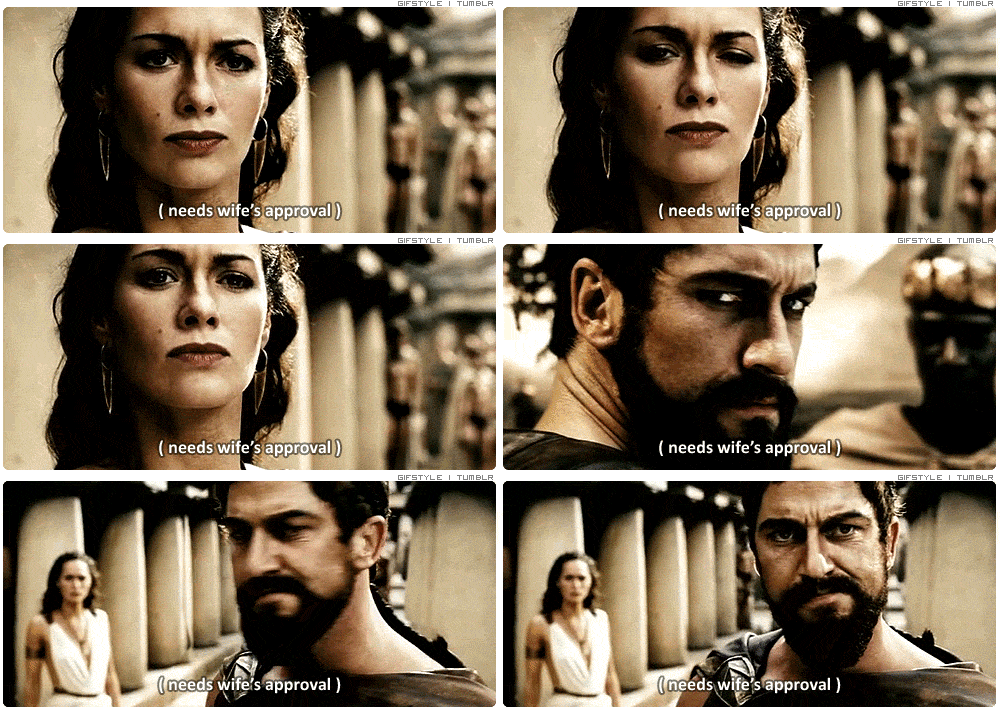
THIS IS MARRIAGE!!
Thats right!
Permission to be a bad ass. Nod.
He looks back at the guy like, “SEE THAT? SHE SAID YES. YOU’RE SO FUCKED.”
Like, guys. Sparta was so kick ASS sometimes when it came to women. Spartan women were given these small knives so that if their husbands came home and tried to hit them or assault them, they had a weapon within reach. That weapon was for CUTTING THEIR HUSBANDS’ FUCKING FACES so that when he went out in public everyone would know he was an asshole, abusing jerkface and they would publicly shame him.
I DID NOT KNOW THAT THAT IS GREAT
LET’S JUST TALK ABOUT SPARTAN WOMEN FOR A SECOND.
In Sparta, women could own land and were considered citizens. THAT IS A HUGE BIG FUCKING DEAL. Why? Because that was RARE AS FUCK and there are lots of places TODAY where women don’t even get that much.
Divorce was totally fine, and a woman could expect to keep her own wealth and get custody of the kids because paternal lineage wasn’t very important. And it didn’t make her a pariah! She could totally remarry, no big deal at all.
Spartan women participated in some fuckin’ badass sporting events, too. And because they were expected to be as physically fit as the Spartan menfolk (who all had to serve compulsory military duties, btw, and couldn’t marry until they finished them at thirty) they didn’t have time for lots of swishy dresses. So they wore notoriously short skirts. According to some accounts, their thighs were visible at all times. HOLY SHIT.
Also, In Sparta men only got their names on their graves if they died in battle. And women? Women only got their names on their graves if they died in childbirth. THE SPARTANS COMPARED CHILDBIRTH TO FUCKING BATTLE AND IT WAS VIEWED AS A GODDAMN BADASS AND HONORABLE WAY TO GO OUT.
FUCKING SPARTAN WOMEN. THIS DUDE HAD FUCKIN’ BETTER MAKE SURE SHE’S COOL WITH WHATEVER HE’S DOING, IF HE KNOWS WHAT’S FUCKIN’ GOOD FOR HIM.
Many thanks to the Evil Feminist.

Workers in Greece Rally against the looming privatization of their society.
Greece is a mess. The IMF and EU are certainly not helping. It seems that this is the pattern as of late. Greece now Hungary stretched on the debt rack until they privatize their country, not for the benefit of the people, but for the business class and multi-national interests.
“Schaeffler told Al Jazeera: “I think Greece has to save money – and if you need to save money then you must sell your jewellery so to speak.
That’s what Greece should do. They must privatise to raise money, that’s what I said to Bild newspaper.”
I wonder when the IMF will get involved. Disaster Capitalism is lovely in the spring.











 bleatmop
 Mystro
 The Arbourist


 Dead Wild Roses
Your opinions…