
You are currently browsing the tag archive for the ‘Innovation’ tag.
Canada has entered the space race, and by “entered” I mean we appear to have placed a rectangle of concrete in the woods and surrounded it with gravel.
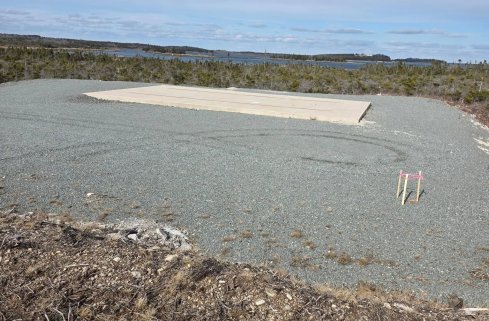
Canada’s space race appears to be stuck in Phase One: gravel.
This is not nothing. In government terms, it may already count as Phase One.
Somewhere, no doubt, there is a strategic framework, a ministerial announcement, a regional development grant, a climate lens, an Indigenous consultation pathway, a diversity procurement plan, and a glossy PDF featuring a child looking up at the stars. Canada loves a working group. It is how we convert urgency into chairs.
Meanwhile, private industry keeps doing the irritating thing it sometimes does: building things. Not perfectly, not gently, not without waste, ego, or spectacle. But the rockets exist. The launches happen. The failures produce data. The next version gets built. The machine moves.
Government moves too, but differently. It studies, regulates, announces, pauses, re-announces, commissions, rebrands, and eventually unveils a pad of poured concrete as evidence that the future has been properly consulted into existence.
This is the broader Canadian problem. We have become excellent at the language of ambition and strangely bad at the discipline of execution. We can describe innovation. We can fund innovation. We can convene panels on innovation. We can produce national strategies about innovation. But at some point, a serious country has to build the thing.
The comparison is unfair, of course. SpaceX is a private company with immense capital, a high tolerance for risk, and a founder constitutionally incapable of leaving well enough alone. Government has different responsibilities: accountability to citizens, laws, budgets, safety rules, and public interest.
Fair enough.
But accountability cannot become an alibi for paralysis. Regulation cannot become a substitute for competence. Process cannot become the product.
A country that wants a space industry needs more than a space-shaped clearing in the gravel. It needs permission to fail, speed to iterate, and institutions that understand the difference between managing decline and building capacity.
Canada does not lack talent, land, brains, or engineering ability. What it lacks is a governing culture that can still turn intention into machinery.
Until that changes, our space program may remain perfectly Canadian: safe, inclusive, fully consulted, and still waiting for liftoff.
 We live in an age of innovation. Using the great scientific advances of previous generations and implementing them in new and creative ways is huge part of our progress. No longer burdened by what we can do (mostly), the question for most fields now is how we can do it better. Can we do it faster? Can we do it cheaper? Can we do it greener? Can we do it prettier? Can we do it easier?
In these pursuits we have seen some phenomenal advances. Urban transportation has seen cars go from obnoxiously loud, disgustingly dirty, and horribly dangerous automobiles for the social elites to quick, small, light, potentially electric cars for most families, some having two or three vehicles. Computers have gone from hand cranked, room-sized bean counters to tiny tera-byte twirling do-almost-anything devices. Body armour has gone from heavy, ill-fitting, steel barrels to light-weight, bullet absorbing liquid kevlar vests. Cast iron stoves to electric grills. Horse-drawn ploughs to John Deeres. Muskets to laser-sighted assault rifles. Absolutely everything is being made with advanced materials to get the most out of just the right resources. All these technological wonders flashed through my head as I waited in yet another traffic standstill due to construction. Why are roads still made of asphalt?
Asphalt roads began being made in the early 1800’s (even before the first combustion engine cars hit the streets) and all I can find, as far as research and advancement goes, are efforts to make asphalt cheaper and faster to produce. That’s it. No new materials for roads. No ideas for the super draining, no-slip driving surface. No new compound that will last more than a year before cracking and developing potholes. Nothing. Why the hell not? Read the rest of this entry »











 bleatmop
 Mystro


 Dead Wild Roses
Your opinions…