
You are currently browsing the tag archive for the ‘Middle East’ tag.
 Some results of the latest Israeli raid :
* Destroyed tunnels, most often used to smuggle into Gaza household items that Israel, in violation of international law, prevents from being imported.
* Massacred nearly 2,000 people, including hundreds of children as young as newborns; injured thousands more.
* Destroyed hundreds of homes, leaving thousands of men, women and children homeless.
* Destroyed power plants, leaving hundreds of thousands of people without electricity or running water.
* Destroyed factories that produce such dangerous items as pretzels, cheese and biscuits.
* Targeted and murdered journalists.
Israeli officials have stated that, in Gaza, they periodically need to ‘mow the lawn’, meaning to destroy infrastructure, and bomb that beleaguered area back as close to the Dark Ages as possible. So one might add that to a list of Israel’s ‘accomplishments’.
Ah, the benefits of collective punishment continue to accrue for Israel.
“There are, however, some unintended results to this latest genocidal bombing of Palestinians.
* Unexpected international criticism of Israel. While this hasn’t been universal, Israel has seen ambassadors recalled, and even the U.S., which provides Israel with a blank check to do whatever it pleases on the world stage, has dared to timidly issue criticism of its puppet-master. It’s unfortunate that it took the repeated bombings of United Nations schools, which were being used to house thousands of Palestinians driven from their homes, for the U.S. to dare to speak up to Israel, but at least some mild criticism was expressed. The resignation of Sayeeda Warsi, a senior minister in Britain’s Foreign Office, who accused Prime Minister David Cameron’s government of taking a ‘morally indefensible’ approach to the conflict between Israel and Hamas, is also a striking statement against Israel.
* International demonstrations in support of Palestine. Even Israel has seen thousands of its own people protesting the carpet-bombing of the Gaza Strip. London has seen tens of thousands of demonstrators demanding that the British government stop supporting Israel.
* The social media storm that slammed into Israel. Apartheid Israel last ‘mowed the lawn’ in Gaza two years ago. At that time, Twitter had approximately 20 million users. Today, it has over 120 million, and Twitter users have spread around the globe graphic pictures and information that the news media didn’t dare report. This, at least in part, resulted in huge demonstrations in front of London’s BBC headquarters, causing that organization to announce it would review its policies to see if it was, in fact, reporting in a manner biased towards Israel.
* Greater motivation for the BDS (Boycott, Divest and Sanction) movement. As people see graphic photos of young children playing on a beach being targeted and blown to bloody bits by IDF (Israeli Defense Forces) terrorists, someone basically apathetic becomes motivated.
* Further overall isolation of Israel from the international community. This may not actually be a separate category, since those listed above all contribute to it. The demonstrations, cancellations of Israel-sponsored events, the growing BDS movement and the increasing awareness, thanks in large part to social media, of Israel’s horrific crimes, cannot forever be ignored by the governments of the people who show their opposition to Israel by supporting these actions.
Perhaps some good has come out of this tragedy after all.
“Although the U.S. will oppose it every step of the way, the U.N. looks poised to investigate possible war crimes committed by Israel. Its findings will probably not be surprising, since the U.N. has issued more resolutions critical of Israel than it has of all other nations combined. But until the citizenry awakens from its public-relations induced sleep, and sees that the U.S. is financing genocide, nothing will change. There is evidence from the last few weeks that perhaps a large crack in the wall of U.S. and Israeli public relations has appeared. Those shocked by Israel’s crimes must widen it.”
Just doing what I can to make the crack a little wider.
 No one should have to live in fear. Death by airstrike, death by rocket. Same result. I cannot even imagine having to deal with every day life in Gaza, especially if I had children.
“I am used to the bombings, but my children are worried. So I have to keep reassuring them.” Explaining what is happening in the skies to children sometimes proves difficult for some Palestinian parents. “When my child becomes scared I try to pacify her,” said Yasir Fatih. “I tell her the noise is far away and it’s not dangerous. Or sometimes I tell her it’s not real, it’s a game.”
One hell of a bogeyman no?
Of course the situation is complex, of course there is aggression from both parties. The violence being perpetrated though, should not be thought as a war between equals. If there ever was a case of David vs Goliath it would be the situation of Hamas versus the IDF.
We have different labels for similar situations…this comment from DierYassin summarized nicely how varied the world stage is.
“Facing international opprobrium over apartheid, Pretoria angrily asked why the world was focusing on them when far more serious atrocities abounded elsewhere.
They boasted of the better living conditions of blacks under white rule. And of how they were a “beacon of civilization” in a backward continent surrounded by countries wanting their “destruction”. They labelled armed resistance as terrorism and gave blacks truncated enclaves ruled by powerless chieftains and called it self-determination.Sound familiar?
Ah, but we in North America are ardent supporters of Israel so obviously, this cannot be the case…
[Source]
Wouldn’t it be nice if this is what Obama actually said? Quotes taken from the Counterpunch article by Uri Avnery
“No nation, great or small, can prosper for long without peace. War is the curse of mankind. It coarsens our spirit, consumes our resources, spreads death and destruction. In our time, with the development of ever more deadly means of mass destruction, war threatens our very existence.
Yet there seems to be among you a curious aversion to peace. Peacemakers are denounced as traitors or enemies. Even I have been termed a “Destroyer of Israel” because of my efforts at the beginning of my first term, to bring about peace between you and your neighbors.
I am told that in your recent election campaign, all parties studiously avoided the word “peace”. That sounds incredible to me. You need peace, perhaps more than any other people on earth.
I am also told that most Israelis, while longing for peace, strongly believe that “Peace is Impossible”. Peace is never impossible, if good men and women earnestly strive for it.
[…]
I did not come here to try and impose a peace plan on you.
Peace should not be imposed. It must flow from the heart. It must be approved by the mind.
Let me share with you, however, a few things that seem to me self-evident:
Peace must be based on what is commonly called the “two-state solution”. Two states for two peoples, for the Israelis and for the Palestinians.
It is not only the best solution – it is the only solution.
Those who bandy about other “solutions” are deluding themselves. There is no other solution.
There must be a Palestinian state, side by side with Israel. Your fathers and mothers were content with nothing less than a state of their own, and the Palestinians will not settle for anything less either. Freedom and independence under their own flag is the right of all human beings. You should be the first to understand that.
The State of Palestine must include all the Palestinian territories occupied in 1967. Any changes to the borders must be agreed between the two sides, and be of equal extent.
Jerusalem, this wonderful old city where we are meeting now, and which fills me with excitement, must be shared by the two peoples. What is Arab should be the capital of Palestine, what is Jewish should be the capital of Israel, recognized at long last by all.
The security of Israel must be safeguarded and guaranteed by the world, especially by the United States of America. And so should the security of Palestine.
Obviously, the millions of Palestinian refugees cannot return to Israel. Justice cannot be restored by imposing a new injustice on the present inhabitants. But we must make a great international effort to compensate the refugees generously, and at least a symbolic number should be allowed to exercise their Right of Return.
These peace terms have been lying on the table for a long time. The time has come – indeed, the time is long overdue – to turn them into a permanent peace treaty. The other Arab nations, whose commendable peace plan has also been lying on the table for many years, should be welcomed as partners in this effort.”
[…]
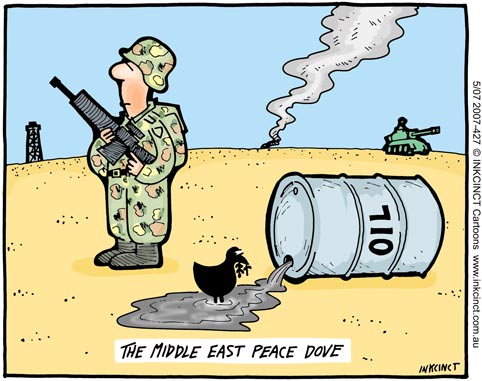 Noam Chomsky is considered a rogue commentator in the United States. His critiques of power illustrates the gross realpolitik that runs the US government and its foreign policy. Traditionally, we tend to think of ourselves as the “good guys”. In reality though, we seldom have that role. A look at the recent history of the Middle East confirms this hypothesis, excerpt from Alter.net.
Q: Does the United States still have the same level of control over the energy resources of the Middle East as it once had?
NC: The major energy-producing countries are still firmly under the control of the Western-backed dictatorships. So, actually, the progress made by the Arab Spring is limited, but it’s not insignificant. The Western-controlled dictatorial system is eroding. In fact, it’s been eroding for some time. So, for example, if you go back 50 years, the energy resources — the main concern of U.S. planners — have been mostly nationalized. There are constantly attempts to reverse that, but they have not succeeded.
Take the U.S. invasion of Iraq, for example. To everyone except a dedicated ideologue, it was pretty obvious that we invaded Iraq not because of our love of democracy but because it’s maybe the second- or third-largest source of oil in the world, and is right in the middle of the major energy-producing region. You’re not supposed to say this. It’s considered a conspiracy theory.
The United States was seriously defeated in Iraq by Iraqi nationalism — mostly by nonviolent resistance. The United States could kill the insurgents, but they couldn’t deal with half a million people demonstrating in the streets. Step by step, Iraq was able to dismantle the controls put in place by the occupying forces. By November 2007, it was becoming pretty clear that it was going to be very hard to reach U.S. goals. And at that point, interestingly, those goals were explicitly stated. So in November 2007 the Bush II administration came out with an official declaration about what any future arrangement with Iraq would have to be. It had two major requirements: one, that the United States must be free to carry out combat operations from its military bases, which it will retain; and two, “encouraging the flow of foreign investments to Iraq, especially American investments.” In January 2008, Bush made this clear in one of his signing statements. A couple of months later, in the face of Iraqi resistance, the United States had to give that up. Control of Iraq is now disappearing before their eyes.
Iraq was an attempt to reinstitute by force something like the old system of control, but it was beaten back. In general, I think, U.S. policies remain constant, going back to the Second World War. But the capacity to implement them is declining.
 Democracy, human rights, humanitarian intervention all fall at the wayside when it comes to the West supporting “stability” in the Middle East. We wonder why the residents are so pissed off at us and cheer when bad things happen to the West. I’m guessing it has a little something to do with the fact that while promoting “human rights and democracy” worldwide we simultaneously support vicious authoritarian regimes that cater to our interests while grinding their populace to dust.
Go figure.
Noam Chomsky summarizes the process quite nicely on article excerpted from Alter.net. Here are some of the highlights:
“So that wasn’t very pretty, but what about the other countries? Well, the countries that are most significant to the United States and the West, generally, are the oil dictatorships and they remain very stable. There were efforts to try and join the Arab Spring, but they were crushed, very harshly, with not a word from the Western powers. Sometimes it was quite violent, as in eastern Saudi Arabia and in Bahrain, which were Shiite areas, mostly, but it resulted in at most a tap on the wrist by the western powers. They clearly wanted the oil dictatorships to remain. That’s the center of their power.
In Tunisia, which had mostly French influence, the French supported the dictatorship until the very end. In fact, they were still supporting it after demonstrations were sweeping the country. Finally, at the last second, they conceded that their favorite dictator had to go. In Egypt, where the United States and Britain were the main influences, it was the same. Obama supported the dictator Mubarak until virtually the last minute – until the army turned against him. It became impossible to support him anymore so they urged him to leave and make a transition to a similar system.
All of that is quite routine. That’s the standard operating procedure for dealing with a situation where your favorite dictator is getting into trouble. There is case after case like that. What you do in that case is support the dictator to the very end, regardless of how vicious and bloody he is. Then when it becomes impossible, say because the army or the business classes have turned against him, then ease him out somewhere (sometimes with half the government’s treasury in his pocket), declare your love for democracy, and try to restore the old system. That’s pretty much what’s happening in Egypt.”
Chomsky called it. How long before we can get back to “business as usual?”
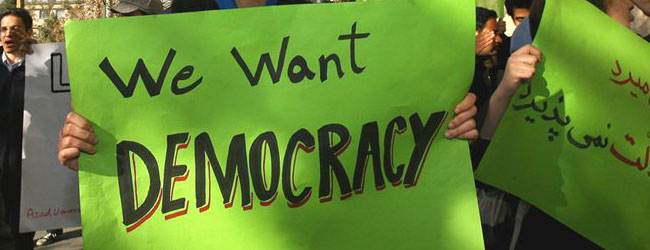 The parallel between the official line for public consumption and the actual realpolitik is quite thin, if you are willing to look. And therein lies the problem, we are not rewarding for looking, for being curious, for wanting to know what our policy actually is in the Middle East. Noam Chomsky discusses our role in the Middle East in a recent article posted at Mother Jones.
“The US and its Western allies are sure to do whatever they can to prevent authentic democracy in the Arab world. To understand why, it is only necessary to look at the studies of Arab opinion conducted by US polling agencies. Though barely reported, they are certainly known to planners. They reveal that by overwhelming majorities, Arabs regard the US and Israel as the major threats they face: the US is so regarded by 90% of Egyptians, in the region generally by over 75%. Some Arabs regard Iran as a threat: 10%. Opposition to US policy is so strong that a majority believes that security would be improved if Iran had nuclear weapons—in Egypt, 80%. Other figures are similar. If public opinion were to influence policy, the US not only would not control the region, but would be expelled from it, along with its allies, undermining fundamental principles of global dominance.”
Whoops, public opinion or what the people want is ignored in our client states, how surprising. The very last thing we want in the Middle East is Democracy.
“Support for democracy is the province of ideologists and propagandists. In the real world, elite dislike of democracy is the norm. The evidence is overwhelming that democracy is supported insofar as it contributes to social and economic objectives, a conclusion reluctantly conceded by the more serious scholarship.
Elite contempt for democracy was revealed dramatically in the reaction to the WikiLeaks exposures. Those that received most attention, with euphoric commentary, were cables reporting that Arabs support the US stand on Iran. The reference was to the ruling dictators. The attitudes of the public were unmentioned. The guiding principle was articulated clearly by Carnegie Endowment Middle East specialist Marwan Muasher, formerly a high official of the Jordanian government: “There is nothing wrong, everything is under control.” In short, if the dictators support us, what else could matter?
The Muasher doctrine is rational and venerable. To mention just one case that is highly relevant today, in internal discussion in 1958, president Eisenhower expressed concern about “the campaign of hatred” against us in the Arab world, not by governments, but by the people. The National Security Council (NSC) explained that there is a perception in the Arab world that the US supports dictatorships and blocks democracy and development so as to ensure control over the resources of the region. Furthermore, the perception is basically accurate, the NSC concluded, and that is what we should be doing, relying on the Muasher doctrine. Pentagon studies conducted after 9/11 confirmed that the same holds today.”
Dig a little deeper, read more about the Middle East and history from a variety of sources. Educate yourself about what you know or think you know about, questioning base assumptions is the all hallmark of the critical thinker and rational citizen.
Media lens is currently calling another Independent reporter on their uncritical treatment of Tony Blair and his sentiments toward the Palestinians. Go to the Media Lens website for the entire deconstruction.
A snippet from John Pilger caught my attention, I will repost it here:
In similar vein, Macintyre made a cryptic reference in his article to the “tragically abortive peace talks at Camp David in 2000”. This “tragic” episode is “Israel’s most important contemporary myth”, John Pilger writes. The myth states that Ehud Barak offered the Palestinians the return of “90 per cent” of the Occupied Territories and that Yasser Arafat turned him down. Arafat’s alleged rejection of this “unprecedented act of generosity”, to quote the myth once again, became the launch pad for renewed abuse of the Palestinians, including the building of an apartheid wall.
Pilger writes of the peace talks in 2000:
“There was no ’90 per cent’ offer. At Camp David, Barak promised a token military withdrawal from no more than 12 per cent of the Occupied Territories. He also made it clear that Israel had no intention of giving back any part of Greater Jerusalem, which covers some of the best Palestinian land and is the administrative and cultural heart of Palestine. Most of the illegal settlements, which controlled 42 per cent of the West Bank and Gaza, would stay, leaving the Palestinians with fragments of their original homeland, or 15 per cent of pre-Israel Palestine.” (John Pilger, Freedom Next Time, Bantam Press, London, 2006, pp. 107-108)
“In practice,” wrote Barak’s chief negotiator at Camp David, Shlomo Ben-Ami, before taking up his negotiator’s role, “the Oslo agreements were founded on a neo-colonialist basis, on a life of dependence of one on the other forever.” (Quoted, Pilger, ibid.)
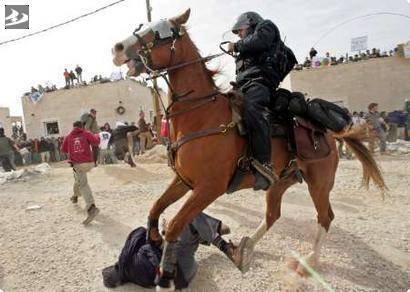
It is nice to see we are giving the Palestinians a fair shake with our obvious generosity.











 bleatmop
 Mystro


 Dead Wild Roses
Your opinions…