
You are currently browsing the tag archive for the ‘Radical Feminism’ tag.
Do Women Have the Right To Defend Their Sex – Michael Biggs
Three female academics spoke about women’s rights at Oxford on 25 October to an audience of about two hundred, composed mainly of feminists. Such a meeting would have been unremarkable in 2009, 1999, 1989, or 1979; even in 1969 it would have caused bemusement rather than outrage. Today, however, the meeting was so controversial that the University of Oxford deserves credit for allowing it to go ahead. Indeed, similar events were re-cently cancelled, or re-arranged, by Massey University in New Zealand and Simon Fraser University in Canada. At stake are two fundamental principles.The first is whether women have the right to defend their sex – to preserve, for example, female-only rape shelters and sports competi-tions. The second is whether we have a right to question fashionable doctrines of gender.
The event at Oxford – entitled ‘A woman’s place is at the lectern’ – was arranged by Woman’s Place UK (WPUK). This organization was formed in 2017 by left-wing feminists after an attendee, Maria MacLachlan, was physically assaulted on the way to a meeting discussing the government’s proposal to amend the Gender Recognition Act. To quote from WPUK’s manifesto:
‘We are against all forms of discrimination. We believe in the right of everyone to live their lives free from discrimination and harassment. Women face entrenched and endemic structural in-equality. … This is why sex is a protected characteristic in the Equality Act (2010) which we believe must be defended.’
I helped WPUK to book a room in Examination Schools for the meeting, for which it paid the normal rates. The Proctors’ Officers warned of a substantial risk of physical disruption. WPUK’s first meeting in Oxford, at the Quaker Meeting House in April 2017, was besieged by about fifty shouting protesters.2 Demonstrators outside the WPUK’s previous meeting, in Brighton, blocked the entrance and tried to kick in the windows.3 Therefore the University insisted that the organization pay for six pri-vate security guards as well as four University staff and obtain liability insurance for £10 million.
The meeting featured three speakers: Professor Selina Todd, Professor of Modern History at Oxford; Dr Susan Matthews, Honorary Senior Research Fellow at the University of Roehampton; and Raquel Rosario Sanchez, doctoral student at the Centre for Gender and Violence Research at the University of Bristol. The chair was Allison Bailey, a criminal defence barrister at Garden Court Chambers who, incidentally, grew up in Cowley.
When the meeting was announced, transactivists (activists campaigning for the transgender cause, most of whom do not identify as transgender but style them-selves ‘cisgender allies’) reacted with predictable outrage. Trans Action Oxford emerged as a new account (@trans-actionox) on Twitter. It asserted ‘a direct correlation be-tween the proliferation of groups like “A Woman’s Place” and the rise in transphobic abuse in the UK’.4 To quote from their statement of 17 October:
‘A proper commitment to academic freedom uplifts voices from all marginalised groups, including those of trans people. It recognises that freedom of expression does not extend to bigotry, and that bigotry serves to silence the vulnerable.’
According to Trans Action Oxford, then, anyone who disagrees with their doctrines has no right to speak – and, as we will see, must be expelled from the University. There is a real asymmetry here, because WPUK has never denied freedom of expression to those who disagree with its principles.
Trans Action Oxford’s statement was signed by several bodies including various groups within Oxford Univer-sity Student Union and the Oxford University LGBTQ+ Society. Other signatories were Beyond the Binary, a project at the Pitt Rivers Museum (paid £91,000 by the Her-itage Lottery Fund5), and the Queer Studies Network, funded by the Oxford Research Centre in the Humanities (TORCH). Should academic units of the University attempt to prevent one of their own colleagues – Todd – from speaking? Fortunately the transactivists decided to hold a rally in Broad Street rather than to intimidate people entering the meeting. The meeting proceeded without disruption. Todd emphasized the persistence of sex discrimination in the university sector. Matthews argued that we need to question the beliefs underlying gender ideology in the same way that earlier feminists exposed myths of their own time. Rosario Sanchez traced the transmogrification of Women’s Studies into Gender Studies and urged a re-turn to its roots. The speeches were followed by a lively question-and-answer session. What was said during the meeting would not surprise anyone who has encountered second-wave feminism.
Nevertheless, three of the four women on the platform have been targeted for harassment. As a founding sup-porter of LGB Alliance, a new group for homosexuals and bisexuals, Bailey received a torrent of abuse and even death threats online.8 Complaints were made to her Chambers, instigated by Gendered Intelligence – an organization which Oxford pays to train staff – and she is now under investigation. Rosario Sanchez has been bullied by students at her university ever since it was announced that she would chair a WPUK meeting in Bristol in 2018. She has been forced to run the gamut of masked protesters at meetings inside her university campus and has faced almost two years of threats by students to assault her at multiple events, both inside and outside her university.
Rosario Sanchez and Bailey’s experiences, incidentally, perfectly illustrates the perversity of today’s identity politics. We are exhorted to defer to oppressed groups, but when orthodoxy is challenged by a woman from the Dominican Republic and a black lesbian, then their dissident voices must be silenced. Todd has likewise faced a persistent campaign of harassment. Because the perpetrators are staff and students at Oxford, it should be of particular concern to readers. Trans Action Oxford’s subsequent statement (28 October) literally demands her sacking:
‘Todd refuses to grant trans women the same status as cisgender women. A person who is so openly transphobic should not be in the University’s employment, let alone in a teaching position where she is directly interacting with students … . We demand that it [the University] review its employment of Selina Todd.’
The authors –‘A collective of undergraduate and postgraduate students, and staff, of the University of Oxford’ – lack the courage to sign their names. The statement was retweeted by the Oxford Feminist Society. The Society also tweeted using the hashtag #FuckTerfs. The acronym stands for Trans Exclusionary Radical Feminists, and and the associated Twitter traffic is often accompanied by threats of violence.
Ponder the paradox of anonymous ‘intersectional feminists’ hurling obscenities at a feminist scholar because she believes that women face discrimination on account of their sex. As Selina Todd has told me, abuse is not confined to social media. After the WPUK meeting, activists planned to disrupt her lecture to undergraduates, causing the History Faculty to ask the Proctors for security. The front row of the lecture theatre was occupied by several transactivists displaying slogans. Such overt intimidation goes far beyond the bounds of any normal academic disagreement or political debate. Moreover, there is reason to conclude that transactivists are targeting Todd as a woman. She and I share similar views on the subject of sex and gender; if anything, I have been more outspoken.
Although I have not altogether escaped criticism, I have not faced anything like the continual campaign of harassment which she has endured, which, she tells me, has included an official complaint to St Hilda’s – dismissed as without foundation – as well as relentless defamation on social media, for over a year. The University of Oxford deserves real praise for al-lowing the WPUK to hire its premises. (The only other British university to do so is Northumbria.) The Vice-Chancellor’s reply to Trans Action Oxford struck just the right balance: Oxford ‘prioritises protecting academic freedom and robust expression of opinion and debate, while not tolerating any form of unlawful discrimination or harassment.’ But, in my view, the University has not done enough to protect Todd from harassment.
It has neither defended her reputation as one of the leading scholars of women’s history with a long record of mentoring female students, nor refuted the defamatory claim that her presence is ‘directly detrimental’ to the ‘well-being and safety’ of trans students. Although the University has adopted robust principles on free speech (written by Professor Timothy Garton Ash and Lord Ken Macdonald), it evidently allows – as in the case of Trans Action Oxford – student groups and even academic units to violate those principles. The debate around sex and gender is inevitably heated because fundamental rights are really at stake.
Needless to say, members of the University have an absolute right to disagree vehemently with Todd and to repudiate her views. It should not be acceptable, however, to call for a colleague and teacher to be sacked for believing that sex matters.
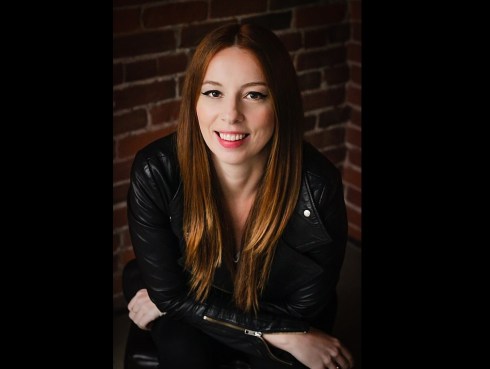
The rest of the article reprinted here with the exception of the hyperbolic response from the trans groups in NZ that who were afraid to debate Meghan Murphy in person on live TV.
“Meghan Murphy is a radical feminist who believes transgender women aren’t women – views that have seen her banned from Twitter.
She was the star guest at Feminism 2020 on Friday – an event organised by Speak Up For Women that was originally going to be hosted at Massey University, but cancelled before being picked up by ACT leader David Seymour and hosted at Parliament.
Murphy told Newshub Nation on Saturday her position was “pretty straightforward”.
“I don’t believe that it’s possible to change biological sex, so I think that you’re born either male or female, and you remain male or female for life.
“Being a woman isn’t a feeling – it’s a fact. I guess I don’t quite understand what the purpose is in identifying the opposite sex.”
Murphy said she has concerns about “women’s rights as a whole”, but added she feels “total empathy” towards people with gender dysphoria, mental illness and their identities.
“The problem with trans is there’s no definition of transgender – it’s just an announcement,” she told Newshub Nation. “There’s no way to discern who is transgender. It’s just something that you say.”
***Update*** Just found the transcript!
On Newshub Nation: Simon Shepherd interviews Meghan Murphy
Simon Shepherd: It’s Transgender Awareness Week, the same week a feminist group, Speak Up For Women, has brought Megan Murphy from Canada to speak in New Zealand. Murphy is a radical feminist who believes trans women aren’t women, views that have seen her banned from Twitter. We asked representatives from several trans and rainbow organisations to engage in a debate, but no one was available. So I began by asking Megan Murphy to explain her position.
Megan Murphy: Sure, I mean, my position is pretty straightforward, in my opinion. I don’t believe that it’s possible to change biological sex. So I think that you’re born either male or female, and you remain male of female for life. So I disagree with the idea that you can identify as female if you’re male. I also, of course, have concerns about gender identity legislation and policies and the way that they impact women, and particularly women’s spaces where women and girls might be particularly vulnerable, so change rooms, transition houses, prisons.
We’ll get to those specific examples in a moment. Gender self-identification — what is wrong with a trans person declaring that they’re a woman, though, if that’s how they feel?
Well, being a woman isn’t a feeling, it’s a fact. I guess I don’t quite understand what the purpose is, in identifying as the opposite sex. I understand that some people suffer from, you know, what you might call gender dysphoria.
That’s right. And that’s a medically recognised diagnosis, isn’t it?
Well, the problem is that now gender identity legislation and policy isn’t based on any kind of medical diagnosis. I would disagree with the concept of gender dysphoria, but that’s sort of a more complicated topic we could maybe get into later. But right now, what we’re talking about is literally just a person announcing that they’re the opposite sex, based on nothing, not based on any kind of mental illness or whatever.
Well, there is one thing that we should raise, though. What about intersex people — the definition is people who do not fit the typical definitions for male or female bodies. Where do they fit into this?
Well, they don’t fit into this, because trans people aren’t intersex, they’re just males or females who don’t identify with the gender stereotypes attached to males and females.
Yeah, but you are saying that biologically you are one or the other, but these people are both or neither.
Well, actually, with intersex conditions, usually those people are male or female, and then they have an intersex condition. There’s some people that it’s more complicated and harder to decipher, but for most people, it’s actually not that hard to decipher, and they just have abnormalities.
Right, so, if someone chooses — if they are intersex and they choose to become a female, is that acceptable to you?
Well, I mean, this conversation really doesn’t have anything to do with intersex, so I’m not particularly interested in debating that issue. I think that’s separate. And, you know, I’m not a doctor, so that’s an issue between the person and their doctor, how they want to go about dealing with this condition.
Sure, but it doesn’t fit into your—
But what we’re talking about is a male who’s obviously male, clearly male, simply saying, ‘I’m a woman,’ and expecting to be accepted as a literal female.
The non-binary community is tiny; some studies here put it at about 1%. So why does a feminist like yourself feel threatened by trans people calling themselves women?
Well, I don’t know that it’s about me feeling threatened per se. Is that I have concerns for the impact on women’s rights as a whole, and particularly marginalised women. So, for example, when we’re talking about female prisons, the women who are in female prisons are among the most marginalised people in the country. And men are being transferred to these prisons and assaulting and sexually harassing these women.
Trans people have a high suicide rate here. There’s a study recently that more than 50% of them have considered suicide in the past year. They are very marginalised as well. Shouldn’t there be some empathy towards them?
I totally have empathy towards people who struggle with gender dysphoria, who struggle with mental illness, who struggle with, you know, their identities, who are marginalised in various ways. It’s really not about empathy or a lack of empathy. I mean, we’re talking about legislation, so it has to be about more than just how you feel. And really, what I’m concerned about is why no one in this conversation seems to have empathy or concerns for women and girls — I mean, they’re totally being left out and shut out of this debate.
And you are fighting for what you say has been the oppression of women over centuries. Do you believe that, in a way, this is also the oppression of another minority, or a marginalised society — that your opinions about them is marginalising them and oppressing them?
Well, I mean, my opinions about people who identify as trans are not offensive or judgemental or hateful in any way. I’m really just saying these basic things like you can’t change your sex.
Yeah, but some cultures have accepted this for years. I mean, there’s cultures around the world that have a history of gender fluidity. So why is it an issue right now?
I don’t have an issue with gender fluidity. And many of those cultures actually didn’t necessarily accept these people as literally the opposite sex. They accepted them as, you know, a male who adopted feminine stereotypes. Or there was, like, a ‘third gender’, but it wasn’t the same as what we’re talking about now.
So you’re saying that society— In your view, should society treat trans people differently, have a different category than male or female?
No. I mean, the problem with trans is that there’s no definition of transgender. It’s just an announcement. So there’s no way to discern who is transgender. You know, what does that mean? What does it mean to be transgender? It’s just something that you say.
The transgender community feels feminists like yourself are what they call exclusionary. They call you TERFs — trans exclusionary radical feminists.
Mm-hm.
So you’re excluding them from society. That’s what their argument—
I’m definitely not excluding them from society.
So why do you object on the terms?
And I’m not excluding trans people from anything. I mean, females who identify as transgender are welcome in women’s spaces, males who identify as transgender are welcome in male spaces and welcome everywhere else. What we’re saying, what we’re talking about specifically is men, so I really feel frustrated when people start talking about it as oppression of trans people or about transphobia, for example, because it’s really not about the trans identity. It’s really about biological sex, and that’s it.
These people feel like they’ve been trapped in the wrong body. That’s one of the things that you hear.
Well, it’s not possible to be trapped in the wrong body. You’re just born with the body and you deal with it. I mean, lots of people don’t like their bodies and wish they had different bodies, but, you know, too bad.
So, you’re a male; you’re always going to be a male. That’s right? You just cannot identify—
Of course. And everyone knows that. I mean, you have to agree it’s not possible to change sex. How would that happen?
Well, medically, it’s possible to change sex.
It’s not possible to change your chromosomes. It’s not possible to change your bones. It’s not possible to change your pheromones. I mean, you can get cosmetic surgery, so you can be a male with breast implants or you can get genital surgery, but that doesn’t literally change your biological sex.
Do you think that you have the privilege in this debate?
Definitely not.
I mean, you know, you are a cis-gender woman, and—
I am not a cis-gender woman. I don’t identify with femininity.
All right.
I don’t identify with sexist gender stereotypes.
Okay. All right. So you’re a woman.
I’m a woman. I’m a female. That’s right.
Okay. You’re a female. But you are not being marginalized, are you? I mean, because women are 50% of the population. So therefore you have the power in this relationship with people—
I mean, I— Me personally— This conversation really isn’t about me personally. It’s about all women and girls, and around the world, you have to agree that women still suffer enormously in many parts of the world. I mean, in Saudi Arabia, women still, you know, can’t function on their own. They’re not allowed to drive.
Sure. So, I guess the argument is with that kind of understanding, why do you not have an understanding of people who feel like they are in the wrong bodies and they want to identify as women and that’s what their natural state should be?
You know, we can’t base legislation based on a few people’s feelings, especially when those people are male and potentially present a threat to women and girls.
Okay. Well, let’s talk—
I mean, just because a man identifies as a woman, I don’t think that means he should be allowed access to women’s change room and be able to be there naked with his penis out around women and girls.
All right. So, they can—
I think surely you can agree that’s inappropriate.
Okay, so let’s talk about the practicalities. You say that a trans woman who hasn’t had a genital change should not be allowed into women’s spaces. Is that right? In women’s changing rooms?
Definitely.
Okay. So you shouldn’t share bathrooms. What about sport? Should trans women compete against other women in sport?
I mean, this is a really big issue, and I’m really glad that you brought it up, because males have an obvious advantage over females in most sports, and that’s why they compete separately. So, you know, women fought to have the right to compete on fair ground, and that’s being rolled back really quickly, and they’re being forced to compete against males. And there’s no— There’s nothing that a man can do, you know— These are men who have gone through puberty; they have male bodies. Even if they reduce their testosterone, that doesn’t mean that they—
Because many sports bodies do have levels of testosterone that are acceptable to have trans women versus women.
I know, but those men still have more muscle mass, their bones are different. You know, males have, like— their bodies are completely different than female bodies. They have different organs — they have bigger lungs, they have bigger hands, they have longer limbs, and you can’t change any of that by reducing testosterone.
What about self-identification on passports and drivers’ licences, these official kinds of documents?
I mean, I don’t see the point, but, again, I think that it’s dangerous to legally change a person’s sex, because what that means is that then that person, if he’s male and he has changed his sex to female on his ID and whatnot, then he must be accepted in women’s transition houses, in female prisons, in women’s change rooms.
Are trans women really a threat in those kinds of places?
Definitely not trans women. Men. Males. So, it doesn’t matter if you identify as trans or not. I don’t think that trans women are any more dangerous or predatorial than any other man, and I don’t even think all men are predatorial. But we know that the people who are predatorial towards women, who sexually harass women, who sexually assault women are generally males, not females.
So you’re saying that a male cannot change their spots if they’re a bad male, whether they be a trans woman or a male?
I mean, I hope that men can change their spots. By transitioning, they’re definitely not changing anything. That’s not the kind of change that we’re looking for.
You say that self-identification is a regressive ideology that’s trying to erase sex-based rights. So you’re saying that if somebody wants to self-ID as a trans woman, they’re erasing women’s rights.
I think that if ‘woman’ no longer has a definition and there’s no such thing as a women, then there’s no basis for women’s rights.
On things we need to get codified into law ASAP.

Radical Feminists Unite is a Toronto-based organization of diverse women who work toward the preservation and advancement of the rights of women and girls. We have organized a lecture at a Toronto Public Library branch by Canadian feminist journalist Meghan Murphy, taking place on October 29th. We are not a hate group, and we do not espouse hate speech, or advocate for the removal of rights from any marginalized group.
We have invited Meghan Murphy to speak because she is respected as an important feminist voice, not only in Canada, but around the world. She has built one of the largest and most read feminist websites in the English speaking world, and has exemplified bravery and steadfastness in her refusal to back down on behalf of women.
Neither we, nor Meghan, are looking to remove anyone’s right to safety, dignity, and freedom from discrimination. We believe that these are fundamental rights that should be guaranteed to all human beings. With regard to trans people, and specifically trans women, we believe that specialized services such as rape shelters, prison accommodations, gender neutral washrooms, and other social programs should be available to meet their specific needs as a marginalized community. To state that we are looking to take away these rights, and that we even question the existence and humanity of trans people, is an outright falsehood.
In 2017 Meghan Murphy testified before the senate regarding the impact bill C-16 would have on women and girls. She focused on how we define men and women, what it means to be male or female, and how masculinity and femininity have been the tools of our oppression. She talked about the dangers of enshrining something as ill-defined as gender identity in Canadian law. Meghan pointed out that the ability for males to be accepted as women on the basis of their internal sense of gender identity, rather than being classified according to sex, has widespread consequences for women. We believe these consequences cannot be ignored and should be discussed.
Bill C-16 added Gender Identity and Gender Expression to the Canadian Human Rights Act. On the surface, this appears to be an important and progressive step for the rights of trans people. But this amendment actually comes into conflict with other protected characteristics also named in the Canadian Human Rights Act, such as the right to single sex spaces and provisions, and freedom of religion (for women who, due to their religion, are prohibited from sharing intimate spaces or coming into physical contact with males); as well as complicating rights guaranteed under the Canadian Charter of Rights and Freedoms, such as freedom of association, and freedom of thought, belief, opinion, and expression. A good example of how these rights compete with each other can be found in the case of JY vs Various Waxing Salons, which was heard before the BC Human Rights Tribunal in July, and is currently pending a decision.
Practically, we believe there is an important difference between males and females, and that being able to distinguish between the two in law is essential to the maintenance of women’s rights. This does not mean we deny the existence of trans people, who may experience gender and/or sex dysphoria and come to identify more closely with the gender roles associated with the opposite sex. We do believe, though, that a discussion needs to be had about how this affects women’s existing, hard won rights- specifically the right to single sex spaces such as prisons, changing rooms, rape shelters, and women’s sports. We also believe that the choice of Statistics Canada to record statistics by self-identified gender, rather than biological sex, will have a negative impact on the ability of advocates to track violence against women and trans people, as well as to know who commits particular crimes, and who the victims of those crimes are. As these stats are used by policy makers and private researchers, it is our contention that the accurate representation of sex in these stats is vital to the well-being of women and trans people.
This event, while now sold out, was open to the public, and will have a question period following Meghan Murphy’s presentation. We consciously priced the tickets at $5 each, so that the event would be as accessible as possible to all. It is our hope that this event will open a desperately needed dialogue among people who hold many different thoughts, opinions, and beliefs.
We are honoured to host Meghan Murphy here in Toronto. An understanding of biological sex is not hateful, and meeting to listen and discuss the impact of the collision of sex and gender in Canadian legislation does not amount to the promotion of discrimination, contempt, or hatred. We would like to see all marginalized people provided for, and think there are solutions to these issues of competing rights, but finding and creating those solutions requires an open and honest discussion of sex, gender, and the law.
Hey folks, it’s election time. Your MP has to pretend harder that they are listening the people they supposedly represent. Take the time and send this in. Courtesy of We The Females.
Dear <MP’s Name>
I am writing as a voter in your riding who supports human rights for all Canadians and with specific concerns about the impact of Bill C16 on women’s sex-based rights.
Bill C16 was enacted in Parliament in 2017 to amend the Canadian Human Rights Code and the Canadian Criminal Code in order to provide protection for the transgendered. Unfortunately, C16 does not explicitly protect transgendered individuals but instead protects “gender identity” and gender expression”, neither of which are given precise legal definitions but are instead subjective categories unlike biological sex.
Although sex remains as a separate protected characteristic, the enactment of Bill C16 has led to a massive conflation of sex and gender identity/expression (many women have found that to even discuss their sex based rights as separately protected from gender identity and gender expression leads to accusations of transphobia and bigotry) with the result that, currently in Canada, a women’s status is no longer based in objective biology but on a subjective “gender identity” and/or “gender expression”.
This is misogynistic and continues to have profound implications for women’s’ sex-based rights including the right to sex segregated spaces and activities including prisons, abuse and rape crisis centres, elder care facilities and sports and athletic opportunities.
Brief examples regarding Statistics Canada and the Correctional Service of Canada follow:
Statistics Canada
As a direct result of C16, Statistics Canada “has revised the variable “sex of a person” as well as creating a new variable “gender of a person”.
This means that but for an extremely limited purpose, data collection and analysis from Stats Canada is based on the “gender of a person” not their biological sex.
One of the most egregious examples of this obfuscation is that universal crime statistics in Canada are no longer collected based on sex but instead on gender identity. This has been confirmed by the Canadian Association of Police Chiefs and now results in crime committed by biological males who identify as transgendered falsely being recorded as committed by female Canadians.
Changes such as these also lead directly to wrongheaded policies like the recent announcement by OPP that they will no longer publicly report the sex or gender of either perpetrators of crimes or their victims. All at a time when violence against biological women is epidemic in Canada!
Corrections Canada
On January 9, 2017 Corrections Canada announced a policy for transgender inmates detailing that: “Pre-operative male to female offenders with gender dysphoria will be held in men’s institutions and pre-operative female to male offenders with gender dysphoria will be held in women’s institutions”. This policy was abruptly reversed only days later, on January 13th, 2017, following an off the cuff comment by Justin Trudeau at a town hall. As a result, biologically male inmates (both post and pre-operative) are being housed in female facilities, some with mother/child units.
In response to an ATIP, Corrections Canada has advised that between June 1, 2017 and December 3, 2018, 8 biological males who identify as transgendered were transferred to the women’s system. 7 of the 8 were convicted of violent crimes including murder and sexual assault. The total population of transgendered males in female facilities remains unknown.
Female inmates (who are disproportionally aboriginal, have previously been subjected to violence/abuse and are overwhelmingly convicted of nonviolent crimes) are being housed with male transgendered inmates such as:
-
Madilyn (formerly Matthew) Harks who was convicted of sexually assaulting girls under the age of eight three times and has been accused of harassment and assaulting female inmates while in custody. Current location unknown but thought to be held at the Fraser Valley Women’s Institute which contains a mother and child unit
-
Tara Desousa (formerly Adam Labucan), a dangerous offender convicted of sexually assaulting a three-month-old baby. While in custody, Desousa assaulted female inmates and a female correctional officer. Currently held at the Fraser Valley Women’s Institute which contains a mother and child unit
With the information I have provided in mind, please let me know your thoughts and position on the points below. Your response will be a very important consideration in my choice of candidate on October 21:
-
What is your position on women sex based human rights as separate from gender identity/expression?
-
Do you support the rights of women to organize, provide and receive services based on biological sex as separate from gender identity/expression?
-
Do you support the collection of date for social statistics programs (including crime stats) based on biological sex as separate from gender identity/expression?
-
What specific steps will you take to support and promote women’s sex-based rights including the right to organize, provide and receive services as separate from gender identity/expression?
Thank-you for earliest response,
<Your Name>











 bleatmop
 Mystro
 The Arbourist


 Dead Wild Roses
Your opinions…