
You are currently browsing the tag archive for the ‘Remembrance Day’ tag.
“We Remember Them,” composed by Susan LaBarr in 2017, is a poignant choral work for SATB voices and piano, drawing from a Jewish liturgical prayer of remembrance by Rabbis Sylvan Kamens and Jack Riemer. Its text unfolds as a meditation on grief and continuity: “When we are weary and in need of strength, we remember them… In the laughter of a child, in the flush of a lover’s kiss, we remember them.” The refrain anchors the piece—”As long as we live, they too shall live, for they are now a part of us, as we remember them”—evoking the enduring presence of the departed in the rhythms of the living. LaBarr’s melody, with its contemporary ballad sensibility and accessible harmonies, renders the work suitable for concerts, memorials, or funerals, transforming solemn reflection into a shared act of renewal.
On this Remembrance Day, let us pause amid the shortening light to honor the fallen, whose silent valor secured the fragile edifice of our freedoms. In their names, we pledge not mere recollection, but resolve: to guard against the tempests of division and the sirens of forgetfulness, so that their sacrifice endures not as echo, but as foundation.
Lest we forget.
The last veterans of the Great War departed this world decades ago; those who endured the trenches and bombardments of the Second World War now number fewer than a thousand, most in their late nineties or beyond. With them vanishes the final tether of direct witness to the twentieth century’s cataclysms. What fades is not merely a generation but a form of moral authority — the living memory that once stood before us in uniform and silence. We have reached a civilizational inflection point: the moment when history ceases to be personal recollection and becomes curated narrative, vulnerable to distortion, neglect, or deliberate revision.
This transition demands vigilance. Memory, once embodied in a stooped figure wearing faded medals, could command reverence simply by existing. Now it resides in archives, textbooks, and the contested arena of public commemoration. The risk is not that the past will vanish entirely — curiosity and conscience ensure fragments endure. The greater peril is that it will be instrumentalised: stripped of complexity and pressed into service for transient ideological projects. A battle becomes a hashtag, a sacrifice a soundbite, a hard-won lesson a slogan detached from the blood that purchased it.
Edmund Burke reminded us that society is a partnership not only among the living, but between the living, the dead, and those yet unborn. This compact imposes obligations. We inherit institutions, norms, and liberties refined through centuries of trial, error, and atonement. To treat them as disposable because their origins lie beyond living memory is to saw off the branch on which we sit. The trenches of the Somme, the beaches of Normandy, the frozen forests of the Ardennes—these were not abstractions of geopolitics but crucibles in which the consequences of appeasement, militarised grievance, and contempt for constitutional restraint were written in blood.
The lesson is not that war is always avoidable; history disproves such sentimentalism. It is that certain patterns recur with lethal predictability when prudence is discarded. The erosion of intermediary institutions, the inflation of executive power, the substitution of mass emotion for deliberation—these were the preconditions that turned stable nations into abattoirs. To recognise them requires neither nostalgia nor ancestor worship, only the intellectual honesty to trace cause and effect across generations.
Conserving society in the Burkean sense is therefore active, not passive. It means cultivating the habits that sustain ordered liberty: deference to proven custom tempered by principled reform; respect for the diffused experience of the many rather than the concentrated will of the few; and humility before the limits of any single generation’s wisdom. Remembrance Day, properly observed, is not a requiem for the dead but a summons to the living. It reminds us that the peace we enjoy is borrowed, not owned — and that the interest payments come due in vigilance, discernment, and the quiet courage to defend what has been painfully built.
As the century that began in Sarajevo and ended in Sarajevo’s shadow recedes from living memory, the obligation deepens. We must read the dispatches, study the treaties, weigh the speeches, and above all resist the temptation to flatten the past into morality plays that flatter the present. Only thus do we honour the fallen: not with poppies alone, but with societies sturdy enough to vindicate their sacrifice.

My choir is singing this at a late Remembrance Day Concert. I hope to get a recording of us performing, but until then the ASU concert choir does a masterful rendition for this most important of days.
We Remember Them
In the rising of the sun and in its going down,
we remember them.
In the blowing of the wind and in the chill of winter,
we remember them.
In the opening of buds and in the rebirth of spring,
we remember them.
In the blueness of the sky and in the warmth of summer,
we remember them.
In the rustling of leaves and in the beauty of autumn,
we remember them.
In the beginning of the year and when it ends,
we remember them.
When we are weary and in need of strength,
we remember them.
When we are lost and sick at heart,
we remember them.
When we have joys we yearn to share,
we remember them.
So long as we live, they too shall live, for they are now a part of us,
as we remember them.
Music for a thoughtful day.
Da pacem Domine
Da pacem Domine is the incipit of two different Latin texts, a hymn and an introit. Both have been the base for compositions to be used in church liturgy, beginning with chant. Paraphrased versions of the hymn were created by Martin Luther in German in 1529, Verleih uns Frieden, also frequently set by composers. In English, the hymn entered the Book of Common Prayer, “Give peace in our time, O Lord”.
 You know what Remembrance Day should be for?
1. Remembering all those who have died in war. Precedence on the civilian deaths, because they die at far higher rate than any established military force.
2. Educate yourself as to what war is and how it is waged.
3. Take action to prevent future war and the inevitable human suffering that goes along with the organized murder we like to call warfare.
Today I’m all about the second bullet point.
Full Documentary
Have your minute of silence. Then take an additional hour and a half to get a glimpse of what the war on terror looks like.
Remembrance Day is a conflicted day for me, I have had the absolute luxury of never having to fight in an armed conflict and for that I am grateful.
Conversely, the application of military power is always the sign of the failure of the human spirit when we must resort to destroying nations and people for what is purported to be what is “right”. We must remember all of those who gave their lives and have had their lives taken from them. John Pilgers quote speaks to the merciless nature of war.
During World War One, 10% of all casualties were civilians.
During World War Two, the number of civilian deaths rose to 50%.
During the Vietnam War, 70% of all casualties were civilians.
In the war in Iraq, civilians account for up to 90% of all deaths.
Sobering figures to say the least.
Speaking of participating in Remembrance Day activities, I had a concert yesterday and my choir, called Soldiers Cry. It was special as Roland Majeau came to sing his song with us, he brought his guitar and accompanied us while he sang the solo line. The song is rhythmically very challenging. As you’re sitting there listening, clap your hands softly to find the pulse of the music. Notice that all the lyrics start when your hands are apart. This piece of music has syncopation in spades, making it just a bear to learn.
The second challenge for me is not to think of the damn video while singing, because becoming emotional/getting misty does bad things to your vocal instrument. :/
I’ll apologize now for the disjointed nature of this post. Days like today do much to stir the emotional pot as they raise many conflicting feelings about how we treat the past, and which parts we choose to focus on. Our history contains a staggering amount of violence , every day could be like November 11th for all the people who have unjustly lost their lives during conflict.
I hope that on days like today people understand, even for just a short while. the importance of history and how the past makes our future. Understanding what we have done, and why, is vital in constructing a coherent view of the world.
I’m not sure how many people really get the horror of war and the terrible price we all pay being party to it, but if Remembrance Day awakens a twinge of empathy, a stirring of consideration, even a feeling of “I don’t want that”, then days like this should be considered to valuable and worth continuing.

Update: The concert went very well, we played to a full house and managed to get an encore out of the proceedings. :)
In a time where things are hyper sensationalized and denuded of any real meaning Remembrance Day has done remarkably well to maintain its somber demeanor and sense of decorum. (I’m sure some budding capitalist is contemplating a remembrance day sale, just before being cuffed upside the head for being so vulgar)
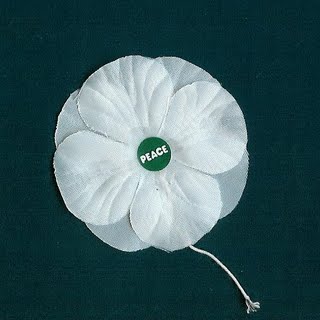
I’d like to put forth the notion that we should change the focus of Remembrance Day; from the armed forces to the civilian populations that suffered the brunt of the casualties during those special times where we leave our empathy and rationality at the door and engage in wholesale slaughter.
This is by no means a comprehensive listing of all civilian deaths due to war – just the low-lights that I could find.
World War I – 6.8 million civilian deaths.
World War II – 42 – 58 million civilian deaths.
Korean War – 2.8 million
Vietnam – 2.0 million
Nicaragua – 78,000 and counting due to landmines.
Iraq – 93,000 to 102,000 and rising.
Afghanistan – 32,000 and rising.
We should take this day to remember our humanity and to work toward understanding each other from across a table, not the barrels of guns.
We should remember those innocent victims of war, they certainly did not deserve their fate, yet war claimed them anyways. We should remember the Armenian Holocaust, we should remember the Jewish Holocaust not only to remind us of depths of human depravity but to remember that tragic events such as these happened because ordinary people did not speak up and call out the injustice as it was beginning to happen.
It is our responsibility as human beings not to look and then turn away, but rather, we must face our ugly past to prevent an ugly future.
So, on this November 11th, I choose to remember our common humanity and weep for our losses due to the depredations of war and unrest. I will remember that I will always have a choice whether or not to perpetuate evil, I will remember the past and hope I have the courage to make the right choice if faced with the grim situations that have marred our bloody history.











 bleatmop
 Mystro


 Dead Wild Roses
Your opinions…