
You are currently browsing the tag archive for the ‘Taliban’ tag.
The Taliban’s gender apartheid in Afghanistan has erased decades of women’s rights, yet Western feminists remain largely mute. This selective outrage undermines global solidarity and demands scrutiny.
The Plight of Afghan Women
Since the Taliban’s 2021 return, Afghan women live under the harshest restrictions in the world. Girls are banned from schooling beyond sixth grade. Women are barred from most employment, forbidden from traveling without male chaperones, and compelled to wear full coverings. More than 80 edicts—54 targeting women—have stripped them of agency.
The results are devastating: suicide rates among Afghan women now exceed those of men, a stark marker of despair. The UN describes Afghanistan as the most repressive state for women globally, with its system of gender apartheid potentially amounting to a crime against humanity. Afghan women themselves say they feel “invisible, isolated, suffocated.”
The Silence of Western Feminists
Where is the outrage? Western feminists—so vocal on reproductive rights, pay gaps, and representation—have been notably quiet. In 1997, the Feminist Majority Foundation spearheaded a campaign against Taliban “gender apartheid,” mobilizing U.S. media and Congress. No such mobilization exists today.
Instead, Western feminist discourse remains centered on domestic struggles. Social media cycles amplify abortion battles or workplace equity, while Afghanistan’s crisis rarely trends. A 2022 Human Rights Watch panel highlighted Afghan women’s sense of abandonment—forgotten by those who once claimed solidarity. The silence is more than neglect; it erodes the credibility of a movement that champions global sisterhood.
The Opposition’s View
Defenders argue Western feminists are rightly focused on where they wield influence—local policy fights over abortion or workplace equity. Others fear that advocating for Afghan women risks repeating colonialist “savior” narratives, as post-9/11 rhetoric did.
But caution has curdled into apathy. Silence neither elevates Afghan voices nor restrains Taliban oppression. If anything, Western feminism’s past complicity in militarized “rescue” campaigns demands more careful, accountable solidarity—not retreat.
The Takeaway
Irony abounds: a movement quick to decry domestic patriarchy turns mute before a regime that has locked women in their homes. Afghan women are not asking for saviors, but for allies who will amplify their voices and challenge their erasure.
Consistency is the true test of principle. Championing equality at home while ignoring gender apartheid abroad is not solidarity—it is privilege. The Taliban’s repression is their crime, but Western feminim’s silence is a stain on its conscience.
References
- UN Women. Women in Afghanistan: From Almost Everywhere to Almost Nowhere. Link
- Human Rights Watch. Afghan Women and Western Intervention: A Conversation. Link
- Atlantic Council. In Afghanistan’s Gender Apartheid. Link
A brief note. I think that this essay should be required reading for all those who consider joining the armed forces and participating in the cycle of terrorism and destruction that currently dominates our foreign policy and geo-political goals here in the West. Many thanks to Tom’s Dispatch for hosting the essay.
“Why The War on Terror Shouldn’t Be Your Battle.”
[…]
Let’s start that unpacking process with racism: That was the first and one of the last times I heard the word “enemy” in battalion. The usual word in my unit was “Hajji.” Now, Hajji is a word of honor among Muslims, referring to someone who has successfully completed a pilgrimage to the Holy Site of Mecca in Saudi Arabia. In the U.S. military, however, it was a slur that implied something so much bigger.
The soldiers in my unit just assumed that the mission of the small band of people who took down the Twin Towers and put a hole in the Pentagon could be applied to any religious person among the more than 1.6 billion Muslims on this planet. The platoon sergeant would soon help usher me into group-blame mode with that “enemy.” I was to be taught instrumental aggression. The pain caused by 9/11 was to be tied to the everyday group dynamics of our unit. This is how they would get me to fight effectively. I was about to be cut off from my previous life and psychological manipulation of a radical sort would be involved. This is something you should prepare yourself for.
When you start hearing the same type of language from your chain-of-command in its attempt to dehumanize the people you are off to fight, remember that 93% of all Muslims condemned the attacks on 9/11. And those who sympathized claimed they feared a U.S. occupation and cited political not religious reasons for their support.
But, to be blunt, as George W. Bush said early on (and then never repeated), the war on terror was indeed imagined in the highest of places as a “crusade.” When I was in the Rangers, that was a given. The formula was simple enough: al-Qaeda and the Taliban represented all of Islam, which was our enemy. Now, in that group-blame game, ISIS, with its mini-terror state in Iraq and Syria, has taken over the role. Be clear again that nearly all Muslims reject its tactics. Even Sunnis in the region where ISIS is operating are increasingly rejecting the group. And it is those Sunnis who may indeed take down ISIS when the time is right.
“If you want to be true to yourself, don’t be swept up in the racism of the moment. Your job should be to end war, not perpetuate it. Never forget that.
The second stop in that unpacking process should be poverty: After a few months, I was finally shipped off to Afghanistan. We landed in the middle of the night. As the doors on our C-5 opened, the smell of dust, clay, and old fruit rolled into the belly of that transport plane. I was expecting the bullets to start whizzing by me as I left it, but we were at Bagram Air Base, a largely secure place in 2002.
Jump ahead two weeks and a three-hour helicopter ride and we were at our forward operating base. The morning after we arrived I noticed an Afghan woman pounding at the hard yellow dirt with a shovel, trying to dig up a gaunt little shrub just outside the stone walls of the base. Through the eye-slit of her burqa I could just catch a hint of her aged face. My unit took off from that base, marching along a road, hoping (I suspect) to stir up a little trouble. We were presenting ourselves as bait, but there were no bites.
When we returned a few hours later, that woman was still digging and gathering firewood, undoubtedly to cook her family’s dinner that night. We had our grenade launchers, our M242 machine guns that fired 200 rounds a minute, our night-vision goggles, and plenty of food — all vacuum-sealed and all of it tasting the same. We were so much better equipped to deal with the mountains of Afghanistan than that woman — or so it seemed to us then. But it was, of course, her country, not ours, and its poverty, like that of so many places you may find yourself in, will, I assure you, be unlike anything you have ever seen. You will be part of the most technologically advanced military on Earth and you will be greeted by the poorest of the poor. Your weaponry in such an impoverished society will feel obscene on many levels. Personally, I felt like a bully much of my time in Afghanistan.
Now, it’s the moment to unpack “the enemy”: Most of my time in Afghanistan was quiet and calm. Yes, rockets occasionally landed in our bases, but most of the Taliban had surrendered by the time I entered the country. I didn’t know it then, but as Anand Gopal has reported in his groundbreaking book, No Good Men Among the Living, our war on terror warriors weren’t satisfied with reports of the unconditional surrender of the Taliban. So units like mine were sent out looking for “the enemy.” Our job was to draw the Taliban — or anyone really — back into the fight.
Believe me, it was ugly. We were often enough targeting innocent people based on bad intelligence and in some cases even seizing Afghans who had actually pledged allegiance to the U.S. mission. For many former Taliban members, it became an obvious choice: fight or starve, take up arms again or be randomly seized and possibly killed anyway. Eventually the Taliban did regroup and today they are resurgent. I know now that if our country’s leadership had truly had peace on its mind, it could have all been over in Afghanistan in early 2002.
If you are shipped off to Iraq for our latest war there, remember that the Sunni population you will be targeting is reacting to a U.S.-backed Shia regime in Baghdad that’s done them dirty for years. ISIS exists to a significant degree because the largely secular members of Saddam Hussein’s Ba’ath party were labeled the enemy as they tried to surrender after the U.S. invasion of 2003. Many of them had the urge to be reincorporated into a functioning society, but no such luck; and then, of course, the key official the Bush administration sent to Baghdad simply disbanded Saddam Hussein’s army and tossed its 400,000 troops out onto the streets at a time of mass unemployment.
It was a remarkable formula for creating resistance in another country where surrender wasn’t good enough. The Americans of that moment wanted to control Iraq (and its oil reserves). To this end, in 2006, they backed the Shia autocrat Nouri al-Maliki for prime minister in a situation where Shia militias were increasingly intent on ethnically cleansing the Sunni population of the Iraqi capital.
Given the reign of terror that followed, it’s hardly surprising to find former Baathist army officers in key positions in ISIS and the Sunnis choosing that grim outfit as the lesser of the two evils in its world. Again, the enemy you are being shipped off to fight is, at least in part, a product of your chain-of-command’s meddling in a sovereign country. And remember that, whatever its grim acts, this enemy presents no existential threat to American security, at least so says Vice President Joe Biden. Let that sink in for a while and then ask yourself whether you really can take your marching orders seriously.
Next, in that unpacking process, consider noncombatants: When unidentified Afghans would shoot at our tents with old Russian rocket launchers, we would guesstimate where the rockets had come from and then call in air strikes. You’re talking 500-pound bombs. And so civilians would die. Believe me, that’s really what’s at the heart of our ongoing war. Any American like you heading into a war zone in any of these years was likely to witness what we call “collateral damage.” That’s dead civilians.
The number of non-combatants killed since 9/11 across the Greater Middle East in our ongoing war has been breathtaking and horrifying. Be prepared, when you fight, to take out more civilians than actual gun-toting or bomb-wielding “militants.” At the least, an estimated 174,000 civilians died violent deaths as a result of U.S. wars in Iraq, Afghanistan, and Pakistan between 2001 and April 2014. In Iraq, over 70% of those who died are estimated to have been civilians. So get ready to contend with needless deaths and think about all those who have lost friends and family members in these wars, and themselves are now scarred for life. A lot of people who once would never have thought about fighting any type of war or attacking Americans now entertain the idea. In other words, you will be perpetuating war, handing it off to the future.”
We’ll add this story to the heading ‘corporations that miss the point‘.
“Electronic Arts has given in to protests and pulled the ability to play as Taliban fighters from its upcoming Medal of Honor video game.
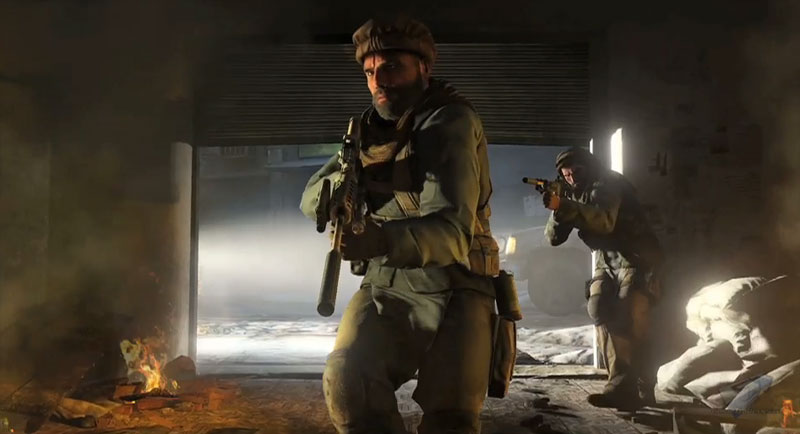
These are the ones you shoot.
It was to allow gamers to fight as Taliban against U.S. and allied troops in its online multiplayer mode, a feature that sparked criticism from some military officials and families of soldiers who have died in Afghanistan. Critics said allowing people to play as the enemies in a current conflict would be insensitive to the families of soldiers who have died.
The cultural assumptions enfolded into this statement bely the skewed view of the world we are fed and has ironic crunchy bits mashed in as well considering that the families of fallen Taliban fighters probably have similar feelings and have more of them considering the technological advantage we possess. But of course, being Official Enemies they do not have feelings or families, or heck, even human status when it comes to our point of view.
“Because the heartbeat of Medal of Honor has always resided in the reverence for American and allied soldiers, we have decided to rename the opposing team in Medal of Honor multiplayer from Taliban to Opposing Force,” executive producer Greg Goodrich said in a statement on the game’s website.”
Exactly, so you can get your righteous fill of filling people ragheads full of holes and terminating them with prejudice. This is okay. We show our reverence for families torn asunder by war by making products that glorify war and the destruction which results from it.
“While this change should not directly affect gamers, as it does not fundamentally alter the gameplay, we are making this change for the men and women serving in the military and for the families of those who have paid the ultimate sacrifice — this franchise will never wilfully disrespect, intentionally or otherwise, your memory and service.”
I’m not sure EA could go any deeper as they are using quantum bore tunnelling technology to dig the hole are in. All this PR spin is about their bottom line. They could care less about the men and women making the ultimate sacrifice during times of war. This wrinkle about changing the human targets from Taliban to OpFor is a callous move to protect their profit margins, nothing more.
A paradigm for reading news and following events that should really become more popular. Triangulation. That grab the same story from several feeds and see what is reported and emphasized and more importantly, what is *not* reported in the story in question.
 In our case we have the instance of Hakimullah Mehsud either being allegedly dead or really just doing fine. The answer depends on whether you look at the report from the CBC, or the report from English Al-Jazeera.
The CBC says:
“The militant leader’s death would be an important success for both Pakistan, which has been battling the Pakistani Taliban, and the U.S., which blames Mehsud for a recent deadly bombing against the CIA in Afghanistan.
The army’s disclosure came shortly after Pakistani state television, citing unnamed “official sources,” reported that Mehsud died in Orakzai, an area in Pakistan’s northwest tribal region where he was reportedly being treated for his injuries.
“We have these reports coming to us,” army spokesman Gen. Athar Abbas told The Associated Press. “We are investigating whether it is true or wrong.”
Versus
Al-Jazeera:
“There has been a call to a local television station and Qari Hussein, a senior commander of the Pakistani Taliban, is said to have denied reports of the death of Hakimullah Mehsud,” Al Jazeera’s Kamal Hyder, reporting from Islamabad, said.
“There is no concrete evidence to suggest that Hakimullah Mehsud is dead, but there is also some suspicion because there has been no video message to prove that he is alive.”
The AFP news agency reported that a senior Taliban spokesman had said that Mehsud was “alive and safe”.
Now, it is hard to evaluate who has a more accurate reports, as who has information about the sources. We have to base much of our news on the veracity of sources that we cannot easily verify.
So is the Taliban leader alive or dead? Who do you believe?











 bleatmop
 Mystro


 Dead Wild Roses
Your opinions…