
You are currently browsing the tag archive for the ‘The DWR Quote of the Day’ tag.
What is wrong with the whole barrel of hoopla that is identity politics. Love the Marx reference to weaving flowers/chains reference.
Entrenched patriarchal attitudes and norms are the enemy. Pervasive, ‘invisible’, and yet ubiquitous. The battles that must be undertaken are fraught with notion of the permanence of patriarchy and how unassailable it seems.
It isn’t. Just reaching one person and showing them the way is a victory, savour it and use it to power the next task at hand.
I felt as if I had to put a little inspiration before this quote of the day, as it is a bit on the disheartening side, but necessary to see the breadth of the task at hand.
“The female “gender-blenders” interviewed by Devor (1989) can help us see how women’s ambivalence about being female usually tends to reinforce patriarchy. These women clearly identified with men. They dressed like men, and they viewed women as most men view women— inferior. They showed strong devaluation of femaleness and of the subordinate behaviors assigned to women by the male-dominant culture. Their strong rejection of the feminine role for themselves was related to their strong acceptance of the message, presented to them by older family members, that females are sexual objects, are subordinate, and are deficient in comparison to men.
It is probably impossible for women not to internalize men’s denigration of femaleness and femininity to some extent. For example, both the women who adopt the feminine role for themselves and the genderblenders described by Devor have internalized the notion that females are subordinate. Neither group questions male culture’s definition of femaleness and femininity. The gender-blender challenges the belief that she is a subordinate but not the belief that women as a group are subordinate.”
|
|
“An abuser doesn’t change because he feels guilty or gets sober or finds God. He doesn’t change after seeing the fear in his children’s eyes or feeling them drift away from him. It doesn’t suddenly dawn on him that his partner deserves better treatment. Because of his self-focus, combined with the many rewards he gets from controlling you, an abuser changes only when he has to, so the most important element in creating a context for change in an abuser is placing him in a situation where he has no other choice. Otherwise, it is highly unlikely that he will ever change his behavior.”
— Lundy Bancroft | Why Does he DO That: Inside The Minds of Angry and Controlling Men
“As children, we count each birthday, eager to become adults so we can do what we want and make our own decisions. Once arrived, we discover that adult freedom is an illusion. Our childhood dreams of an exciting life are replaced with never-ending work and little to show for it. We feel like failures. What did we do wrong? The answer is — nothing. We did nothing wrong. This is how capitalism functions. Like a giant casino, capitalism promises much and delivers little. A few strike it rich, re-enforcing the myth that you can do the same. But the game is rigged by the capitalist class. The harder we work, the richer they get, and the sicker we become. As in every con, capitalism must resign the losers to their losses so they do not organize to end the con. Promoting the fiction of personal choice misdirects us to blame ourselves.”

I hate it when people say stuff that rings true and hits close to home.
“A word about my personal philosophy. It is anchored in optimism. It must be, for optimism brings with it hope, a future with purpose, and therefore, a will to fight for a better world. Without this optimism, there is no reason to carry on. If we think of the struggle as a climb up a mountain, then we must visualize a mountain with no top. We see a top, but when we finally reach it, the overcast rises and we find ourselves merely on a bluff. The mountain continues on up. Now we see the ‘real’ top ahead of us, and strive for it, only to find we’ve reached another bluff, and the top still above us. And so it goes on, interminably.
Knowing that the mountain has no top, that it is a perpetual quest from plateau to plateau, the question arises, “Why the struggle, the conflict, the heartbreak, the danger, the sacrifice. Why the constant climb?” Our answer is the same as that which a real mountain climber gives when he is asked why he does what he does. “Because it is there.”
Because life is there ahead of you and either one tests oneself in its challenges or huddles away in the valleys in a dreamless day-to-day existence who only purpose is the preservation of an illusory security and safety. The latter is what the vast majority of people choose to do, fearing the adventure into the unknown. Paradoxically, they give up the dream of what may lie ahead on the heights of tomorrow for a perpetual nightmare – and endless succession of days fearing the loss of a tenuous security. “
-Saul D. Alinsky. Rules for Radicals p. 20 – 21
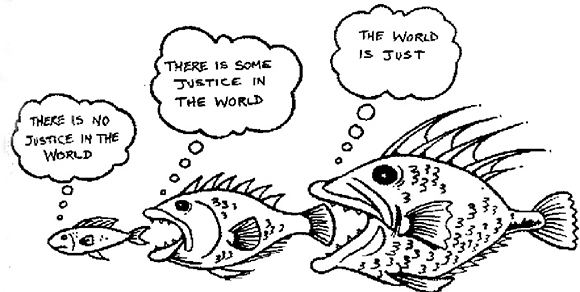
“The oppressive effect of privilege is often so insidious that dominant groups complain whenever it’s brought up for discussion. They feel impatient and imposed on. “Come on,” they say, “stop whining. Things aren’t that bad. Maybe they used to be, but not anymore. It’s time to move on. Get over it” But people who are white or heterosexual or male or nondisabled or middle- or upper-class have to ask themselves how they would know how bad it really is to be a person of color or a lesbian or a woman or gay or disabled or working- or lower-class. What life experience, for example, would qualify a white person to know the day-to-day reality of racism? People of color are, by comparison, experts in the dynamics of race privilege, because they live with the oppressive consequences of it twenty-four hours a day.”
— Allan G. Johnson











 bleatmop
 Mystro


 Dead Wild Roses
Your opinions…