
You are currently browsing the tag archive for the ‘Utopia’ tag.
Critical theory, as articulated by James Lindsay and rooted in the Frankfurt School’s intellectual project, forms the corrosive core of contemporary “woke” ideology. At its heart, it is not a constructive framework for social improvement but a methodological commitment to negation. Its aim is not to diagnose specific problems and propose reforms, but to discredit existing social arrangements by measuring them against an imagined standard of perfection that its own architects say cannot be positively described.
This orientation traces back to Max Horkheimer’s 1937 essay Traditional and Critical Theory. Traditional theory, he argued—drawing from the natural sciences and classical philosophies—engages with observable reality and grapples with the inevitable trade-offs embedded in human life. Critical theory rejects this approach. It evaluates the real world not against empirical evidence or feasible alternatives, but against a speculative ideal that can never be fully articulated, let alone realized. In 1969, Horkheimer reaffirmed this openly: because the ideal society cannot be conceptualized in existing terms, the only available activity is relentless critique of whatever exists. In effect, the real world is condemned for being real.
This negative idealism weaponizes the gap between the actual and the imaginary. Real societies, by necessity, require trade-offs: freedom of speech permits offensive speech; environmental protection imposes economic and temporal costs; social order requires rules, hierarchies of competence, and constraints on behavior. Critical theory interprets these trade-offs not as inherent features of human life but as intolerable flaws. It provides no functional replacement for what it seeks to dismantle. Instead, it declares that racism, class division, penal systems, borders, gender norms, or any designated “problematic” ought not to exist in the ideal world. Everything short of that unreachable ideal becomes proof of systemic oppression.
By measuring the real against an impossible standard, critical theory does not reform institutions—it erodes their legitimacy. It fosters perpetual grievance while strategically withholding any concrete alternative that could be scrutinized, tested, or judged by the same standards it applies to the world.
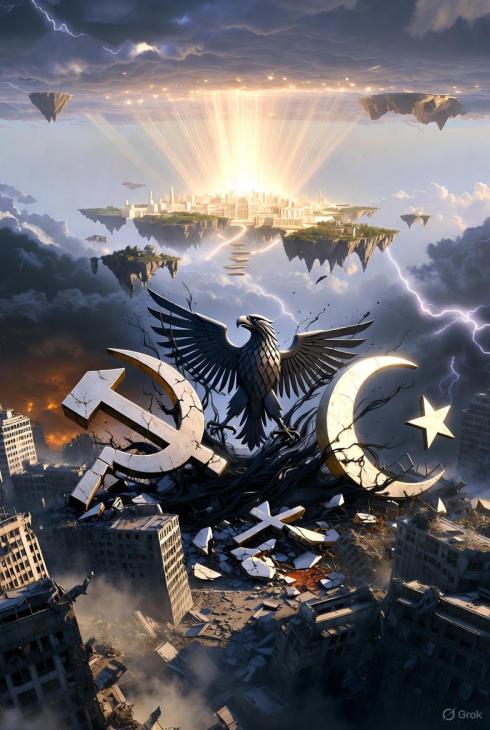
James Lindsay identifies three major historical ideologies that employ this same pattern of negative utopianism: communism, fascism, and political Islam. The claim is not that these movements are identical, but that they exhibit the same critical-theoretical structure:
- Communism imagines a stateless, classless society populated by “socialist man,” a type of human being who does not yet exist. Until such a person emerges, every tradition, institution, and authority is condemned as perpetuating exploitation.¹
- Fascism posits a perfectly ordered national or racial hierarchy unified around the mythic volk. Anything cosmopolitan, liberal, or “degenerate” is denounced as a betrayal of that utopian unity.²
- Political Islam (in its revolutionary form) imagines global submission to divine law. The present age is delegitimized as jahiliyyah—ignorance—and therefore unworthy of loyalty until the ideal community is imposed.³
In each case, the ideal is defined primarily by what it negates: capitalism, decadence, unbelief. And in each case, the historical results were catastrophic: gulags, war, genocide, theocratic oppression. The ideal was literally u-topian—“no place.”
Critical theory operates on precisely the same logic. Its power lies in inflaming resentment, undermining trust in existing institutions, and inducing a permanent revolutionary consciousness. It teaches adherents to view every tradition, norm, and hierarchy as illegitimate simply because it exists. It replaces trade-offs with absolutist moral demands, and flaws with indictments. It offers no blueprint for construction—only a sophisticated toolkit for deconstruction.
This is why contemporary “woke” politics behaves as it does. The endless denunciations of “systems,” “structures,” and “hegemonies”; the refusal to offer workable solutions; the moral absolutism; the perpetual expansion of grievance categories; the inability to articulate what a healthy society would look like—all reflect the same methodological negation that Horkheimer enshrined. It is criticism without end, and without responsibility.
Critical theory, in this sense, is not a path to reform but a program of societal disintegration. By demanding the impossible and attacking the real for failing to produce perfection, it generates only dissatisfaction, conflict, and institutional decay. The historical record is unambiguous: no system built on a negative utopia has ever produced anything but rubble.
To embrace critical theory is to wage war on reality under the banner of a perfection that cannot exist. That is why it must be understood clearly—and rejected root and branch.
Citations
Primary Critical Theory Sources
- Max Horkheimer, Traditional and Critical Theory (1937).
- Max Horkheimer, Critical Theory: Selected Essays (1969).
- Herbert Marcuse, One-Dimensional Man (1964).
- Jürgen Habermas, Knowledge and Human Interests (1968).
- Theodor W. Adorno, Negative Dialectics (1966).
Historical Ideology Sources
6. Karl Marx & Friedrich Engels, The German Ideology (1846); Critique of the Gotha Program (1875).
7. Benito Mussolini & Giovanni Gentile, The Doctrine of Fascism (1932).
8. Sayyid Qutb, Milestones (1964) — foundational for modern political Islam.
9. Ruhollah Khomeini, Islamic Government (1970).
Secondary Sources / Contemporary Analysis
10. James Lindsay, Cynical Theories (with Helen Pluckrose, 2020).
11. James Lindsay, The Marxification of Education (2023).
12. Roger Scruton, Fools, Frauds and Firebrands (2015).
13. Paul Gottfried, The Strange Death of Marxism (2005).
14. Mark Lilla, The Reckless Mind (2016).
15. John Gray, Black Mass: Apocalyptic Religion and the Death of Utopia (2007).
Glossary of Key Terms
Critical Theory – An ideological project originating with the Frankfurt School that critiques society against an impossible ideal rather than proposing practicable reforms.
Negative Idealism – Measuring reality against a utopia that cannot be articulated or realized.
Utopia – Literally “no place”; an imagined perfect society used as a moral weapon against the real world.
Hegemony – Antonio Gramsci’s concept of cultural dominance; used by CT to claim that norms and values are tools of oppression.
Structural Oppression – The assertion that unjust outcomes are produced by hidden systems rather than individual actions.
Standpoint Epistemology – The belief that knowledge is tied to identity; “lived experience” is epistemically privileged.
Praxis – Activism embedded into theory; in CT, the idea that theory must produce political action.
Reification – A Marxist term meaning the naturalization of social constructs; used to claim that institutions disguise power.
Signs You Are Encountering Critical Theory in Real Life
Here are the typical markers:
1. The language of systems and structures
Phrases like:
- “systemic oppression”
- “institutional racism”
- “hegemonic norms”
- “structures of privilege”
These shift blame from individuals to invisible systems.
2. Demands for perfect equity, not equality
If disparities alone are treated as dispositive evidence of injustice, CT is operating.
3. Appeals to lived experience as decisive evidence
Personal narrative is elevated above data or argument.
4. Moral asymmetry between groups
Some identities are framed as inherently oppressive; others as inherently oppressed.
5. Critique without end, without alternatives
If someone deconstructs everything but proposes nothing testable or concrete, it’s CT.
6. Rebranding ordinary conflict as oppression
If disagreement is treated as harm, and harm as violence, CT is at work.
7. The “if it exists, it’s oppressive” rule
Traditions, norms, meritocracy, law, biology—all treated as power structures.
How to Deal With Critical Theory in an Argument
Critical Theory arguments do not operate on normal rules of evidence or rational debate. Here’s how to engage effectively, calmly, and persuasively.
1. Reintroduce Trade-Offs
CT denies trade-offs. Bring them back.
“Every policy choice has costs—what trade-offs are you proposing in exchange for your solution?”
This forces concreteness.
2. Ask for Positive Alternatives
CT collapses when it must define what it wants.
“If the current system is oppressive, what specific system would you replace it with? How would it work in practice?”
Make them articulate the utopia in concrete terms. They rarely can.
3. Reject Claims Based Solely on Disparity
Demand causal reasoning.
“A disparity doesn’t automatically indicate discrimination. What evidence shows a causal link?”
This moves the debate from ideology to empiricism.
4. Expose Moral Asymmetry
Ask:
“Why are only some groups moralized? Do individuals still have agency?”
This undermines the oppressor/oppressed binary.
5. Clarify Definitions
CT thrives on shifting definitions.
Ask:
- “What do you mean by racism?”
- “How are you defining harm?”
- “What counts as violence?”
Pinning down definitions prevents concept-hopping.
6. Refuse Standpoint Epistemology
Challenge the epistemic claim:
“Lived experience matters, but it’s not a substitute for evidence. How can we verify your claim?”
This resets the terms of rational inquiry.
7. Separate Compassion From Ideology
Many people adopt CT-infused ideas because they want to be good.
Tell them:
“Your moral concern is admirable. CT is not the only—or even the best—way to address injustice.”
This opens space for alternatives and lowers defensiveness.
When political violence erupts, it often looks random — a lone extremist, a protest that gets out of hand, or a clash between two angry groups. But much of what we’re seeing today, in both the United States and Canada, is not random at all. It is part of a deliberate strategy that activists call dialectical warfare — and it is tearing at the heart of our democratic societies.
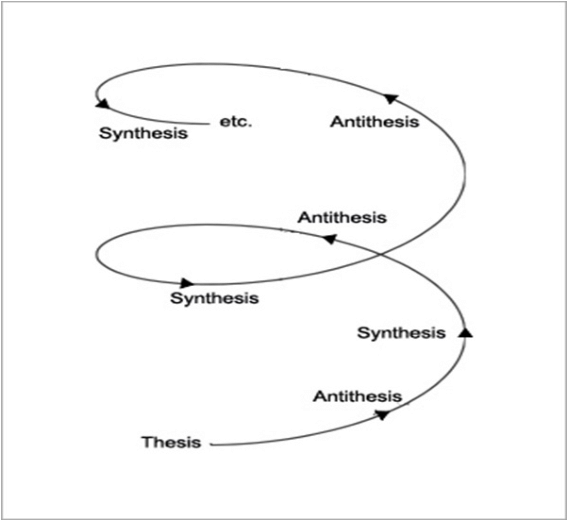
The assassination of Charlie Kirk and the furious conservative backlash that followed are not isolated events. They are part of a larger spiral of violence and reaction, one that radicals hope will end with the collapse of our current system. To understand how, we need to unpack an old idea: the dialectic.
What is the Dialectic?
The word “dialectic” comes from philosophy, specifically the German thinker Georg Wilhelm Friedrich Hegel in the early 1800s. At its simplest, the dialectic is a way of describing how history moves forward through conflict.
- Thesis: the current system or status quo.
- Antithesis: the force that challenges it.
- Synthesis: a new system that emerges after the clash.
For Hegel, this was a way of understanding history as a story of progress. Marx later took this idea and made it the foundation of his revolutionary theory. For him, history was about class struggle: workers against capitalists. Capitalism, he argued, would eventually collapse under its contradictions and give way to communism.
The key point is this: conflict isn’t a bug in the system — it’s the engine of history.
From Philosophy to Political Activism
Fast forward to today. Many left-wing activists, consciously or not, operate with a dialectical mindset. They believe that society advances through conflict and breakdown, not peaceful debate.
That means chaos, division, and even violence can be seen as useful. If enough conflict is stirred up, the system will be forced to reveal its flaws, overreact, and eventually collapse — clearing the way for something new.
This isn’t conspiracy theory. Activist manuals, writings from radical groups, and historical revolutionary movements all share this logic. The goal is not stability. The goal is destabilization.
Dialectical Warfare Today
Dialectical warfare is what happens when activists deliberately create or amplify conflict to destabilize society. Here’s how it works in practice:
- Provocation: Protests or acts of violence designed to draw a harsh reaction.
- Overreaction: Authorities or opponents respond too aggressively, confirming the activists’ narrative.
- Crisis: The clash erodes faith in institutions and convinces people the system doesn’t work.
- Escalation: Each cycle of conflict moves society further up the spiral toward collapse.
It’s not about winning the argument. It’s about breaking the system so that something “better” (usually some form of socialist utopia) can be built on the ruins.
The Charlie Kirk Case
The recent assassination of Charlie Kirk shows this dynamic clearly. For the radical Left, the act of violence itself was a shock designed to destabilize. But what mattered more was the reaction.
Conservatives in power, outraged and furious, began employing the same tools that had once been used against them: censorship, cancel culture, and efforts to silence left-wing voices. In their anger, they began shredding the same democratic norms — free speech, due process, respect for law — that they had once fought to defend.
From the perspective of dialectical warfare, this is a victory for the radicals. The point was never just to kill one man. The point was to provoke an overreaction that would weaken the credibility of conservative leaders, make democratic institutions look fragile, and drive polarization even deeper.
Why This is Dangerous
Every time conservatives react by copying the authoritarian tactics of the Left, they confirm the radicals’ worldview. They prove that democracy is a sham, that free speech is a lie, and that the system is doomed.
This is exactly what the activist Left wants. They welcome conservative overreach, because it accelerates the collapse of the old order. The tragedy is that in fighting back, the right risks becoming what it hates: reactionary, authoritarian, and destructive of the very freedoms it claims to defend.
Lessons from History
We have seen this before. In the 20th century, totalitarian movements from Communism in Russia to fascism in Germany thrived on dialectical conflict. They used street violence, political assassinations, and manufactured crises to polarize society. Each overreaction by their opponents brought them closer to power.
The idea is seductive: “This system is broken. Only radical action can save us.” But the results are always catastrophic. Millions died under regimes that promised utopia and delivered tyranny.
A Simple Analogy
Think of democracy like a family car. It’s not perfect — sometimes it breaks down, sometimes it needs repairs. Activists practicing dialectical warfare are not trying to fix the car. They are trying to crash it on purpose, believing that after the wreck, they’ll be able to build a perfect new vehicle.
But history shows that after the crash, what you usually get is not a better car — it’s a dictatorship.
The Dialectical Spiral at Work
To make this crystal clear, here’s how activists see the spiral — and what really happens:
| Stage | Activist Left’s View | What Actually Happens |
|---|---|---|
| Provocation | Stir conflict (riots, violence, incendiary rhetoric) to expose “systemic oppression.” | Communities destabilize; trust erodes. |
| Reaction | Force conservatives into authoritarian overreach. | Free speech and rule of law weaken; institutions lose credibility. |
| Crisis | Show that democracy and capitalism can’t solve the conflict. | Cynicism deepens; polarization hardens. |
| Escalation | Push society up the spiral toward “revolution and utopia.” | Cycle repeats, leading not to utopia but greater instability. |
Why We Must Resist
The activists’ dream of a communist utopia is a fantasy that has failed every time it’s been tried. But their strategy of dialectical warfare is very real — and very effective at breaking societies apart.
The assassination of Charlie Kirk and the conservative overreaction it triggered are a warning. If we allow ourselves to be baited into authoritarian responses, we are not saving democracy — we are digging its grave.
The only way forward is to resist the spiral: to defend free speech, uphold the rule of law, and refuse to play into the radicals’ hands. Otherwise, we will all be dragged into the chaos they long for, and the freedoms that make Western society unique will vanish in the wreckage.
References
- Hegel, G.W.F. The Phenomenology of Spirit (1807).
- Marx, K. & Engels, F. The Communist Manifesto (1848).
- Arendt, H. On Violence (1970).
- Popper, K. The Open Society and Its Enemies (1945).
- Contemporary coverage: Reuters, Associated Press, Fox News (Sept. 2025) – reporting on the assassination of Charlie Kirk and ensuing political fallout.
Devon Eriksen can be counted on to write some thought provoking and challenging ideas.
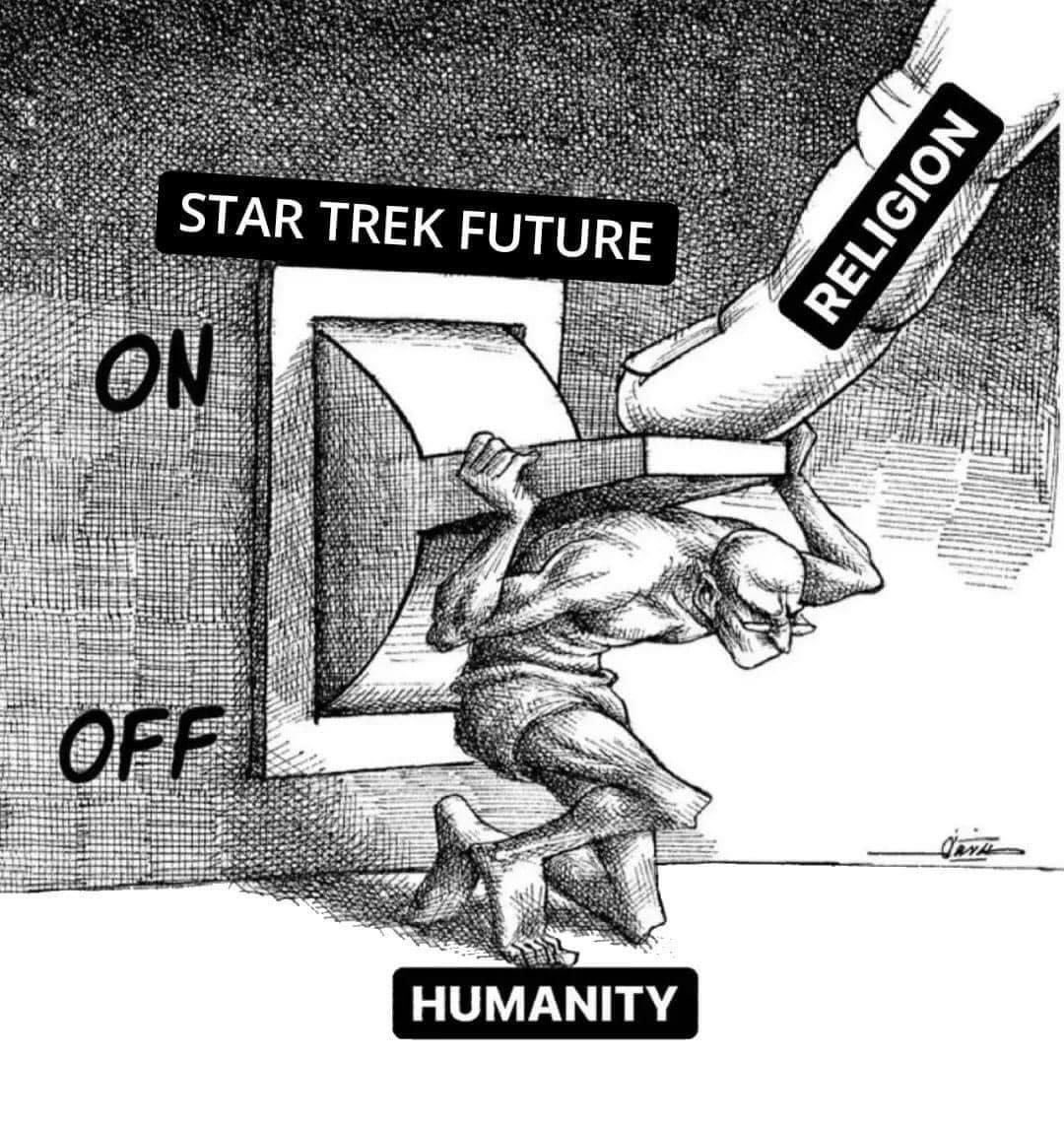
This is the socialist worldview in a nutshell.
Socialists believe the following:
1. All progress is social. This means that all human problems are solved by rearranging collective human behavior.
2. How to rearrange human behavior to solve problems is already known.
3. Problems therefore exist because there are people who don’t want to behave in this known fashion.
4. Therefore, problems exist because certain people are in the way of progress. Socialist politicians may be grifters who believe in nothing, but their (living) voters, the socialist true believers, hate you, and this is why.
They believe you, your existence, your non-compliance with their plans, is all that stands between humanity and paradise. This is why they will always murder you if they have power. This is why unchecked socialism always leads to the censor, the secret policeman tapping your phone, the neighbors dragged away in the night, the torture chamber, the gulag, the mass grave. Because if you think that nothing stands between you and paradise but stubborn people, then you think you can murder your way to paradise.
When a socialist demands socialism, you either comply or you do not. If you do not comply, he wants to murder you. If you do not comply, then the socialist policy he enacts not only fails to bring about paradise, it makes things worse, so he demands a further socialist policy. If you do not comply, he wants to murder you. If you repeatedly comply, then eventually things get very bad indeed, and the socialist casts about for someone to blame. Surely there must be some non-compliant person around here somewhere. Some counter-revolutionary. He must be found and murdered, and then paradise will be attained.
This isn’t about religion. “Religion” is merely the label they paste on your non-compliance. If you were an atheist, they’d just use another label. That giant finger in the drawing isn’t your beliefs. It’s you. They think you are evil. Not wrong, evil. And they want to kill you. Not all of them think they do, of course. There’s a group called “democratic socialists”, who append the word “democratic” to the front, to mean “I don’t want to kill you, I only want to use the political process to force you to comply.” But when they do, your society enters the same downward spiral described above.
So they eventually decide to kill you.
They will always, eventually, reach the point where they decide to kill someone. Because they always think their utopian plans will work if they kill just one more person, and their utopian plans will never actually work no matter how many people they kill.
What actually works isn’t socialism, it’s technology. Here’s how:
1. All progress is technological. This means that all human problems are solved by figuring out a better understanding of the universe, and creating a piece of technology based on that understanding.
2. Creating new science and technology is hard, and requires a lot time, money, and effort.
3. Problems therefore exist because not enough time, money, and effort has yet been invested to produce the necessary technological breakthrough.
4. Therefore, there is absolutely, positively, 100% no way to solve all human problems right now by acting differently. But we can optimize society for technological progress.
In other words, the “star trek future” isn’t waiting for us to become atheists, because atheism doesn’t produce technology faster or better than any religion that isn’t anti-technology. That “star trek future” is instead waiting on us to invent warp drives, teleporters, and matter nanoassemblers. And every single piece of progress that humanity has achieved came not from social activism, but from technological advancement. The 40 hour work week was merely demanded by unions. It was actually enabled by industrial technology.
Democracy, republicanism, and other forms of populist government were merely demanded by revolutions and philosophies. They were enabled by the rifled firearm. And so on. For every positive change in society and civilization, there is one or more critical pieces of technology that allow it to happen. Once that technology exists, the change is trivial. When it does not exist, forcing that change is disastrous, not positive. A 40 hour work week would exterminate a civilization of bronze age agriculturalists. Democracy would destroy a medieval kingdom. Progress is technological progress.
This is why socialism must be stopped.
Because socialism interferes with technological progress, which is the real driving force behind progress of any kind.
You cannot murder your way to utopia.
Controversial topics are hard to talk about. What makes the process even more difficult is when one side, for whatever reason, decides that disagreeing with their position is equivalent to you *hating* their position.
The disagreement=hate confab is almost an exclusive feature of attempting to dialogue with someone on the Left of the political spectrum. I hesitate to use the Left/Right distinction though because the terms are not describing the political reality we now inhabit. Perhaps authoritarian vs anti-authoritarian might be a better way to describe positions these days.
Authoritarians whether on the Left or the Right seem to have a built in predisposition to thinking that their choice is the moral choice and that somehow by questioning their assertions you are questioning their morality or ethics.
It really isn’t that, at least not a first. One must grapple with the argument the person makes not the morality or ethics the person in question happens to hold.
An easy example is a person stating the fact that women, exclusively, are adult human females. The simple action of stating a fact can lead to accusations of hatred, discrimination, and even bigotry.
How does that even work? My hypothesis is that when you encounter the disagreement=hate trope the person that you are dealing with isn’t willing to put the thought or effort in to make a reasonable counter-argument. It is much easier to simply dismiss statements and thoughts that do not comport with what you hold to be true than do the work to properly refute them (also the statement in question may be closest to the truth and thus more accurate than your worldview).
Another issue is that your interlocutor may rate highly on the authoritarian scale. Woke ideologies like transgender ideology are totalizing, for them to reach their final stage *everyone* has to believe in the ideology. The utopian magic can’t happen until everyone is ideologically congruent thus wrong-thinkers must be converted or removed from the equation. If you are speaking against gender ideology -for the converted it simply must be “hate” – because the ideologue is convinced that their position is not only factually correct, but morally and ethically correct as well. Thus, the problem lies in you, not them as they have deep insight into the question, that gives them access to the “truth” and speaking against this “truth” must be hateful in nature.
It isn’t.
Being able to interrogate and critique ideas is part of the bedrock of a free society. We need to be able to objectively look at what people say and determine for ourselves the value of their arguments. Doing this now in society can be challenging precisely because questioning the orthodoxy is often misconstrued as “hatred”, thus speech and debate must be kept in check to stop the “hate” if one is to follow the reasoning from those who seek to limit speech in our society.
Limiting speech is such a completely terrible idea and we should really pause and consider the nature of so called progressive movements that advocate for the censure of speech in society.











 bleatmop
 Mystro


 Dead Wild Roses
Your opinions…